Stage Lighting Equipment List for Small Venues: What You Need and How to Plan It
Why a Small Venue Needs a Smarter Stage Lighting Equipment Plan
Choosing stage lighting equipment for a small venue is rarely a simple matter of adding brighter fixtures.
In practice, lighting decisions shape audience comfort, performer visibility, power planning, maintenance effort, and how professional the room feels.
That is why a realistic equipment list matters.
A compact music lounge, a hotel function room, and a school auditorium may share similar dimensions.
Their lighting priorities are still very different.
Within commercial sourcing, this difference is important.
GCT often reflects a broader market reality: experiential spaces demand equipment that balances aesthetics, compliance, reliability, and long-term operating logic.
For small venues, the right stage lighting equipment list reduces setup friction from the beginning and avoids expensive corrections later.
Actual Use Conditions Change What Belongs on the List
The first planning mistake is assuming all small stages need the same package.
A venue used three nights a week for live bands behaves differently from a multi-use hall that hosts speeches, receptions, and small theatrical performances.
More useful planning starts with a few questions.
- Will the lighting stay focused on a front performance line or cover deeper stage movement?
- Does the room need warm hospitality ambience, dynamic concert looks, or neutral presentation lighting?
- How often will non-technical staff operate the system?
- Are rigging points fixed, limited, or temporary?
- Is there enough electrical capacity for added fixtures and control devices?
These questions decide far more than fixture count.
They affect whether the venue should prioritize LED pars, profile fixtures, moving heads, compact follow spots, or simple static washes.
When the Room Hosts Music, Front Light Usually Matters Most
Small music venues often overinvest in colored effects and underinvest in clean front coverage.
The result looks exciting in photos but weak in person.
Faces disappear, cameras struggle, and performers step in and out of usable light.
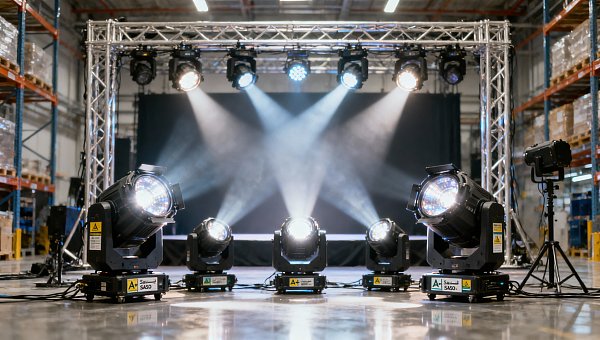
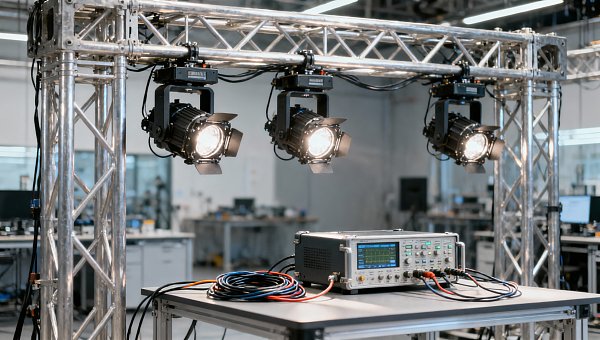
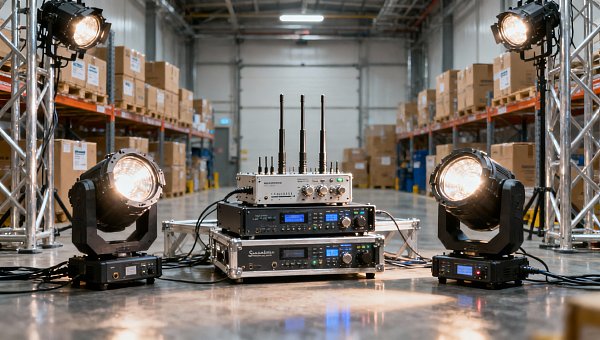
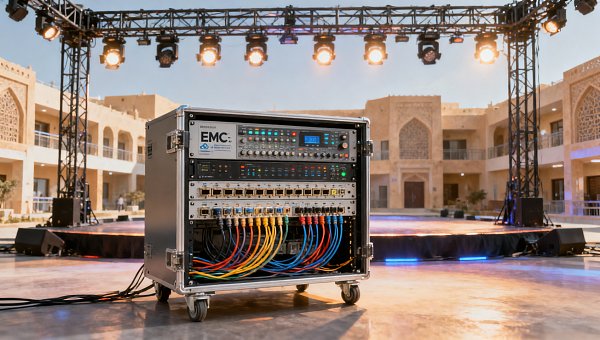
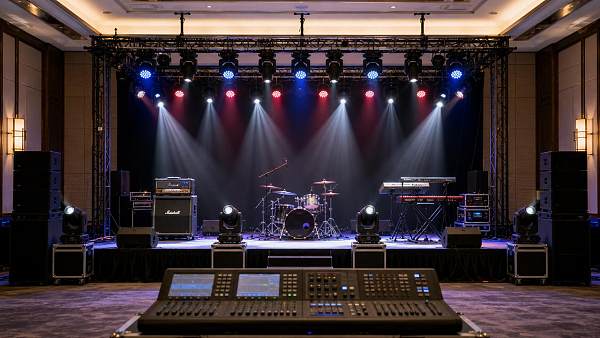
In this setting, a practical stage lighting equipment package usually includes front wash fixtures, backlight, side accents, a control console, DMX distribution, clamps, cabling, and safe mounting hardware.
If the stage is shallow, wide beam LED pars may be enough.
If performers move across distinct marks, compact profile fixtures help shape cleaner zones.
Moving heads are useful, but only when the venue benefits from changing looks between acts.
For rooms with frequent live streaming or social clips, consistent color temperature becomes another planning factor.
That requirement often matters more than adding another effect light.
Hotel Event Spaces and Multi-Use Halls Need Flexibility First
A small venue inside a hotel or conference property rarely serves one purpose.
One day it supports a product launch.
The next day it becomes a banquet stage or panel discussion platform.
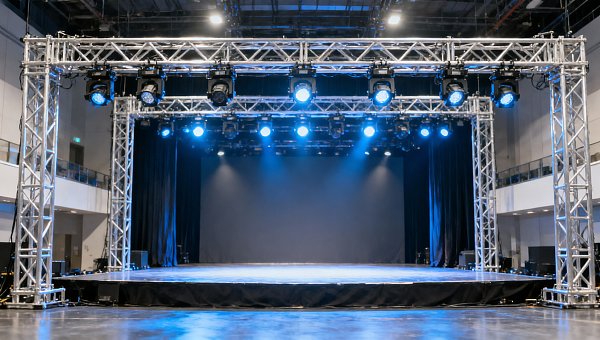
Here, stage lighting equipment should support quick transitions rather than dramatic complexity.
Soft front light, adjustable white balance, quiet fixture operation, and preset-based control usually matter more than advanced movement.
A good list often includes tunable or color-mixing LED fixtures, a simple scene controller, architectural integration points, and backup signal paths.
This is also where finish quality and visual neatness count.
In hospitality environments, visible cable disorder or bulky rigging can weaken the premium impression of the room.
Education and Community Spaces Usually Need Durability Over Spectacle
School halls, training centers, and community theaters often use the same stage for assemblies, performances, and public events.
That creates a different planning logic.
The stage lighting equipment list should be easy to maintain, simple to patch, and tolerant of changing users.
Fixtures with long LED life, protected connectors, familiar control layouts, and clearly labeled circuits tend to outperform more ambitious systems.
In these spaces, access for servicing matters a lot.
A fixture that looks efficient on paper becomes a burden if every adjustment needs specialized lifts or outside technicians.
That is why many compact venues prefer fewer fixture types with broader utility.
A Core Stage Lighting Equipment List for Most Small Venues
Although requirements vary, most small venues need the same backbone.
The difference lies in quantity, beam behavior, control depth, and mounting method.
This kind of list supports better comparison across suppliers and prevents the common habit of pricing fixtures alone.
Different Small Venue Setups Need Different Trade-Offs
The most useful stage lighting equipment decision is often a trade-off, not a feature upgrade.
A compact black box room may accept darker surroundings and stronger contrast.
A boutique hotel venue usually needs gentler transitions and flattering skin tones.
A community stage may value easy replacement parts more than refined optical control.
- Low ceiling: prioritize compact fixtures, careful tilt range, and glare control.
- Frequent reconfiguration: choose preset-based control and fast repositioning hardware.
- Hybrid live and video use: prioritize CRI, white balance options, and flicker performance.
- Tight operating budget: reduce fixture variety before reducing safety or signal infrastructure.
These choices explain why similar rooms can justify different equipment lists without either plan being wrong.
What Gets Missed Before Installation Starts
Many problems appear before the first event, not after years of use.
One common misjudgment is selecting stage lighting equipment based only on fixture specifications.
Beam angle, output, and color effects look persuasive.
They do not confirm whether the fixture suits the room geometry, rigging height, or daily workflow.
Another frequent issue is ignoring the cost of implementation.
Extra lifts, structural adjustments, power upgrades, and programming time can quietly exceed the fixture budget.
Standards and compatibility also deserve more attention.
Commercial spaces often need documented compliance, dependable thermal behavior, and consistent parts support across markets.
That broader sourcing view aligns with how premium commercial environments evaluate equipment, especially where operational continuity matters.
A Practical Way to Match Equipment to the Venue
A better planning process starts with the room, then narrows into the equipment list.
- Map the stage dimensions, ceiling height, throw distance, and power points.
- Define the most frequent event type, not only the most impressive one.
- Separate essential light from optional effect light.
- Confirm control simplicity, maintenance access, and spare part availability.
- Review compliance, load ratings, and signal reliability before final selection.
This approach keeps the stage lighting equipment plan grounded in actual use rather than showroom appeal.
It also creates a clearer framework for comparing suppliers, project timelines, and lifecycle cost.
The Best Equipment List Is the One That Still Works a Year Later
For a small venue, good stage lighting equipment is not defined by fixture count alone.
It is defined by fit.
Fit between light and room size.
Fit between visual goals and operating skill.
Fit between budget and long-term upkeep.
Before locking the final list, it helps to document the main use cases, compare technical constraints across those scenarios, and identify where flexibility is truly needed.
That next step usually reveals whether the venue needs more fixtures, better control, or simply a more disciplined stage lighting equipment plan.
Search News
Hot Articles
- Commercial KitchenHow Restaurants Can Choose Disposable Wooden Cutlery for Takeout and CateringSep 14, 2026
- Jewelry Packaging & DisplayHow U.S. Retailers Can Choose Jewelry Displays for Better Security and SalesSep 13, 2026
- Commercial KitchenHow to Size a Restaurant Walk-In Cooler for Peak Inventory and Kitchen LayoutSep 12, 2026
Popular Tags
Need ExpertConsultation?
Connect with our specialized leisureengineering team for procurementstrategies.
Recommended News
 Jul 13, 2026Stage Riser Platforms Explained: Types, Load Ratings, and Best-Fit Event UsesStage riser platforms explained clearly: compare types, load ratings, safety factors, and best-fit event uses to choose smarter, safer solutions for conferences, schools, hotels, and live shows.● Pro Audio Engineer
 Jul 09, 2026SASO Fast Track Cuts Stage Lighting Export Lead TimeSASO Fast Track cuts stage lighting export lead time from 45 days to 12 working days. Learn how Saudi certification changes affect truss suppliers, OEMs, buyers, and shipment planning.● Pro Audio Engineer
 Jul 08, 2026SASO Updates Stage Lighting Label Rules for LED Moving HeadsSASO updates stage lighting label rules for LED moving heads, requiring three-level energy efficiency values and bilingual labels. See what exporters and buyers must do before October 2026.● Pro Audio Engineer
 Jul 07, 2026SASO Adds Energy Label Rules for Stage Lighting ImportsSASO Adds Energy Label Rules for Stage Lighting Imports: learn which stage lighting products now need Arabic energy labels and SASO-recognized test reports before Sept. 1, 2026.● Pro Audio Engineer
 Jul 06, 2026Saudi SASO Sets A+ Rule for Stage LED LightingSaudi SASO sets A+ rule for stage LED lighting from Oct 1, 2026. Learn how the new SASO label and IEC 62722-2-1:2026 standard impact compliance, shipping, and market access.● Pro Audio Engineer
 Jul 04, 2026SASO Tightens RF Test Rules for Wireless Stage ControlsSASO tightens RF test rules for wireless stage controls in Saudi Arabia. Learn how the new IEC 62368-3 requirement impacts stage lighting exports, compliance, and delivery.● Pro Audio Engineer
 Jul 03, 2026Saudi SASO Adds RF Approval Rule for Stage LightingSaudi SASO adds RF approval rule for stage lighting. Learn how the new SASO RoHS+RF certification affects wireless lighting, truss control exports, retail access, and project delivery in Saudi Arabia.● Pro Audio Engineer
 Jul 02, 2026SASO Starts EMC Pilot for Smart Stage Lighting in SaudiSASO starts an EMC pilot for smart stage lighting in Saudi Arabia, impacting dimming controllers, cloud access, and project compliance. See what suppliers and integrators must do now.● Pro Audio Engineer
 Jul 01, 2026Saudi SASO Tightens UV-C Limits for Stage LightingSaudi SASO tightens UV-C limits for stage lighting and truss products. Learn the 2026 SASO IEC 62471 update, retesting deadline, customs risks, and how to protect Saudi shipments.● Pro Audio Engineer
 Jun 30, 2026EN 62471:2026 Adds UV-C Limit for Stage LightingEN 62471:2026 adds a UV-C limit for stage lighting, impacting LED moving heads, laser fixtures, and truss lighting. Learn what changes before Dec 1, 2026.● Pro Audio Engineer
 Jun 29, 2026TUV Adds Wi-Fi 7 EMC Test for Stage LightingTUV Adds Wi-Fi 7 EMC Test for Stage Lighting sold into the EU. Learn the Oct 1, 2026 deadline, retesting rules, and how EN 55032:2024 impacts certificates, shipments, and compliance planning.● Pro Audio Engineer
 Jun 25, 2026LED PAR Cans Wholesale: What to Compare in Wattage, Beam Angle, and DMX ControlLED par cans wholesale buyers should compare wattage, beam angle, and DMX control before requesting quotes. Learn how to avoid costly mismatches and choose fixtures that fit each venue.● Pro Audio Engineer
 Jun 16, 2026Stage Lighting Equipment List for Small Venues: What You Need and How to Plan ItStage lighting equipment for small venues: discover a practical equipment list, planning tips, and smart setup ideas to improve performance, flexibility, and long-term value.● Pro Audio Engineer
 Jun 12, 2026Vietnam Tightens EMC Rules for Stage Lighting LEDsVietnam Tightens EMC Rules for Stage Lighting LEDs: learn how QCVN 139:2026 impacts imports, testing, sourcing, and delivery planning for stage lighting businesses.● Pro Audio Engineer
 Jun 11, 2026LPGA Shanghai Debut Lifts Stage Lighting OrdersStage lighting and truss demand is rising as LPGA Shanghai debuts in 2026. Learn how tighter delivery windows, compliance, and project execution are reshaping global orders.● Pro Audio Engineer
 Jun 04, 2026UK EPR Rules Expand to Stage Lighting and TrussUK EPR rules for stage lighting and truss expand in Q3 2026. Learn how UKCA-linked registration, reporting, recycling fees, and material documentation will affect compliance and market access.● Pro Audio Engineer
 Jun 03, 2026UK EPR Fee Hits Stage Truss Textiles in Q3 2026UK EPR Fee for stage truss textiles starts in Q3 2026. Learn what new recycling charges and UKCA-Flame rules mean for lighting and truss suppliers.● Pro Audio Engineer
 Jun 02, 2026UK EPR Fee Hits Stage Lighting & TrussUK EPR Fee Hits Stage Lighting & Truss products with textile components in 2026. Learn compliance risks, BOM updates, and cost impacts for UK exporters.● Pro Audio Engineer
 May 25, 2026China's Carbon Fiber Truss Strength Up 32% at 2026 Sports ExpoCarbon fiber truss strength up 32% at 2026 Sports Expo—UL 1598 certified, CE+UL ready. Discover how China’s stage infrastructure is winning European music festivals & global tenders.● Pro Audio Engineer
 May 23, 2026Vietnam Mandates Bilingual MSDS for Stage Lighting & Truss ImportsVietnam mandates bilingual MSDS (Vietnamese & Chinese) for stage lighting and truss imports — ensure compliance by July 1, 2026 to avoid shipment rejection.● Pro Audio Engineer
 May 20, 20263 Chinese Stage Lighting Firms Join LA28 Olympic Supplier List3 Chinese stage lighting firms join LA28 Olympic supplier list — showcasing ISO 20121 & UL 1574 compliance, sustainability leadership, and global credibility in live-event infrastructure.● Pro Audio Engineer
 May 20, 2026What matters most when choosing lighting stands crank up?Lighting stands crank up: learn what really matters beyond height—load capacity, crank safety, stability, compatibility, and serviceability—to choose the right stand with confidence.● Pro Audio Engineer
 May 19, 20263 Chinese Stage Lighting Firms Join IOC’s 2028 LA Olympics Supplier ListChinese stage lighting firms join IOC's 2028 LA Olympics supplier list — a major validation for OEM/ODM exporters and tech integrators in global sports & entertainment lighting.● Pro Audio Engineer
 May 19, 2026When are chain hoists for stage the better rigging choiceChain hoists for stage are the better rigging choice when you need precise lifting, compact headroom use, and reliable repeat performance. See key use cases and buyer tips.● Pro Audio Engineer