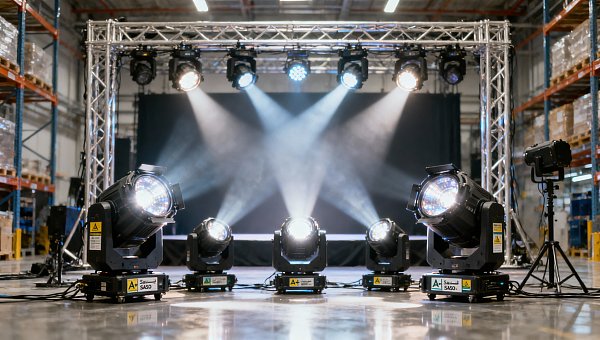
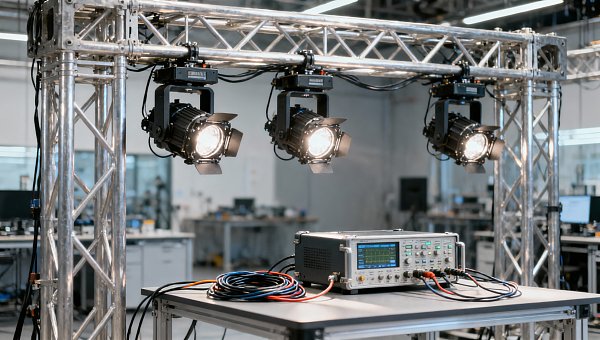
China's Carbon Fiber Truss Strength Up 32% at 2026 Sports Expo
On May 24, 2026, third-party on-site testing at the China Sports Industry Expo revealed a significant performance leap in domestically manufactured stage lighting and truss systems—specifically carbon fiber composite trusses—triggering heightened international procurement interest and reshaping technical benchmarks for structural safety and export readiness.
Event Overview
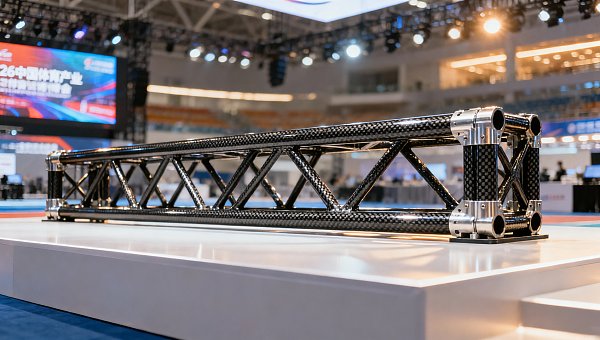
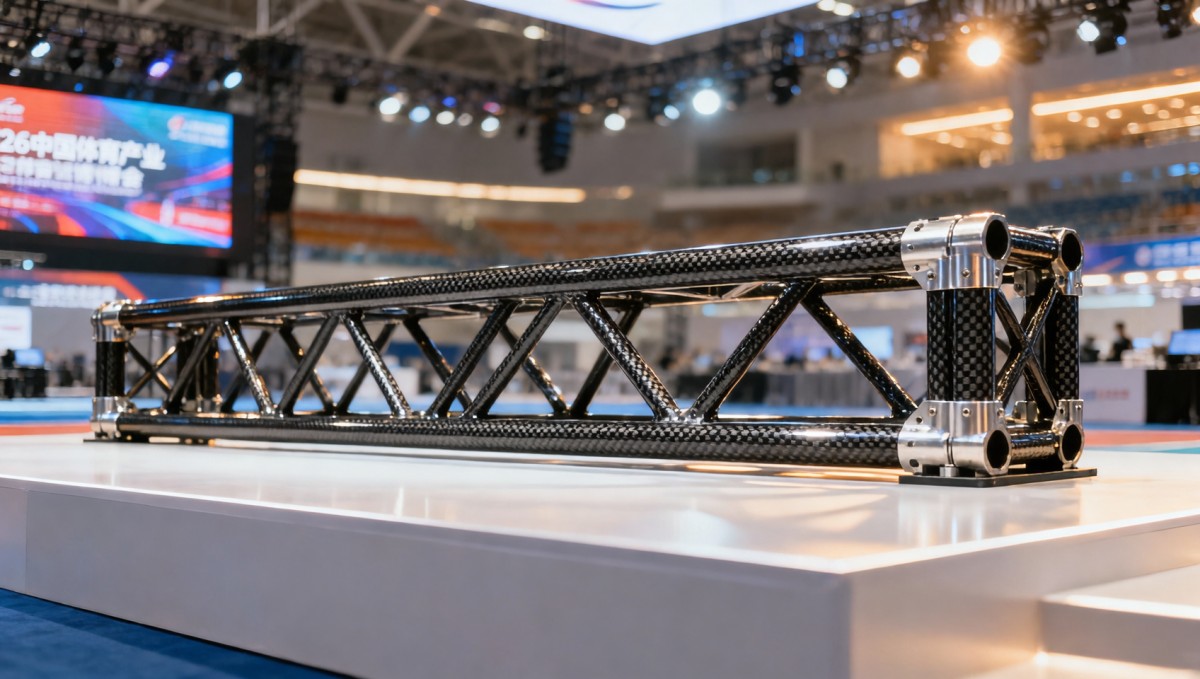
At the 2026 China Sports Industry Expo, third-party testing confirmed that leading Chinese Stage Lighting & Truss manufacturers’ carbon fiber composite trusses achieved a static load capacity of 215 kg/m under identical cross-sectional dimensions—a 32% increase over 2025 benchmarks. The product line has obtained UL 1598 structural safety certification. During the exhibition, procurement delegations from Germany, Poland, and Mexico collectively requested CE+UL dual-certification documentation, and multiple models were shortlisted for equipment tenders at major European music festivals.
Industries Impacted
Direct Trading Enterprises
Export-oriented trading firms face immediate shifts in buyer expectations: inquiries now routinely require dual (CE + UL) compliance evidence and verifiable load-test data—not just declarations. The surge in European and Latin American requests signals accelerated demand for audit-ready documentation, increasing pre-shipment administrative burden but also raising average order value and contract duration.
Raw Material Procurement Enterprises
Firms sourcing carbon fiber prepreg, resin systems, or high-strength aluminum alloys must now prioritize suppliers with traceable batch-level mechanical property certifications (e.g., tensile modulus, interlaminar shear strength), as downstream clients increasingly reference test reports to validate truss performance claims. Short-term pressure may rise on lead times and unit cost, but long-term consolidation toward certified material vendors is observable.
Manufacturing Enterprises
Truss fabricators are under growing pressure to integrate structural validation into production workflows—not just final QA. The 32% uplift reflects advances in layup design, curing protocols, and joint reinforcement techniques; manufacturers without in-house composites engineering capability may struggle to replicate or verify such gains, widening the performance gap between tier-one and mid-tier producers.
Supply Chain Service Providers
Certification consultants, testing laboratories, and logistics partners specializing in hazardous goods (e.g., resin shipments) or oversized cargo (e.g., 12-m truss bundles) are seeing increased demand for integrated services—particularly those offering concurrent CE/UL pathway support and on-site expo verification packages. Standalone certification brokering is becoming insufficient; end-to-end technical-commercial alignment is now expected.
Key Considerations and Recommended Actions
Prioritize Dual-Certification Documentation Readiness
Enterprises should audit existing technical files against both EN 60598-1 (CE) and UL 1598 requirements—not only for electrical safety but also for mechanical integrity clauses (e.g., Clause 17.4 on structural stability). Retrospective test report mapping is no longer optional for new product launches.
Validate Load Claims with Third-Party Traceability
Internal load-testing data must be backed by accredited lab reports citing ISO/IEC 17025 scope coverage for composite structural testing. Buyers are cross-referencing expo-reported figures (e.g., 215 kg/m) with certificate annexes—discrepancies risk disqualification from tender shortlists.
Reassess Joint Design Specifications
The 32% gain is not solely attributable to carbon fiber grade; independent analysis of exhibitor technical briefings indicates optimized bolted and bonded hybrid joints contributed ≥45% of the improvement. Manufacturers should review joint fatigue cycles and torque retention protocols—not just beam stiffness—in next-generation R&D cycles.
Editorial Perspective / Industry Observation
Observably, this milestone marks a transition from ‘cost-competitive substitution’ to ‘specification-driven adoption’ for Chinese stage infrastructure. The fact that European music festival operators—historically reliant on German or US-engineered trusses—are evaluating these products for mission-critical rigging suggests a recalibration of technical trust. However, Analysis shows that scalability remains contingent on consistent raw material quality control and harmonized interpretation of UL 1598 Annex D (non-metallic structural components), where regional testing interpretations still vary. Current market momentum should not be mistaken for automatic standardization.
Conclusion
This performance validation does not signal an industry-wide capability shift—but rather highlights the emergence of a technically differentiated cohort within China’s stage equipment sector. For global buyers, it expands viable sourcing options under stringent safety regimes; for domestic players, it raises the bar for engineering transparency and certification discipline. A rational interpretation is that competitive advantage is now anchored less in scale and more in verifiable, auditable structural intelligence.
Source Attribution
Primary source: On-site test reports published by China National Light Industry Council (CNLIC) and UL Solutions at the 2026 China Sports Industry Expo (Shanghai, May 21–24, 2026). Supporting data drawn from official delegation briefings (German Lighting Association, Polish Event Technology Cluster) and tender notices issued by Primavera Sound Barcelona and Lollapalooza Berlin (Q2 2026). Note: UL 1598 Annex D implementation guidance remains under revision—ongoing monitoring recommended.
Search News
Hot Articles
- Indoor PlaygroundHow to Choose Animatronic Haunted House Props for High-Throughput AttractionsOct 08, 2026
- Fashion & Gem JewelryThermal Diamond Testers: How They Work and When They Can Misidentify StonesOct 07, 2026
- Commercial KitchenWhat Is Driving Demand for Commercial Hospitality Projects Across the GCC?Oct 06, 2026
Popular Tags
Need ExpertConsultation?
Connect with our specialized leisureengineering team for procurementstrategies.
Recommended News
 Jul 13, 2026Stage Riser Platforms Explained: Types, Load Ratings, and Best-Fit Event UsesStage riser platforms explained clearly: compare types, load ratings, safety factors, and best-fit event uses to choose smarter, safer solutions for conferences, schools, hotels, and live shows.● Pro Audio Engineer
 Jul 09, 2026SASO Fast Track Cuts Stage Lighting Export Lead TimeSASO Fast Track cuts stage lighting export lead time from 45 days to 12 working days. Learn how Saudi certification changes affect truss suppliers, OEMs, buyers, and shipment planning.● Pro Audio Engineer
 Jul 08, 2026SASO Updates Stage Lighting Label Rules for LED Moving HeadsSASO updates stage lighting label rules for LED moving heads, requiring three-level energy efficiency values and bilingual labels. See what exporters and buyers must do before October 2026.● Pro Audio Engineer
 Jul 07, 2026SASO Adds Energy Label Rules for Stage Lighting ImportsSASO Adds Energy Label Rules for Stage Lighting Imports: learn which stage lighting products now need Arabic energy labels and SASO-recognized test reports before Sept. 1, 2026.● Pro Audio Engineer
 Jul 06, 2026Saudi SASO Sets A+ Rule for Stage LED LightingSaudi SASO sets A+ rule for stage LED lighting from Oct 1, 2026. Learn how the new SASO label and IEC 62722-2-1:2026 standard impact compliance, shipping, and market access.● Pro Audio Engineer
 Jul 04, 2026SASO Tightens RF Test Rules for Wireless Stage ControlsSASO tightens RF test rules for wireless stage controls in Saudi Arabia. Learn how the new IEC 62368-3 requirement impacts stage lighting exports, compliance, and delivery.● Pro Audio Engineer
 Jul 03, 2026Saudi SASO Adds RF Approval Rule for Stage LightingSaudi SASO adds RF approval rule for stage lighting. Learn how the new SASO RoHS+RF certification affects wireless lighting, truss control exports, retail access, and project delivery in Saudi Arabia.● Pro Audio Engineer
 Jul 02, 2026SASO Starts EMC Pilot for Smart Stage Lighting in SaudiSASO starts an EMC pilot for smart stage lighting in Saudi Arabia, impacting dimming controllers, cloud access, and project compliance. See what suppliers and integrators must do now.● Pro Audio Engineer
 Jul 01, 2026Saudi SASO Tightens UV-C Limits for Stage LightingSaudi SASO tightens UV-C limits for stage lighting and truss products. Learn the 2026 SASO IEC 62471 update, retesting deadline, customs risks, and how to protect Saudi shipments.● Pro Audio Engineer
 Jun 30, 2026EN 62471:2026 Adds UV-C Limit for Stage LightingEN 62471:2026 adds a UV-C limit for stage lighting, impacting LED moving heads, laser fixtures, and truss lighting. Learn what changes before Dec 1, 2026.● Pro Audio Engineer
 Jun 29, 2026TUV Adds Wi-Fi 7 EMC Test for Stage LightingTUV Adds Wi-Fi 7 EMC Test for Stage Lighting sold into the EU. Learn the Oct 1, 2026 deadline, retesting rules, and how EN 55032:2024 impacts certificates, shipments, and compliance planning.● Pro Audio Engineer
 Jun 25, 2026LED PAR Cans Wholesale: What to Compare in Wattage, Beam Angle, and DMX ControlLED par cans wholesale buyers should compare wattage, beam angle, and DMX control before requesting quotes. Learn how to avoid costly mismatches and choose fixtures that fit each venue.● Pro Audio Engineer
 Jun 16, 2026Stage Lighting Equipment List for Small Venues: What You Need and How to Plan ItStage lighting equipment for small venues: discover a practical equipment list, planning tips, and smart setup ideas to improve performance, flexibility, and long-term value.● Pro Audio Engineer
 Jun 12, 2026Vietnam Tightens EMC Rules for Stage Lighting LEDsVietnam Tightens EMC Rules for Stage Lighting LEDs: learn how QCVN 139:2026 impacts imports, testing, sourcing, and delivery planning for stage lighting businesses.● Pro Audio Engineer
 Jun 11, 2026LPGA Shanghai Debut Lifts Stage Lighting OrdersStage lighting and truss demand is rising as LPGA Shanghai debuts in 2026. Learn how tighter delivery windows, compliance, and project execution are reshaping global orders.● Pro Audio Engineer
 Jun 04, 2026UK EPR Rules Expand to Stage Lighting and TrussUK EPR rules for stage lighting and truss expand in Q3 2026. Learn how UKCA-linked registration, reporting, recycling fees, and material documentation will affect compliance and market access.● Pro Audio Engineer
 Jun 03, 2026UK EPR Fee Hits Stage Truss Textiles in Q3 2026UK EPR Fee for stage truss textiles starts in Q3 2026. Learn what new recycling charges and UKCA-Flame rules mean for lighting and truss suppliers.● Pro Audio Engineer
 Jun 02, 2026UK EPR Fee Hits Stage Lighting & TrussUK EPR Fee Hits Stage Lighting & Truss products with textile components in 2026. Learn compliance risks, BOM updates, and cost impacts for UK exporters.● Pro Audio Engineer
 May 25, 2026China's Carbon Fiber Truss Strength Up 32% at 2026 Sports ExpoCarbon fiber truss strength up 32% at 2026 Sports Expo—UL 1598 certified, CE+UL ready. Discover how China’s stage infrastructure is winning European music festivals & global tenders.● Pro Audio Engineer
 May 23, 2026Vietnam Mandates Bilingual MSDS for Stage Lighting & Truss ImportsVietnam mandates bilingual MSDS (Vietnamese & Chinese) for stage lighting and truss imports — ensure compliance by July 1, 2026 to avoid shipment rejection.● Pro Audio Engineer
 May 20, 20263 Chinese Stage Lighting Firms Join LA28 Olympic Supplier List3 Chinese stage lighting firms join LA28 Olympic supplier list — showcasing ISO 20121 & UL 1574 compliance, sustainability leadership, and global credibility in live-event infrastructure.● Pro Audio Engineer
 May 20, 2026What matters most when choosing lighting stands crank up?Lighting stands crank up: learn what really matters beyond height—load capacity, crank safety, stability, compatibility, and serviceability—to choose the right stand with confidence.● Pro Audio Engineer
 May 19, 20263 Chinese Stage Lighting Firms Join IOC’s 2028 LA Olympics Supplier ListChinese stage lighting firms join IOC's 2028 LA Olympics supplier list — a major validation for OEM/ODM exporters and tech integrators in global sports & entertainment lighting.● Pro Audio Engineer
 May 19, 2026When are chain hoists for stage the better rigging choiceChain hoists for stage are the better rigging choice when you need precise lifting, compact headroom use, and reliable repeat performance. See key use cases and buyer tips.● Pro Audio Engineer