ACCC Launches Anti-Dumping Sunset Review on Chinese Playground Slides
Australia’s competition and consumer regulator has initiated a critical trade review that could reshape export conditions for Chinese manufacturers of indoor playground slide components — with potential tariff increases looming just months ahead of the scheduled hearing.
Event Overview
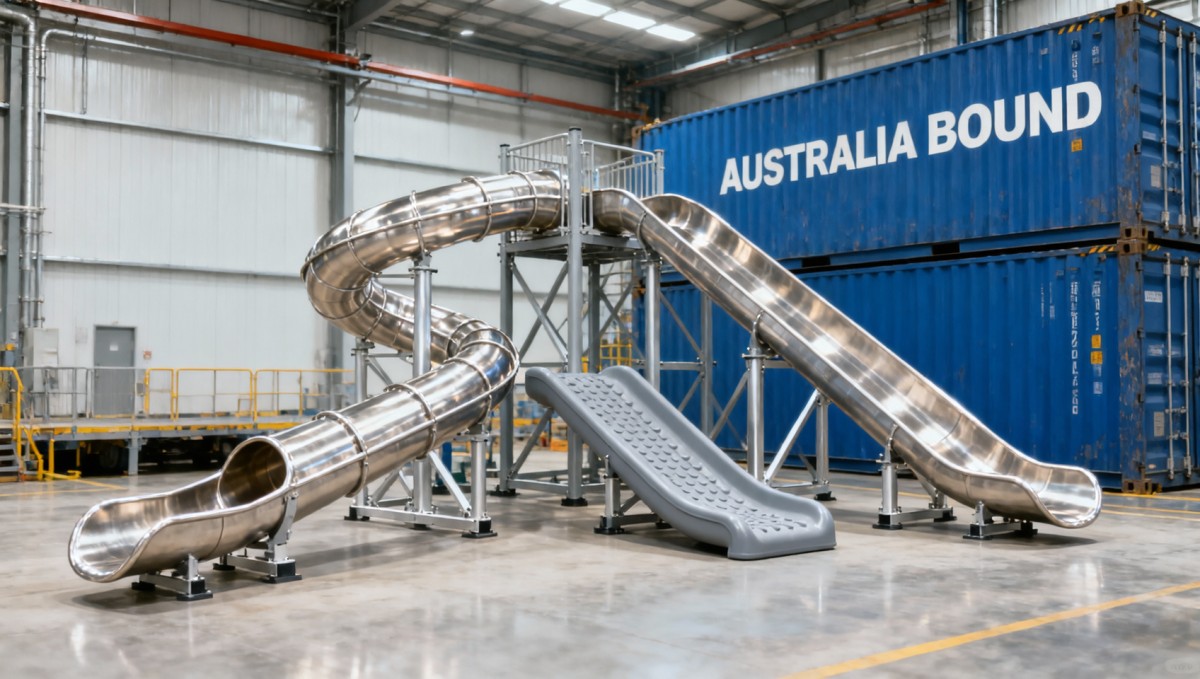
The Australian Competition and Consumer Commission (ACCC) announced on 24 May 2026 the commencement of the first sunset review of anti-dumping duties imposed in 2022 on indoor playground slide components originating from China. The review is scheduled to conclude with a formal hearing on 15 July 2026. Preliminary findings indicate that, if the original determination is upheld, the applicable anti-dumping duty rate may rise from the current 24.1% to 28.7%. This adjustment would affect approximately AUD 420 million in annual exports of these products from China to Australia.
Industries Affected
Direct exporting enterprises: Chinese companies that ship slide components directly to Australian importers or distributors face immediate cost pressure. A 4.6-percentage-point tariff increase would raise landed costs, compressing profit margins — particularly for firms operating on thin margins or competing in price-sensitive segments of the Australian commercial playground market.
Raw material procurement enterprises: Suppliers of aluminum extrusions, HDPE sheeting, and stainless-steel fasteners used in slide fabrication may see downstream order volatility. While not subject to duties themselves, their customers’ export uncertainty may delay purchasing decisions or trigger renegotiation of volume commitments and payment terms.
Contract manufacturing enterprises: OEM/ODM factories producing under private labels for Australian brands could experience margin erosion if brand owners resist absorbing higher tariffs and instead demand cost concessions. These manufacturers often lack pricing power in bilateral negotiations and may absorb part of the duty increase unless contractual terms explicitly allocate tariff risk.
Supply chain service providers: Freight forwarders, customs brokers, and trade compliance consultants serving this product category are likely to see increased demand for tariff classification verification, origin documentation support, and post-entry audit readiness — especially as importers seek to validate whether alternative supply routes (e.g., via third countries) remain viable under current rules of origin.
Key Focus Areas and Recommended Actions
Verify product scope and HS code alignment
Enterprises must confirm whether their specific slide component designs fall within the ACCC’s defined scope — notably whether modular, non-integrated parts (e.g., curved rails, transition plates, or mounting brackets) are captured alongside fully assembled slides. Misclassification risks triggering penalties or retrospective duty assessments.
Assess eligibility for exemption or duty drawback mechanisms
Although Australia does not operate a general duty drawback scheme for anti-dumping duties, exporters should examine whether certain end-use applications (e.g., components supplied to Australian government-funded early childhood education facilities) qualify for concessional treatment under existing public procurement frameworks.
Prepare submissions for the 15 July 2026 hearing
Interested parties — including exporters, Australian importers, and industry associations — may file factual submissions by the ACCC’s deadline (expected late June 2026). Evidence on changed market conditions, cost structures, or evidence of non-injury since 2022 will carry weight; generic arguments without data-backed analysis are unlikely to influence the outcome.
Editorial Perspective / Industry Observation
Analysis shows this review reflects a broader tightening in Australia’s trade enforcement posture — not merely a procedural formality. Unlike earlier investigations, the ACCC’s preliminary statement cites ‘increased import volumes at lower average unit values’ since 2022 as a key factor, suggesting heightened sensitivity to pricing trends even in niche B2B product categories. Observably, the timing coincides with Australia’s national strategy to strengthen domestic early childhood infrastructure, which may unintentionally amplify scrutiny on imported play equipment inputs. From an industry perspective, the 28.7% proposed rate appears calibrated to offset perceived cost advantages rather than reflect full injury calculations — making it more of a policy signal than a strictly economic threshold.
Conclusion
This sunset review underscores how long-standing trade measures can evolve into structural cost factors — especially in capital-intensive, low-volume industrial subsectors like custom playground component manufacturing. For Chinese exporters, the outcome will test not only competitiveness but also adaptability in regulatory engagement. A sustained duty increase would likely accelerate regional diversification efforts among Australian buyers — though such shifts take time and depend heavily on certification pathways and lead-time reliability, not just price.
Source Attribution
Official notice published by the Australian Competition and Consumer Commission (ACCC), Notice No. ACCC/DR/2026/0524 (24 May 2026); referenced anti-dumping measure: AD2022/017. Further updates — including submission deadlines, hearing agenda, and final determination — are expected on the ACCC website. Continued monitoring is advised for changes to the Product Stewardship for Children’s Play Equipment voluntary code, which may indirectly influence import compliance expectations beyond tariff rules.
Search News
Hot Articles
- Fashion & Gem JewelryThermal Diamond Testers: How They Work and When They Can Misidentify StonesOct 07, 2026
- Commercial KitchenWhat Is Driving Demand for Commercial Hospitality Projects Across the GCC?Oct 06, 2026
- Hotel Room AmenitiesHow to Select Hotel Hair Dryers That Balance Guest Safety, Durability, and CostOct 05, 2026
Popular Tags
Need ExpertConsultation?
Connect with our specialized leisureengineering team for procurementstrategies.
Recommended News
 Sep 29, 2026Poured Playground Safety Surfacing: How to Specify Thickness for Fall HeightsPoured playground safety surfacing: learn how to specify tested thickness by fall height, ASTM standards, substrate conditions, accessibility, and field verification.● Theme Park Strategist
 Sep 27, 2026Custom Trampoline Park Equipment: Planning Capacity, Safety, and LayoutCustom trampoline park equipment for safer capacity, smooth guest flow, and efficient layouts. Explore practical planning insights for a high-performing park.● Theme Park Strategist
 Aug 30, 2026Entertainment Venue Master Planning: How to Balance Capacity, Flow, and RevenueEntertainment venue development master planning: balance capacity, guest flow, and revenue with practical strategies for resilient, high-performing venues.● Theme Park Strategist
 Sep 07, 2026What Should Buyers Do When a Supplier Delivers Non-Compliant Products?What to do if a supplier delivers non-compliant commercial products: contain risks, document evidence, protect your project, and secure the right remedy.● Theme Park Strategist
 Sep 02, 2026Waterpark Capacity Management: Balancing Queue Times, Safety, and Guest ThroughputWaterpark capacity management strategies to reduce queue times, protect safety, optimize guest throughput, and build a smoother, more profitable park operation.● Theme Park Strategist
 Sep 01, 2026ASTM F2075 Explained: Testing Engineered Wood Fiber for Playground Impact SafetyASTM F2075 explained: learn how engineered wood fiber supports playground impact safety, smarter sourcing, compliance documentation, and reliable maintenance planning.● Theme Park Strategist
 Aug 24, 2026How to Evaluate an Indoor Ninja Warrior Course Supplier in Europe?indoor ninja warrior course Europe supplier guide: learn how to assess safety, EN compliance, engineering, installation, and maintenance support before you choose.● Theme Park Strategist
 Aug 20, 2026How to Choose Modular Indoor Play Equipment for Different Venue Sizes and Age GroupsModular indoor play equipment buying guide: learn how to match venue size, ceiling height, traffic flow, and age groups to create safer, smarter, and more profitable play spaces.● Theme Park Strategist
 Aug 14, 2026POB Push Lifts Overseas Pre-Registrations 45.74%POB boosts overseas pre-registrations for the 2026 China Sport Show by 45.74%, signaling stronger global buyer interest and smarter sourcing opportunities in sports manufacturing.● Theme Park Strategist
 Aug 02, 2026What to Check Before Buying Thick Gymnastic Mats Wholesale for Schools and GymsThick gymnastic mats wholesale buying guide for schools and gyms: learn how to check foam, cover durability, safety documents, samples, and true long-term value before placing a bulk order.● Theme Park Strategist
 Jul 28, 2026How to Design Inclusive Sensory Play Areas for Different Age Groups and NeedsInclusive sensory play starts with smart zoning, age planning, accessibility, and acoustics. Discover practical design tips to create safer, engaging spaces that truly work.● Theme Park Strategist
 Jul 26, 2026How to Evaluate a Bowling Alley Equipment Factory Before Requesting a QuoteBowling alley equipment factory evaluation starts before price. Learn how to check manufacturing scope, engineering, compliance, spare parts, and installation support to avoid costly sourcing mistakes.● Theme Park Strategist
 Jul 16, 2026EN 1176:2026 Takes Effect for Indoor PlaygroundsEN 1176:2026 takes effect for indoor playgrounds in the EU, making conformity assessment mandatory. Learn how this impacts certification, customs clearance, suppliers, and market access.● Theme Park Strategist
 Jul 15, 2026CPSC Sets New ASTM Impact Test for Indoor Playground Metal PartsCPSC sets new ASTM impact test rules for indoor playground metal parts effective Oct. 1, 2026. Learn how the 15kN requirement may affect compliance, testing timelines, and U.S. export delivery.● Theme Park Strategist
 Jul 14, 2026CPSC Tightens Phthalate Limit for Indoor Playground Soft MaterialsCPSC tightens phthalate limits for indoor playground soft materials from Aug 15, 2026. Learn how DIBP control, CBP detention risk, and testing changes impact sourcing, exports, and compliance.● Theme Park Strategist
 Jul 13, 2026Vietnam Tightens IoT Rule for Indoor Playground ImportsVietnam Tightens IoT Rule for Indoor Playground Imports: learn how VNSS-2025 gateway requirements affect exporters, buyers, installers, and delivery timelines before the 2026 deadline.● Theme Park Strategist
 Jul 13, 2026How a Recreational Facility Planning Company Helps Reduce Layout MistakesRecreational facility planning company insights: learn how early layout strategy reduces costly mistakes, improves flow, compliance, and buildability for smoother project delivery.● Theme Park Strategist
 Jul 12, 2026CPSC Halts Imports of Indoor Playground Soft PartsCPSC halts imports of indoor playground soft parts from China under ASTM F3432-26. Learn the compliance risks, testing requirements, and urgent steps importers must take now.● Theme Park Strategist
 Jul 11, 2026CPSC Import Alert Tightens Fire Test Rule for Indoor Playground PaddingCPSC import alert updates indoor playground padding rules to ASTM F3432-26. See how the new fire test affects foam mats, shipments, and U.S. market access.● Theme Park Strategist
 Jul 11, 2026Ice Bumper Cars Bulk Order Checklist for Indoor Parks: Space, Power, and Safety PointsIce bumper cars bulk order guide for indoor parks: learn how to assess space, power, safety, and throughput before buying, so you can avoid costly mistakes and choose the right fleet with confidence.● Theme Park Strategist
 Jul 10, 2026Commercial Playground Equipment for Campuses: Key Safety Standards and Planning TipsCommercial playground equipment for campuses: explore key safety standards, inclusive layout planning, durable materials, and smart procurement tips to avoid costly mistakes.● Theme Park Strategist
 Jul 09, 2026CPSC Recall Escalates Over Phthalates in Indoor Playground PadsCPSC recall escalates over phthalates in indoor playground pads as affected batches exceed CPSIA limits. Learn the risks, supply chain impact, and what buyers should monitor now.● Theme Park Strategist
 Jul 07, 2026How to Choose Ice Skating Rink Equipment in Europe: Key Systems, Standards, and Budget Factorsice skating rink equipment Europe guide: compare refrigeration, rink floors, boards, EU compliance, and total budget factors to choose a safer, more efficient commercial rink solution.● Theme Park Strategist
 Jul 06, 2026CPSC Flags New Flame Test for Indoor Playground PaddingCPSC flags a new flame test for indoor playground padding under ASTM F1487-23b. Learn how this urgent compliance alert affects materials, testing, imports, and U.S. market access.● Theme Park Strategist