TUV Adds Wi-Fi 7 EMC Test for Stage Lighting
On October 1, 2026, a new compliance point takes effect for stage lighting systems and truss controllers sold into the EU market. According to a notice issued by TUV Rheinland on June 28, 2026, these products will need to pass the newly added Wi-Fi 7 radio-frequency immunity test in the 6 GHz band under EN 55032:2024 Class B. For manufacturers, exporters, certification teams, and buyers tied to EU deliveries, the immediate issue is not only the new test item itself, but also the fact that existing certificates cannot be extended and products must be resubmitted for testing.
What the update clearly changes
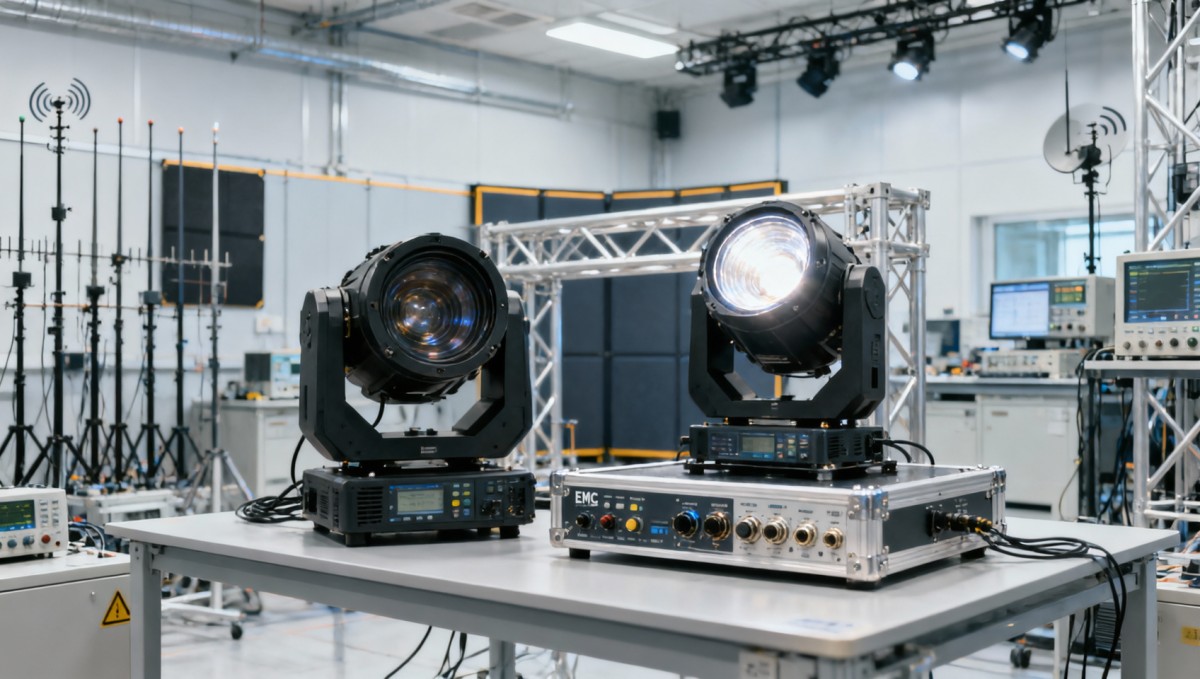
The confirmed facts are limited but operationally important. TUV Rheinland announced on June 28, 2026 that from October 1, 2026 onward, all stage lighting systems and truss structure controllers sold to the EU must meet the newly added Wi-Fi 7, 6 GHz radio-frequency immunity requirement within EN 55032:2024 Class B. The notice also states that existing certificates are not eligible for extension, and that new samples must be submitted for testing.
No additional implementation details, exemptions, or transition arrangements were provided in the input. Based on the confirmed information alone, the regulatory effect is tied to EU-bound products in the named categories and to retesting rather than simple certificate renewal.
Where pressure may appear across the supply chain
For product makers shipping to the EU
From an industry perspective, manufacturers of stage lighting systems and truss controllers are the first group likely to feel the impact. The reason is direct: products intended for the EU market will need to satisfy an added EMC-related immunity requirement, and previously issued certificates cannot simply be rolled forward. The practical pressure point is the certification cycle, especially where existing product lines are still shipping under certificates that will not be extendable.
For exporters and trade-focused businesses
Companies handling EU sales, order fulfillment, and export documentation may be affected at the commercial interface. Analysis shows that the key risk area is shipment readiness: if a product category falls within the stated scope, the business will need to verify whether current certification remains usable for ongoing deliveries after the effective date. What deserves closer attention is coordination between sales commitments, certification status, and customer-facing compliance documents.
For procurement and project buyers
Buyers sourcing stage lighting systems or truss controllers for EU deployment may also need to adjust their review process. The reason is not a confirmed market disruption, but a clear documentation change. Observably, the main business checkpoint will be supplier qualification, certificate validity, and whether retesting has already been completed for the specific models being ordered.
For testing and supply-chain coordination teams
Service providers and internal teams involved in sampling, scheduling, and delivery planning may see added workload because the notice requires resubmission for testing rather than certificate extension. The impact is most likely to appear in sample preparation, test booking, document updates, and communication across engineering, compliance, logistics, and customer account functions.
What companies should watch now
Check which EU-bound models fall within scope
The first practical task is to identify which stage lighting systems and truss controllers are sold into the EU and therefore need to meet the updated requirement from October 1, 2026. This is a product-and-market mapping issue, not a broad policy exercise.
Separate certificate status from shipment plans
The notice makes one point unusually clear: existing certificates cannot be extended. Companies should therefore distinguish between products that still require fresh sample submission and products that may already be in a new testing cycle. This matters for delivery commitments, quotation validity, and customer documentation.
Prepare for retesting-related lead time
Analysis shows that the operational issue is not only technical compliance but also timing. Because the pathway is resubmission rather than administrative renewal, teams should pay close attention to sample preparation, internal approval flow, and any impact on order schedules tied to the EU market.
Track further wording and implementation detail
What deserves closer attention is the difference between the confirmed headline rule and any later clarification on execution. The input confirms the effective date, scope, test addition, and non-extendable status of existing certificates, but it does not provide more granular procedural detail. Businesses should continue to monitor whether later official wording adds interpretation relevant to product classification, documentation, or test handling.
Why this reads as more than a routine certificate update
Analysis shows that this development is best understood as a concrete compliance change with immediate commercial relevance, rather than as a distant policy signal. The reason is straightforward: an effective date has been stated, a specific test requirement has been named, and existing certificates are explicitly excluded from extension.
At the same time, it would be premature to treat the notice as proof of broader market outcomes that have not yet been verified. Observably, the more useful interpretation for now is that this is a targeted certification update with direct implications for EU market access in the affected product categories. Whether it later signals a wider shift in EMC expectations for adjacent products remains something to watch, not something that can be asserted as fact from the current input alone.
How this update is best understood at this stage
At this stage, the industry significance lies in the combination of a new Wi-Fi 7, 6 GHz immunity requirement and the loss of certificate extension as an option for existing approvals. That changes the compliance workload for affected EU-bound products in a practical way.
It is more appropriate to understand this as an actionable near-term regulatory development with possible longer-term signaling value. The confirmed result today is narrow but important: companies tied to EU sales of stage lighting systems and truss controllers need to review certification status, retesting needs, and delivery planning against the October 1, 2026 deadline.
Basis of this article and points for continued verification
This article is based on the user-provided news title, event date, and event summary concerning TUV Rheinland's update affecting EMC certification requirements for stage lighting systems and truss controllers sold into the EU.
For this type of industry update, source categories usually worth checking include official notices, company announcements, industry association updates, standard-related documents, and reporting from authoritative trade media. A specific official source link was not provided in the input, so the exact source document should continue to be verified. Follow-up attention should focus on any later official clarification about scope, implementation handling, and practical retesting requirements.
Search News
Hot Articles
- Outdoor RidesHow to Select Leisure Park Equipment for Safe, High-Throughput Visitor AreasOct 03, 2026
- Fashion & Gem JewelryDiamond Tester Wholesale: How to Vet Accuracy, Calibration, and MOQ Before OrderingOct 02, 2026
- Hotel Room AmenitiesHow Hotels Can Choose Amenity Bottles That Balance Brand Image and Refill CostsOct 01, 2026
Popular Tags
Need ExpertConsultation?
Connect with our specialized leisureengineering team for procurementstrategies.
Recommended News
 Jul 13, 2026Stage Riser Platforms Explained: Types, Load Ratings, and Best-Fit Event UsesStage riser platforms explained clearly: compare types, load ratings, safety factors, and best-fit event uses to choose smarter, safer solutions for conferences, schools, hotels, and live shows.● Pro Audio Engineer
 Jul 09, 2026SASO Fast Track Cuts Stage Lighting Export Lead TimeSASO Fast Track cuts stage lighting export lead time from 45 days to 12 working days. Learn how Saudi certification changes affect truss suppliers, OEMs, buyers, and shipment planning.● Pro Audio Engineer
 Jul 08, 2026SASO Updates Stage Lighting Label Rules for LED Moving HeadsSASO updates stage lighting label rules for LED moving heads, requiring three-level energy efficiency values and bilingual labels. See what exporters and buyers must do before October 2026.● Pro Audio Engineer
 Jul 07, 2026SASO Adds Energy Label Rules for Stage Lighting ImportsSASO Adds Energy Label Rules for Stage Lighting Imports: learn which stage lighting products now need Arabic energy labels and SASO-recognized test reports before Sept. 1, 2026.● Pro Audio Engineer
 Jul 06, 2026Saudi SASO Sets A+ Rule for Stage LED LightingSaudi SASO sets A+ rule for stage LED lighting from Oct 1, 2026. Learn how the new SASO label and IEC 62722-2-1:2026 standard impact compliance, shipping, and market access.● Pro Audio Engineer
 Jul 04, 2026SASO Tightens RF Test Rules for Wireless Stage ControlsSASO tightens RF test rules for wireless stage controls in Saudi Arabia. Learn how the new IEC 62368-3 requirement impacts stage lighting exports, compliance, and delivery.● Pro Audio Engineer
 Jul 03, 2026Saudi SASO Adds RF Approval Rule for Stage LightingSaudi SASO adds RF approval rule for stage lighting. Learn how the new SASO RoHS+RF certification affects wireless lighting, truss control exports, retail access, and project delivery in Saudi Arabia.● Pro Audio Engineer
 Jul 02, 2026SASO Starts EMC Pilot for Smart Stage Lighting in SaudiSASO starts an EMC pilot for smart stage lighting in Saudi Arabia, impacting dimming controllers, cloud access, and project compliance. See what suppliers and integrators must do now.● Pro Audio Engineer
 Jul 01, 2026Saudi SASO Tightens UV-C Limits for Stage LightingSaudi SASO tightens UV-C limits for stage lighting and truss products. Learn the 2026 SASO IEC 62471 update, retesting deadline, customs risks, and how to protect Saudi shipments.● Pro Audio Engineer
 Jun 30, 2026EN 62471:2026 Adds UV-C Limit for Stage LightingEN 62471:2026 adds a UV-C limit for stage lighting, impacting LED moving heads, laser fixtures, and truss lighting. Learn what changes before Dec 1, 2026.● Pro Audio Engineer
 Jun 29, 2026TUV Adds Wi-Fi 7 EMC Test for Stage LightingTUV Adds Wi-Fi 7 EMC Test for Stage Lighting sold into the EU. Learn the Oct 1, 2026 deadline, retesting rules, and how EN 55032:2024 impacts certificates, shipments, and compliance planning.● Pro Audio Engineer
 Jun 25, 2026LED PAR Cans Wholesale: What to Compare in Wattage, Beam Angle, and DMX ControlLED par cans wholesale buyers should compare wattage, beam angle, and DMX control before requesting quotes. Learn how to avoid costly mismatches and choose fixtures that fit each venue.● Pro Audio Engineer
 Jun 16, 2026Stage Lighting Equipment List for Small Venues: What You Need and How to Plan ItStage lighting equipment for small venues: discover a practical equipment list, planning tips, and smart setup ideas to improve performance, flexibility, and long-term value.● Pro Audio Engineer
 Jun 12, 2026Vietnam Tightens EMC Rules for Stage Lighting LEDsVietnam Tightens EMC Rules for Stage Lighting LEDs: learn how QCVN 139:2026 impacts imports, testing, sourcing, and delivery planning for stage lighting businesses.● Pro Audio Engineer
 Jun 11, 2026LPGA Shanghai Debut Lifts Stage Lighting OrdersStage lighting and truss demand is rising as LPGA Shanghai debuts in 2026. Learn how tighter delivery windows, compliance, and project execution are reshaping global orders.● Pro Audio Engineer
 Jun 04, 2026UK EPR Rules Expand to Stage Lighting and TrussUK EPR rules for stage lighting and truss expand in Q3 2026. Learn how UKCA-linked registration, reporting, recycling fees, and material documentation will affect compliance and market access.● Pro Audio Engineer
 Jun 03, 2026UK EPR Fee Hits Stage Truss Textiles in Q3 2026UK EPR Fee for stage truss textiles starts in Q3 2026. Learn what new recycling charges and UKCA-Flame rules mean for lighting and truss suppliers.● Pro Audio Engineer
 Jun 02, 2026UK EPR Fee Hits Stage Lighting & TrussUK EPR Fee Hits Stage Lighting & Truss products with textile components in 2026. Learn compliance risks, BOM updates, and cost impacts for UK exporters.● Pro Audio Engineer
 May 25, 2026China's Carbon Fiber Truss Strength Up 32% at 2026 Sports ExpoCarbon fiber truss strength up 32% at 2026 Sports Expo—UL 1598 certified, CE+UL ready. Discover how China’s stage infrastructure is winning European music festivals & global tenders.● Pro Audio Engineer
 May 23, 2026Vietnam Mandates Bilingual MSDS for Stage Lighting & Truss ImportsVietnam mandates bilingual MSDS (Vietnamese & Chinese) for stage lighting and truss imports — ensure compliance by July 1, 2026 to avoid shipment rejection.● Pro Audio Engineer
 May 20, 20263 Chinese Stage Lighting Firms Join LA28 Olympic Supplier List3 Chinese stage lighting firms join LA28 Olympic supplier list — showcasing ISO 20121 & UL 1574 compliance, sustainability leadership, and global credibility in live-event infrastructure.● Pro Audio Engineer
 May 20, 2026What matters most when choosing lighting stands crank up?Lighting stands crank up: learn what really matters beyond height—load capacity, crank safety, stability, compatibility, and serviceability—to choose the right stand with confidence.● Pro Audio Engineer
 May 19, 20263 Chinese Stage Lighting Firms Join IOC’s 2028 LA Olympics Supplier ListChinese stage lighting firms join IOC's 2028 LA Olympics supplier list — a major validation for OEM/ODM exporters and tech integrators in global sports & entertainment lighting.● Pro Audio Engineer
 May 19, 2026When are chain hoists for stage the better rigging choiceChain hoists for stage are the better rigging choice when you need precise lifting, compact headroom use, and reliable repeat performance. See key use cases and buyer tips.● Pro Audio Engineer