RCEP Fast-Track Clears Outdoor Rides to Vietnam in 48 Hours
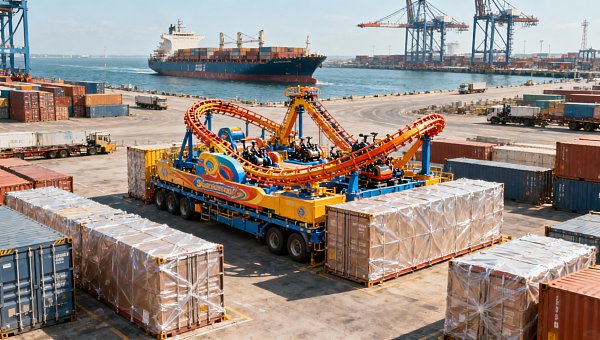
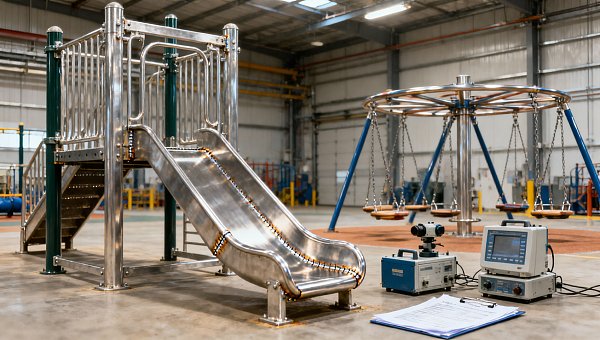
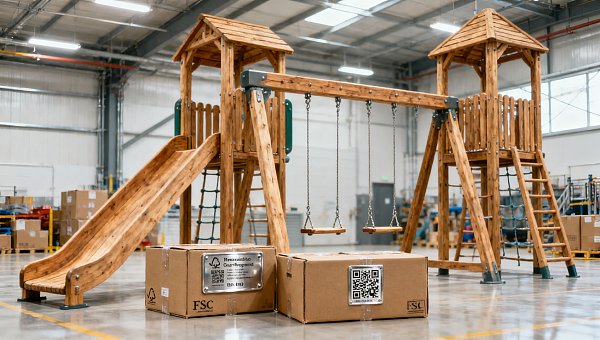
On June 28, 2026, a new customs fast-track arrangement began operating at the RCEP ASEAN smart warehouse in Ho Chi Minh City’s Linh Trung bonded logistics center for Outdoor Rides exports to Vietnam. The change matters because it ties faster clearance to a defined compliance condition: complete amusement ride units and modular components that meet AS/NZS 4486.1:2025 can move through a compressed document review and on-site inspection process, reducing average clearance time from seven days to within 48 hours. For exporters, buyers, logistics providers, and compliance teams, this is less a routine logistics update than a concrete signal that standards alignment is now directly affecting delivery timing.

A Rule Change Expressed Through Clearance Practice
According to the provided event summary, the dedicated green channel for Outdoor Rides officially started on June 28, 2026 at the RCEP ASEAN smart warehouse located in the Linh Trung bonded logistics center in Ho Chi Minh City.
The arrangement applies to complete amusement ride equipment and modular components that comply with AS/NZS 4486.1:2025.
The operational change consists of compression in both document review and on-site inspection. Based on the provided information, average customs clearance time has been reduced from seven days to within 48 hours.
The same summary states that, in its first week of operation, the channel processed more than $23 million in export value from China.
Where the Immediate Pressure Points Shift
Export scheduling now depends more heavily on standards readiness
From an industry perspective, exporters of complete ride systems and modular assemblies are likely to feel the impact first. The reason is straightforward: the time advantage is linked to whether the shipment falls within the qualifying scope tied to AS/NZS 4486.1:2025. In practice, this shifts attention toward how technical files, product descriptions, and shipment classification are prepared before dispatch. What deserves closer attention is whether internal export documentation is consistent enough to support fast-track handling without creating avoidable review friction.
Procurement and project buyers may revise delivery assumptions
Buyers and project procurement teams may also be affected because shorter customs timelines can change how delivery windows are planned for ride installations or phased component intake. Analysis shows that the main issue is not simply speed, but predictability. Where procurement schedules were previously built around a longer customs buffer, teams may now reassess lead-time assumptions, provided the shipment can meet the stated standard condition. That makes supplier qualification, documentation completeness, and shipment scope more relevant to procurement planning than before.
Logistics and customs service providers face a tighter documentation threshold
Supply chain service providers, including forwarding and customs support teams, are likely to see the operational effect in pre-clearance preparation. The compression of document review and site inspection suggests that paperwork quality and file consistency may carry greater weight in avoiding delay. Observably, this increases the need to align cargo descriptions, supporting technical materials, and shipment packaging logic with the qualifying product category, especially where complete equipment and modular components are handled under the same project flow.
Compliance and testing-linked functions become more visible in delivery execution
Certification-related teams and testing support functions may not control customs processing directly, but they influence whether a shipment can credibly support its compliance position. From an industry perspective, the key impact is that standards conformity is no longer just a market-access issue in the abstract; it now appears linked to customs efficiency in an operational setting. Companies involved in quality, technical review, and compliance document management therefore need to pay closer attention to how evidence of conformity is prepared and presented across export files.
What Companies Should Watch in the Next Stage
Check whether technical evidence is organized for practical customs use
Analysis shows that meeting a standard and demonstrating that status in a customs-facing workflow are not always the same thing. Companies shipping eligible Outdoor Rides products should review whether technical documents, test-related materials, and product specifications are organized in a form that can support accelerated review, rather than only satisfying internal or commercial requirements.
Monitor how execution language develops around qualifying scope
What deserves closer attention is how the qualifying scope is applied in practice to complete units versus modular components. The provided information confirms eligibility for both categories when they comply with AS/NZS 4486.1:2025, but it does not provide more detailed operational definitions. That means exporters and buyers should continue watching for further execution language or handling practice that could affect shipment planning.
Reassess lead times without assuming every shipment will move identically
Observably, a reduction from seven days to within 48 hours can influence production release, booking, and installation planning. At the same time, companies should avoid treating the announced timing as an unconditional result for every case. A more practical approach is to update lead-time models cautiously and keep room for document review, inspection handling, and transaction-specific variation until broader execution feedback becomes clearer.
Pay closer attention to after-sales and traceability records
From an industry perspective, faster border movement can compress the time available to correct inconsistencies after shipment. That makes traceability records, component identification, and post-delivery support documentation more important, particularly for modular products that may later need service coordination or technical verification in the destination market.
Why This Looks More Like an Execution Signal Than a Broad Policy Rewrite
Analysis shows that this update is best understood as an execution-level trade facilitation signal tied to a specific product category, location, and compliance condition, rather than as a sweeping rewrite of cross-border rules for the entire sector. The combination of a dedicated green channel, compressed document review, and compressed on-site inspection indicates that customs handling is being operationally differentiated for qualifying shipments.
At the same time, it is still appropriate to treat this as a development that requires follow-up observation. The provided information confirms launch, scope, timing improvement, and first-week processed value, but it does not set out fuller detail on subsequent implementation practice, dispute handling, or broader replication. For that reason, market participants should read the event as a concrete landed change with further execution details still worth tracking.
How the Market Is Most Likely to Read This Update Now
At this stage, the most reasonable conclusion is that the new channel represents a real operational change for qualifying Outdoor Rides exports to Vietnam, with direct implications for customs timing, document preparation, and standards-linked shipment readiness. It should not yet be overstated as a universal change across all products or all trade flows. More appropriately, it can be understood as a practical sign that compliance status, customs handling, and delivery planning are becoming more tightly connected in this trade lane.
Basis of This Article and What Still Needs Verification
This article is based on the user-provided news title, event date, and event summary. For developments of this type, relevant source categories would typically include official notices, releases from customs or trade authorities, information from regulatory bodies, industry association updates, standards organization documents, and reporting by established business or trade media.
No specific official source link was provided in the input, so the official source trail remains to be verified on an ongoing basis. Observably, the points that still deserve continued monitoring include any further implementation detail, compliance interpretation around AS/NZS 4486.1:2025, changes in tender or procurement documentation, market feedback from participating companies, and evidence of how consistently the fast-track process is applied in practice.
Search News
Hot Articles
- Restaurant FurnitureFast-Casual Restaurant Interiors: Design Choices That Improve Speed and Guest FlowOct 04, 2026
- Outdoor RidesHow to Select Leisure Park Equipment for Safe, High-Throughput Visitor AreasOct 03, 2026
- Fashion & Gem JewelryDiamond Tester Wholesale: How to Vet Accuracy, Calibration, and MOQ Before OrderingOct 02, 2026
Popular Tags
Need ExpertConsultation?
Connect with our specialized leisureengineering team for procurementstrategies.
Recommended News
 Oct 03, 2026How to Select Leisure Park Equipment for Safe, High-Throughput Visitor AreasLeisure park equipment selection guide for safe, high-throughput venues—explore capacity, supervision, durability, accessibility, and supplier criteria.● Theme Park Strategist
 Sep 18, 2026What Drives Animatronic Dinosaur Manufacturer Prices for Theme Park Projects?Animatronic dinosaurs manufacturer price guide: compare motion, materials, controls, installation, and lifecycle costs to plan a durable theme park attraction.● Theme Park Strategist
 Sep 06, 2026Do Amusement Ride Safety Compliance Requirements Change Every Year?Do amusement safety compliance requirements change annually? Learn what really changes, from standards and inspections to permits, upgrades, and local approvals.● Theme Park Strategist
 Sep 02, 2026How Long Does It Take to Receive Full Safety Documents From an OEM?How long does it take to get full safety documentation from OEM partners? Discover realistic timelines, common delays, and practical steps to secure compliant files faster.● Theme Park Strategist
 Sep 03, 2026Designing Adventure Park Safety Systems for Zip Lines, Ropes Courses, and Daily InspectionsAdventure park safety systems: learn how to design safer zip lines and ropes courses with daily inspections, defect controls, rescue readiness, and staff training.● Theme Park Strategist
 Aug 22, 2026What to Look for When Choosing Three Seat Jet Skis for Rental or Resort UseThree seat jet skis for rental or resort use should balance stability, safety, maintenance, and guest comfort. Learn how to choose models that boost uptime and guest satisfaction.● Theme Park Strategist
 Aug 17, 2026What Parts Matter Most in a Roller Coaster and How Do They Affect Ride Safety?Roller coaster parts determine ride safety more than most riders realize. Explore how tracks, restraints, brakes, wheels, and control systems work together to protect every ride.● Theme Park Strategist
 Aug 15, 20262026 China Sports Expo Sees 45.74% More Overseas Pre-registered Buyers as POB Expands Procurement Matching2026 China Sports Expo boosts overseas pre-registered buyers by 45.74% as POB expands procurement matching for fitness, outdoor, and venue suppliers.● Theme Park Strategist
 Aug 14, 2026What Should Buyers Check Before Choosing a Flying Chair Ride Exporter?Flying chair ride exporter buyers should check safety, structure, export support, and spare parts before purchase to reduce risk and choose a reliable supplier.● Theme Park Strategist
 Aug 04, 2026EU Issues EN 1176-1:2026 for Playground SafetyEU Issues EN 1176-1:2026 for Playground Safety: learn how the new standard impacts Outdoor Rides, CE certification, inventory checks, and EU compliance before March 2027.● Theme Park Strategist
 Aug 03, 2026CPSC Adopts ASTM F1487-26 for Imported Outdoor RidesOutdoor Rides face a major U.S. compliance shift as CPSC adopts ASTM F1487-26. Learn the new certification, testing, and customs risks before November 1, 2026.● Theme Park Strategist
 Jul 26, 2026Revised EN 1176:2026 Triggers Re-Certification for Outdoor RidesOutdoor Rides face immediate EN 1176:2026 re-certification for new CE applications. Learn how testing, documentation, and EU market access rules now affect exports and delivery plans.● Theme Park Strategist
 Jul 21, 2026CPSC Recall Flags Structural Risk in Outdoor RidesCPSC recall flags structural risk in outdoor rides: learn how ASTM F1487-23 failures affect importers, distributors, and compliance teams across the U.S., Canada, and Australia.● Theme Park Strategist
 Jul 19, 2026How to Choose Outdoor Fitness Equipment for Parks Based on Users, Space, and BudgetOutdoor fitness equipment for parks: learn how to choose the right mix based on users, space, and budget to improve safety, usage, and long-term value.● Theme Park Strategist
 Jul 15, 2026Ocean Freight Spike Pressures Outdoor Rides ExportsOcean Freight Spike Pressures Outdoor Rides Exports as Shanghai-Rotterdam rates surge 42%. See how rising freight costs, delays, and rerouting risks could reshape Europe-bound delivery plans.● Theme Park Strategist
 Jul 14, 2026EN 1176 Revision Takes Effect for Outdoor Ride Weld TestingEN 1176 revision takes effect for outdoor ride weld testing from Sept 1, 2026. Learn ISO 5817 level B, third-party NDT report rules, and key EU compliance steps.● Theme Park Strategist
 Jul 12, 2026Vietnam Requires AI Anti-Collision Systems for Imported Outdoor RidesVietnam Requires AI Anti-Collision Systems for Imported Outdoor Rides from Sept. 15, 2026. Learn compliance rules, VAST certification needs, and how importers can avoid delays.● Theme Park Strategist
 Jul 11, 2026Vietnam Tightens Rules for Imported Outdoor RidesVietnam Tightens Rules for Imported Outdoor Rides: learn how Vietnam’s 2026 compliance update adds AI anti-collision, Vietnamese logs, and local maintenance duties for importers and manufacturers.● Theme Park Strategist
 Jul 09, 2026How to Evaluate a Lazy River Equipment Supplier for Safety, Flow Design, and MaintenanceLazy river equipment supplier selection affects safety, flow design, and maintenance costs. Learn what to compare, what to ask, and how to choose a reliable partner.● Theme Park Strategist
 Jul 08, 2026RCEP Update Cuts ASEAN Tariffs to Zero for Outdoor RidesRCEP update cuts ASEAN tariffs to zero for outdoor rides from China. Learn how FSC-CoC, PEFC traceability, and e-CO compliance affect exports, sourcing, and buyer decisions.● Theme Park Strategist
 Jul 07, 2026RCEP Guide Adds Dual Wood Traceability for Outdoor RidesOutdoor Rides exporters face a new RCEP traceability rule: dual FSC-CoC and PEFC-STS 2023 codes for wood components. See what changes before Oct. 1, 2026.● Theme Park Strategist
 Jul 06, 2026Vietnam Tightens RCEP Rules for Wooden Ride PartsVietnam Tightens RCEP Rules for Wooden Ride Parts: learn how FSC Chain-of-Custody and QR code requirements now affect outdoor rides, RCEP imports, and shipment compliance.● Theme Park Strategist
 Jul 06, 2026How to Evaluate a Bumper Cars on Ice Manufacturer for Safety, Capacity, and ROIBumper cars on ice manufacturer selection starts with safety, capacity, and ROI. Learn how to compare suppliers, reduce risk, and choose a partner built for long-term commercial success.● Theme Park Strategist
 Jul 04, 2026Electric Drift Bumper Cars vs Traditional Bumper Cars: Which Fits Your Venue Better?Electric drift bumper cars or traditional bumper cars? Compare installation, safety, maintenance, guest appeal, and ROI to choose the best fit for your venue.● Theme Park Strategist