CPSC Adds Thermal Runaway Test to Arcade and VR Safety Guide
On September 1, 2026, the updated U.S. CPSC safety guidance for arcade and VR machines becomes a practical compliance threshold for products entering the U.S. market. The change matters because it adds a mandatory Thermal Runaway Propagation test for lithium battery-powered equipment and requires the report to come from a CPSC-recognized laboratory, which directly affects product certification preparation, export delivery planning, procurement review, and market entry decisions for manufacturers, exporters, buyers, and testing-related service providers.
What the updated guidance now requires
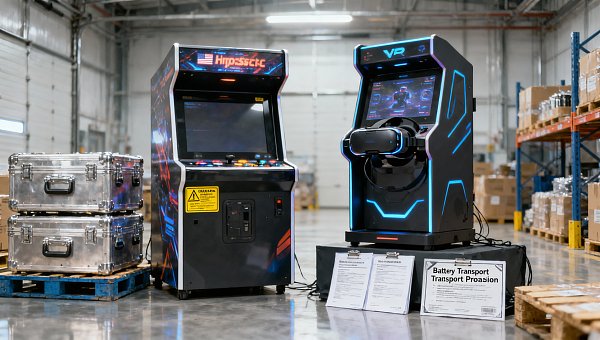
The confirmed facts are limited but clear. The U.S. Consumer Product Safety Commission (CPSC) updated its Arcade & VR Machines safety enforcement guidance on June 28, 2026. The update adds a mandatory Thermal Runaway Propagation test for lithium battery-powered devices. It applies to arcade and VR equipment entering the U.S. market after September 1, 2026. The required test report must be issued by a CPSC-recognized laboratory, and IEC 62133 cannot be used as a substitute for this requirement.
Where the operational pressure is likely to appear first
For manufacturers shipping battery-powered arcade or VR equipment
From an industry perspective, this change may affect the compliance path before goods are released for export or prepared for U.S. market entry. The immediate issue is not only product design, but also whether existing test documentation matches the new entry requirement. Companies producing lithium battery-powered arcade or VR machines should pay closer attention to whether their current technical files, test plans, and product release schedules still align with the post-September 1, 2026 requirement.
For exporters, import-facing suppliers, and trading companies
Analysis shows that trading parties may face added pressure in documentation review and delivery timing. If a shipment relies on prior battery-related test materials that do not include the mandatory Thermal Runaway Propagation report from a CPSC-recognized laboratory, the documentation package may no longer be sufficient for the affected U.S. market entry scenario. What deserves closer attention is the handoff between factory compliance status, export paperwork, and customer acceptance requirements.
For buyers and procurement teams
For procurement functions, the practical impact may appear in supplier qualification and pre-shipment review. Buyers sourcing arcade or VR equipment for the U.S. market may need to confirm earlier in the purchasing cycle whether the product uses lithium battery power and whether the supplier can provide the required report from a CPSC-recognized laboratory. Observably, the rule change may shift part of the compliance check from final delivery review to earlier sourcing and contract preparation stages.
For testing and certification-related service providers
Testing-related service providers may see demand move toward laboratory qualification and report acceptability rather than toward general battery testing alone. Because IEC 62133 is expressly not accepted as a substitute in this case, service discussions may need to focus more narrowly on whether the test route meets the specific CPSC-recognized laboratory requirement described in the updated guidance.
What companies should review now
Recheck whether existing reports still support U.S. market access
Companies should review whether current battery safety documentation for affected products actually covers the newly required Thermal Runaway Propagation test and whether the issuing laboratory meets the CPSC-recognized condition stated in the guidance. This is especially relevant where internal teams have historically relied on broader battery compliance files or prior test packages.
Bring technical documents and commercial documents into the same review cycle
What deserves closer attention is the consistency between test reports, technical descriptions, bid documents, product specifications, and delivery files. Where sales contracts or procurement files refer generally to battery compliance without identifying this updated testing requirement, companies may need to tighten document alignment to avoid later disputes over acceptance or shipment readiness.
Watch timing risks around post-September 1 shipments
Analysis shows that the effective date matters operationally. Products entering the U.S. market after September 1, 2026 fall within the stated scope, so companies should review whether production, testing, and shipment planning leave enough time for compliant documentation. The available facts do not describe detailed enforcement steps, so this should be treated as a timing and readiness review point rather than a confirmed outcome in every transaction.
Follow later wording, interpretation, and market implementation
The current information confirms the requirement itself, but it does not provide fuller detail on implementation practice, supporting document expectations beyond the required report, or how market participants will reflect the change in purchase terms and tender language. Companies should therefore continue tracking official wording, customer compliance requests, and any changes in transaction documents tied to U.S.-bound products.
How this change is best understood at this stage
Observably, this update is more than a general policy signal because it sets a defined requirement, a defined product scope, and a defined timing condition for U.S. market entry. At the same time, it should not be overstated beyond the confirmed facts. It is more appropriate to understand this as an implemented compliance signal with direct entry implications, while the detailed execution path in commercial practice still deserves continued observation.
Why the market is likely to keep watching this closely
From an industry perspective, the significance of this development lies in the shift from general battery safety reliance toward a more specific acceptance condition tied to Thermal Runaway Propagation testing and laboratory recognition. The rule change does not by itself describe every downstream consequence, but it clearly raises the importance of documentation quality, laboratory selection, and shipment readiness for lithium battery-powered arcade and VR equipment headed to the United States. At this stage, the most reasonable reading is that the requirement should be treated as a real market-entry condition, while its day-to-day enforcement rhythm and commercial response still need to be monitored.
Basis of this article and what still needs verification
This article is generated based on the user-provided news title, event date, and event summary. For developments of this kind, relevant source types usually include official regulatory releases, enforcement guidance issued by competent authorities, trade or customs-related notices, industry association updates, standard-setting documents, and reporting by established professional media. A specific official source link was not provided in the input, so that part still requires follow-up verification. Further observation is also needed on later policy detail, certification interpretation, tender document changes, market feedback, and how affected companies implement the requirement in practice.
Search News
Hot Articles
- Restaurant FurnitureFast-Casual Restaurant Interiors: Design Choices That Improve Speed and Guest FlowOct 04, 2026
- Outdoor RidesHow to Select Leisure Park Equipment for Safe, High-Throughput Visitor AreasOct 03, 2026
- Fashion & Gem JewelryDiamond Tester Wholesale: How to Vet Accuracy, Calibration, and MOQ Before OrderingOct 02, 2026
Popular Tags
Need ExpertConsultation?
Connect with our specialized leisureengineering team for procurementstrategies.
Recommended News
 Sep 15, 2026How to Choose Coin-Operated Pool Tables for Bars, Hotels, and Arcade VenuesCoin operated pool tables for bars, hotels, and arcades: compare sizes, payment systems, durability, service access, and revenue potential.● Theme Park Strategist
 Sep 08, 2026What to Look for in a Flight Simulator Chair Manufacturer for Commercial VR CentersChoose a flight simulator chair manufacturer that delivers durable, safe, customizable seating for commercial VR centers. Explore key sourcing criteria now.● Theme Park Strategist
 Aug 25, 2026What to Evaluate Before Buying Commercial Self Service Photo Booths for VenuesCommercial self service photo booths for venues: learn how to evaluate durability, software stability, branding flexibility, support, and total ROI before you buy.● Theme Park Strategist
 Aug 23, 2026How to Evaluate Wholesale Vending Machines for Multi-Location Business DeploymentWholesale vending machines for multi-location deployment require more than low unit cost. Learn how to compare reliability, payments, telemetry, and supplier support to scale smarter.● Theme Park Strategist
 Aug 17, 2026U.S. CPSC Urges Bilingual Warnings for Arcade and VR MachinesU.S. CPSC urges bilingual safety warnings for Arcade & VR Machines—learn what exporters, importers, and distributors must do now to avoid delays and returns.● Theme Park Strategist
 Aug 16, 2026EU Enforces EN IEC 62368-1:2026 Certification for Arcade and VR MachinesEU Enforces EN IEC 62368-1:2026 certification for arcade and VR machines, reshaping EU market access, customs clearance, and compliance planning for exporters and distributors.● Theme Park Strategist
 Aug 13, 2026UFLPA’s new guidelines take effect: Exports of Arcade and VR equipment face full-link labor compliance requirementsUFLPA’s new guide takes effect: Arcade and VR machine exports to the U.S. now face full-chain labor compliance checks. Discover key risks and action steps.● Theme Park Strategist
 Aug 12, 2026EU PPWR takes effect, Arcade and VR packaging incorporate heavy metal and PFAS restrictionsEU PPWR now applies to Arcade and VR packaging, tightening heavy metal and PFAS compliance. Learn how exporters can avoid delays, fines, and customs risks.● Theme Park Strategist
 Aug 11, 2026CPSC Sets Bilingual Labels for Arcade and VR ImportsCPSC bilingual labels for arcade and VR imports become mandatory on October 1, 2026. Learn the new English-Spanish warning rules, customs risks, and key compliance steps now.● Theme Park Strategist
 Aug 10, 2026EU Rule Takes Effect for Arcade & VR Machine ClearanceArcade & VR Machine clearance in the EU now depends on EN IEC 62368-1:2026+A11:2026 compliance. Learn what changed, who is affected, and how to avoid customs delays.● Theme Park Strategist
 Aug 09, 2026CPSC Requires New Labels for Arcade and VR ImportsCPSC requires new labels for Arcade and VR imports starting Oct 1, 2026. Learn the multilingual warning rules, compliance risks, and key steps exporters and buyers must take now.● Theme Park Strategist
 Aug 08, 2026EU Entry Rule Tightens for Arcade & VR MachinesArcade & VR Machines entering the EU now face stricter CE compliance under EN IEC 62368-1:2026+A11:2026. Learn the new rule, risks, and what exporters must do now.● Theme Park Strategist
 Aug 07, 2026CPSC Notice Tightens U.S. Entry Rules for Arcade and VR MachinesCPSC Notice Tightens U.S. Entry Rules for Arcade and VR Machines: learn the new labeling, FCC, UN38.3, and compliance document requirements before October 1, 2026.● Theme Park Strategist
 Aug 06, 2026EU Rule Takes Effect for CE-UKCA Labels on Arcade & VR MachinesArcade & VR Machines face new CE-UKCA label and ECPD filing rules in the EU and UK. Learn what manufacturers, importers, and distributors must do now to avoid delays.● Theme Park Strategist
 Aug 05, 2026CPSC Recalls Arcade and VR Machines Over UL 62368-1CPSC recalls arcade and VR machines over UL 62368-1 non-compliance. Learn how this 2026 safety action may affect imports, distribution, customs clearance, and market access.● Theme Park Strategist
 Aug 02, 2026EU Sets New Certification Rule for Arcade and VR MachinesArcade and VR Machines face a new EU certification rule from Oct 1, 2026. Learn how EN IEC 62368-1:2026+A11:2026 affects CE marking, customs clearance, and market access.● Theme Park Strategist
 Aug 01, 2026CPSC Moves to Require Bilingual Warnings on Arcade and VR MachinesCPSC bilingual warnings for Arcade and VR Machines may reshape U.S. import compliance. Learn how English-Spanish labels affect packaging, customs risk, and shipment readiness.● Theme Park Strategist
 Jul 31, 2026EU Sets EN IEC 62368-1:2025 Rule for Arcade and VR MachinesEU Sets EN IEC 62368-1:2025 Rule for Arcade and VR Machines. Learn the new EU compliance deadlines, safety updates, and key actions for manufacturers, OEMs, and distributors.● Theme Park Strategist
 Jul 30, 2026CPSC Sets New Warning Label Rule for Arcade & VR MachinesCPSC sets a new warning label rule for Arcade & VR Machines effective August 15, 2026. Learn key compliance risks, multilingual label requirements, and shipment actions now.● Theme Park Strategist
 Jul 29, 2026EU Enforces New Safety Standard for Arcade and VR MachinesEU Enforces New Safety Standard for Arcade and VR Machines: learn how EN IEC 62368-1 affects CE compliance, customs clearance, and EU market access for exporters and buyers.● Theme Park Strategist
 Jul 28, 2026CPSC Sets ASTM F3472-26 Rule for Arcade & VR ImportsCPSC ASTM F3472-26 rule reshapes Arcade & VR imports to the U.S. Learn key compliance deadlines, certification risks, and what exporters, OEM/ODM suppliers, and buyers should do now.● Theme Park Strategist
 Jul 27, 2026EU Rule Takes Effect for Arcade & VR Machine CybersecurityEU Rule Takes Effect for Arcade & VR Machine Cybersecurity: learn how EN IEC 62443-3-3:2025 affects compliance, customs clearance, sales continuity, and supplier planning in the EU market.● Theme Park Strategist
 Jul 25, 2026CPSC Sets Bilingual Warning Rule for Arcade and VR ImportsCPSC bilingual warning rule for arcade and VR imports takes effect August 1, 2026. Learn how OEM/ODM exporters can avoid CBP delays, relabel shipments, and protect U.S. delivery timelines.● Theme Park Strategist
 Jul 24, 2026EU Enforces New Safety Standard for Arcade and VR MachinesEU Enforces New Safety Standard for Arcade and VR Machines: learn how EN IEC 62368-1:2026+A11:2026 reshapes EU compliance, CE documentation, testing timelines, and export readiness.● Theme Park Strategist