Japan Enacts JIS T 9001:2026 for Musical Instrument Sound Attenuation
On October 1, 2026, Japan’s revised industrial standard JIS T 9001:2026 enters mandatory enforcement, introducing the first-ever compulsory sound attenuation certification for musical instruments exported to Japan—including electronic keyboards, electric guitar amplifiers, and electronic drum pads. The regulation targets noise control in residential environments, requiring sound pressure levels ≤35 dB(A) during typical use. This marks a structural shift in compliance requirements for China-based exporters and upstream stakeholders across the global musical instrument supply chain.
Event Overview
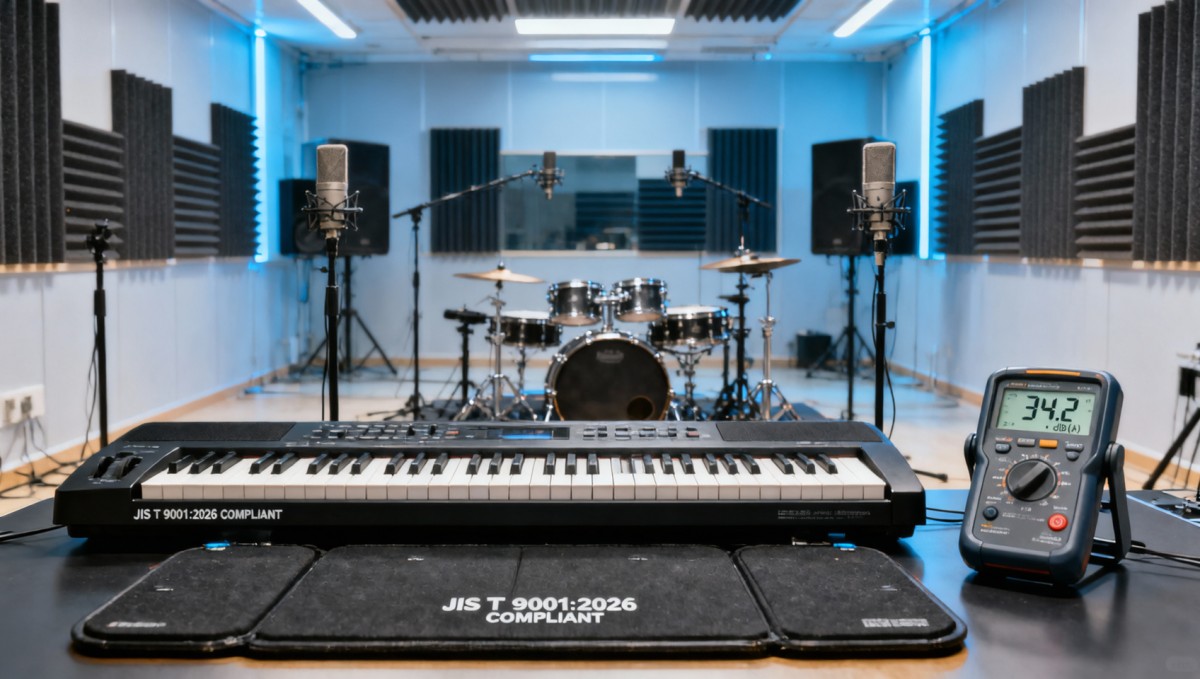
The Japanese Industrial Standards Committee (JISC) officially published JIS T 9001:2026, Acoustic Environment Adaptation Requirements for Musical Instruments, on May 24, 2026. The standard explicitly expands scope to include electronic and amplified musical instruments—previously unregulated under acoustic performance criteria—and mandates third-party sound attenuation testing prior to import clearance. Enforcement begins October 1, 2026, with no transitional grace period for new shipments.
Industries Affected
Direct Exporters (Trading Companies): These entities face immediate customs clearance risks if documentation lacks certified test reports aligned with JIS T 9001:2026. Non-compliant consignments may be rejected at Japanese ports or subjected to post-arrival retesting—delaying delivery by up to 12 business days and incurring storage and re-certification fees.
Raw Material Suppliers: Manufacturers of speaker diaphragms, cabinet damping foams, and amplifier chassis must now provide material-level acoustic absorption data (e.g., NRC values, transmission loss curves) to downstream assemblers. Absence of traceable, JIS-aligned material certifications may invalidate final product test results.
Contract Manufacturers & OEM Factories: Production lines require recalibration of acoustic test setups (e.g., anechoic chamber protocols, microphone placement per Annex B of JIS T 9001:2026). Factories without ISO/IEC 17025-accredited internal labs must engage JISC-recognized testing bodies—increasing per-unit compliance cost by an estimated 8–12%.
Supply Chain Service Providers: Logistics firms offering pre-shipment inspection, customs brokerage, or regulatory consulting must update service modules to include JIS T 9001:2026 verification checkpoints—such as validating test report issuance date, accredited lab ID, and measurement conditions (e.g., reverberation time
Key Focus Areas and Recommended Actions
Verify Lab Accreditation Status
Confirm that testing laboratories are listed on the JISC-recognized accreditation registry (updated quarterly); reports from non-listed labs will not satisfy Japanese Customs’ import documentation requirements.
Update Product Technical Files
Integrate sound attenuation test parameters—including measurement distance (1 m), operating mode (maximum volume, sustained tone), and environmental calibration records—into technical dossiers submitted to Japanese importers.
Review Packaging and User Manual Language
Per Clause 7.2 of JIS T 9001:2026, packaging labels and instruction manuals must include a bilingual (Japanese/English) statement confirming compliance with ≤35 dB(A) in residential settings; omission constitutes labeling non-conformance.
Assess Product Redesign Feasibility
For models consistently exceeding 35 dB(A), evaluate low-cost mitigation options—such as passive baffling, variable gain limiting circuits, or adaptive noise-gating firmware—prior to Q3 2026 to avoid production halts.
Editorial Perspective / Industry Observation
Analysis shows this is not merely a technical update but a policy-driven signal: Japan is formalizing ‘residential acoustic citizenship’ as a market access criterion—a trend likely to influence similar standards in South Korea and EU urban municipalities. Observably, the 35 dB(A) threshold aligns closely with WHO nighttime noise guidelines for bedrooms, suggesting future expansion into other consumer audio categories (e.g., karaoke systems, practice headphones). From an industry perspective, the absence of phase-in periods indicates prioritization of public policy over trade facilitation—raising the strategic value of early engagement with Japanese distributors’ compliance teams.
Conclusion
JIS T 9001:2026 redefines the baseline for market entry—not through safety or electromagnetic criteria, but through contextual acoustic responsibility. Its enforcement underscores a broader global pivot toward ‘use-environment-aware’ regulation, where product performance is assessed not in isolation, but relative to real-world deployment settings. For exporters, readiness hinges less on technical capability than on integrated regulatory foresight across R&D, procurement, and logistics functions.
Source Attribution
Official publication: Japanese Industrial Standards Committee (JISC), JIS T 9001:2026 Acoustic Environment Adaptation Requirements for Musical Instruments, issued May 24, 2026 (https://www.jisc.go.jp/app/jis/general?lang=en).
Note: JISC has announced plans to publish supplementary guidance on test methodology harmonization by August 2026—this remains under observation.
Search News
Hot Articles
- Indoor PlaygroundHow to Choose Animatronic Haunted House Props for High-Throughput AttractionsOct 08, 2026
- Fashion & Gem JewelryThermal Diamond Testers: How They Work and When They Can Misidentify StonesOct 07, 2026
- Commercial KitchenWhat Is Driving Demand for Commercial Hospitality Projects Across the GCC?Oct 06, 2026
Popular Tags
Need ExpertConsultation?
Connect with our specialized leisureengineering team for procurementstrategies.
Recommended News
 Sep 11, 2026How to Choose Touring Instrument Cases for Flights, Trucks, and Daily Load-InsInstrument cases for touring: learn how to balance flight protection, truck durability, weight, fit, and serviceable hardware for safer, faster load-ins.● Pro Audio Engineer
 Sep 07, 2026How to Choose Wood Frame Tambourines for Sound Quality and Long-Term UseWood frame tambourines: learn how to compare frame construction, jingle tone, head options, durability, and supplier quality for reliable long-term performance.● Pro Audio Engineer
 Sep 05, 2026How Often Should Music Education Equipment Be Serviced?How often should music education equipment be serviced? Explore practical schedules, maintenance tips, and lifecycle planning to keep instruments and audio systems reliable.● Pro Audio Engineer
 Aug 21, 2026How to Choose Marching Band Drums for Sound Projection, Weight, and DurabilityMarching band drums buying guide: learn how to balance sound projection, weight, and durability for better field performance, easier carrying, and longer-lasting value.● Pro Audio Engineer
 Aug 09, 2026How to Evaluate a MIDI Cable Manufacturer for Audio Quality and OEM ReliabilityMIDI cable manufacturer evaluation guide: learn how to assess signal stability, connector quality, OEM process control, and batch consistency to reduce failures and source with confidence.● Pro Audio Engineer
 Aug 08, 2026How to Evaluate a Trumpets OEM Manufacturer for Quality, MOQ, and Custom DesignTrumpets OEM manufacturer selection starts with quality, MOQ, and custom design control. Learn how to compare suppliers, reduce sourcing risk, and choose a reliable long-term factory partner.● Pro Audio Engineer
 Jul 27, 2026How to Source Conga Drums in Bulk for Schools, Bands, and Event ProgramsConga drums bulk sourcing for schools, bands, and event programs made easier. Learn how to compare quality, durability, compliance, and total cost before you place a large order.● Pro Audio Engineer
 Jul 24, 2026How to Choose Low Dust Violin Rosin for Cleaner Practice and Better Bow ControlLow dust violin rosin buying guide: learn how to compare formula, climate fit, grip, and string compatibility for cleaner practice, better bow control, and smarter purchase decisions.● Pro Audio Engineer
 Jul 15, 2026Plastic Tambourines Bulk Buying Guide: Sizes, Materials, and MOQ QuestionsPlastic tambourines bulk buying guide covering sizes, ABS vs PP materials, sound consistency, customization, and MOQ questions to help buyers cut risk and choose the right supplier.● Pro Audio Engineer
 Jul 13, 2026Acoustic Guitars Wholesale China: How to Evaluate Build Quality and OEM OptionsAcoustic guitars wholesale China guide: learn how to assess build quality, factory consistency, and OEM options to choose reliable suppliers and reduce sourcing risk.● Pro Audio Engineer
 Jul 12, 2026Mini Effect Pedals Wholesale: MOQ, OEM Options, Testing, and Supplier ComparisonMini effect pedals wholesale guide covering MOQ, OEM options, testing standards, and supplier comparison to help buyers reduce risk, improve margins, and choose reliable partners.● Pro Audio Engineer
 Jul 11, 2026DJ Turntables OEM Guide: Key Torque, Drive, and Build Specs to CompareDJ turntables OEM guide covering torque, drive type, speed stability, platter build, and manufacturing consistency. Compare the specs that impact performance, reliability, and sourcing confidence.● Pro Audio Engineer
 Jul 08, 2026Guitar Capos Wholesale: What Materials, Clamp Types, and MOQ Terms Should You Compare?Guitar capos wholesale buying starts with more than price. Compare materials, clamp types, quality checks, and MOQ terms to reduce returns, protect margins, and choose a supplier with confidence.● Pro Audio Engineer
 Jul 07, 2026Birch Drum Kits Manufacturer Comparison: Shell Construction, Hardware Quality, and OEM OptionsBirch drum kits manufacturer comparison covering shell construction, hardware quality, and OEM options to help buyers reduce sourcing risk and choose reliable suppliers.● Pro Audio Engineer
 Jul 06, 2026Spruce Top Acoustic Guitars Explained: Tone, Wood Grades, and Who They Suit BestSpruce top acoustic guitars explained: compare tone, wood grades, and build quality to find the best fit for players, retailers, and commercial buyers.● Pro Audio Engineer
 Jun 30, 2026Xylophones and Glockenspiels: Key Differences in Range, Tone, and Classroom UseXylophones and glockenspiels compared: discover key differences in range, tone, durability, and classroom use to choose the right instrument for teaching, buying, or school programs.● Pro Audio Engineer
 Jun 25, 2026Musical Instrument Industry Report: Key Market Segments, Demand Drivers, and Price TrendsMusical instrument industry report covering key market segments, demand drivers, and price trends. Explore sourcing risks, premium growth, and where buyer demand is shifting next.● Pro Audio Engineer
 Jun 23, 2026Metronomes and Tuners Explained: Types, Key Features, and Who Needs BothMetronomes and tuners explained: compare types, key features, and who needs both. Learn how to choose the right tool for better timing, pitch, and practical daily use.● Pro Audio Engineer
 Jun 22, 2026How the Musical Instrument Industry Supply Chain Affects Lead Times, Cost, and QualityMusical instrument industry supply chain trends now shape lead times, cost, and quality. Discover how smarter sourcing and supplier transparency reduce risk and improve buying outcomes.● Pro Audio Engineer
 Jun 20, 2026DJ Headphones Wholesale Buying Guide: OEM Options, MOQ, and Audio Specs to CompareDJ headphones wholesale guide covering OEM options, MOQ strategy, and key audio specs. Compare build quality, compliance, and total cost to source smarter and reduce returns.● Pro Audio Engineer
 Jun 19, 2026Acoustic Guitars Wholesale: 7 Specs Buyers Should Compare Before Placing an OrderAcoustic guitars wholesale buyers can compare 7 key specs before ordering, from tonewoods and playability to OEM, packaging, and QC, to reduce risk and protect margins.● Pro Audio Engineer
 Jun 15, 2026Tambourines Bulk Buying Guide: Materials, Sound Quality, and Pack Size DifferencesTambourines bulk buying guide covering material choices, sound consistency, and pack size differences. Compare suppliers smarter, reduce risk, and choose the best fit for schools, retail, and events.● Pro Audio Engineer
 Jun 14, 2026Professional Musical Instruments Explained: Types, Skill Levels, and Buying CriteriaProfessional musical instruments explained: discover key types, ideal skill levels, and practical buying criteria to choose reliable, high-performance instruments with confidence.● Pro Audio Engineer
 Jun 10, 2026Drum Kits Manufacturer Comparison: What to Check Before OEM or Bulk OrdersDrum kits manufacturer comparison guide for OEM and bulk buyers: check quality, compliance, lead times, packaging, and true cost before placing large orders.● Pro Audio Engineer