Southeast Asia Port Congestion Hits Outdoor Rides Deliveries
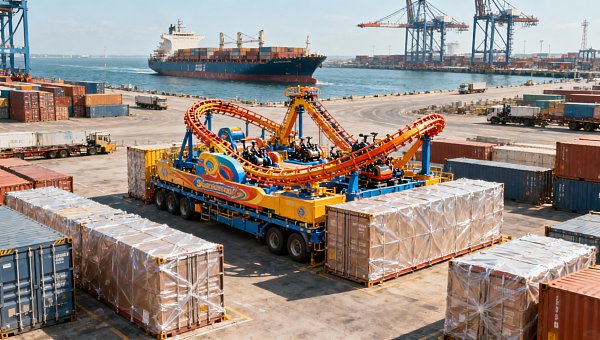
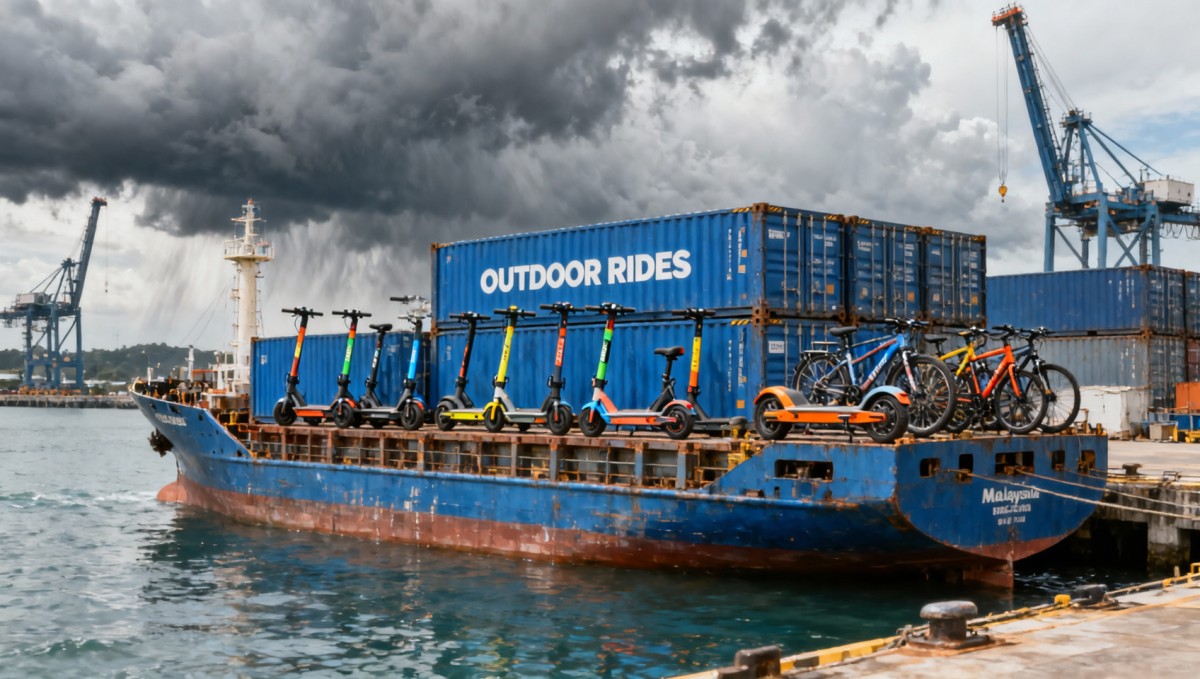
Severe port congestion across Southeast Asia — particularly at Malaysia’s Port of Port Klang — has escalated in recent weeks, with vessel dwell time and container滞港 rate surging amid seasonal monsoon conditions and concentrated vessel arrivals. The disruption is now materially delaying maritime deliveries of outdoor recreational riding equipment (Outdoor Rides) from China to regional markets, triggering contractual reviews and operational recalibrations across the supply chain.
Event Overview
According to the latest data released by the Maritime and Port Authority of Singapore (MPA) on 24 May 2026, the average container dwell time at Port Klang reached 11.3 days, and the port congestion rate climbed to 68%. This surge is attributed to concurrent heavy rainfall during the monsoon season and an unusually high concentration of vessel arrivals. As a direct consequence, scheduled sea freight transit time for Outdoor Rides shipments under FOB Shenzhen terms — historically averaging 18 days to Port Klang — has extended to approximately 30 days. Several export orders have formally entered force majeure clause discussions between Chinese exporters and Southeast Asian importers.
Industries Affected
Direct Export Trading Enterprises
Trading firms specializing in Outdoor Rides exports from China face immediate pressure on delivery reliability and contract compliance. Extended transit times increase demurrage exposure at origin ports, elevate working capital lock-up, and strain customer trust — especially where contracts specify strict delivery windows or carry liquidated damages clauses.
Raw Material Procurement Enterprises
Suppliers sourcing components (e.g., aluminum frames, lithium batteries, control modules) for Outdoor Rides production are encountering ripple effects: downstream order deferrals are prompting inventory reassessment, while forward procurement planning is being complicated by uncertain shipment timelines. Some procurement teams report widening lead-time variance — up to ±9 days — making just-in-time replenishment increasingly unviable.
Manufacturing Enterprises
OEM/ODM manufacturers of Outdoor Rides in Guangdong and Zhejiang provinces are adjusting production sequencing and buffer stock levels. With delayed outbound logistics, finished goods inventories are accumulating faster than anticipated, compressing warehouse capacity and increasing holding costs. Notably, some factories have begun splitting orders across alternative routing options — e.g., transshipment via Ho Chi Minh City or Singapore — though these alternatives add cost and coordination complexity.
Supply Chain Service Providers
Freight forwarders, customs brokers, and integrated logistics providers report heightened demand for real-time port status monitoring and contingency planning support. Requests for multimodal fallbacks (e.g., air-freight partials for high-priority SKUs) have risen 35% month-on-month. At the same time, documentation processing timelines are stretching due to increased port-side inspections and berth allocation delays — adding friction to release cycles.
Key Considerations and Recommended Actions
Review Incoterms and Force Majeure Triggers
Exporters and importers should jointly re-examine contractual Incoterms (particularly FOB vs. CIF responsibilities) and verify whether prolonged port dwell qualifies under defined force majeure provisions — noting that MPA’s official data provides objective, third-party validation for such claims.
Prioritize Route Diversification — Not Just Port Switching
Shifting solely to alternate Southeast Asian ports (e.g., Tanjung Pelepas or Laem Chabang) may replicate congestion patterns. Analysis shows greater resilience lies in combining port diversification with intermodal shifts — e.g., short-sea feeder services from Shenzhen to Singapore, followed by land transport into Malaysia — which currently show 40–50% lower dwell variability.
Strengthen Real-Time Visibility Infrastructure
Enterprises relying on static weekly shipping schedules are falling behind. Observably, those deploying API-integrated port status dashboards (pulling live data from MPA, Port Klang Authority, and vessel AIS feeds) reduce reactive decision latency by up to 60%, enabling earlier inventory rebalancing and customer communication.
Editorial Insight / Industry Observation
This episode is not merely a logistical hiccup but a stress test of regional supply chain maturity. From an industry perspective, the 68% congestion rate reflects structural bottlenecks — including limited yard automation, rain-sensitive terminal infrastructure, and rigid berth allocation protocols — rather than purely cyclical weather impact. Current more noteworthy is how rapidly Outdoor Rides exporters are shifting from ‘delay mitigation’ to ‘delivery model redesign’: early adopters are piloting hybrid fulfillment models blending regional warehousing hubs with localized last-mile assembly. That shift — not just port congestion — better signals the sector’s evolving resilience architecture.
Conclusion
Port Klang’s congestion underscores a broader reality: maritime reliability in emerging trade corridors can no longer be assumed as static. For Outdoor Rides stakeholders, the event serves less as an anomaly and more as a catalyst — accelerating the transition from linear, schedule-dependent logistics to adaptive, data-informed, and geographically distributed fulfillment strategies. A measured, evidence-based response remains preferable to reactive overcorrection.
Source Attribution
Data sourced from the Maritime and Port Authority of Singapore (MPA), official release dated 24 May 2026. Port Klang operational metrics remain under active monitoring; further updates expected in MPA’s biweekly Port Performance Bulletin. Note: Rainfall intensity forecasts and vessel arrival projections for Q3 2026 are pending revision by the Malaysian Meteorological Department and ASEAN Shipping Coordination Group — both warrant continued observation.
Search News
Hot Articles
- Indoor PlaygroundHow to Choose Animatronic Haunted House Props for High-Throughput AttractionsOct 08, 2026
- Fashion & Gem JewelryThermal Diamond Testers: How They Work and When They Can Misidentify StonesOct 07, 2026
- Commercial KitchenWhat Is Driving Demand for Commercial Hospitality Projects Across the GCC?Oct 06, 2026
Popular Tags
Need ExpertConsultation?
Connect with our specialized leisureengineering team for procurementstrategies.
Recommended News
 Oct 03, 2026How to Select Leisure Park Equipment for Safe, High-Throughput Visitor AreasLeisure park equipment selection guide for safe, high-throughput venues—explore capacity, supervision, durability, accessibility, and supplier criteria.● Theme Park Strategist
 Sep 18, 2026What Drives Animatronic Dinosaur Manufacturer Prices for Theme Park Projects?Animatronic dinosaurs manufacturer price guide: compare motion, materials, controls, installation, and lifecycle costs to plan a durable theme park attraction.● Theme Park Strategist
 Sep 06, 2026Do Amusement Ride Safety Compliance Requirements Change Every Year?Do amusement safety compliance requirements change annually? Learn what really changes, from standards and inspections to permits, upgrades, and local approvals.● Theme Park Strategist
 Sep 02, 2026How Long Does It Take to Receive Full Safety Documents From an OEM?How long does it take to get full safety documentation from OEM partners? Discover realistic timelines, common delays, and practical steps to secure compliant files faster.● Theme Park Strategist
 Sep 03, 2026Designing Adventure Park Safety Systems for Zip Lines, Ropes Courses, and Daily InspectionsAdventure park safety systems: learn how to design safer zip lines and ropes courses with daily inspections, defect controls, rescue readiness, and staff training.● Theme Park Strategist
 Aug 22, 2026What to Look for When Choosing Three Seat Jet Skis for Rental or Resort UseThree seat jet skis for rental or resort use should balance stability, safety, maintenance, and guest comfort. Learn how to choose models that boost uptime and guest satisfaction.● Theme Park Strategist
 Aug 17, 2026What Parts Matter Most in a Roller Coaster and How Do They Affect Ride Safety?Roller coaster parts determine ride safety more than most riders realize. Explore how tracks, restraints, brakes, wheels, and control systems work together to protect every ride.● Theme Park Strategist
 Aug 15, 20262026 China Sports Expo Sees 45.74% More Overseas Pre-registered Buyers as POB Expands Procurement Matching2026 China Sports Expo boosts overseas pre-registered buyers by 45.74% as POB expands procurement matching for fitness, outdoor, and venue suppliers.● Theme Park Strategist
 Aug 14, 2026What Should Buyers Check Before Choosing a Flying Chair Ride Exporter?Flying chair ride exporter buyers should check safety, structure, export support, and spare parts before purchase to reduce risk and choose a reliable supplier.● Theme Park Strategist
 Aug 04, 2026EU Issues EN 1176-1:2026 for Playground SafetyEU Issues EN 1176-1:2026 for Playground Safety: learn how the new standard impacts Outdoor Rides, CE certification, inventory checks, and EU compliance before March 2027.● Theme Park Strategist
 Aug 03, 2026CPSC Adopts ASTM F1487-26 for Imported Outdoor RidesOutdoor Rides face a major U.S. compliance shift as CPSC adopts ASTM F1487-26. Learn the new certification, testing, and customs risks before November 1, 2026.● Theme Park Strategist
 Jul 26, 2026Revised EN 1176:2026 Triggers Re-Certification for Outdoor RidesOutdoor Rides face immediate EN 1176:2026 re-certification for new CE applications. Learn how testing, documentation, and EU market access rules now affect exports and delivery plans.● Theme Park Strategist
 Jul 21, 2026CPSC Recall Flags Structural Risk in Outdoor RidesCPSC recall flags structural risk in outdoor rides: learn how ASTM F1487-23 failures affect importers, distributors, and compliance teams across the U.S., Canada, and Australia.● Theme Park Strategist
 Jul 19, 2026How to Choose Outdoor Fitness Equipment for Parks Based on Users, Space, and BudgetOutdoor fitness equipment for parks: learn how to choose the right mix based on users, space, and budget to improve safety, usage, and long-term value.● Theme Park Strategist
 Jul 15, 2026Ocean Freight Spike Pressures Outdoor Rides ExportsOcean Freight Spike Pressures Outdoor Rides Exports as Shanghai-Rotterdam rates surge 42%. See how rising freight costs, delays, and rerouting risks could reshape Europe-bound delivery plans.● Theme Park Strategist
 Jul 14, 2026EN 1176 Revision Takes Effect for Outdoor Ride Weld TestingEN 1176 revision takes effect for outdoor ride weld testing from Sept 1, 2026. Learn ISO 5817 level B, third-party NDT report rules, and key EU compliance steps.● Theme Park Strategist
 Jul 12, 2026Vietnam Requires AI Anti-Collision Systems for Imported Outdoor RidesVietnam Requires AI Anti-Collision Systems for Imported Outdoor Rides from Sept. 15, 2026. Learn compliance rules, VAST certification needs, and how importers can avoid delays.● Theme Park Strategist
 Jul 11, 2026Vietnam Tightens Rules for Imported Outdoor RidesVietnam Tightens Rules for Imported Outdoor Rides: learn how Vietnam’s 2026 compliance update adds AI anti-collision, Vietnamese logs, and local maintenance duties for importers and manufacturers.● Theme Park Strategist
 Jul 09, 2026How to Evaluate a Lazy River Equipment Supplier for Safety, Flow Design, and MaintenanceLazy river equipment supplier selection affects safety, flow design, and maintenance costs. Learn what to compare, what to ask, and how to choose a reliable partner.● Theme Park Strategist
 Jul 08, 2026RCEP Update Cuts ASEAN Tariffs to Zero for Outdoor RidesRCEP update cuts ASEAN tariffs to zero for outdoor rides from China. Learn how FSC-CoC, PEFC traceability, and e-CO compliance affect exports, sourcing, and buyer decisions.● Theme Park Strategist
 Jul 07, 2026RCEP Guide Adds Dual Wood Traceability for Outdoor RidesOutdoor Rides exporters face a new RCEP traceability rule: dual FSC-CoC and PEFC-STS 2023 codes for wood components. See what changes before Oct. 1, 2026.● Theme Park Strategist
 Jul 06, 2026Vietnam Tightens RCEP Rules for Wooden Ride PartsVietnam Tightens RCEP Rules for Wooden Ride Parts: learn how FSC Chain-of-Custody and QR code requirements now affect outdoor rides, RCEP imports, and shipment compliance.● Theme Park Strategist
 Jul 06, 2026How to Evaluate a Bumper Cars on Ice Manufacturer for Safety, Capacity, and ROIBumper cars on ice manufacturer selection starts with safety, capacity, and ROI. Learn how to compare suppliers, reduce risk, and choose a partner built for long-term commercial success.● Theme Park Strategist
 Jul 04, 2026Electric Drift Bumper Cars vs Traditional Bumper Cars: Which Fits Your Venue Better?Electric drift bumper cars or traditional bumper cars? Compare installation, safety, maintenance, guest appeal, and ROI to choose the best fit for your venue.● Theme Park Strategist