Amusement Safety Compliance Checklist: What to Review Before Ride Installation and Opening
Why does an amusement safety compliance checklist matter before installation even begins?
An amusement ride is not judged only on design appeal or capacity. It is judged on whether every technical, legal, and operational condition is ready before the first component is lifted into place.
That is why an amusement safety compliance checklist should start long before opening day. In practice, the checklist is a control tool for approvals, sequencing, contractor coordination, and launch risk.
Many delays do not come from the ride itself. They come from missing permits, unclear design responsibilities, incomplete utility planning, or safety documents that do not match local authority expectations.
In broader commercial environments, this discipline also reflects how premium projects are now evaluated. Across hospitality, leisure, and public-use developments, compliance readiness has become part of procurement quality.
That perspective aligns with the kind of sourcing intelligence often emphasized by Global Commercial Trade, where technical reliability, international standards, and supply chain credibility shape commercial decisions as much as price.
A strong amusement safety compliance checklist therefore does more than avoid violations. It helps protect opening schedules, insurance acceptance, contractor accountability, and long-term operating confidence.
What should be cleared before the ride arrives on site?
This is where many teams underestimate the workload. Site readiness is not just about having space. It is about confirming whether the project can legally and safely receive the equipment.
A practical amusement safety compliance checklist usually begins with five early review areas.
- Permits and jurisdiction requirements, including building, electrical, fire, and ride-specific approvals.
- Manufacturer documentation, such as calculations, drawings, load data, manuals, and conformity records.
- Civil and structural readiness, including foundations, anchor positions, drainage, and access for heavy equipment.
- Utility compatibility, especially voltage, grounding, backup power, communications, and control interfaces.
- Delivery and installation sequencing, with clear responsibility for inspections, hold points, and acceptance sign-offs.
The common mistake is treating these items as paperwork. They are actually technical gate checks. If one item is unresolved, the entire installation sequence can become inefficient or non-compliant.
It helps to map each document to a decision point. For example, foundation approval should be tied to anchor verification, not stored as a separate archive item with no live control value.
A quick review table for pre-installation decisions
Before mobilization, teams usually need a compact way to judge whether the site is truly ready. The table below works well as an early-stage filter.
Which technical checks are most often missed during installation?
Once the ride is on site, the checklist must shift from design review to field verification. This stage is where assumptions are tested against actual conditions.
Structural fit-up is one major concern. Bolt torque, weld quality, connection orientation, and dimensional tolerances should never be treated as routine assembly details. They are compliance items.
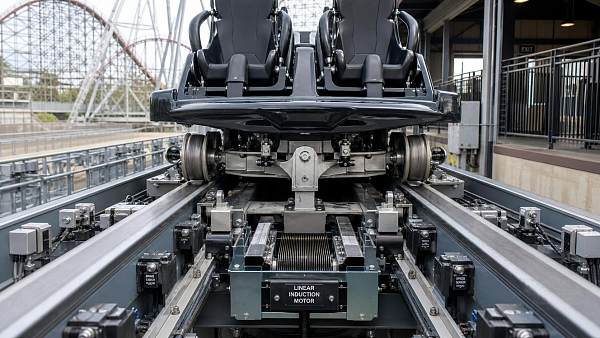
Electrical installation is another area where shortcuts create hidden exposure. Cable routing, enclosure ratings, lockout points, emergency stop circuits, and insulation testing all need documented confirmation.
In actual projects, safety guarding often causes late friction. Access barriers may conflict with maintenance routes, guest flow, or nearby structures. Those conflicts should be resolved before commissioning, not after inspection failure.
Control systems also deserve close attention. Sensor positions, interlocks, ride logic, fault responses, and reset conditions should match the approved operating philosophy. A working system is not automatically a compliant system.
The better approach is to attach every field check to evidence. Photos, test records, torque logs, calibration data, and signed witness points make the amusement safety compliance checklist useful during authority review and future audits.
Is a ride ready to open once commissioning is complete?
Not necessarily. Mechanical completion and commissioning are important, but public opening requires a wider readiness test. The final question is whether the ride can be operated safely and repeatedly under real conditions.
An effective amusement safety compliance checklist should include operational evidence, not just engineering records. This usually means trial operation, emergency drills, operator competence, and maintenance readiness.
- Operator training records should match the exact ride model and site procedures.
- Restraint checks need validation under realistic loading conditions.
- Evacuation methods should be practiced, timed, and documented.
- Daily inspection routines must be defined before opening, not created afterward.
- Spare parts and fault response contacts should already be available on site.
A useful test is to ask whether the ride can handle a routine fault at peak attendance without confusion. If the answer is unclear, opening readiness is still incomplete.
This is especially relevant for mixed-use destinations, where amusement systems sit alongside hotels, retail, dining, and event operations. Opening risk can affect the entire commercial environment, not just one attraction.
Where do compliance failures usually come from?
Most failures do not come from one dramatic error. They come from small disconnects between design, procurement, installation, and operations.
One frequent issue is relying on supplier statements without checking local enforceability. A ride may meet one jurisdiction's expectations while still falling short under another authority's documentation rules.
Another weak point is revision control. A field team may install from one drawing set while inspectors review another. That gap creates avoidable disputes and expensive correction work.
There is also a tendency to compress training near handover. When that happens, operators learn buttons and alarms, but not fault logic, guest handling limits, or escalation thresholds.
The amusement safety compliance checklist should therefore include behavioral risks, not just hardware checks. Weak communication, unclear ownership, and rushed acceptance are all compliance hazards.
A sensible control method is to define no-open items in advance. These are issues that automatically stop opening approval until evidence is closed, regardless of schedule pressure.
Common no-open triggers worth defining early
- Incomplete third-party inspection or unresolved punch items affecting safety systems.
- Missing emergency procedures, rescue equipment, or trained personnel.
- Unverified control logic changes after factory testing.
- Open civil defects that affect drainage, access, or barrier stability.
- No approved preventive maintenance schedule for the opening period.
How detailed should the final amusement safety compliance checklist be?
Detailed enough to support decisions, but not so bloated that no one uses it. The best checklists are structured by stage, ownership, and evidence type.
A practical format usually separates pre-installation, installation, commissioning, pre-opening, and post-opening monitoring. That makes accountability easier and prevents important items from disappearing into one long list.
Each line should answer four things: what is being checked, who confirms it, what evidence is required, and what happens if it is not closed.
This approach also supports better sourcing and lifecycle evaluation. In sectors covered by GCT, the stronger suppliers are usually the ones that can provide traceable documents, coordinated installation support, and post-handover clarity.
So the checklist should not end at regulatory language. It should help compare execution quality, maintenance preparedness, and operational resilience across vendors and project partners.
Before opening, review the full amusement safety compliance checklist one final time against site reality. Confirm documents, test records, staff readiness, and authority sign-off in one controlled decision meeting.
That final review is usually where risk becomes visible. It also provides the clearest next step: close the few unresolved items properly, then open with confidence instead of assumption.
Search News
Hot Articles
- Restaurant FurnitureFast-Casual Restaurant Interiors: Design Choices That Improve Speed and Guest FlowOct 04, 2026
- Outdoor RidesHow to Select Leisure Park Equipment for Safe, High-Throughput Visitor AreasOct 03, 2026
- Fashion & Gem JewelryDiamond Tester Wholesale: How to Vet Accuracy, Calibration, and MOQ Before OrderingOct 02, 2026
Popular Tags
Need ExpertConsultation?
Connect with our specialized leisureengineering team for procurementstrategies.
Recommended News
 Oct 03, 2026How to Select Leisure Park Equipment for Safe, High-Throughput Visitor AreasLeisure park equipment selection guide for safe, high-throughput venues—explore capacity, supervision, durability, accessibility, and supplier criteria.● Theme Park Strategist
 Sep 18, 2026What Drives Animatronic Dinosaur Manufacturer Prices for Theme Park Projects?Animatronic dinosaurs manufacturer price guide: compare motion, materials, controls, installation, and lifecycle costs to plan a durable theme park attraction.● Theme Park Strategist
 Sep 06, 2026Do Amusement Ride Safety Compliance Requirements Change Every Year?Do amusement safety compliance requirements change annually? Learn what really changes, from standards and inspections to permits, upgrades, and local approvals.● Theme Park Strategist
 Sep 02, 2026How Long Does It Take to Receive Full Safety Documents From an OEM?How long does it take to get full safety documentation from OEM partners? Discover realistic timelines, common delays, and practical steps to secure compliant files faster.● Theme Park Strategist
 Sep 03, 2026Designing Adventure Park Safety Systems for Zip Lines, Ropes Courses, and Daily InspectionsAdventure park safety systems: learn how to design safer zip lines and ropes courses with daily inspections, defect controls, rescue readiness, and staff training.● Theme Park Strategist
 Aug 22, 2026What to Look for When Choosing Three Seat Jet Skis for Rental or Resort UseThree seat jet skis for rental or resort use should balance stability, safety, maintenance, and guest comfort. Learn how to choose models that boost uptime and guest satisfaction.● Theme Park Strategist
 Aug 17, 2026What Parts Matter Most in a Roller Coaster and How Do They Affect Ride Safety?Roller coaster parts determine ride safety more than most riders realize. Explore how tracks, restraints, brakes, wheels, and control systems work together to protect every ride.● Theme Park Strategist
 Aug 15, 20262026 China Sports Expo Sees 45.74% More Overseas Pre-registered Buyers as POB Expands Procurement Matching2026 China Sports Expo boosts overseas pre-registered buyers by 45.74% as POB expands procurement matching for fitness, outdoor, and venue suppliers.● Theme Park Strategist
 Aug 14, 2026What Should Buyers Check Before Choosing a Flying Chair Ride Exporter?Flying chair ride exporter buyers should check safety, structure, export support, and spare parts before purchase to reduce risk and choose a reliable supplier.● Theme Park Strategist
 Aug 04, 2026EU Issues EN 1176-1:2026 for Playground SafetyEU Issues EN 1176-1:2026 for Playground Safety: learn how the new standard impacts Outdoor Rides, CE certification, inventory checks, and EU compliance before March 2027.● Theme Park Strategist
 Aug 03, 2026CPSC Adopts ASTM F1487-26 for Imported Outdoor RidesOutdoor Rides face a major U.S. compliance shift as CPSC adopts ASTM F1487-26. Learn the new certification, testing, and customs risks before November 1, 2026.● Theme Park Strategist
 Jul 26, 2026Revised EN 1176:2026 Triggers Re-Certification for Outdoor RidesOutdoor Rides face immediate EN 1176:2026 re-certification for new CE applications. Learn how testing, documentation, and EU market access rules now affect exports and delivery plans.● Theme Park Strategist
 Jul 21, 2026CPSC Recall Flags Structural Risk in Outdoor RidesCPSC recall flags structural risk in outdoor rides: learn how ASTM F1487-23 failures affect importers, distributors, and compliance teams across the U.S., Canada, and Australia.● Theme Park Strategist
 Jul 19, 2026How to Choose Outdoor Fitness Equipment for Parks Based on Users, Space, and BudgetOutdoor fitness equipment for parks: learn how to choose the right mix based on users, space, and budget to improve safety, usage, and long-term value.● Theme Park Strategist
 Jul 15, 2026Ocean Freight Spike Pressures Outdoor Rides ExportsOcean Freight Spike Pressures Outdoor Rides Exports as Shanghai-Rotterdam rates surge 42%. See how rising freight costs, delays, and rerouting risks could reshape Europe-bound delivery plans.● Theme Park Strategist
 Jul 14, 2026EN 1176 Revision Takes Effect for Outdoor Ride Weld TestingEN 1176 revision takes effect for outdoor ride weld testing from Sept 1, 2026. Learn ISO 5817 level B, third-party NDT report rules, and key EU compliance steps.● Theme Park Strategist
 Jul 12, 2026Vietnam Requires AI Anti-Collision Systems for Imported Outdoor RidesVietnam Requires AI Anti-Collision Systems for Imported Outdoor Rides from Sept. 15, 2026. Learn compliance rules, VAST certification needs, and how importers can avoid delays.● Theme Park Strategist
 Jul 11, 2026Vietnam Tightens Rules for Imported Outdoor RidesVietnam Tightens Rules for Imported Outdoor Rides: learn how Vietnam’s 2026 compliance update adds AI anti-collision, Vietnamese logs, and local maintenance duties for importers and manufacturers.● Theme Park Strategist
 Jul 09, 2026How to Evaluate a Lazy River Equipment Supplier for Safety, Flow Design, and MaintenanceLazy river equipment supplier selection affects safety, flow design, and maintenance costs. Learn what to compare, what to ask, and how to choose a reliable partner.● Theme Park Strategist
 Jul 08, 2026RCEP Update Cuts ASEAN Tariffs to Zero for Outdoor RidesRCEP update cuts ASEAN tariffs to zero for outdoor rides from China. Learn how FSC-CoC, PEFC traceability, and e-CO compliance affect exports, sourcing, and buyer decisions.● Theme Park Strategist
 Jul 07, 2026RCEP Guide Adds Dual Wood Traceability for Outdoor RidesOutdoor Rides exporters face a new RCEP traceability rule: dual FSC-CoC and PEFC-STS 2023 codes for wood components. See what changes before Oct. 1, 2026.● Theme Park Strategist
 Jul 06, 2026Vietnam Tightens RCEP Rules for Wooden Ride PartsVietnam Tightens RCEP Rules for Wooden Ride Parts: learn how FSC Chain-of-Custody and QR code requirements now affect outdoor rides, RCEP imports, and shipment compliance.● Theme Park Strategist
 Jul 06, 2026How to Evaluate a Bumper Cars on Ice Manufacturer for Safety, Capacity, and ROIBumper cars on ice manufacturer selection starts with safety, capacity, and ROI. Learn how to compare suppliers, reduce risk, and choose a partner built for long-term commercial success.● Theme Park Strategist
 Jul 04, 2026Electric Drift Bumper Cars vs Traditional Bumper Cars: Which Fits Your Venue Better?Electric drift bumper cars or traditional bumper cars? Compare installation, safety, maintenance, guest appeal, and ROI to choose the best fit for your venue.● Theme Park Strategist