How to Select Energy Efficient Display Cabinets for Food Retail and Hospitality
How to Select Energy Efficient Display Cabinets for Food Retail and Hospitality
Choosing energy efficient display cabinets is no longer only about reducing electricity spend.
It now shapes food quality, customer experience, maintenance planning, and total project value.
In food retail and hospitality, the right cabinet supports merchandising and protects operating margins at the same time.
That is why energy efficient display cabinets should be assessed as a system decision, not a simple equipment purchase.
The best selection usually balances energy performance, thermal stability, visibility, service access, and supplier dependability.
Why Energy Efficient Display Cabinets Matter More Than Before
From recent market shifts, one clear signal stands out.
Operators want refrigeration assets that control costs without weakening presentation or compliance.
Energy prices remain volatile across many regions.
At the same time, stores, bakeries, cafes, hotels, and grab-and-go formats need cabinets that run longer hours.
This makes energy efficient display cabinets a practical lever for lowering lifecycle cost.
The stronger signal is operational.
Poorly selected cabinets create uneven temperatures, excessive frosting, noisy operation, and weak product visibility.
Those issues directly affect shrink, labor time, and customer perception.
In real projects, the cheapest unit often becomes the most expensive one to run.
Start With the Real Use Case
Before comparing models, define the operating environment in detail.
This step prevents many common specification mistakes.
Key questions to answer early
- Will the cabinet hold chilled drinks, dairy, pastries, prepared meals, seafood, or frozen items?
- Is the site a supermarket, convenience store, hotel buffet, cafe, or quick-service outlet?
- How many door openings or customer interactions will occur during peak hours?
- What is the ambient temperature, humidity level, and ventilation condition around the unit?
- Will products be loaded by staff only, or also accessed by customers directly?
Energy efficient display cabinets behave differently under different loads.
A cabinet that performs well in a cool bakery may struggle in a busy hotel breakfast area.
That also means selection should reflect actual trading hours and replenishment patterns.
Evaluate the Core Efficiency Features
Not all low-energy claims mean the same thing.
The real question is which design features deliver stable performance in daily use.
Features that usually matter most
- High-performance insulation that reduces heat gain and compressor cycling.
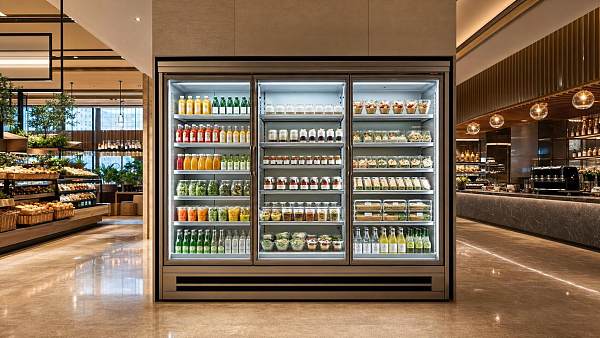
- Low-emissivity glass doors that improve visibility while controlling thermal transfer.
- EC fans and inverter compressors that adapt to changing load conditions.
- LED lighting with low heat output and consistent shelf illumination.
- Smart defrost management that avoids unnecessary energy use.
- Tight door seals and reliable frame construction that limit cold air loss.
For open-front models, air curtain design becomes especially important.
Weak air management can erase the benefits of other efficient components.
In practice, the most effective energy efficient display cabinets combine several of these features rather than relying on one headline specification.
Check Temperature Control and Food Safety Performance
Energy performance should never be evaluated apart from food safety.
A cabinet that saves energy but fails to hold target temperature is a poor project decision.
Look beyond nominal temperature range.
Ask for test conditions, recovery time after door openings, and temperature consistency across shelves.
This matters even more for fresh food, desserts, dairy, and ready-to-eat items.
If possible, request data on pull-down time, evaporator performance, and control accuracy.
Reliable energy efficient display cabinets maintain product-safe conditions without overcooling.
That balance is what protects both inventory and energy budgets.
Assess Merchandising and Space Efficiency Together
Selection decisions often fail when energy and layout are reviewed separately.
In retail and hospitality, the cabinet must also sell.
A well-designed unit should support clear sightlines, easy access, and logical product zoning.
It should also fit service corridors, power points, loading routes, and cleaning routines.
What to compare during layout review
- Net display area versus external footprint.
- Shelf adjustability for changing menu or product mix.
- Door swing, aisle clearance, and customer flow impact.
- Glare control, lighting tone, and product color rendering.
- Back-of-house replenishment access where fast restocking is needed.
The strongest energy efficient display cabinets improve selling capacity without increasing refrigeration burden.
That is a better long-term result than chasing volume alone.
Verify Standards, Testing, and Supplier Claims
Specification sheets can look impressive, but project teams should verify the basis behind every claim.
Request test reports, certification details, and operating assumptions.
Relevant requirements may include CE, ETL, UL, RoHS, or local food equipment standards.
Refrigerant type also deserves close review, especially where sustainability targets are part of the project brief.
This is where experienced sourcing support becomes valuable.
Global Commercial Trade connects buyers with verified market intelligence across hospitality equipment and specialty retail supply chains.
That kind of intelligence helps separate proven energy efficient display cabinets from generic low-price offers with weak documentation.
Compare Total Cost of Ownership, Not Just Purchase Price
A disciplined decision process should include total cost of ownership.
That means looking at the full operating life of the cabinet.
This broader view often changes the ranking between suppliers.
Many energy efficient display cabinets cost more upfront but recover that premium through lower running cost and fewer service issues.
A Practical Shortlist for Final Selection
When the options narrow, a simple scoring method works well.
- Match each model to the exact food category and operating environment.
- Compare verified energy data, not marketing claims only.
- Review temperature performance under realistic use conditions.
- Check merchandising effectiveness and floor plan fit.
- Score supplier responsiveness, documentation quality, and after-sales support.
- Estimate lifecycle cost over the expected service period.
This approach keeps the decision grounded in project outcomes.
It also reduces the risk of selecting energy efficient display cabinets that look competitive on paper but underperform on site.
Final Takeaway
Selecting energy efficient display cabinets is really about operational fit, not single-point efficiency.
The strongest choice supports food safety, visual appeal, serviceability, and cost control together.
In practical sourcing, verified data and reliable suppliers matter as much as technical features.
A careful review today makes future store performance more predictable and easier to manage.
For food retail and hospitality projects, that is usually the difference between a cabinet that merely cools and one that truly delivers value.
Search News
Hot Articles
- Outdoor RidesHow to Select Leisure Park Equipment for Safe, High-Throughput Visitor AreasOct 03, 2026
- Fashion & Gem JewelryDiamond Tester Wholesale: How to Vet Accuracy, Calibration, and MOQ Before OrderingOct 02, 2026
- Hotel Room AmenitiesHow Hotels Can Choose Amenity Bottles That Balance Brand Image and Refill CostsOct 01, 2026
Popular Tags
Need ExpertConsultation?
Connect with our specialized leisureengineering team for procurementstrategies.
Recommended News
 Sep 24, 2026Conveyor Pizza Oven Price: What Buyers Should Budget for Capacity and FeaturesConveyor pizza oven price guide: compare capacity, features, installation costs, and quote factors to choose the right commercial oven for your operation.● Hospitality Sourcing Dir
 Sep 23, 2026How Restaurant Buyers Can Source Hospitality Supplies Without OverorderingHospitality supplies for restaurants: learn practical sourcing strategies to cut excess inventory, protect cash flow, improve supplier reliability, and keep every service running smoothly.● Hospitality Sourcing Dir
 Sep 22, 2026Commercial Kitchen Design Price: Budgeting by Layout, Equipment, and MEP ScopeCommercial kitchen design price explained: budget smarter for layout, equipment, MEP scope, compliance, installation, and long-term operational performance.● Hospitality Sourcing Dir
 Sep 19, 2026How to Select a Spiral Dough Mixer for Bakery Batch Size and Dough HydrationSpiral dough mixer bakery guide: match batch size, flour load, and hydration to select reliable torque, temperature control, and consistent dough results.● Hospitality Sourcing Dir
 Sep 14, 2026How Restaurants Can Choose Disposable Wooden Cutlery for Takeout and CateringDisposable wooden cutlery fork spoon knife guide for restaurants: compare strength, finish, packaging, food-contact needs, and catering performance.● Hospitality Sourcing Dir
 Sep 12, 2026How to Size a Restaurant Walk-In Cooler for Peak Inventory and Kitchen LayoutRestaurant walk in coolers sized for peak inventory and kitchen workflow help improve food safety, staff efficiency, storage access, and long-term operational performance.● Hospitality Sourcing Dir
 Sep 10, 2026How to Choose a CE Hot Dog Roller for Safe, High-Volume Food Service?Choose a CE hot dog roller with confidence: compare compliance documents, heating consistency, cleaning design, capacity, and total cost for safe, high-volume food service.● Hospitality Sourcing Dir
 Sep 04, 2026How to Evaluate a Commercial Food Warmer Manufacturer for Bulk Catering ProjectsCommercial food warmer manufacturer evaluation guide for bulk catering projects: compare thermal performance, compliance, customization, costs, and after-sales support.● Hospitality Sourcing Dir
 Aug 30, 2026How Can Buyers Verify Supplier Qualifications Before a Bulk Order?How to confirm supplier qualifications before placing a bulk order: verify legal identity, factory capability, certificates, samples, quality controls, and payment safeguards.● Hospitality Sourcing Dir
 Aug 28, 2026Commercial Kitchen Design Standards: A Planning Checklist for Code-Compliant LayoutsCommercial kitchen design standards: use this practical checklist to plan safer, code-compliant layouts, streamline approvals, and avoid costly rework.● Hospitality Sourcing Dir
 Aug 06, 2026How to Choose Flake Ice Makers for Seafood Displays, Bars, and Food Prep?Flake ice makers buying guide: compare output, hygiene, storage, energy use, and reliability to choose the best solution for seafood displays, bars, and food prep.● Hospitality Sourcing Dir
 Aug 03, 2026Commercial Kitchen Design Price: What Drives Cost in a New Build Project?Commercial kitchen design price explained: discover what drives cost in a new build, from layout and equipment to ventilation, compliance, and hidden budget risks.● Hospitality Sourcing Dir
 Jul 30, 2026How to Choose a Countertop Commercial Pizza Oven for Capacity, Speed, and Space?Countertop commercial pizza oven buying guide: learn how to match capacity, bake speed, and kitchen space for consistent output, lower costs, and smarter purchasing decisions.● Hospitality Sourcing Dir
 Jul 22, 2026How to Evaluate a Cotton Candy Machine Supplier for Quality, Lead Time, and MOQCotton candy machine supplier selection starts with quality, lead time, and MOQ. Learn how to compare suppliers, reduce sourcing risk, and choose a partner that supports reliable growth.● Hospitality Sourcing Dir
 Jul 21, 2026How to Choose a Charcoal Commercial Grill for Capacity, Heat Control, and Menu FitCharcoal commercial grill buying guide: learn how to match capacity, heat control, and menu fit to boost consistency, service speed, and ROI in commercial kitchens.● Hospitality Sourcing Dir
 Jul 10, 2026FDA Import Alert Adds NSF/ANSI 50-2026 for Commercial Kitchen EquipmentFDA Import Alert now highlights NSF/ANSI 50-2026 for commercial kitchen equipment. Learn how dishwashers, ice machines, and steam cabinets can avoid U.S. port detention.● Hospitality Sourcing Dir
 Jul 05, 2026How to Select Energy Efficient Display Cabinets for Food Retail and HospitalityEnergy efficient display cabinets can cut operating costs while improving food safety, visibility, and service efficiency. Learn how to choose the right model for retail and hospitality.● Hospitality Sourcing Dir
 Jul 04, 2026CPSC Flags New UL 2595 Label Rule for Commercial Ice MakersCPSC flags a new UL 2595 label rule for commercial ice makers entering the U.S. after Aug. 1, 2026. Learn who is affected, key compliance steps, and how to avoid port delays and recall risk.● Hospitality Sourcing Dir
 Jun 29, 2026How to Choose Thermal Receipt Printers for Retail and Restaurant CountersThermal receipt printers for retail and restaurant counters: learn how to compare speed, durability, connectivity, and total operating cost to choose a model that supports smoother service.● Hospitality Sourcing Dir
 Jun 28, 2026Stainless Steel Kitchen Ventilation Systems: Key Specifications for Commercial ProjectsStainless steel kitchen ventilation systems: compare material grades, airflow capture, hygiene, fire safety, and installation specs for commercial projects before you buy.● Hospitality Sourcing Dir
 Jun 27, 2026Commercial Shawarma Machines: What to Check Before Buying for High-Volume ServiceShawarma machines commercial buying guide: learn how to compare capacity, heat control, durability, compliance, and lifecycle cost before choosing equipment for high-volume service.● Hospitality Sourcing Dir
 Jun 26, 2026Restaurant POS Systems: How to Compare Features, Costs, and ScalabilityRestaurant POS systems: compare features, costs, and scalability to find the best fit for your restaurant and boost long-term efficiency.● Hospitality Sourcing Dir
 Jun 25, 2026Kitchen Ventilation Systems Design: How to Size Hoods, Airflow, and Make-Up AirKitchen ventilation systems design explained clearly: learn how to size hoods, set exhaust airflow, and balance make-up air for safer, more efficient commercial kitchens.● Hospitality Sourcing Dir
 Jun 14, 2026Hot Dog Rollers for Convenience Stores and Cafes: Capacity, Heating Zones, and Cleaning TipsHot dog rollers buying guide for convenience stores and cafes: compare real capacity, heating zones, energy use, and cleaning tips to choose a smarter, lower-waste setup.● Hospitality Sourcing Dir