How to Choose Sushi Display Cases for Temperature Control, Visibility, and Counter Space
How to Choose Sushi Display Cases for Temperature Control, Visibility, and Counter Space
Choosing the right sushi display cases is not only about presentation. It directly affects food safety, freshness, and day-to-day workflow.
For buyers comparing commercial options, three priorities usually decide the shortlist. They are temperature stability, product visibility, and efficient use of counter space.
That sounds straightforward, but real purchasing decisions are rarely simple. Different service formats need different cooling performance, display styles, and installation footprints.
This guide breaks down how to evaluate sushi display cases in a practical way. It focuses on sourcing decisions that support compliance, merchandising value, and long-term operational efficiency.
Start with Temperature Control, Not Appearance
The first job of sushi display cases is refrigeration. If temperature performance is weak, even a beautiful unit becomes a liability.
Sushi is highly sensitive to temperature variation. Rice, seafood, and garnishes all lose quality quickly when cooling is uneven or recovery time is slow.
In practical sourcing, ask suppliers for the real operating range, not only the laboratory specification. Ambient heat, door opening frequency, and loading patterns can change actual performance.
Look closely at these refrigeration checkpoints:
- Temperature consistency across all shelves and corners
- Fast pull-down time after replenishment
- Stable holding temperature during service peaks
- Low risk of warm spots near the glass or edges
- Reliable defrost system that does not disturb food quality
More buyers now request independent test data. That is a smart move, especially for venues with long operating hours or high customer turnover.
If the unit will sit near open kitchens, windows, or entry points, thermal resilience becomes even more important. In these environments, sushi display cases need stronger performance than basic catalog numbers suggest.
Understand Which Cooling System Fits the Operation
Not all sushi display cases cool in the same way. The cooling method influences freshness, condensation control, energy use, and maintenance frequency.
Static cooling can work for smaller volumes and shorter display periods. It is often quieter and simpler, but it may create uneven temperatures.
Fan-assisted cooling improves circulation and recovery speed. However, excessive airflow can dry exposed products if the design is not properly balanced.
That is why sourcing decisions should match the service model:
- Sushi bars often prefer compact units with stable front-facing presentation
- Buffet lines need wider coverage and quick replenishment access
- Grab-and-go counters need visibility plus frequent opening tolerance
- Hotel breakfast or lounge programs need quiet operation and polished aesthetics
From a risk perspective, the wrong cooling system usually creates hidden cost. Product loss, inconsistent quality, and more staff monitoring can erase any savings from a lower purchase price.
Visibility Drives Sales, but It Must Support Freshness
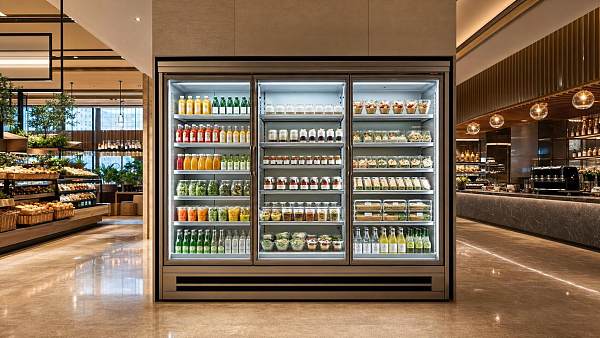
Sushi display cases are selling tools as much as refrigeration equipment. Customers often buy with their eyes first, especially in premium foodservice settings.
Clear glass, balanced lighting, and low visual distortion help products look fresh and high value. But strong visibility should never come at the expense of thermal control.
When comparing units, review these display factors:
- Glass clarity under service lighting
- Anti-fog performance in humid conditions
- Interior lighting color that does not distort food appearance
- Shelf angle and height for easy customer viewing
- Frame design that avoids blocking key products
A common buying mistake is choosing oversized glass areas without checking condensation behavior. If the case fogs up during busy periods, merchandising value drops immediately.
Well-designed sushi display cases balance visual openness with dependable cooling. That balance matters more than flashy styling or decorative features.
Counter Space Should Be Measured in Working Space
Counter space is usually tighter than expected. The challenge is not only the unit footprint, but also how it affects staff movement, food prep, and customer interaction.
In actual operations, a compact case can still create friction if doors open awkwardly, service access is limited, or cleaning clearance is ignored.
Before approving any sushi display cases, check:
- Overall dimensions, including rear ventilation clearance
- Usable display area versus total footprint
- Loading access for staff during busy service
- Relationship to POS terminals, prep zones, and customer reach
- Cleaning access around corners, glass, and drain areas
This is where drawings and real site measurements matter. A unit that looks efficient on paper may reduce working space once cable routing and ventilation are considered.
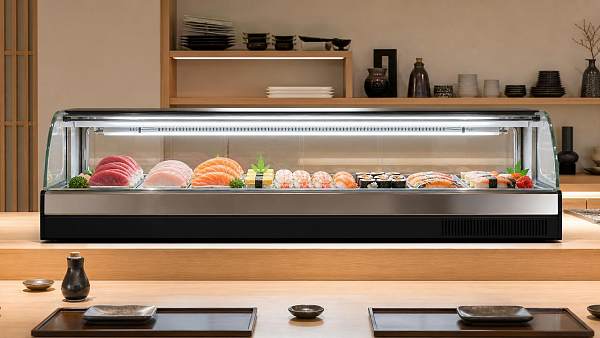
For compact venues, curved-glass or slim-depth sushi display cases often perform well. Still, the best choice depends on how the counter is actually used throughout the day.
Compare Build Quality and Food Safety Details
Once the main format is clear, build quality becomes the next filter. Commercial buyers should look beyond surface finish and focus on durability, hygiene, and service life.
Sushi display cases handle moisture, repeated cleaning, and constant opening. Weak seals, thin stainless steel, or poor joint finishing can create maintenance issues quickly.
Important checkpoints include:
- Food-contact materials suitable for commercial environments
- Smooth interior surfaces for fast sanitation
- Durable gaskets and hinges
- Corrosion resistance in humid conditions
- Drainage and condensate management design
Compliance documents also deserve attention. Depending on the market, buyers may need electrical certifications, food safety declarations, and refrigerant compliance records.
In cross-border procurement, document readiness often signals supplier maturity. It also reduces delays during installation, inspection, or project handover.
Evaluate Energy Use and Total Cost of Ownership
Purchase price is only one part of the decision. Over time, energy use, service calls, spare parts, and product waste often have a bigger financial impact.
That is why experienced buyers compare sushi display cases through total cost of ownership, not just initial quotation.
A lower-cost unit can become expensive if it struggles in warm conditions or requires frequent maintenance. On the other hand, over-specifying the case may also waste budget.
The better approach is to align performance with actual service demand. That keeps sushi display cases commercially efficient without paying for unnecessary features.
Questions to Ask Suppliers Before Final Approval
A strong sourcing process depends on better questions. Clear supplier answers often reveal whether the product is ready for professional commercial use.
- What temperature data is available under real operating conditions?
- How does the unit perform in high humidity or high ambient heat?
- What refrigerant is used, and is it compliant in the target market?
- Which parts are most commonly replaced?
- How quickly can spare parts be supplied?
- What certifications and inspection documents are available?
- Can the supplier support OEM or layout-specific adjustments?
In many projects, the supplier’s responsiveness is almost as important as the machine itself. Good technical support reduces risk before and after delivery.
Make the Final Choice Based on Operational Fit
The best sushi display cases are not simply the coldest, the biggest, or the cheapest. They are the units that match the service model, protect food quality, and support efficient use of space.
A practical decision framework is simple. Confirm temperature stability first, then visibility quality, then counter fit, then lifetime operating cost.
This order helps avoid a common sourcing mistake. Many teams start with appearance and dimensions, then discover cooling or maintenance problems later.
When evaluated carefully, sushi display cases can do more than hold products. They can strengthen food safety control, improve presentation, and make service flow smoother.
For any final review, compare shortlisted models side by side using the same criteria. That keeps the decision objective and easier to defend internally.
In the end, the right sourcing decision comes from operational fit. When sushi display cases align with temperature demands, visibility goals, and space limits, they create value far beyond the counter.
Search News
Hot Articles
- Jewelry Packaging & DisplayHow U.S. Retailers Can Choose Jewelry Displays for Better Security and SalesSep 13, 2026
- Commercial KitchenHow to Size a Restaurant Walk-In Cooler for Peak Inventory and Kitchen LayoutSep 12, 2026
- Musical InstrumentsHow to Choose Touring Instrument Cases for Flights, Trucks, and Daily Load-InsSep 11, 2026
Popular Tags
Need ExpertConsultation?
Connect with our specialized leisureengineering team for procurementstrategies.
Recommended News
 Sep 12, 2026How to Size a Restaurant Walk-In Cooler for Peak Inventory and Kitchen LayoutRestaurant walk in coolers sized for peak inventory and kitchen workflow help improve food safety, staff efficiency, storage access, and long-term operational performance.● Hospitality Sourcing Dir
 Sep 10, 2026How to Choose a CE Hot Dog Roller for Safe, High-Volume Food Service?Choose a CE hot dog roller with confidence: compare compliance documents, heating consistency, cleaning design, capacity, and total cost for safe, high-volume food service.● Hospitality Sourcing Dir
 Sep 04, 2026How to Evaluate a Commercial Food Warmer Manufacturer for Bulk Catering ProjectsCommercial food warmer manufacturer evaluation guide for bulk catering projects: compare thermal performance, compliance, customization, costs, and after-sales support.● Hospitality Sourcing Dir
 Aug 30, 2026How Can Buyers Verify Supplier Qualifications Before a Bulk Order?How to confirm supplier qualifications before placing a bulk order: verify legal identity, factory capability, certificates, samples, quality controls, and payment safeguards.● Hospitality Sourcing Dir
 Aug 28, 2026Commercial Kitchen Design Standards: A Planning Checklist for Code-Compliant LayoutsCommercial kitchen design standards: use this practical checklist to plan safer, code-compliant layouts, streamline approvals, and avoid costly rework.● Hospitality Sourcing Dir
 Aug 06, 2026How to Choose Flake Ice Makers for Seafood Displays, Bars, and Food Prep?Flake ice makers buying guide: compare output, hygiene, storage, energy use, and reliability to choose the best solution for seafood displays, bars, and food prep.● Hospitality Sourcing Dir
 Aug 03, 2026Commercial Kitchen Design Price: What Drives Cost in a New Build Project?Commercial kitchen design price explained: discover what drives cost in a new build, from layout and equipment to ventilation, compliance, and hidden budget risks.● Hospitality Sourcing Dir
 Jul 30, 2026How to Choose a Countertop Commercial Pizza Oven for Capacity, Speed, and Space?Countertop commercial pizza oven buying guide: learn how to match capacity, bake speed, and kitchen space for consistent output, lower costs, and smarter purchasing decisions.● Hospitality Sourcing Dir
 Jul 22, 2026How to Evaluate a Cotton Candy Machine Supplier for Quality, Lead Time, and MOQCotton candy machine supplier selection starts with quality, lead time, and MOQ. Learn how to compare suppliers, reduce sourcing risk, and choose a partner that supports reliable growth.● Hospitality Sourcing Dir
 Jul 21, 2026How to Choose a Charcoal Commercial Grill for Capacity, Heat Control, and Menu FitCharcoal commercial grill buying guide: learn how to match capacity, heat control, and menu fit to boost consistency, service speed, and ROI in commercial kitchens.● Hospitality Sourcing Dir
 Jul 10, 2026FDA Import Alert Adds NSF/ANSI 50-2026 for Commercial Kitchen EquipmentFDA Import Alert now highlights NSF/ANSI 50-2026 for commercial kitchen equipment. Learn how dishwashers, ice machines, and steam cabinets can avoid U.S. port detention.● Hospitality Sourcing Dir
 Jul 05, 2026How to Select Energy Efficient Display Cabinets for Food Retail and HospitalityEnergy efficient display cabinets can cut operating costs while improving food safety, visibility, and service efficiency. Learn how to choose the right model for retail and hospitality.● Hospitality Sourcing Dir
 Jul 04, 2026CPSC Flags New UL 2595 Label Rule for Commercial Ice MakersCPSC flags a new UL 2595 label rule for commercial ice makers entering the U.S. after Aug. 1, 2026. Learn who is affected, key compliance steps, and how to avoid port delays and recall risk.● Hospitality Sourcing Dir
 Jun 29, 2026How to Choose Thermal Receipt Printers for Retail and Restaurant CountersThermal receipt printers for retail and restaurant counters: learn how to compare speed, durability, connectivity, and total operating cost to choose a model that supports smoother service.● Hospitality Sourcing Dir
 Jun 28, 2026Stainless Steel Kitchen Ventilation Systems: Key Specifications for Commercial ProjectsStainless steel kitchen ventilation systems: compare material grades, airflow capture, hygiene, fire safety, and installation specs for commercial projects before you buy.● Hospitality Sourcing Dir
 Jun 27, 2026Commercial Shawarma Machines: What to Check Before Buying for High-Volume ServiceShawarma machines commercial buying guide: learn how to compare capacity, heat control, durability, compliance, and lifecycle cost before choosing equipment for high-volume service.● Hospitality Sourcing Dir
 Jun 26, 2026Restaurant POS Systems: How to Compare Features, Costs, and ScalabilityRestaurant POS systems: compare features, costs, and scalability to find the best fit for your restaurant and boost long-term efficiency.● Hospitality Sourcing Dir
 Jun 25, 2026Kitchen Ventilation Systems Design: How to Size Hoods, Airflow, and Make-Up AirKitchen ventilation systems design explained clearly: learn how to size hoods, set exhaust airflow, and balance make-up air for safer, more efficient commercial kitchens.● Hospitality Sourcing Dir
 Jun 14, 2026Hot Dog Rollers for Convenience Stores and Cafes: Capacity, Heating Zones, and Cleaning TipsHot dog rollers buying guide for convenience stores and cafes: compare real capacity, heating zones, energy use, and cleaning tips to choose a smarter, lower-waste setup.● Hospitality Sourcing Dir
 Jun 13, 2026Commercial Milkshake Mixers vs Blenders: Which Is Better for High-Volume Service?Commercial milkshake mixers or blenders—which suits high-volume service better? Compare texture, speed, consistency, and cost to choose the right machine.● Hospitality Sourcing Dir
 Jun 12, 2026Blast Chillers Commercial Buying Guide: Capacity, Cooling Rate, and Kitchen Workflow FitBlast chillers commercial buying guide covering capacity, cooling rate, and workflow fit. Learn how to choose safer, faster, audit-ready equipment for real kitchen performance.● Hospitality Sourcing Dir
 Jun 10, 2026How to Choose Sushi Display Cases for Temperature Control, Visibility, and Counter SpaceSushi display cases buying guide: learn how to compare temperature control, product visibility, and counter space to choose safer, smarter, and more profitable commercial solutions.● Hospitality Sourcing Dir
 Jun 08, 2026How to Choose Commercial Bread Slicers for Bakeries, Cafes, and Foodservice KitchensCommercial bread slicers buying guide for bakeries, cafes, and foodservice kitchens. Compare capacity, slice consistency, safety, cleaning, and supplier support to choose with confidence.● Hospitality Sourcing Dir
 Jun 06, 2026Dough Sheeters Wholesale Buying Guide: Roller Width, Capacity, and Safety FeaturesDough sheeters wholesale buying guide: compare roller width, real capacity, and safety features to choose a reliable machine for bakeries, hotels, and foodservice operations.● Hospitality Sourcing Dir