Conveyor Pizza Oven Price: What Buyers Should Budget for Capacity and Features
Conveyor Pizza Oven Price: What Buyers Should Budget for Capacity and Features
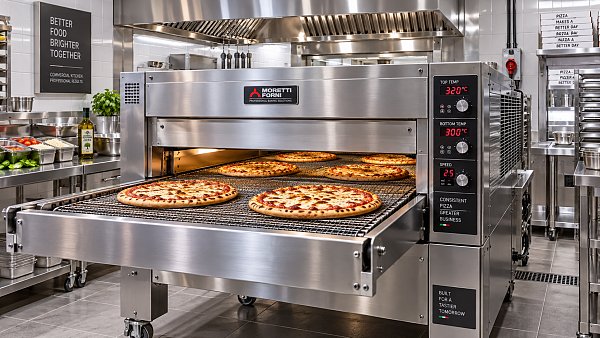
Understanding conveyor pizza oven price is essential for procurement teams balancing throughput, kitchen footprint, energy efficiency, and long-term operating costs. A conveyor oven may look like a straightforward piece of hot-food equipment, but the purchase decision affects service speed, menu consistency, ventilation planning, utility capacity, and maintenance budgets for years.
For hotels, food courts, institutional kitchens, catering operations, entertainment venues, and multi-site restaurant groups, the lowest unit price is rarely the lowest-cost option. A compact oven that cannot absorb peak demand can create queue problems. An oversized oven can consume valuable line space and add unnecessary energy load. The practical question is not simply “How much does a conveyor pizza oven cost?” but “What capacity and specification level does this operation actually need?”
Typical Commercial Price Bands
Pricing varies by region, electrical configuration, fuel type, conveyor width, brand position, controls, certification requirements, and whether the quotation includes freight, installation support, or accessories. Still, early-stage budgeting usually benefits from broad planning bands. The following figures should be treated as indicative equipment-only ranges in US dollars, not as confirmed market quotations.
These bands can move substantially once local compliance, gas conversion, voltage adaptation, factory options, export packing, and site conditions are included. A low initial offer should therefore be reviewed line by line. It may exclude a stand, hood interface components, freight insurance, commissioning, spare parts, or the electrical work needed to put the oven into service.
Capacity Drives the Real Buying Decision
Throughput claims are one of the most misunderstood parts of comparing conveyor ovens. A supplier may state pizzas per hour, but the number depends on pizza diameter, bake time, belt loading pattern, product temperature, crust style, and operator discipline. A thin, smaller pizza can be positioned closer together than a large fresh-dough pizza with generous toppings. Procurement teams should request the assumptions behind every output claim.
A better starting point is the operation’s busiest 15-minute or 30-minute interval. Count expected pizza orders, identify the dominant pizza size, and include non-pizza items that may use the same oven. Flatbreads, baked sandwiches, nachos, chicken products, and reheating trays can all consume belt time. If an outlet expects 40 pizzas in its busiest 15 minutes, selecting equipment based on average hourly sales will likely produce an under-capacity kitchen.
Conveyor width matters as much as chamber length. A wider belt can permit multiple smaller products side by side, while a longer bake chamber supports a slower travel time at a given temperature. Neither configuration is automatically better. The right choice depends on whether the menu is built around a single pizza format, mixed products, or frequent changes in load size.
Do not buy capacity without considering redundancy
A single large conveyor oven may appear more economical than two smaller units. In some kitchens it is. Yet two units can provide operational resilience, allow different bake profiles, and reduce exposure when one oven requires service. This is especially relevant in hotels with all-day dining, leisure parks with concentrated peak periods, and sites where a menu cannot simply be reduced during a breakdown.
The trade-off is clear: twin units increase purchase cost, installation complexity, and utility demand. But the decision should be assessed against lost sales, guest dissatisfaction, and emergency replacement risk rather than equipment price alone.
What Adds Cost Beyond Basic Heat and a Moving Belt
Two ovens with similar external dimensions can have very different prices because the cost sits in the components, controls, and operational design. Stainless steel thickness, insulation quality, motor construction, fan systems, access panels, and electronics all influence durability and serviceability. These details are difficult to assess from a product image or a short quotation.
Digital controls are often worth evaluating carefully. Programmable belt speed and temperature settings can help standardize output across shifts and locations. For a single independent outlet with a narrow menu, a simpler interface may be sufficient. For a restaurant group, hotel portfolio, or institution managing rotating staff, repeatable recipe settings can reduce variation and make training less dependent on individual operator skill.
Other cost drivers commonly include:
- Electric, gas, or hybrid heating configuration;
- Belt width, baking chamber size, and stackable design;
- Ventless or reduced-ventilation claims, where permitted by local authorities;
- Automatic standby functions and energy-management controls;
- Export-ready voltage, plug, gas pressure, and language requirements;
- Local safety approvals, documentation, and testing requirements;
- OEM branding, non-standard finishes, or custom line integration.
Ventilation deserves particular caution. An oven marketed as ventless does not automatically eliminate the need for site review. Local fire, building, health, and electrical rules may still apply, and the acceptability of an installation can depend on the product being cooked, grease load, existing kitchen systems, and the authority having jurisdiction. Procurement should confirm the site requirement before treating ventilation savings as guaranteed.
Initial Price Is Only One Part of the Budget
The total installed cost of a conveyor pizza oven can be materially higher than the supplier’s base equipment price. Utilities are a frequent surprise. Electric units may need dedicated circuits, appropriate disconnects, and sufficient panel capacity. Gas units require correct pressure, shut-off arrangements, and installation by qualified personnel. In either case, site access, delivery routes, floor loading, clearance around the equipment, and extraction coordination should be checked before an order is released.
Freight also needs scrutiny. A delivered-duty-paid offer can be easier to compare than a factory-ex-works number, but it may not include unloading, placement, final connection, or waste removal. International sourcing adds another layer: packaging quality, transit protection, spare-parts availability, customs documentation, and warranty responsibility should be explicit rather than assumed.
Operating cost depends on local energy tariffs, hours of use, loading rate, preheat routine, and maintenance condition. It is not reliable to declare one fuel type universally cheaper. An electric oven can be attractive where electricity supply is suitable and gas infrastructure is limited; gas may be preferred in other markets or kitchens. Buyers should ask for rated input information, then have their facilities or engineering teams model expected consumption against local tariffs and operating hours.
Comparing Quotes Without Being Misled
A useful quote comparison starts by making every supplier answer the same brief. Without that discipline, procurement teams often compare a fully specified machine against a base unit that appears cheaper only because key items are absent.
The brief should define the required product sizes, projected peak demand, utility type, available voltage or gas conditions, space envelope, delivery destination, compliance expectations, and whether installation or commissioning is required. It should also ask suppliers to state belt dimensions, external dimensions, rated power or gas input, production assumptions, recommended cleaning routines, included accessories, warranty scope, lead time, and spare-parts support.
Pay attention to exclusions and ambiguous terms. “Capacity” may mean theoretical output. “Warranty” may cover parts but not labor, freight, or travel. “Certification available” may mean the manufacturer can provide documents, not that the offered configuration is accepted in the destination market. A well-prepared procurement file records these differences before commercial negotiations begin.
Service access is a cost feature
Daily cleaning is part of the ownership equation. Cheese, flour, grease, and carbon buildup can affect performance and create avoidable service calls. Buyers should look at how easily the belt, crumb trays, access panels, filters, and critical components can be reached. A cheaper oven that takes excessive time to clean, or requires difficult disassembly for routine maintenance, can become expensive in a labor-constrained kitchen.
For multi-site operators, standardizing selected wear parts and control logic can simplify training and inventory. This may justify a higher purchase price than a collection of locally sourced units with inconsistent components.
A Practical Budgeting Approach
Rather than approving an oven from a catalogue price, build the budget in layers: base equipment, mandatory factory options, freight and import costs, site preparation, installation, compliance work, commissioning, initial spare parts, and a reasonable service contingency. Then compare the total against the expected demand profile and operational life of the site.
This approach is particularly useful for mixed-use commercial projects. A premium hotel may prioritize quiet operation, finish quality, recipe consistency, and service support. A smart-campus food hall may need high recovery during class breaks and robust operator controls. An amusement venue may value rapid throughput during a short peak window more than all-day efficiency. The best conveyor pizza oven price is therefore the price of a configuration that fits the service model, not merely the lowest number on a bid sheet.
Global Commercial Trade (GCT) approaches commercial equipment sourcing through this wider project lens: matching hospitality and foodservice requirements with practical questions around capacity, compliance, design coordination, and supply-chain reliability. For buyers evaluating overseas and domestic options, that wider view can reveal gaps that a unit-price comparison will miss.
Before issuing a purchase order, ask the selected supplier to confirm the final configuration against the site utility schedule, product mix, local installation requirements, and delivery responsibilities. Those confirmations may take extra time during procurement, but they are usually less costly than discovering a mismatch after the oven reaches the kitchen.
Search News
Hot Articles
- Commercial KitchenConveyor Pizza Oven Price: What Buyers Should Budget for Capacity and FeaturesSep 24, 2026
- Commercial KitchenHow Restaurant Buyers Can Source Hospitality Supplies Without OverorderingSep 23, 2026
- Commercial KitchenCommercial Kitchen Design Price: Budgeting by Layout, Equipment, and MEP ScopeSep 22, 2026
Popular Tags
Need ExpertConsultation?
Connect with our specialized leisureengineering team for procurementstrategies.
Recommended News
 Sep 24, 2026Conveyor Pizza Oven Price: What Buyers Should Budget for Capacity and FeaturesConveyor pizza oven price guide: compare capacity, features, installation costs, and quote factors to choose the right commercial oven for your operation.● Hospitality Sourcing Dir
 Sep 23, 2026How Restaurant Buyers Can Source Hospitality Supplies Without OverorderingHospitality supplies for restaurants: learn practical sourcing strategies to cut excess inventory, protect cash flow, improve supplier reliability, and keep every service running smoothly.● Hospitality Sourcing Dir
 Sep 22, 2026Commercial Kitchen Design Price: Budgeting by Layout, Equipment, and MEP ScopeCommercial kitchen design price explained: budget smarter for layout, equipment, MEP scope, compliance, installation, and long-term operational performance.● Hospitality Sourcing Dir
 Sep 19, 2026How to Select a Spiral Dough Mixer for Bakery Batch Size and Dough HydrationSpiral dough mixer bakery guide: match batch size, flour load, and hydration to select reliable torque, temperature control, and consistent dough results.● Hospitality Sourcing Dir
 Sep 14, 2026How Restaurants Can Choose Disposable Wooden Cutlery for Takeout and CateringDisposable wooden cutlery fork spoon knife guide for restaurants: compare strength, finish, packaging, food-contact needs, and catering performance.● Hospitality Sourcing Dir
 Sep 12, 2026How to Size a Restaurant Walk-In Cooler for Peak Inventory and Kitchen LayoutRestaurant walk in coolers sized for peak inventory and kitchen workflow help improve food safety, staff efficiency, storage access, and long-term operational performance.● Hospitality Sourcing Dir
 Sep 10, 2026How to Choose a CE Hot Dog Roller for Safe, High-Volume Food Service?Choose a CE hot dog roller with confidence: compare compliance documents, heating consistency, cleaning design, capacity, and total cost for safe, high-volume food service.● Hospitality Sourcing Dir
 Sep 04, 2026How to Evaluate a Commercial Food Warmer Manufacturer for Bulk Catering ProjectsCommercial food warmer manufacturer evaluation guide for bulk catering projects: compare thermal performance, compliance, customization, costs, and after-sales support.● Hospitality Sourcing Dir
 Aug 30, 2026How Can Buyers Verify Supplier Qualifications Before a Bulk Order?How to confirm supplier qualifications before placing a bulk order: verify legal identity, factory capability, certificates, samples, quality controls, and payment safeguards.● Hospitality Sourcing Dir
 Aug 28, 2026Commercial Kitchen Design Standards: A Planning Checklist for Code-Compliant LayoutsCommercial kitchen design standards: use this practical checklist to plan safer, code-compliant layouts, streamline approvals, and avoid costly rework.● Hospitality Sourcing Dir
 Aug 06, 2026How to Choose Flake Ice Makers for Seafood Displays, Bars, and Food Prep?Flake ice makers buying guide: compare output, hygiene, storage, energy use, and reliability to choose the best solution for seafood displays, bars, and food prep.● Hospitality Sourcing Dir
 Aug 03, 2026Commercial Kitchen Design Price: What Drives Cost in a New Build Project?Commercial kitchen design price explained: discover what drives cost in a new build, from layout and equipment to ventilation, compliance, and hidden budget risks.● Hospitality Sourcing Dir
 Jul 30, 2026How to Choose a Countertop Commercial Pizza Oven for Capacity, Speed, and Space?Countertop commercial pizza oven buying guide: learn how to match capacity, bake speed, and kitchen space for consistent output, lower costs, and smarter purchasing decisions.● Hospitality Sourcing Dir
 Jul 22, 2026How to Evaluate a Cotton Candy Machine Supplier for Quality, Lead Time, and MOQCotton candy machine supplier selection starts with quality, lead time, and MOQ. Learn how to compare suppliers, reduce sourcing risk, and choose a partner that supports reliable growth.● Hospitality Sourcing Dir
 Jul 21, 2026How to Choose a Charcoal Commercial Grill for Capacity, Heat Control, and Menu FitCharcoal commercial grill buying guide: learn how to match capacity, heat control, and menu fit to boost consistency, service speed, and ROI in commercial kitchens.● Hospitality Sourcing Dir
 Jul 10, 2026FDA Import Alert Adds NSF/ANSI 50-2026 for Commercial Kitchen EquipmentFDA Import Alert now highlights NSF/ANSI 50-2026 for commercial kitchen equipment. Learn how dishwashers, ice machines, and steam cabinets can avoid U.S. port detention.● Hospitality Sourcing Dir
 Jul 05, 2026How to Select Energy Efficient Display Cabinets for Food Retail and HospitalityEnergy efficient display cabinets can cut operating costs while improving food safety, visibility, and service efficiency. Learn how to choose the right model for retail and hospitality.● Hospitality Sourcing Dir
 Jul 04, 2026CPSC Flags New UL 2595 Label Rule for Commercial Ice MakersCPSC flags a new UL 2595 label rule for commercial ice makers entering the U.S. after Aug. 1, 2026. Learn who is affected, key compliance steps, and how to avoid port delays and recall risk.● Hospitality Sourcing Dir
 Jun 29, 2026How to Choose Thermal Receipt Printers for Retail and Restaurant CountersThermal receipt printers for retail and restaurant counters: learn how to compare speed, durability, connectivity, and total operating cost to choose a model that supports smoother service.● Hospitality Sourcing Dir
 Jun 28, 2026Stainless Steel Kitchen Ventilation Systems: Key Specifications for Commercial ProjectsStainless steel kitchen ventilation systems: compare material grades, airflow capture, hygiene, fire safety, and installation specs for commercial projects before you buy.● Hospitality Sourcing Dir
 Jun 27, 2026Commercial Shawarma Machines: What to Check Before Buying for High-Volume ServiceShawarma machines commercial buying guide: learn how to compare capacity, heat control, durability, compliance, and lifecycle cost before choosing equipment for high-volume service.● Hospitality Sourcing Dir
 Jun 26, 2026Restaurant POS Systems: How to Compare Features, Costs, and ScalabilityRestaurant POS systems: compare features, costs, and scalability to find the best fit for your restaurant and boost long-term efficiency.● Hospitality Sourcing Dir
 Jun 25, 2026Kitchen Ventilation Systems Design: How to Size Hoods, Airflow, and Make-Up AirKitchen ventilation systems design explained clearly: learn how to size hoods, set exhaust airflow, and balance make-up air for safer, more efficient commercial kitchens.● Hospitality Sourcing Dir
 Jun 14, 2026Hot Dog Rollers for Convenience Stores and Cafes: Capacity, Heating Zones, and Cleaning TipsHot dog rollers buying guide for convenience stores and cafes: compare real capacity, heating zones, energy use, and cleaning tips to choose a smarter, lower-waste setup.● Hospitality Sourcing Dir