Can Amusement Ride Suppliers Meet Safety Rules Without On-Site Audits?
Yes, an amusement ride supplier may satisfy applicable safety requirements without a buyer conducting an on-site factory audit. That depends on whether the relevant approval process accepts the available evidence, whether that evidence covers the exact ride being supplied, and whether any required physical inspections still take place. A remote assessment can support supplier approval, but it cannot replace an inspection that must be performed in person.
The question “can a supplier pass amusement safety compliance without on-site audit” therefore needs one distinction: approving a manufacturer is different from approving a ride for operation. A supplier may pass your sourcing review while the completed installation still needs examination, testing, or authorization before carrying passengers.
A practical decision starts by identifying what needs approval, then checking whether documents and remote observation can establish it. The aim is to avoid leaving an important safety question unanswered simply because a factory visit is inconvenient.
Define what “passing compliance” means for the purchase.
The phrase can describe several different decisions. Supplier qualification examines whether a manufacturer has suitable capabilities and production controls. Design assessment examines whether the ride’s engineering addresses its intended loads, movements, restraints, and failure conditions. Manufacturing verification checks whether the delivered equipment follows that design. Installation and commissioning checks address the assembled ride at its operating location.
These decisions require different evidence. A company’s quality management certificate may support confidence in its processes, but it does not establish that a particular restraint system works correctly. A design review may support the engineering, but it does not prove that every production weld or electrical connection matches the approved drawings.
Before accepting a remote route, establish the following:
- Where the ride will operate and which approval requirements apply there.
- How the equipment is classified, including its intended users and operating conditions.
- Who can accept design reviews, test reports, manufacturing records, and inspection results.
- Which activities require physical attendance, witnessed testing, or examination of the installed ride.
- Whether your contract or insurance arrangements impose additional audit or inspection conditions.
Resolve these points before agreeing to a shipment date. A supplier’s statement that its equipment is “internationally compliant” is too broad to establish an approval route. The useful answer identifies the applicable requirements, the equipment covered, the supporting evidence, and the party responsible for accepting it.
Separate a factory audit from a physical ride inspection.
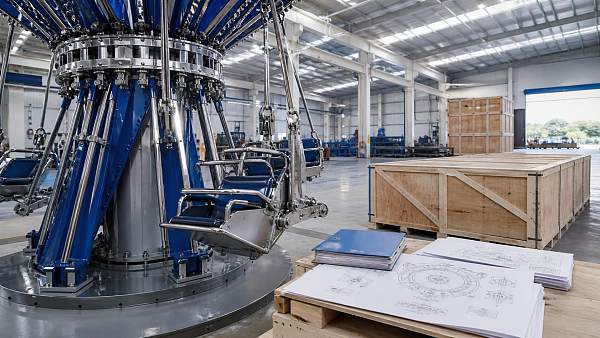
A factory audit typically examines how work is controlled: material identification, welding procedures, staff qualifications, measuring equipment, subcontracting, and treatment of defective work. A ride inspection examines an identifiable machine or installation. Although the findings can overlap, one does not automatically substitute for the other.
It may be reasonable to skip your own factory visit while commissioning an independent inspector to witness critical manufacturing stages. That arrangement still involves on-site work. Describe it accurately as remote supplier qualification supported by physical inspection, rather than a completely remote compliance process.
The distinction also prevents a common purchasing error: treating approval to place an order as permission to operate. Your sourcing decision can remain conditional on production evidence, delivery inspection, correct installation, and successful commissioning.
Build an evidence package around the actual ride.
Start with identity. The model designation, configuration, drawing revisions, and unit identification should connect across the quotation, technical file, test reports, and production records. Without that connection, an impressive document package may describe a different machine.
Configuration differences matter. A change in passenger capacity, restraint arrangement, drive system, control software, or operating speed can affect the relevance of earlier assessments. Cosmetic customization may also deserve engineering review when it changes weight, clearance, visibility, or access to moving parts.
Request evidence in five practical groups:
- Design and risk controls: drawings, supporting engineering assessments, identified hazards, and explanations of how safety functions address them.
- Materials and production: records connecting safety-critical components to their materials, fabrication processes, inspections, and any repairs.
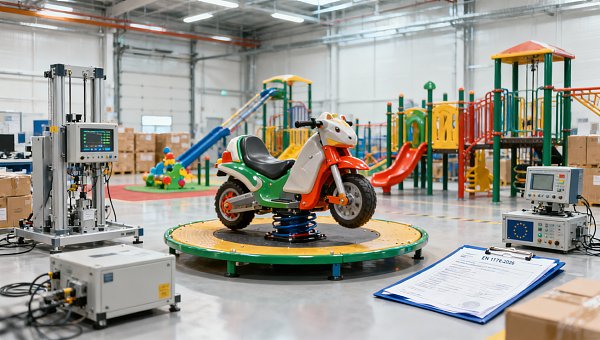
- Testing: reports identifying the tested equipment, methods, conditions, results, and unresolved findings.
- Production consistency: procedures for design changes, supplier substitutions, nonconforming parts, and release of completed equipment.
- Installation and operation: foundation and assembly requirements, operating limits, inspection instructions, maintenance tasks, and emergency procedures.
Each group answers a different question. Engineering records explain why the design should be safe. Production records show how the design was implemented. Test results demonstrate specified behavior under stated conditions. Instructions explain how that safety depends on correct installation and continued care.
For example, a test showing that an emergency stop functions does not, by itself, establish that every foreseeable control fault has been addressed. Likewise, a structural calculation does not establish the quality of the manufactured joints. Review the connections between evidence instead of counting the number of certificates.
Check what certificates and reports actually cover.
Read beyond the certificate title. Identify the issuing organization, the assessment scope, the equipment or facility covered, and any exclusions or conditions. Where applicable, check validity and the issuer’s competence or accreditation for the work performed. Authenticate important documents directly through the issuer’s verification channel.
A component certificate applies to that component within its stated scope. It does not automatically establish the safety of the complete ride. Similarly, a quality management certificate concerns a management system; its presence does not mean every product has received an independent safety assessment.
Test reports deserve the same scrutiny. Look for a clear description of the specimen, its configuration, the test method, and the acceptance criteria. A result for another model may be relevant, but the relationship needs an engineering explanation. Visual similarity alone is insufficient.
Pay particular attention to open findings. A report can document testing while also recording failures, limitations, or corrective actions. Request closure evidence showing what changed and how the correction was assessed. “Passed after adjustment” is incomplete if the delivered configuration does not incorporate that adjustment.
Use a remote assessment to follow evidence through production.
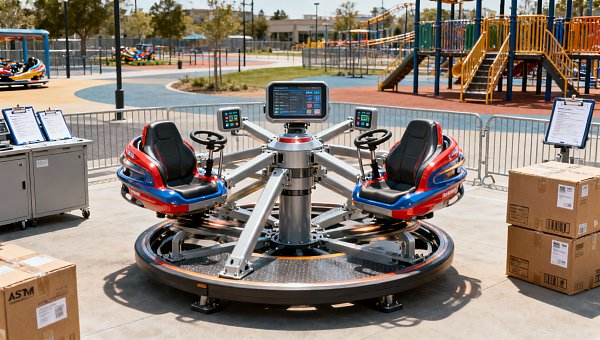
A useful remote audit is a planned examination with live access, document sampling, and follow-up. A prerecorded factory tour mainly shows what the supplier chose to film. It offers limited evidence about normal production controls.
Agree on the assessment scope in advance, then allow the assessor to select records and items during the session. For instance, choose a safety-critical assembly visible on the production floor and trace it back to its drawing revision, material identification, inspection status, and release record.
This approach tests whether the documentation belongs to the work being shown. It also reveals whether staff can retrieve records reliably or must assemble explanations after the event. Include relevant subcontractors when they perform critical fabrication, testing, or control-system work.
Live video can show identification marks, work areas, inspection equipment, and the handling of rejected parts. It can also support interviews about change control and corrective actions. However, camera resolution, restricted views, connection quality, and supplier-controlled access limit what an assessor can conclude.
Record those limits as part of the assessment scope. If a critical feature cannot be examined adequately, assign a physical inspection or another suitable verification method. Do not convert “not visible” into “acceptable.”
Decide when physical attendance is necessary.
Remote verification is more credible when the design is established, the supplied configuration matches reviewed evidence, production records are traceable, and independent assessments cover the relevant work. It becomes less persuasive when the design is new, safety-critical systems have changed, or records cannot be connected to the ordered unit.
A more demanding review is appropriate for equipment involving substantial dynamic loads, complex passenger restraints, or control functions whose failure could create hazardous movement. The decision should follow the possible consequences of a failure and the strength of the available evidence.
Arrange on-site assessment when a mandatory process requires it, when critical work needs direct observation, or when remote findings expose unresolved concerns. Examples include inconsistent component identification, unexplained fabrication repairs, undocumented substitutions, and test results that conflict with the stated configuration.
A full factory audit is not always the only useful intervention. A targeted visit can examine a subcontractor’s critical work, witness a specified test, or inspect an assembly before it becomes inaccessible. Match the visit to the unanswered question. If the concern is a concealed structural connection, a general office-and-factory tour will not resolve it.
Make approval conditional and protect later verification.
Remote qualification should produce a written decision with a defined scope. State which supplier, facility, ride model, and configuration are covered; which evidence was accepted; and which conditions remain before shipment or operation. This prevents a limited sourcing approval from becoming an unsupported claim of complete safety compliance.
The purchase agreement should make those conditions actionable. Specify document deliverables, access for agreed inspections, control of safety-related changes, and responsibility for correcting nonconformities. Link payment milestones to accepted deliverables where commercially appropriate, rather than relying only on production dates.
Require notification before changes to critical materials, components, subcontractors, or software. A substitution that appears commercially equivalent may alter the basis of a previous assessment. The contract should establish who reviews the change and what evidence is needed before it is accepted.
Preserve inspection opportunities during production. Some features become difficult to assess after painting, enclosure, or final assembly. Agreed hold points allow examination at the stage when evidence is most useful, reducing the risk of discovering an unresolved issue after shipment.
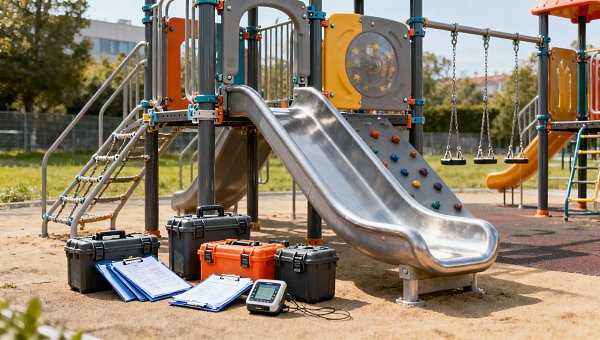
Installation introduces further conditions: foundation suitability, anchoring, electrical supply, clearances, assembly accuracy, and access for maintenance or evacuation. Factory evidence cannot establish these site conditions. Plan the required commissioning checks and operating documentation before delivery so that acceptance does not depend on improvised testing.
Global Commercial Trade’s sourcing intelligence can help organize an initial comparison of manufacturing capabilities and available documentation. That comparison supports shortlisting; ride acceptance still rests on evidence tied to the supplied configuration and the applicable approval process.
Before committing to the order, ask one concrete question: What safety-relevant fact would remain unproven if nobody visited the factory? If the answer is none because suitable evidence and accepted verification methods cover the scope, remote qualification may be reasonable. If the answer concerns critical workmanship, an unreviewed change, or a required witnessed test, arrange the physical assessment that closes that gap.
Search News
Hot Articles
- Outdoor RidesComcast Q3 Earnings: Universal Theme Park Revenue Falls 4.4% to $2.6 BillionOct 23, 2026
- Restaurant FurnitureHotel Bar Furniture Prices: What to Budget for Stools, Tables, and DeliveryOct 23, 2026
- Pro Stage AudioAudio Production for Streaming: How to Build a Dedicated Live Event MixOct 22, 2026
Popular Tags
Need ExpertConsultation?
Connect with our specialized leisureengineering team for procurementstrategies.
Recommended News
 Oct 23, 2026Comcast Q3 Earnings: Universal Theme Park Revenue Falls 4.4% to $2.6 BillionComcast Q3 earnings: Universal theme park revenue reportedly fell 4.4% to $2.6 billion. Explore what ticket discounts and pricing pressure could mean for operators, ticket sellers and suppliers.● Theme Park Strategist
 Oct 21, 2026IAAPA Launches Insurance Solution for North American Attractions IndustryExplore IAAPA Insurance Solution, a dedicated insurance and risk management offering for North American attractions operators, and discover what it could mean for your business.● Theme Park Strategist
 Oct 20, 2026Energylandia Announces Rokan, Set to Be Europe’s Tallest and Longest B&M Wing CoasterDiscover Energylandia’s Rokan, set to become Europe’s tallest and longest B&M wing coaster. Explore the 62-metre thrill ride planned for spring 2027 in the new Volana themed area.● Theme Park Strategist
 Oct 23, 2026Can Amusement Ride Suppliers Meet Safety Rules Without On-Site Audits?Can a supplier pass amusement safety compliance without on-site audit? Explore accepted evidence, remote checks, and required inspections to make safer sourcing decisions.● Theme Park Strategist
 Oct 03, 2026How to Select Leisure Park Equipment for Safe, High-Throughput Visitor AreasLeisure park equipment selection guide for safe, high-throughput venues—explore capacity, supervision, durability, accessibility, and supplier criteria.● Theme Park Strategist
 Sep 18, 2026What Drives Animatronic Dinosaur Manufacturer Prices for Theme Park Projects?Animatronic dinosaurs manufacturer price guide: compare motion, materials, controls, installation, and lifecycle costs to plan a durable theme park attraction.● Theme Park Strategist
 Sep 06, 2026Do Amusement Ride Safety Compliance Requirements Change Every Year?Do amusement safety compliance requirements change annually? Learn what really changes, from standards and inspections to permits, upgrades, and local approvals.● Theme Park Strategist
 Sep 02, 2026How Long Does It Take to Receive Full Safety Documents From an OEM?How long does it take to get full safety documentation from OEM partners? Discover realistic timelines, common delays, and practical steps to secure compliant files faster.● Theme Park Strategist
 Sep 03, 2026Designing Adventure Park Safety Systems for Zip Lines, Ropes Courses, and Daily InspectionsAdventure park safety systems: learn how to design safer zip lines and ropes courses with daily inspections, defect controls, rescue readiness, and staff training.● Theme Park Strategist
 Aug 22, 2026What to Look for When Choosing Three Seat Jet Skis for Rental or Resort UseThree seat jet skis for rental or resort use should balance stability, safety, maintenance, and guest comfort. Learn how to choose models that boost uptime and guest satisfaction.● Theme Park Strategist
 Aug 17, 2026What Parts Matter Most in a Roller Coaster and How Do They Affect Ride Safety?Roller coaster parts determine ride safety more than most riders realize. Explore how tracks, restraints, brakes, wheels, and control systems work together to protect every ride.● Theme Park Strategist
 Aug 15, 20262026 China Sports Expo Sees 45.74% More Overseas Pre-registered Buyers as POB Expands Procurement Matching2026 China Sports Expo boosts overseas pre-registered buyers by 45.74% as POB expands procurement matching for fitness, outdoor, and venue suppliers.● Theme Park Strategist
 Aug 14, 2026What Should Buyers Check Before Choosing a Flying Chair Ride Exporter?Flying chair ride exporter buyers should check safety, structure, export support, and spare parts before purchase to reduce risk and choose a reliable supplier.● Theme Park Strategist
 Aug 04, 2026EU Issues EN 1176-1:2026 for Playground SafetyEU Issues EN 1176-1:2026 for Playground Safety: learn how the new standard impacts Outdoor Rides, CE certification, inventory checks, and EU compliance before March 2027.● Theme Park Strategist
 Aug 03, 2026CPSC Adopts ASTM F1487-26 for Imported Outdoor RidesOutdoor Rides face a major U.S. compliance shift as CPSC adopts ASTM F1487-26. Learn the new certification, testing, and customs risks before November 1, 2026.● Theme Park Strategist
 Jul 26, 2026Revised EN 1176:2026 Triggers Re-Certification for Outdoor RidesOutdoor Rides face immediate EN 1176:2026 re-certification for new CE applications. Learn how testing, documentation, and EU market access rules now affect exports and delivery plans.● Theme Park Strategist
 Jul 21, 2026CPSC Recall Flags Structural Risk in Outdoor RidesCPSC recall flags structural risk in outdoor rides: learn how ASTM F1487-23 failures affect importers, distributors, and compliance teams across the U.S., Canada, and Australia.● Theme Park Strategist
 Jul 19, 2026How to Choose Outdoor Fitness Equipment for Parks Based on Users, Space, and BudgetOutdoor fitness equipment for parks: learn how to choose the right mix based on users, space, and budget to improve safety, usage, and long-term value.● Theme Park Strategist
 Jul 15, 2026Ocean Freight Spike Pressures Outdoor Rides ExportsOcean Freight Spike Pressures Outdoor Rides Exports as Shanghai-Rotterdam rates surge 42%. See how rising freight costs, delays, and rerouting risks could reshape Europe-bound delivery plans.● Theme Park Strategist
 Jul 14, 2026EN 1176 Revision Takes Effect for Outdoor Ride Weld TestingEN 1176 revision takes effect for outdoor ride weld testing from Sept 1, 2026. Learn ISO 5817 level B, third-party NDT report rules, and key EU compliance steps.● Theme Park Strategist
 Jul 12, 2026Vietnam Requires AI Anti-Collision Systems for Imported Outdoor RidesVietnam Requires AI Anti-Collision Systems for Imported Outdoor Rides from Sept. 15, 2026. Learn compliance rules, VAST certification needs, and how importers can avoid delays.● Theme Park Strategist
 Jul 11, 2026Vietnam Tightens Rules for Imported Outdoor RidesVietnam Tightens Rules for Imported Outdoor Rides: learn how Vietnam’s 2026 compliance update adds AI anti-collision, Vietnamese logs, and local maintenance duties for importers and manufacturers.● Theme Park Strategist
 Jul 09, 2026How to Evaluate a Lazy River Equipment Supplier for Safety, Flow Design, and MaintenanceLazy river equipment supplier selection affects safety, flow design, and maintenance costs. Learn what to compare, what to ask, and how to choose a reliable partner.● Theme Park Strategist
 Jul 08, 2026RCEP Update Cuts ASEAN Tariffs to Zero for Outdoor RidesRCEP update cuts ASEAN tariffs to zero for outdoor rides from China. Learn how FSC-CoC, PEFC traceability, and e-CO compliance affect exports, sourcing, and buyer decisions.● Theme Park Strategist