Which Professional Sound System Specs Matter Most for Live Venues?
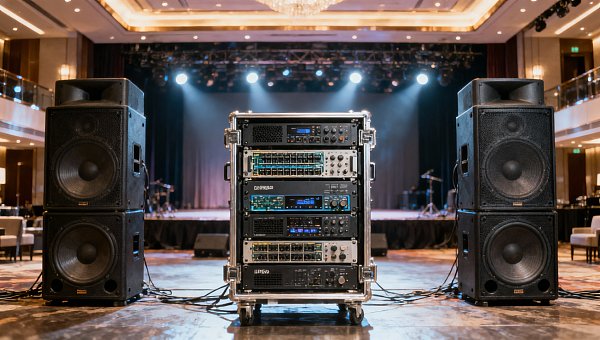
The professional sound system specs that matter most for live venues are usable maximum sound pressure level, coverage, frequency response, and performance at sustained output. Together, they determine whether vocals remain clear, listeners hear a balanced mix across the room, and musical peaks stay clean. Amplifier wattage helps explain how a system operates, but it cannot tell you how well that system will serve a particular venue.
Start with the room and the performances it needs to support. A speech-focused space, an intimate acoustic stage, and a venue hosting amplified bands place different demands on the same equipment. The useful question is whether the complete system can deliver the required sound throughout the audience area, with enough reserve for demanding moments.
Define the room before comparing loudspeakers
A speaker specification becomes meaningful when you know the distance it must cover and the surfaces around it. Record the audience area’s width and depth, ceiling height, stage position, possible mounting locations, and any balconies or seating beneath overhangs. Note reflective surfaces such as glass, concrete, and bare walls.
Also define the program: spoken presentations, acoustic music, amplified bands, DJ performances, or a mixture. These uses require different amounts of low-frequency output and different balances between average level and brief peaks. Audience capacity alone is a weak basis for choosing a PA system; two rooms with similar capacities can have very different shapes and acoustic behavior.
Establish the intended operating level and any sound limits that affect the venue. Additional system capacity provides useful headroom, but the design still needs an appropriate listening level. If the room is highly reverberant, improving speaker placement and acoustic treatment may contribute more to intelligibility than buying louder equipment.
Read maximum SPL as a performance claim with conditions
Maximum SPL describes a loudspeaker’s sound pressure output under stated conditions. It is more relevant to loudness capability than amplifier power, but figures are only comparable when their measurement methods are compatible.
Check whether the published maximum is measured or calculated. A calculated figure may combine sensitivity and amplifier power without fully accounting for driver limits, thermal compression, or protective processing. A measured figure is more informative when the manufacturer also states the test signal, measurement distance, duration, and allowable distortion.
Peak output and sustained output answer different questions. A brief peak rating indicates the ability to reproduce short transients. Sustained performance indicates how the system behaves through demanding passages or extended use. A speaker may produce strong momentary output while its limiter reduces level during a dense mix.
Headroom is the reserve between normal operating level and the system’s usable limit. It allows vocal accents, percussion, and other peaks to pass without persistent limiting or audible strain. The required reserve depends on the material: a dynamic acoustic performance and heavily compressed dance music stress a system differently.
Ask for an estimate of achievable output at the most demanding audience positions. A published measurement close to the cabinet does not describe the level at the back of a room. Distance, speaker directivity, room reflections, and the arrangement of multiple cabinets all affect the result.
Coverage determines who hears a good mix
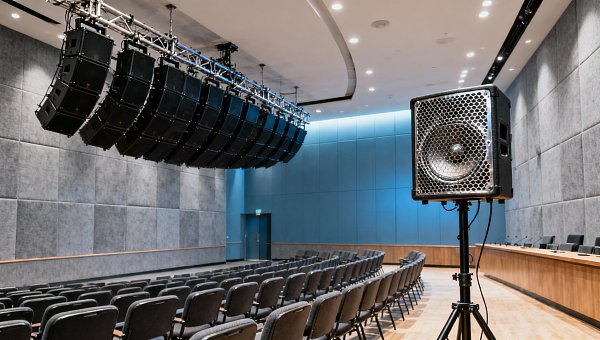
Coverage angles describe how a loudspeaker distributes sound horizontally and vertically. They help determine whether a cabinet can cover the audience without directing excessive energy onto walls, ceilings, or the stage.
A wide horizontal pattern can suit a broad, shallow room. A more controlled pattern may suit a narrow room where wall reflections reduce clarity. Vertical coverage becomes especially important when speakers are mounted above listeners: the angle must reach both nearby and distant positions without wasting substantial output overhead.
Nominal coverage is not a uniform beam with a sharp boundary. Loudspeakers behave differently across frequency, and low frequencies generally spread more widely than high frequencies. Look for polar plots or coverage data across the relevant frequency range. A single angle on a specification sheet cannot show whether speech remains balanced near the edges.
For a deep room, front fills or delayed loudspeakers may improve consistency more effectively than increasing the level of the main system. These speakers need suitable placement, timing, and level adjustment. Uncontrolled overlap can cause interference, producing uneven sound as listeners move through the venue.
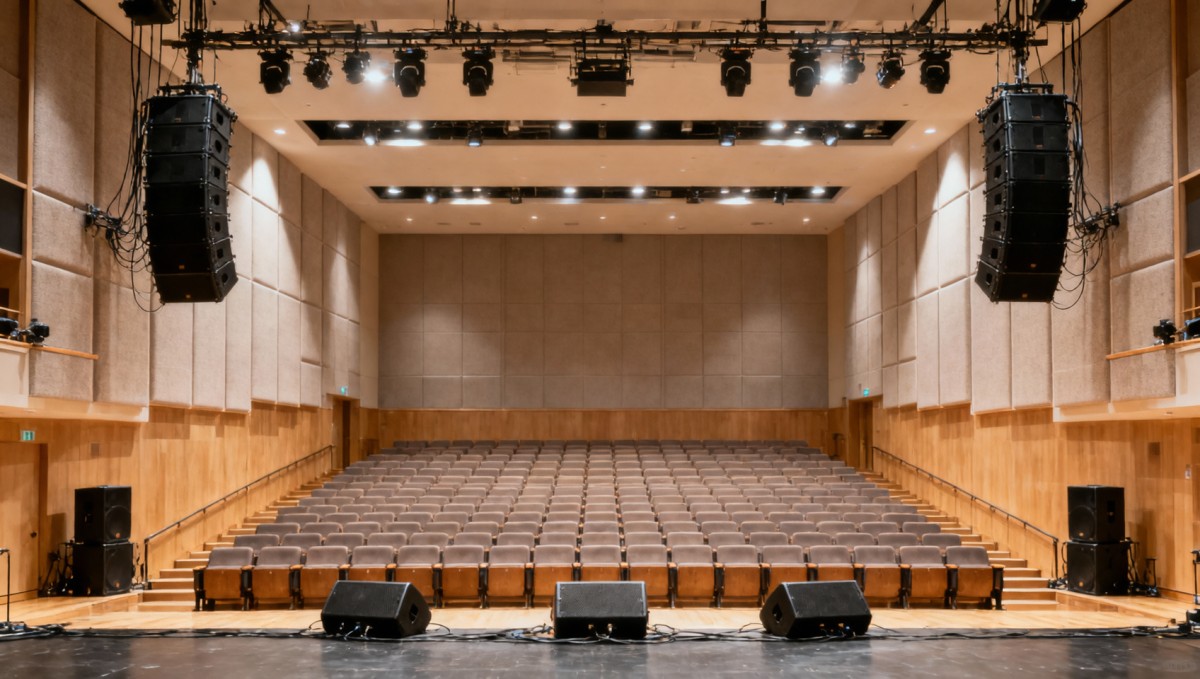
A useful coverage drawing should show speaker positions, aiming, audience boundaries, and areas served by fills. Include balconies and obstructed seating. Coverage predictions help compare layouts, while listening and measurement in the installed room establish how well the design works.
Compare frequency response at the level you intend to use
Frequency response describes how evenly a loudspeaker reproduces different frequencies. Frequency range usually describes the span of frequencies it can reproduce within a stated tolerance. These terms are related, but a broad range does not establish a smooth or balanced response.
Always read the tolerance attached to a range claim. A low-frequency endpoint measured well below the speaker’s main output can make bass extension appear more substantial than it sounds. A response curve provides more context, although its measurement conditions still matter.
For vocals and speech, pay particular attention to the midrange and the transition between drivers. Irregularities in this region can make voices sound nasal, harsh, or unclear. Equalization can address some tonal problems, but it cannot reliably repair poor coverage or destructive interference between speakers.
Bass requirements should follow the performance. Dedicated subwoofers can provide low-frequency capacity for kick drum, bass instruments, and electronic music while reducing the low-frequency burden on the main speakers. A space used mainly for speech may gain little from extensive sub-bass capability.
Compare bass extension with usable output. A system that reaches lower at modest volume may have less capacity at performance level than another system with a more conservative published range. Subwoofer placement also matters: room interactions can create strong bass in one position and weak bass elsewhere.
Request details of the crossover and alignment between mains and subwoofers. Their phase relationship and arrival times affect whether they combine smoothly around the crossover region. Compatible processing and appropriate setup matter more than matching cabinet sizes or buying the same number of each.
Distortion, compression, and noise explain what happens under pressure
Distortion specifications are useful when they include frequency, output level, and test conditions. A low total harmonic distortion figure measured at a gentle level says little about performance near the system’s limits. During evaluation, listen for vocals becoming coarse, percussion losing definition, or bass sounding strained as level rises.
Thermal power compression occurs when voice-coil heating reduces a driver’s efficiency. Protective processing may also reduce output to prevent damage. Both can affect the relationship between the level entering the system and the sound reaching the audience.
Limiters are valuable protection tools. The practical question is how frequently they engage at the required operating level and how audibly they affect the mix. Regular limiting during normal use can indicate insufficient capacity, unsuitable settings, or excessive demand in a particular frequency band.
Self-noise deserves attention in quiet rooms. Amplifier hiss, cooling fans, and equipment noise can become noticeable during spoken presentations or pauses in an acoustic performance. A demonstration should include quiet passages as well as loud music.
Use wattage and compatibility specs to check the complete system
Wattage indicates electrical power, rather than acoustic performance by itself. Loudspeaker sensitivity, efficiency, directivity, driver capability, and processing influence how that power translates into sound. Sensitivity is particularly useful for passive loudspeakers, provided the measurement basis is clear.
With passive systems, check nominal impedance, the permitted load on each amplifier channel, manufacturer-recommended amplification, and the required protection settings. Impedance changes with frequency, so the nominal figure is a starting point rather than a complete electrical description. Parallel speaker connections also change the load presented to an amplifier.
Active loudspeakers integrate amplification and usually include processing and protection. They simplify some matching decisions, but still require suitable power distribution, signal connections, and access for service. Comparing active models by amplifier wattage alone is especially unhelpful because manufacturers may report power differently.
Digital signal processing should support the installation’s actual needs: crossover control, equalization, delay, limiting, and secure presets. Remote monitoring is useful when speakers are difficult to access. Where digital audio networking is planned, check protocol compatibility, channel capacity, clocking, and routing support across the complete signal path.
Latency matters when performers hear the system through monitors or when processed sound combines with direct acoustic sound. Assess the complete path through the console, network, processing, and loudspeaker. One device’s latency figure does not describe the entire experience.
Compare proposals using the same evidence
A consistent comparison prevents an impressive headline specification from dominating the decision. Ask each supplier to explain the proposed system against the same room layout, performance requirements, and operating conditions.
Cabinet weight, dimensions, mounting options, and approved suspension hardware can eliminate a technically attractive option. Suspended installations need documented hardware and a qualified assessment of the supporting structure. Outdoor use requires suitability for the actual exposure; a general durability claim does not establish weather resistance.
Long-term value also depends on replacement drivers, amplifier modules, repair arrangements, and continued access to control software. For international sourcing, specify the destination’s electrical requirements, required compliance documentation, delivery scope, and commissioning responsibilities in the quotation. These details fit GCT’s focus on commercial sourcing: equipment capability needs to be evaluated alongside supply and support reliability.
Make the final decision in the audience area
Use a demonstration to resolve questions that specifications leave open. Play familiar speech and music representative of the venue’s program. Listen near the stage, at the rear, along the sides, and beneath any balcony. Check whether vocal clarity and tonal balance remain consistent as you move.
Include sustained demanding material at the intended operating level. Brief loud excerpts can conceal compression or frequent limiting. If live microphones are part of normal use, evaluate them with realistic stage and monitor positions; playback alone cannot reveal the same feedback constraints.
Define acceptance criteria before ordering: coverage of the intended audience area, clear speech, appropriate bass balance, clean operation at the required level, and accessible system control. Include commissioning, saved settings, operating guidance, and handover documentation in the scope. Choose the proposal that demonstrates these outcomes in your room and provides a practical way to maintain them.
Search News
Hot Articles
- Pro Stage AudioAudio Production for Streaming: How to Build a Dedicated Live Event MixOct 22, 2026
- Outdoor RidesIAAPA Launches Insurance Solution for North American Attractions IndustryOct 21, 2026
- Watch OEM & SmartwatchesWatch Movement Parts: How to Check Compatibility With a Specific CaliberOct 21, 2026
Popular Tags
Need ExpertConsultation?
Connect with our specialized leisureengineering team for procurementstrategies.
Recommended News
 Oct 22, 2026Audio Production for Streaming: How to Build a Dedicated Live Event MixMaster audio production for streaming with a dedicated live event mix. Learn routing, loudness control, and monitoring techniques to deliver clear, balanced sound your online audience will love.● Pro Audio Engineer
 Oct 15, 2026Designing Theater Sound Systems for Clear Dialogue and Even Audience CoverageOptimize stage sound for theaters with practical tips on acoustics, speaker placement, and tuning. Discover how to deliver clear dialogue and consistent coverage across audience seating.● Pro Audio Engineer
 Oct 22, 2026Which Professional Sound System Specs Matter Most for Live Venues?Discover what professional sound system specs matter most for live venues. Compare SPL, coverage, frequency response, and headroom to choose a PA that delivers clear, powerful sound.● Pro Audio Engineer
 Oct 20, 2026Should You Prioritize Stage Sound or Audience Coverage?Should I prioritize stage sound or audience coverage first? Discover how to balance clear audience audio, reliable monitoring, and smarter sound-system upgrades for your venue.● Pro Audio Engineer
 Oct 18, 2026How Much Does Studio Acoustic Treatment Cost per Square Meter?How much does studio acoustic treatment cost per square meter? Learn how to compare panel prices, installation fees, and complete budgets to choose the right treatment without overspending.● Pro Audio Engineer
 Oct 17, 2026How Do Line Array and Point Source Sound Systems Differ?What is the difference between line array and point source systems? Compare coverage, costs, and venue fit to find the right solution for clearer sound.● Pro Audio Engineer
 Oct 16, 2026Are Standard Acoustic Panels Enough for Performance Venues?Are standard acoustic panels enough for performance venues? Discover their limits, explore bass control and diffusion, and learn how to choose treatments that improve sound without wasting budget.● Pro Audio Engineer
 Sep 30, 2026How to Choose an Aluminum Projector Ceiling Mount for Load, Drop, and Ceiling TypeChoose an aluminum projector ceiling mount with confidence. Learn how load capacity, drop length, ceiling structure, safety retention, and service access shape a reliable commercial AV installation.● Pro Audio Engineer
 Sep 26, 2026How to Choose Dynamic Microphones for Vocals in Live Stage SettingsDynamic microphones for vocals: learn how to match polar patterns, feedback control, durability, and clarity to live stage needs for reliable, professional sound.● Pro Audio Engineer
 Sep 07, 2026How to Choose Wall Mount Speakers for Clear Audio in Commercial SpacesWall mount speakers for commercial spaces: learn how to optimize coverage, SPL, directivity, installation, and system design for clear, reliable audio.● Pro Audio Engineer
 Sep 03, 2026How to Choose Locking Speakon Speaker Cables for Reliable Live Sound ConnectionsLocking Speakon speaker cables: learn how to select the right gauge, connector pinout, strain relief, and durable construction for reliable live sound connections.● Pro Audio Engineer
 Sep 08, 2026Is It Worth Upgrading a Stage Sound System Mid-Project?Is it worth upgrading stage sound systems mid-project? Discover how to assess performance gaps, costs, compatibility, and long-term venue value.● Pro Audio Engineer
 Sep 04, 2026Can AV Systems Be Retrofitted Into Older Commercial Buildings?Can AV integration be retrofitted into older commercial buildings? Discover practical strategies for reliable, code-aware AV upgrades with minimal disruption.● Pro Audio Engineer
 Jul 17, 2026How to Choose a Crossover Networks Supplier: Key Specs, Quality Checks, and OEM FactorsFind the right crossover networks supplier with this practical guide to key specs, quality checks, OEM factors, and supply chain risks for better audio performance and sourcing confidence.● Pro Audio Engineer
 Jul 16, 2026How to Evaluate ODM Services for Pro Audio: Design, Certification, and Production CapabilitiesODM services for pro audio: learn how to assess design depth, certification readiness, and production strength to choose a reliable partner and launch better audio products with less risk.● Pro Audio Engineer
 Jul 15, 2026JETRO Flags Modular, Low-Power Shift in Pro Stage AudioPro Stage Audio buyers in Japan are shifting fast: JETRO flags modular amplifiers, IP65 line arrays, low standby power, and JIS compliance as key to channel entry.● Pro Audio Engineer
 Jul 15, 2026Paper Speaker Cones Explained: How Cone Weight and Stiffness Affect SoundPaper speaker cones explained: discover how cone weight and stiffness shape sensitivity, clarity, breakup control, and real-world speaker performance for smarter audio sourcing.● Pro Audio Engineer
 Jul 15, 2026Performance Venues Compliance Checklist: Fire Safety, Accessibility, and Crowd RulesPerformance venues compliance checklist covering fire safety, accessibility, and crowd rules. Learn how to reduce delays, improve approvals, and open safer, more resilient venues.● Pro Audio Engineer
 Jul 14, 2026Japan Adds EMC Immunity Test for Stage AmplifiersJapan Adds EMC Immunity Test for Stage Amplifiers: learn how Japan’s 2026 JIS update affects EMC testing, JIS marking, certification timing, and market access for exporters.● Pro Audio Engineer
 Jul 13, 2026CISCE 2026 Adds Pro Stage Audio ZoneCISCE 2026 Adds Pro Stage Audio Zone as free overseas pre-registration opens. Explore key updates for pro audio suppliers, distributors, and system integrators before the Shanghai expo.● Pro Audio Engineer
 Jul 12, 2026Japan Tightens Pro Stage Audio Efficiency Limits Under JIS C 8105-2026Japan Tightens Pro Stage Audio Efficiency Limits Under JIS C 8105-2026: learn how new PSE compliance rules reshape market access, product eligibility, and shipment planning in Japan.● Pro Audio Engineer
 Jul 12, 2026How to Choose Low Profile Ceiling Speakers for Hotels, Offices, and Retrofit ProjectsLow profile ceiling speakers for hotels, offices, and retrofit projects: learn how to compare depth, coverage, compliance, and installation factors to choose the right fit.● Pro Audio Engineer
 Jul 11, 2026Japan Tightens JIS C 8105-2026 for Pro AudioJapan Tightens JIS C 8105-2026 for Pro Audio: learn how stricter standby power, PSE diamond mark rules, and the 2026 deadline impact exports, compliance, and market access.● Pro Audio Engineer
 Jul 10, 2026JETRO Q2 Outlook Signals Higher Stage Audio DemandJETRO Q2 Outlook signals higher stage audio demand in Japan, with 37% procurement growth and stricter PSE Annex D compliance. See what importers, manufacturers, and rental channels must act on now.● Pro Audio Engineer