Paper Speaker Cones Explained: How Cone Weight and Stiffness Affect Sound
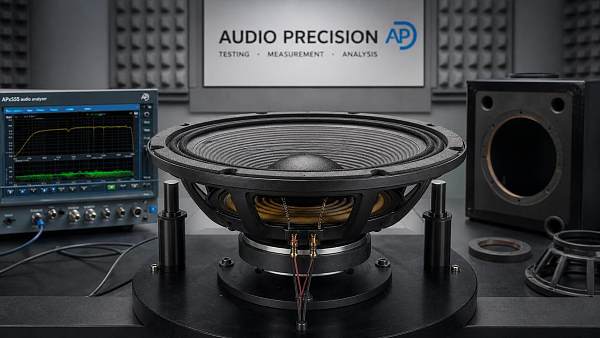
Paper speaker cones still define the reference point for many loudspeaker evaluations because they reveal a rare balance between low moving mass and usable rigidity. That balance affects tonal precision, transient speed, sensitivity, and breakup behavior. In commercial audio sourcing, where systems must sound consistent across venues, paper cones remain highly relevant for comparing driver quality, voicing priorities, and long-term application fit.
Why paper cones remain central in loudspeaker evaluation
In simple terms, a cone must stay light enough to start and stop quickly, yet stiff enough to avoid unwanted flex. Paper speaker cones are valued because they can achieve both traits without relying on extreme material density.
That is why they appear in studio monitors, MI speakers, installed sound systems, and selected premium commercial audio products. They are not old-fashioned by default. They are still acoustically competitive when engineered well.
For sourcing platforms such as Global Commercial Trade, this matters because material selection is rarely cosmetic. Cone composition affects measurable performance, system character, reliability expectations, and supplier positioning across the pro audio and musical instruments segment.
Weight and stiffness shape the sound in different ways
Cone weight influences how much energy is needed to move the diaphragm. A lighter cone generally improves sensitivity and helps a driver respond faster to musical transients.
This often supports clearer attack on percussion, better low-level detail, and more natural articulation in speech and vocals. In many systems, that translates into a more open and immediate presentation.
Stiffness plays a different role. A stiffer cone resists bending as frequency rises or excursion increases. When rigidity is insufficient, parts of the cone move out of phase, creating breakup modes, peaks, dips, and audible coloration.
The challenge is that added stiffness often comes with added mass. This is the engineering trade-off behind most diaphragm choices. Paper speaker cones are interesting because fiber blend, pulp treatment, coatings, and profile geometry can tune that relationship with surprising precision.
What happens when the cone is too heavy
An overly heavy cone can lower efficiency and soften transient expression. Bass may still feel substantial, but the system can lose liveliness and sound less responsive at moderate amplifier power.
In commercial environments, that can mean higher power requirements, reduced headroom, or less clarity in distributed installations where speech intelligibility is already under pressure.
What happens when stiffness is too low
If the cone flexes too easily, the usable frequency range narrows. Tonal balance becomes harder to control, and crossover integration may become more complicated.
This is especially important in professional cabinets expected to maintain consistent voicing from unit to unit. Small material inconsistencies can create audible differences at scale.
Why paper behaves differently from other cone materials
Paper is not one uniform substance. In loudspeaker manufacturing, “paper” may include wood pulp, cotton fiber, synthetic reinforcement, resins, and surface treatments. The resulting cone can be soft, rigid, damped, lightweight, or heavily controlled.
That flexibility is one reason paper speaker cones remain important in product development. Designers can shape the material response rather than simply accept the raw behavior of metal or plastic.
Another advantage is internal damping. Many paper cones suppress resonances more gracefully than hard metallic diaphragms. Instead of sharp ringing, they often produce a smoother decay pattern that listeners perceive as more natural.
That does not make paper universally better. It means paper often trades extreme rigidity for a more forgiving resonance profile, which can be useful in real-world voicing.
Where these trade-offs matter in commercial audio
The importance of paper speaker cones changes with application. In a touring cabinet, durability and output may dominate. In a hospitality venue, tonal smoothness and fatigue-free listening may matter more.
Installed systems for hotels, branded retail, education spaces, and leisure venues often operate for long hours. They need stable performance, predictable voicing, and manageable amplifier demand.
A well-designed paper cone can support those needs by combining musicality with useful efficiency. It can also simplify system tuning when resonance behavior is controlled and crossover targets remain realistic.
Typical use directions
- Full-range and mid-bass drivers where vocal clarity and natural timbre are priorities.
- Musical instrument cabinets where response character is part of the product identity.
- Installed background and foreground systems requiring efficient output and smooth long-term listening.
- Custom OEM projects where cone formulation can be tuned for a target acoustic signature.
How to judge paper cone quality beyond the material label
The phrase “paper cone” is too broad to support a sourcing decision on its own. Better evaluation starts with how the cone behaves inside the driver system.
Frequency response, breakup control, distortion, sensitivity, and power compression reveal more than the cone label. So do batch consistency and environmental reliability.
From a technical standpoint, several checkpoints are more useful than generic claims.
- Review the cone profile, pulp composition, and any edge or surface coating.
- Compare sensitivity against moving mass and intended enclosure alignment.
- Check for resonance spikes near the crossover region.
- Request humidity and aging data when deployment conditions vary.
- Look at production tolerance, not only prototype measurements.
These points are especially relevant in cross-border sourcing, where the same specification sheet may hide large differences in process control. GCT’s editorial focus on verified capability and application context is useful precisely because raw material language can be misleading.
Current industry attention around paper speaker cones
Several trends keep paper speaker cones in active discussion. One is the demand for more refined listening experiences in commercial spaces. Another is the push for efficient systems with distinctive voicing rather than purely generic output.
There is also growing interest in material transparency. Buyers increasingly ask how cones are made, how coatings affect durability, and whether production remains stable across larger orders.
At the premium end of pro audio, paper remains relevant because it can deliver character without sacrificing discipline. In many cases, the goal is not the stiffest cone possible. The goal is the most controlled acoustic behavior for the intended system role.
Common misconceptions worth avoiding
- Paper does not automatically mean fragile or low-tech.
- A lighter cone is not always better if breakup begins too early.
- High stiffness alone does not guarantee better sound.
- Coatings can improve stability, but they also change acoustic behavior.
Turning material insight into a better sourcing decision
In practical evaluation, paper speaker cones should be judged as part of a complete design story. The useful question is not whether paper is superior in theory. The useful question is whether the cone’s weight, stiffness, and damping suit the target duty cycle and listening goal.
For commercial projects, that means linking driver data to venue type, amplifier strategy, enclosure design, compliance needs, and expected service conditions. A hotel lounge, a smart campus hall, and an entertainment venue may all require different balances.
The strongest next step is to define an evaluation matrix before comparing suppliers. Include moving mass, resonance control, sensitivity, environmental treatment, and sample consistency. Then test paper speaker cones in the actual acoustic context that matters.
That approach leads to better decisions than relying on material reputation alone. It also creates a clearer path for comparing OEM options, verifying claims, and selecting drivers that support consistent commercial sound experiences over time.
Search News
Hot Articles
- Office Furniture & EquipChoosing Commercial Air Conditioners for Offices: Capacity, Zoning, and NoiseOct 13, 2026
- Fashion & Gem JewelryHow to Choose Designer Eyewear That Fits Your Store’s Customer ProfileOct 12, 2026
- Musical InstrumentsA Practical Guide to Identifying Wooden Orchestral Instruments by Family and ToneOct 10, 2026
Popular Tags
Need ExpertConsultation?
Connect with our specialized leisureengineering team for procurementstrategies.
Recommended News
 Sep 30, 2026How to Choose an Aluminum Projector Ceiling Mount for Load, Drop, and Ceiling TypeChoose an aluminum projector ceiling mount with confidence. Learn how load capacity, drop length, ceiling structure, safety retention, and service access shape a reliable commercial AV installation.● Pro Audio Engineer
 Sep 26, 2026How to Choose Dynamic Microphones for Vocals in Live Stage SettingsDynamic microphones for vocals: learn how to match polar patterns, feedback control, durability, and clarity to live stage needs for reliable, professional sound.● Pro Audio Engineer
 Sep 07, 2026How to Choose Wall Mount Speakers for Clear Audio in Commercial SpacesWall mount speakers for commercial spaces: learn how to optimize coverage, SPL, directivity, installation, and system design for clear, reliable audio.● Pro Audio Engineer
 Sep 03, 2026How to Choose Locking Speakon Speaker Cables for Reliable Live Sound ConnectionsLocking Speakon speaker cables: learn how to select the right gauge, connector pinout, strain relief, and durable construction for reliable live sound connections.● Pro Audio Engineer
 Sep 08, 2026Is It Worth Upgrading a Stage Sound System Mid-Project?Is it worth upgrading stage sound systems mid-project? Discover how to assess performance gaps, costs, compatibility, and long-term venue value.● Pro Audio Engineer
 Sep 04, 2026Can AV Systems Be Retrofitted Into Older Commercial Buildings?Can AV integration be retrofitted into older commercial buildings? Discover practical strategies for reliable, code-aware AV upgrades with minimal disruption.● Pro Audio Engineer
 Jul 17, 2026How to Choose a Crossover Networks Supplier: Key Specs, Quality Checks, and OEM FactorsFind the right crossover networks supplier with this practical guide to key specs, quality checks, OEM factors, and supply chain risks for better audio performance and sourcing confidence.● Pro Audio Engineer
 Jul 16, 2026How to Evaluate ODM Services for Pro Audio: Design, Certification, and Production CapabilitiesODM services for pro audio: learn how to assess design depth, certification readiness, and production strength to choose a reliable partner and launch better audio products with less risk.● Pro Audio Engineer
 Jul 15, 2026JETRO Flags Modular, Low-Power Shift in Pro Stage AudioPro Stage Audio buyers in Japan are shifting fast: JETRO flags modular amplifiers, IP65 line arrays, low standby power, and JIS compliance as key to channel entry.● Pro Audio Engineer
 Jul 15, 2026Paper Speaker Cones Explained: How Cone Weight and Stiffness Affect SoundPaper speaker cones explained: discover how cone weight and stiffness shape sensitivity, clarity, breakup control, and real-world speaker performance for smarter audio sourcing.● Pro Audio Engineer
 Jul 15, 2026Performance Venues Compliance Checklist: Fire Safety, Accessibility, and Crowd RulesPerformance venues compliance checklist covering fire safety, accessibility, and crowd rules. Learn how to reduce delays, improve approvals, and open safer, more resilient venues.● Pro Audio Engineer
 Jul 14, 2026Japan Adds EMC Immunity Test for Stage AmplifiersJapan Adds EMC Immunity Test for Stage Amplifiers: learn how Japan’s 2026 JIS update affects EMC testing, JIS marking, certification timing, and market access for exporters.● Pro Audio Engineer
 Jul 13, 2026CISCE 2026 Adds Pro Stage Audio ZoneCISCE 2026 Adds Pro Stage Audio Zone as free overseas pre-registration opens. Explore key updates for pro audio suppliers, distributors, and system integrators before the Shanghai expo.● Pro Audio Engineer
 Jul 12, 2026Japan Tightens Pro Stage Audio Efficiency Limits Under JIS C 8105-2026Japan Tightens Pro Stage Audio Efficiency Limits Under JIS C 8105-2026: learn how new PSE compliance rules reshape market access, product eligibility, and shipment planning in Japan.● Pro Audio Engineer
 Jul 12, 2026How to Choose Low Profile Ceiling Speakers for Hotels, Offices, and Retrofit ProjectsLow profile ceiling speakers for hotels, offices, and retrofit projects: learn how to compare depth, coverage, compliance, and installation factors to choose the right fit.● Pro Audio Engineer
 Jul 11, 2026Japan Tightens JIS C 8105-2026 for Pro AudioJapan Tightens JIS C 8105-2026 for Pro Audio: learn how stricter standby power, PSE diamond mark rules, and the 2026 deadline impact exports, compliance, and market access.● Pro Audio Engineer
 Jul 10, 2026JETRO Q2 Outlook Signals Higher Stage Audio DemandJETRO Q2 Outlook signals higher stage audio demand in Japan, with 37% procurement growth and stricter PSE Annex D compliance. See what importers, manufacturers, and rental channels must act on now.● Pro Audio Engineer
 Jul 10, 2026How to Choose Wall Mount Speakers for Restaurants by Layout, Coverage, and SPLWall mount speakers for restaurants should match layout, coverage, and SPL. Learn how to choose the right setup for even sound, guest comfort, and reliable performance.● Pro Audio Engineer
 Jul 09, 2026JIS T 9001:2026 Adds Mandatory AI Noise LabelsJIS T 9001:2026 adds mandatory AI noise labels for pro audio gear from October 2026. Learn how it impacts compliance, testing, exports, and product launches.● Pro Audio Engineer
 Jul 06, 2026Improving Sound Reinforcement Speech Clarity: Key Causes of Muddiness and How to Fix ThemSound reinforcement speech clarity starts with identifying reverberation, coverage, noise, and timing issues. Discover practical fixes that make announcements clearer and commercial spaces perform better.● Pro Audio Engineer
 Jul 05, 2026Saudi Rule Adds Arabic UI Requirement for Pro Audio ImportsSaudi Rule Adds Arabic UI Requirement for Pro Audio Imports: learn how SASO’s new Arabic UI mandate affects digital amplifiers, DSP processors, and network audio interfaces before Sept. 1, 2026.● Pro Audio Engineer
 Jul 02, 2026How to Choose Audio Mixing Consoles for Live Venues: Channels, Buses, and I/O ExplainedAudio mixing consoles explained for live venues: learn how to choose the right channels, buses, and I/O to improve workflow, support growth, and avoid costly mistakes.● Pro Audio Engineer
 Jul 01, 2026UL 62368-3:2026 Adds EMC Rules for Pro Stage AudioUL 62368-3:2026 adds EMC rules for Pro Stage Audio, requiring Level 4 immunity and manual labeling by Oct 1, 2026. See what exporters, makers, and buyers must do now.● Pro Audio Engineer
 Jun 30, 2026Sound Reinforcement Design Basics: How to Plan Coverage, SPL, and Speaker PlacementSound reinforcement design starts with smarter coverage, target SPL, and speaker placement. Learn how to plan clearer, more reliable audio performance for commercial spaces.● Pro Audio Engineer