How to Choose Wall Mount Speakers for Restaurants by Layout, Coverage, and SPL
How to Choose Wall Mount Speakers for Restaurants by Layout, Coverage, and SPL
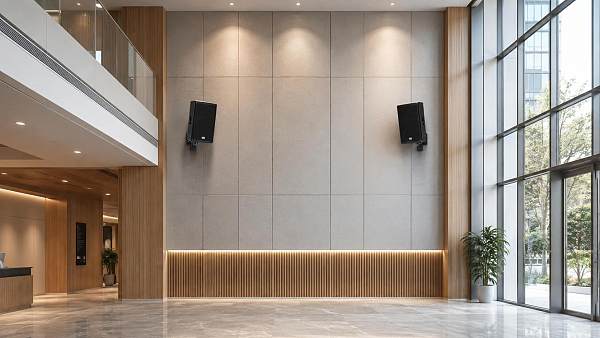
Choosing wall mount speakers for restaurants is not just about sound quality. It is about matching coverage, placement, and SPL to the room you actually need to serve.
In practice, the wrong speaker choice creates uneven volume, harsh hotspots, and dead zones. It also complicates commissioning, tuning, and future maintenance.
For restaurant projects, the best wall mount speakers for restaurants support both guest comfort and predictable system design. That means layout comes first, then coverage, then SPL.
A compact cafe, a fine dining room, and a sports bar can all use wall mount speakers. Still, they require very different speaker spacing, aiming, and output strategy.
Start with the restaurant layout, not the speaker catalog
The first selection step is mapping the space. Room geometry usually tells you more than brand brochures or peak power figures.
Look at ceiling height, wall length, seating density, reflective surfaces, and service pathways. These details shape how wall mount speakers for restaurants will actually perform.
Divide the site into functional audio zones. Typical examples include entry areas, main dining, private rooms, bar counters, outdoor seating, and waiting spaces.
This zoning step matters because one speaker model rarely fits every area. A restaurant often needs different coverage behavior within the same project.
- Narrow rooms benefit from controlled horizontal coverage.
- Open dining floors often need wider dispersion and tighter spacing.
- Bars may require higher SPL and stronger vocal clarity.
- Outdoor terraces need weather resistance and higher output reserve.
From a planning standpoint, layout-driven speaker selection reduces later redesign. It also makes cable routing, amplifier sizing, and installation scheduling easier to manage.
Coverage angles decide whether the room feels even or frustrating
Coverage is where many restaurant audio systems succeed or fail. A speaker can sound excellent on paper and still underperform when dispersion does not match the room.
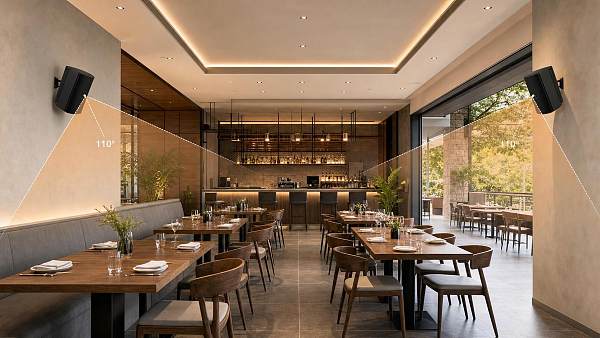
Most wall mount speakers for restaurants are specified by horizontal and vertical coverage angles. Those numbers affect spacing, mounting height, and aiming direction.
Wide coverage is useful when speaker positions are limited. However, it can also spill energy onto glass, tile, and hard ceilings, which hurts intelligibility.
Narrower coverage gives better control. It often works well in long dining rooms, banquet corridors, or side-wall mounting conditions.
A practical way to assess coverage
- Measure the listener area width and depth.
- Confirm realistic mounting height, not idealized height.
- Check if speakers will fire across tables, down aisles, or toward reflective boundaries.
- Estimate overlap between adjacent speakers to avoid comb filtering and level gaps.
As a rule, more speakers at lower level usually create better uniformity than fewer speakers pushed hard. That is especially true for hospitality environments.
When selecting wall mount speakers for restaurants, coverage control is often more valuable than chasing bigger drivers or inflated wattage claims.
SPL should match dining behavior, not just maximum output
SPL stands for sound pressure level. In restaurant projects, it should be treated as an operating target, not a marketing headline.
Different venues need different loudness ranges. Fine dining rooms usually prioritize subtle background music. Casual dining and bars need more headroom for crowd noise.
The useful question is simple: what SPL is required at the listener position during the busiest service period, with clean headroom still available?
For wall mount speakers for restaurants, continuous performance matters more than short peak numbers. Projects suffer when the system reaches target volume only by sounding strained.
Typical SPL planning logic
- Quiet dining zones need modest, even background coverage.
- High-turnover spaces need extra level above ambient activity.
- Bars and game-viewing areas need higher SPL margin and stronger vocal projection.
- Outdoor zones usually demand more output because sound dissipates faster.
This also means the same speaker line may work indoors and fail outdoors. Coverage can remain acceptable while usable SPL drops below operational needs.
A reliable design keeps routine playback below the limit, leaving enough reserve for peaks, announcements, and seasonal occupancy spikes.
Match speaker size and voicing to the restaurant concept
Not every restaurant needs the same cabinet size. Larger enclosures may provide stronger low end, but they can look intrusive in design-led interiors.
Smaller wall mount speakers for restaurants often suit cafes, boutique dining rooms, and private rooms where visual integration matters as much as audio coverage.
Larger models make sense when music is part of the venue identity. Think sports bars, brewpubs, or themed entertainment dining concepts.
Voicing matters too. A speaker tuned for speech-heavy clarity may feel thin for music-led spaces. A bass-heavy voicing may blur detail in reflective rooms.
The best decision balances brand atmosphere, interior design, target SPL, and the acoustic behavior of the room.
Common mistakes when specifying wall mount speakers for restaurants
Several specification errors appear again and again in commercial dining projects. Most are avoidable with earlier coordination.
- Choosing by wattage alone without checking sensitivity or coverage.
- Using too few speakers and relying on excessive output.
- Ignoring mounting height and aiming hardware limits.
- Treating all zones as if they share the same acoustic demand.
- Overlooking finishes, bracket visibility, and architectural integration.
- Skipping environmental ratings for humid or semi-outdoor locations.
Another frequent issue is underestimating ambient noise growth. A room that sounds calm during handover may become far louder on weekends or during peak dining periods.
That is why wall mount speakers for restaurants should be selected against real operational scenarios, not empty-room assumptions.
A short evaluation checklist for better selection decisions
A structured review process helps compare speaker options without losing track of project constraints. It also improves communication between design, procurement, and installation teams.
- Define each audio zone by purpose and occupancy pattern.
- Confirm wall positions, heights, and visual restrictions.
- Review coverage angles against actual listener geometry.
- Set target SPL and headroom by zone.
- Check sensitivity, impedance, and amplifier compatibility.
- Verify bracket flexibility, finish options, and environmental rating.
- Model maintenance access and future expansion needs.
When this checklist is applied early, wall mount speakers for restaurants become easier to compare on real performance value, not just headline specifications.
It also reduces procurement risk, especially on multi-site rollouts where consistency and repeatability matter.
Final decision: prioritize uniform coverage, usable SPL, and installation reality
The right wall mount speakers for restaurants are not simply the loudest or the most compact. They are the models that suit the room, the concept, and the operating pattern.
In most projects, layout analysis should lead the process. Coverage control should shape speaker spacing. SPL planning should confirm that guest comfort and system headroom can coexist.
That approach creates better listening consistency, cleaner installation logic, and fewer commissioning surprises. It also supports smarter sourcing decisions across commercial hospitality environments.
Before locking the specification, review the restaurant plan, noise profile, and zoning intent one more time. That final check usually separates an acceptable audio system from a genuinely dependable one.
Search News
Hot Articles
- Indoor PlaygroundHow to Choose Animatronic Haunted House Props for High-Throughput AttractionsOct 08, 2026
- Fashion & Gem JewelryThermal Diamond Testers: How They Work and When They Can Misidentify StonesOct 07, 2026
- Commercial KitchenWhat Is Driving Demand for Commercial Hospitality Projects Across the GCC?Oct 06, 2026
Popular Tags
Need ExpertConsultation?
Connect with our specialized leisureengineering team for procurementstrategies.
Recommended News
 Sep 30, 2026How to Choose an Aluminum Projector Ceiling Mount for Load, Drop, and Ceiling TypeChoose an aluminum projector ceiling mount with confidence. Learn how load capacity, drop length, ceiling structure, safety retention, and service access shape a reliable commercial AV installation.● Pro Audio Engineer
 Sep 26, 2026How to Choose Dynamic Microphones for Vocals in Live Stage SettingsDynamic microphones for vocals: learn how to match polar patterns, feedback control, durability, and clarity to live stage needs for reliable, professional sound.● Pro Audio Engineer
 Sep 07, 2026How to Choose Wall Mount Speakers for Clear Audio in Commercial SpacesWall mount speakers for commercial spaces: learn how to optimize coverage, SPL, directivity, installation, and system design for clear, reliable audio.● Pro Audio Engineer
 Sep 03, 2026How to Choose Locking Speakon Speaker Cables for Reliable Live Sound ConnectionsLocking Speakon speaker cables: learn how to select the right gauge, connector pinout, strain relief, and durable construction for reliable live sound connections.● Pro Audio Engineer
 Sep 08, 2026Is It Worth Upgrading a Stage Sound System Mid-Project?Is it worth upgrading stage sound systems mid-project? Discover how to assess performance gaps, costs, compatibility, and long-term venue value.● Pro Audio Engineer
 Sep 04, 2026Can AV Systems Be Retrofitted Into Older Commercial Buildings?Can AV integration be retrofitted into older commercial buildings? Discover practical strategies for reliable, code-aware AV upgrades with minimal disruption.● Pro Audio Engineer
 Jul 17, 2026How to Choose a Crossover Networks Supplier: Key Specs, Quality Checks, and OEM FactorsFind the right crossover networks supplier with this practical guide to key specs, quality checks, OEM factors, and supply chain risks for better audio performance and sourcing confidence.● Pro Audio Engineer
 Jul 16, 2026How to Evaluate ODM Services for Pro Audio: Design, Certification, and Production CapabilitiesODM services for pro audio: learn how to assess design depth, certification readiness, and production strength to choose a reliable partner and launch better audio products with less risk.● Pro Audio Engineer
 Jul 15, 2026JETRO Flags Modular, Low-Power Shift in Pro Stage AudioPro Stage Audio buyers in Japan are shifting fast: JETRO flags modular amplifiers, IP65 line arrays, low standby power, and JIS compliance as key to channel entry.● Pro Audio Engineer
 Jul 15, 2026Paper Speaker Cones Explained: How Cone Weight and Stiffness Affect SoundPaper speaker cones explained: discover how cone weight and stiffness shape sensitivity, clarity, breakup control, and real-world speaker performance for smarter audio sourcing.● Pro Audio Engineer
 Jul 15, 2026Performance Venues Compliance Checklist: Fire Safety, Accessibility, and Crowd RulesPerformance venues compliance checklist covering fire safety, accessibility, and crowd rules. Learn how to reduce delays, improve approvals, and open safer, more resilient venues.● Pro Audio Engineer
 Jul 14, 2026Japan Adds EMC Immunity Test for Stage AmplifiersJapan Adds EMC Immunity Test for Stage Amplifiers: learn how Japan’s 2026 JIS update affects EMC testing, JIS marking, certification timing, and market access for exporters.● Pro Audio Engineer
 Jul 13, 2026CISCE 2026 Adds Pro Stage Audio ZoneCISCE 2026 Adds Pro Stage Audio Zone as free overseas pre-registration opens. Explore key updates for pro audio suppliers, distributors, and system integrators before the Shanghai expo.● Pro Audio Engineer
 Jul 12, 2026Japan Tightens Pro Stage Audio Efficiency Limits Under JIS C 8105-2026Japan Tightens Pro Stage Audio Efficiency Limits Under JIS C 8105-2026: learn how new PSE compliance rules reshape market access, product eligibility, and shipment planning in Japan.● Pro Audio Engineer
 Jul 12, 2026How to Choose Low Profile Ceiling Speakers for Hotels, Offices, and Retrofit ProjectsLow profile ceiling speakers for hotels, offices, and retrofit projects: learn how to compare depth, coverage, compliance, and installation factors to choose the right fit.● Pro Audio Engineer
 Jul 11, 2026Japan Tightens JIS C 8105-2026 for Pro AudioJapan Tightens JIS C 8105-2026 for Pro Audio: learn how stricter standby power, PSE diamond mark rules, and the 2026 deadline impact exports, compliance, and market access.● Pro Audio Engineer
 Jul 10, 2026JETRO Q2 Outlook Signals Higher Stage Audio DemandJETRO Q2 Outlook signals higher stage audio demand in Japan, with 37% procurement growth and stricter PSE Annex D compliance. See what importers, manufacturers, and rental channels must act on now.● Pro Audio Engineer
 Jul 10, 2026How to Choose Wall Mount Speakers for Restaurants by Layout, Coverage, and SPLWall mount speakers for restaurants should match layout, coverage, and SPL. Learn how to choose the right setup for even sound, guest comfort, and reliable performance.● Pro Audio Engineer
 Jul 09, 2026JIS T 9001:2026 Adds Mandatory AI Noise LabelsJIS T 9001:2026 adds mandatory AI noise labels for pro audio gear from October 2026. Learn how it impacts compliance, testing, exports, and product launches.● Pro Audio Engineer
 Jul 06, 2026Improving Sound Reinforcement Speech Clarity: Key Causes of Muddiness and How to Fix ThemSound reinforcement speech clarity starts with identifying reverberation, coverage, noise, and timing issues. Discover practical fixes that make announcements clearer and commercial spaces perform better.● Pro Audio Engineer
 Jul 05, 2026Saudi Rule Adds Arabic UI Requirement for Pro Audio ImportsSaudi Rule Adds Arabic UI Requirement for Pro Audio Imports: learn how SASO’s new Arabic UI mandate affects digital amplifiers, DSP processors, and network audio interfaces before Sept. 1, 2026.● Pro Audio Engineer
 Jul 02, 2026How to Choose Audio Mixing Consoles for Live Venues: Channels, Buses, and I/O ExplainedAudio mixing consoles explained for live venues: learn how to choose the right channels, buses, and I/O to improve workflow, support growth, and avoid costly mistakes.● Pro Audio Engineer
 Jul 01, 2026UL 62368-3:2026 Adds EMC Rules for Pro Stage AudioUL 62368-3:2026 adds EMC rules for Pro Stage Audio, requiring Level 4 immunity and manual labeling by Oct 1, 2026. See what exporters, makers, and buyers must do now.● Pro Audio Engineer
 Jun 30, 2026Sound Reinforcement Design Basics: How to Plan Coverage, SPL, and Speaker PlacementSound reinforcement design starts with smarter coverage, target SPL, and speaker placement. Learn how to plan clearer, more reliable audio performance for commercial spaces.● Pro Audio Engineer