How to Choose Professional Sound Systems for Auditoriums: Coverage, SPL, and DSP Explained
How to Choose Professional Sound Systems for Auditoriums: Coverage, SPL, and DSP Explained
Choosing professional sound systems for auditoriums is rarely about brand alone.
It is really about acoustic performance in a specific room.
A system that sounds excellent in one venue may fail badly in another.
That is why technical evaluation starts with coverage, SPL, and DSP.
These three factors shape speech intelligibility, musical impact, and operational control.
They also determine whether the investment stays effective over time.
In practical sourcing, this means comparing system behavior, not just product specifications.
A clear evaluation process helps reduce risk and improves long-term value.
Start with auditorium use, not speaker wattage
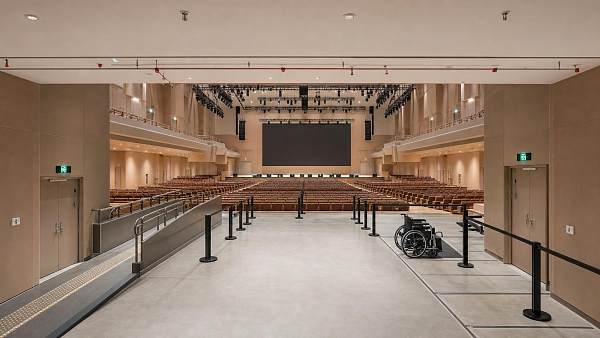
Before selecting professional sound systems for auditoriums, define the room’s actual mission.
A lecture hall, performing arts venue, and school auditorium need different results.
Speech-first spaces prioritize intelligibility, even coverage, and feedback stability.
Music-led spaces need higher headroom, fuller low-frequency support, and broader dynamic range.
Multi-use auditoriums usually require flexible presets and better system management.
This is where many buying mistakes begin.
Teams often compare maximum power ratings without mapping audience zones or program material.
A smarter approach is to document room dimensions, seating rake, stage depth, and event profile first.
- Define primary use: speech, music, mixed events, or cinema-style playback.
- Map audience areas: front rows, under-balcony zones, and upper seating.
- Review room finishes that affect reflection, absorption, and reverberation.
- Identify operational limits such as rigging points, ceiling height, and control staffing.
Why coverage matters more than raw output
Coverage is the foundation of professional sound systems for auditoriums.
If listeners hear different tonal balance across seats, the system is already underperforming.
Good coverage means sound reaches each audience section with consistent level and clarity.
That includes front rows, side seating, balcony sections, and difficult shadow areas.
The goal is not perfect uniformity.
The goal is controlled, predictable variation that stays within acceptable limits.
In most projects, a difference of a few dB across the audience is manageable.
Large drops create dead zones and force operators to overdrive the system.
That usually increases reflections and reduces intelligibility.
Coverage decisions also affect loudspeaker format.
Point-source speakers can work well in smaller or simpler rooms.
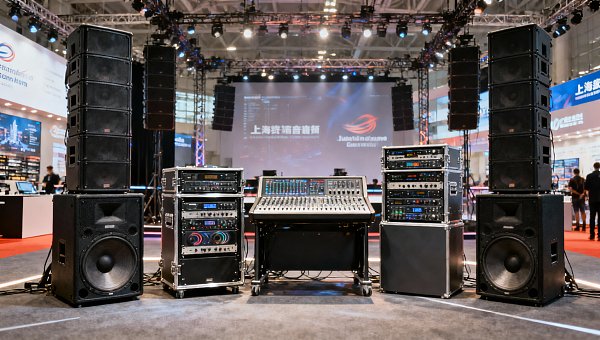
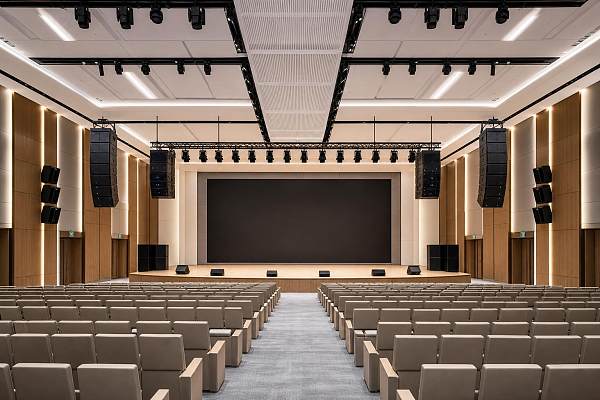
Line array systems often suit deeper auditoriums with larger seating areas.
Distributed fills may be necessary for balconies, side sections, or under-balcony seating.
The best professional sound systems for auditoriums use these elements as a coordinated package.
Questions to ask about coverage
- What is the horizontal and vertical dispersion of each loudspeaker?
- How does the design address front-to-back level consistency?
- Are delay fills included for blocked or distant seating zones?
- Was the room modeled with acoustic prediction software?
- Can the supplier provide coverage maps, not just brochure claims?
How to evaluate SPL without getting misled
SPL is often treated as a simple number.
In reality, it is one of the most misunderstood parts of auditorium audio selection.
Maximum SPL on a datasheet does not guarantee usable performance in the room.
What matters is clean SPL at the audience position with enough headroom.
Headroom protects clarity during peaks and reduces system stress.
For speech-focused rooms, required levels may be moderate.
For live music, ceremonies, or amplified performances, the target rises quickly.
This also means amplifier matching and loudspeaker sensitivity matter as much as rated power.
When reviewing professional sound systems for auditoriums, ask how SPL is measured.
Is it peak, continuous, or program level?
Was the value taken at one meter in ideal conditions?
Does the design preserve intelligibility when pushed harder?
Those details tell you far more than a headline number.
DSP is where system control becomes practical
DSP often decides whether professional sound systems for auditoriums feel polished or problematic.
Digital signal processing shapes timing, EQ, protection, routing, and tonal balance.
It turns a group of components into a coherent audio system.
This becomes even more important in mixed-use auditoriums.
One room may host speeches in the morning and performances at night.
Preset-based DSP helps adapt quickly without rebuilding the system every time.
That saves labor and improves consistency between operators.
Core DSP functions worth reviewing
- Delay alignment for mains, fills, and subwoofers.
- Parametric EQ for room correction and voicing.
- Limiters for loudspeaker protection and reliable operation.
- Input routing for lectures, wireless microphones, and playback sources.
- User presets for different event types and operator skill levels.
- Network monitoring for status checks and fault reporting.
From a decision standpoint, the question is not whether DSP exists.
The question is whether it is accessible, stable, and well implemented.
A complicated interface can create operational errors.
A well-designed DSP workflow makes the system easier to manage for years.
Match the system to room acoustics and audience geometry
Even the best professional sound systems for auditoriums cannot overcome poor room analysis.
Hard walls, glass, and long reverberation times can blur speech quickly.
Steep seating angles may create strong coverage challenges.
Balconies can shadow key listening zones.
This is why room geometry should guide loudspeaker aiming and placement.
Acoustic treatment and system design often need to work together.
A balanced specification usually includes more than speaker counts.
It should define target coverage, expected SPL, DSP architecture, and commissioning steps.
It should also clarify acceptance criteria.
That makes supplier comparisons much more reliable.
A practical checklist for comparing suppliers
When shortlisting professional sound systems for auditoriums, structured comparison saves time.
It also reduces the influence of marketing-heavy proposals.
A good evaluation framework should cover technical fit, support capability, and future scalability.
- Request acoustic predictions with clear audience coverage data.
- Compare continuous SPL and headroom, not only peak ratings.
- Review DSP functions, presets, and network control options.
- Confirm commissioning, tuning, and operator training are included.
- Check compliance, warranty terms, and replacement part availability.
- Ask for similar auditorium case studies with measurable outcomes.
In real procurement work, support quality often separates good systems from great investments.
The installed system may last many years.
Local service access and tuning expertise therefore matter more than many teams expect.
Common mistakes that weaken auditorium audio decisions
Several issues repeatedly undermine professional sound systems for auditoriums.
The first is overvaluing wattage while ignoring coverage.
The second is accepting generic layouts without room-specific modeling.
Another common problem is underestimating DSP setup and final tuning.
Some projects also skip operator training.
That often leads to inconsistent event quality after handover.
A stronger buying decision keeps focus on listener experience.
Can every seat hear clearly?
Can the system stay clean at realistic operating levels?
Can staff run it confidently across different event types?
Those are the questions that usually reveal the right solution.
Final decision guide
The best professional sound systems for auditoriums balance coverage, SPL, and DSP as one strategy.
Coverage ensures every seat receives useful sound.
SPL ensures the system performs with control and headroom.
DSP ensures the design remains adaptable, protectable, and easy to manage.
When these elements are evaluated together, specification quality improves immediately.
Supplier proposals also become easier to compare on real performance.
For better outcomes, begin with room use, audience geometry, and acoustic constraints.
Then validate every claim with modeling, measurable targets, and commissioning detail.
That process leads to professional sound systems for auditoriums that sound better and age better.
It also supports a more confident sourcing decision from day one.
Search News
Hot Articles
- Commercial KitchenHow to Select a Spiral Dough Mixer for Bakery Batch Size and Dough HydrationSep 19, 2026
- Outdoor RidesWhat Drives Animatronic Dinosaur Manufacturer Prices for Theme Park Projects?Sep 18, 2026
- Stationery & UniformsHow to Source Wholesale Packing Tape Without Compromising Carton Seal StrengthSep 17, 2026
Popular Tags
Need ExpertConsultation?
Connect with our specialized leisureengineering team for procurementstrategies.
Recommended News
 Sep 07, 2026How to Choose Wall Mount Speakers for Clear Audio in Commercial SpacesWall mount speakers for commercial spaces: learn how to optimize coverage, SPL, directivity, installation, and system design for clear, reliable audio.● Pro Audio Engineer
 Sep 03, 2026How to Choose Locking Speakon Speaker Cables for Reliable Live Sound ConnectionsLocking Speakon speaker cables: learn how to select the right gauge, connector pinout, strain relief, and durable construction for reliable live sound connections.● Pro Audio Engineer
 Sep 08, 2026Is It Worth Upgrading a Stage Sound System Mid-Project?Is it worth upgrading stage sound systems mid-project? Discover how to assess performance gaps, costs, compatibility, and long-term venue value.● Pro Audio Engineer
 Sep 04, 2026Can AV Systems Be Retrofitted Into Older Commercial Buildings?Can AV integration be retrofitted into older commercial buildings? Discover practical strategies for reliable, code-aware AV upgrades with minimal disruption.● Pro Audio Engineer
 Jul 17, 2026How to Choose a Crossover Networks Supplier: Key Specs, Quality Checks, and OEM FactorsFind the right crossover networks supplier with this practical guide to key specs, quality checks, OEM factors, and supply chain risks for better audio performance and sourcing confidence.● Pro Audio Engineer
 Jul 16, 2026How to Evaluate ODM Services for Pro Audio: Design, Certification, and Production CapabilitiesODM services for pro audio: learn how to assess design depth, certification readiness, and production strength to choose a reliable partner and launch better audio products with less risk.● Pro Audio Engineer
 Jul 15, 2026JETRO Flags Modular, Low-Power Shift in Pro Stage AudioPro Stage Audio buyers in Japan are shifting fast: JETRO flags modular amplifiers, IP65 line arrays, low standby power, and JIS compliance as key to channel entry.● Pro Audio Engineer
 Jul 15, 2026Paper Speaker Cones Explained: How Cone Weight and Stiffness Affect SoundPaper speaker cones explained: discover how cone weight and stiffness shape sensitivity, clarity, breakup control, and real-world speaker performance for smarter audio sourcing.● Pro Audio Engineer
 Jul 15, 2026Performance Venues Compliance Checklist: Fire Safety, Accessibility, and Crowd RulesPerformance venues compliance checklist covering fire safety, accessibility, and crowd rules. Learn how to reduce delays, improve approvals, and open safer, more resilient venues.● Pro Audio Engineer
 Jul 14, 2026Japan Adds EMC Immunity Test for Stage AmplifiersJapan Adds EMC Immunity Test for Stage Amplifiers: learn how Japan’s 2026 JIS update affects EMC testing, JIS marking, certification timing, and market access for exporters.● Pro Audio Engineer
 Jul 13, 2026CISCE 2026 Adds Pro Stage Audio ZoneCISCE 2026 Adds Pro Stage Audio Zone as free overseas pre-registration opens. Explore key updates for pro audio suppliers, distributors, and system integrators before the Shanghai expo.● Pro Audio Engineer
 Jul 12, 2026Japan Tightens Pro Stage Audio Efficiency Limits Under JIS C 8105-2026Japan Tightens Pro Stage Audio Efficiency Limits Under JIS C 8105-2026: learn how new PSE compliance rules reshape market access, product eligibility, and shipment planning in Japan.● Pro Audio Engineer
 Jul 12, 2026How to Choose Low Profile Ceiling Speakers for Hotels, Offices, and Retrofit ProjectsLow profile ceiling speakers for hotels, offices, and retrofit projects: learn how to compare depth, coverage, compliance, and installation factors to choose the right fit.● Pro Audio Engineer
 Jul 11, 2026Japan Tightens JIS C 8105-2026 for Pro AudioJapan Tightens JIS C 8105-2026 for Pro Audio: learn how stricter standby power, PSE diamond mark rules, and the 2026 deadline impact exports, compliance, and market access.● Pro Audio Engineer
 Jul 10, 2026JETRO Q2 Outlook Signals Higher Stage Audio DemandJETRO Q2 Outlook signals higher stage audio demand in Japan, with 37% procurement growth and stricter PSE Annex D compliance. See what importers, manufacturers, and rental channels must act on now.● Pro Audio Engineer
 Jul 10, 2026How to Choose Wall Mount Speakers for Restaurants by Layout, Coverage, and SPLWall mount speakers for restaurants should match layout, coverage, and SPL. Learn how to choose the right setup for even sound, guest comfort, and reliable performance.● Pro Audio Engineer
 Jul 09, 2026JIS T 9001:2026 Adds Mandatory AI Noise LabelsJIS T 9001:2026 adds mandatory AI noise labels for pro audio gear from October 2026. Learn how it impacts compliance, testing, exports, and product launches.● Pro Audio Engineer
 Jul 06, 2026Improving Sound Reinforcement Speech Clarity: Key Causes of Muddiness and How to Fix ThemSound reinforcement speech clarity starts with identifying reverberation, coverage, noise, and timing issues. Discover practical fixes that make announcements clearer and commercial spaces perform better.● Pro Audio Engineer
 Jul 05, 2026Saudi Rule Adds Arabic UI Requirement for Pro Audio ImportsSaudi Rule Adds Arabic UI Requirement for Pro Audio Imports: learn how SASO’s new Arabic UI mandate affects digital amplifiers, DSP processors, and network audio interfaces before Sept. 1, 2026.● Pro Audio Engineer
 Jul 02, 2026How to Choose Audio Mixing Consoles for Live Venues: Channels, Buses, and I/O ExplainedAudio mixing consoles explained for live venues: learn how to choose the right channels, buses, and I/O to improve workflow, support growth, and avoid costly mistakes.● Pro Audio Engineer
 Jul 01, 2026UL 62368-3:2026 Adds EMC Rules for Pro Stage AudioUL 62368-3:2026 adds EMC rules for Pro Stage Audio, requiring Level 4 immunity and manual labeling by Oct 1, 2026. See what exporters, makers, and buyers must do now.● Pro Audio Engineer
 Jun 30, 2026Sound Reinforcement Design Basics: How to Plan Coverage, SPL, and Speaker PlacementSound reinforcement design starts with smarter coverage, target SPL, and speaker placement. Learn how to plan clearer, more reliable audio performance for commercial spaces.● Pro Audio Engineer
 Jun 28, 2026TUV Rheinland Adds 5G Immunity Test for Pro AudioTUV Rheinland adds 5G immunity test for pro audio, reshaping EU EMC certification for mixing consoles, amplifiers, and audio-lighting control systems. See who is affected and how to prepare.● Pro Audio Engineer
 Jun 27, 2026TUV Rheinland Adds 5G EMC Test for Stage AudioTUV Rheinland adds 5G EMC test for stage audio from Sept. 1, 2026. Learn how CE-EMC changes may impact smart mixers, DMX/WiFi/Bluetooth systems, certification, and delivery plans.● Pro Audio Engineer