How to Choose a Crossover Networks Supplier: Key Specs, Quality Checks, and OEM Factors
Choosing a crossover networks supplier is rarely a minor sourcing task. In loudspeaker systems, the crossover shapes frequency distribution, tonal balance, and long-term reliability. A weak supplier can undermine a well-designed product, while a capable one helps maintain consistency across production runs, market regions, and private-label programs.
That matters across commercial settings where sound quality supports the experience itself. Hotels, leisure venues, education spaces, specialty retail, and professional audio installations all depend on predictable performance. In sourcing environments tracked by Global Commercial Trade, technical fit and supply discipline often matter more than a small unit-price difference.
What a crossover networks supplier is really providing
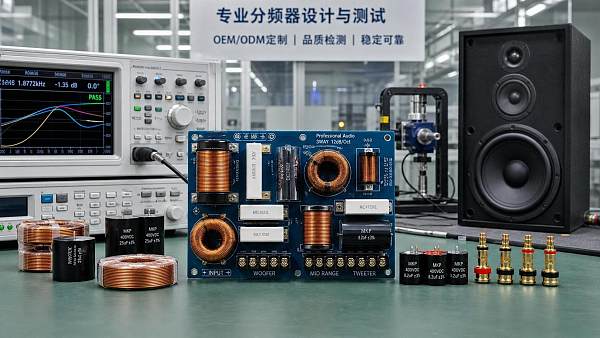
A crossover network divides the audio signal into suitable frequency bands for woofers, midrange drivers, and tweeters. The component may look compact, but its influence on sound is substantial. It affects clarity, power handling, driver protection, and integration between transducers.
For this reason, a crossover networks supplier is not simply selling assembled parts. The supplier is also providing design discipline, component selection, process control, traceability, and often support for tuning or customization. In OEM business, that wider capability becomes a major part of supplier value.
Passive crossover networks remain common in installed speakers, ceiling systems, portable PA products, and branded commercial audio solutions. Buyers may source standard designs, custom boards, or fully integrated assemblies with wiring, terminals, and housing options.
Why supplier selection has become more critical
Commercial audio procurement has changed. Product lines are broader, certification expectations are tighter, and launch cycles are shorter. At the same time, markets expect better sonic performance and fewer field failures.
This puts pressure on every crossover networks supplier to deliver more than basic assembly. Stable performance under heat, vibration, and variable load conditions is now part of the baseline. So is documentation that supports compliance, warranty management, and multi-market distribution.
Another issue is consistency. In commercial projects, one approved sample is not enough. A venue chain, campus rollout, or branded retail concept may require the same acoustic signature across many batches. That is where supplier process maturity becomes visible very quickly.
The technical specifications that deserve close attention
A dependable crossover networks supplier should be able to explain performance in measurable terms, not only through marketing language. The most important specifications usually include crossover frequency, slope, impedance compatibility, power handling, insertion loss, and tolerance control.
Core electrical and acoustic considerations
- Crossover points must match the actual driver behavior, not just nominal catalog values.
- Filter slope affects driver overlap, phase behavior, and perceived smoothness.
- Impedance interaction should be evaluated under real operating conditions.
- Power rating should reflect thermal stress over time, not only peak claims.
- Component tolerances influence channel matching and batch consistency.
Materials also matter. Capacitors, inductors, resistors, PCB substrate, solder quality, and wiring layout all affect durability. A serious crossover networks supplier should disclose component grades and substitution rules, especially when market shortages appear.
What to confirm during technical review
Quality checks that separate reliable suppliers from risky ones
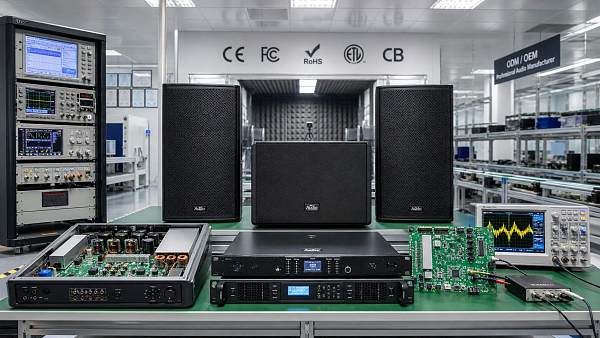
Quality control is where many sourcing decisions become clearer. A polished sample can hide weak process control. A reliable crossover networks supplier should show how quality is maintained before assembly, during production, and after final testing.
Incoming inspection should cover component verification, lot traceability, and storage conditions. Production control should address soldering consistency, polarity checks, wiring integrity, and workmanship standards. Final inspection should include electrical measurements and visual review.
For higher-value programs, sample approval should go beyond a simple listening test. It is more useful to combine acoustic validation with environmental testing, especially where products may face heat, humidity, transport shock, or long duty cycles.
- Request batch test reports, not only prototype results.
- Check whether failed units trigger corrective action records.
- Confirm traceability to component lot and production date.
- Review packaging methods for board protection during shipment.
Suppliers serving premium commercial markets often perform better here because they are used to audited processes. This aligns with the kind of sourcing intelligence valued by GCT, where reliability, compliance, and execution quality support long-term commercial outcomes.
OEM and customization factors that affect the decision
OEM capability is not only about adding a logo or changing wire length. In crossover sourcing, OEM work may involve tuning adjustments, enclosure-specific layout changes, connector selection, branded labeling, compliance documentation, and packaging adaptation for channel requirements.
A capable crossover networks supplier should define where customization begins, what engineering support is included, and which changes affect tooling, lead time, or validation cost. This prevents confusion later when product revisions move from sample stage to mass production.
Useful OEM checkpoints
- Minimum order quantity for custom crossover boards or assemblies
- Engineering response time for design revisions
- Support for sample iteration and approval records
- Private-label packaging and barcode requirements
- Regional certification or material compliance support
This is especially relevant when audio products are part of broader commercial concepts. A hotel brand, education integrator, or leisure venue may need specific acoustic behavior, installation format, and documentation standards. The right crossover networks supplier can adapt without disrupting product identity.
Supply chain signals worth checking early
Technical strength matters, but operational resilience matters just as much. A supplier with good engineering and unstable delivery performance still creates cost. Delays in passive components, magnetics, or PCB fabrication can affect launch schedules and replacement parts availability.
Useful signals include lead time stability, alternate sourcing plans, inventory strategy for critical parts, and visibility into sub-suppliers. If a crossover networks supplier depends on single-source components without approved alternatives, risk rises quickly.
It also helps to understand communication discipline. Clear quotation structure, revision control, and delivery updates often indicate a supplier that can support scaled commercial programs. Weak document control usually shows up later as mismatch, delay, or unapproved substitution.
How the evaluation changes by application
Not every project weighs the same factors equally. Installed background music systems may prioritize consistency and certification. Portable sound products may place more weight on vibration resistance and compact layout. Premium branded speakers may care most about tuning precision and finish integration.
A practical way to narrow the shortlist
A useful sourcing process starts with a clear specification package. Include target drivers, impedance, expected power range, enclosure context, required approvals, labeling needs, and forecast volume. Without that baseline, supplier comparison becomes too subjective.
Then compare each crossover networks supplier across three layers: technical fit, quality evidence, and operational reliability. Pricing should be reviewed after these basics are visible. A lower quote with loose tolerance, limited traceability, or unstable lead time often costs more later.
The next step is disciplined validation. Review drawings and BOM controls, request production-level samples, and check how the supplier handles changes. In competitive global sourcing, the best decision usually comes from measurable proof, not from sales language alone.
When requirements are aligned early, a crossover networks supplier becomes more than a source of parts. The supplier becomes a stable contributor to product performance, brand consistency, and commercial delivery. That is the standard worth applying before the next quotation round begins.
Search News
Hot Articles
- Pro Stage AudioDesigning Theater Sound Systems for Clear Dialogue and Even Audience CoverageOct 15, 2026
- Musical InstrumentsHow Do You Choose Music Education Equipment for a New Campus?Oct 15, 2026
- Arcade & VR MachinesChoosing a Racing Simulator Cockpit for an FEC: Durability and Guest FitOct 14, 2026
Popular Tags
Need ExpertConsultation?
Connect with our specialized leisureengineering team for procurementstrategies.
Recommended News
 Oct 15, 2026Designing Theater Sound Systems for Clear Dialogue and Even Audience CoverageOptimize stage sound for theaters with practical tips on acoustics, speaker placement, and tuning. Discover how to deliver clear dialogue and consistent coverage across audience seating.● Pro Audio Engineer
 Sep 30, 2026How to Choose an Aluminum Projector Ceiling Mount for Load, Drop, and Ceiling TypeChoose an aluminum projector ceiling mount with confidence. Learn how load capacity, drop length, ceiling structure, safety retention, and service access shape a reliable commercial AV installation.● Pro Audio Engineer
 Sep 26, 2026How to Choose Dynamic Microphones for Vocals in Live Stage SettingsDynamic microphones for vocals: learn how to match polar patterns, feedback control, durability, and clarity to live stage needs for reliable, professional sound.● Pro Audio Engineer
 Sep 07, 2026How to Choose Wall Mount Speakers for Clear Audio in Commercial SpacesWall mount speakers for commercial spaces: learn how to optimize coverage, SPL, directivity, installation, and system design for clear, reliable audio.● Pro Audio Engineer
 Sep 03, 2026How to Choose Locking Speakon Speaker Cables for Reliable Live Sound ConnectionsLocking Speakon speaker cables: learn how to select the right gauge, connector pinout, strain relief, and durable construction for reliable live sound connections.● Pro Audio Engineer
 Sep 08, 2026Is It Worth Upgrading a Stage Sound System Mid-Project?Is it worth upgrading stage sound systems mid-project? Discover how to assess performance gaps, costs, compatibility, and long-term venue value.● Pro Audio Engineer
 Sep 04, 2026Can AV Systems Be Retrofitted Into Older Commercial Buildings?Can AV integration be retrofitted into older commercial buildings? Discover practical strategies for reliable, code-aware AV upgrades with minimal disruption.● Pro Audio Engineer
 Jul 17, 2026How to Choose a Crossover Networks Supplier: Key Specs, Quality Checks, and OEM FactorsFind the right crossover networks supplier with this practical guide to key specs, quality checks, OEM factors, and supply chain risks for better audio performance and sourcing confidence.● Pro Audio Engineer
 Jul 16, 2026How to Evaluate ODM Services for Pro Audio: Design, Certification, and Production CapabilitiesODM services for pro audio: learn how to assess design depth, certification readiness, and production strength to choose a reliable partner and launch better audio products with less risk.● Pro Audio Engineer
 Jul 15, 2026JETRO Flags Modular, Low-Power Shift in Pro Stage AudioPro Stage Audio buyers in Japan are shifting fast: JETRO flags modular amplifiers, IP65 line arrays, low standby power, and JIS compliance as key to channel entry.● Pro Audio Engineer
 Jul 15, 2026Paper Speaker Cones Explained: How Cone Weight and Stiffness Affect SoundPaper speaker cones explained: discover how cone weight and stiffness shape sensitivity, clarity, breakup control, and real-world speaker performance for smarter audio sourcing.● Pro Audio Engineer
 Jul 15, 2026Performance Venues Compliance Checklist: Fire Safety, Accessibility, and Crowd RulesPerformance venues compliance checklist covering fire safety, accessibility, and crowd rules. Learn how to reduce delays, improve approvals, and open safer, more resilient venues.● Pro Audio Engineer
 Jul 14, 2026Japan Adds EMC Immunity Test for Stage AmplifiersJapan Adds EMC Immunity Test for Stage Amplifiers: learn how Japan’s 2026 JIS update affects EMC testing, JIS marking, certification timing, and market access for exporters.● Pro Audio Engineer
 Jul 13, 2026CISCE 2026 Adds Pro Stage Audio ZoneCISCE 2026 Adds Pro Stage Audio Zone as free overseas pre-registration opens. Explore key updates for pro audio suppliers, distributors, and system integrators before the Shanghai expo.● Pro Audio Engineer
 Jul 12, 2026Japan Tightens Pro Stage Audio Efficiency Limits Under JIS C 8105-2026Japan Tightens Pro Stage Audio Efficiency Limits Under JIS C 8105-2026: learn how new PSE compliance rules reshape market access, product eligibility, and shipment planning in Japan.● Pro Audio Engineer
 Jul 12, 2026How to Choose Low Profile Ceiling Speakers for Hotels, Offices, and Retrofit ProjectsLow profile ceiling speakers for hotels, offices, and retrofit projects: learn how to compare depth, coverage, compliance, and installation factors to choose the right fit.● Pro Audio Engineer
 Jul 11, 2026Japan Tightens JIS C 8105-2026 for Pro AudioJapan Tightens JIS C 8105-2026 for Pro Audio: learn how stricter standby power, PSE diamond mark rules, and the 2026 deadline impact exports, compliance, and market access.● Pro Audio Engineer
 Jul 10, 2026JETRO Q2 Outlook Signals Higher Stage Audio DemandJETRO Q2 Outlook signals higher stage audio demand in Japan, with 37% procurement growth and stricter PSE Annex D compliance. See what importers, manufacturers, and rental channels must act on now.● Pro Audio Engineer
 Jul 10, 2026How to Choose Wall Mount Speakers for Restaurants by Layout, Coverage, and SPLWall mount speakers for restaurants should match layout, coverage, and SPL. Learn how to choose the right setup for even sound, guest comfort, and reliable performance.● Pro Audio Engineer
 Jul 09, 2026JIS T 9001:2026 Adds Mandatory AI Noise LabelsJIS T 9001:2026 adds mandatory AI noise labels for pro audio gear from October 2026. Learn how it impacts compliance, testing, exports, and product launches.● Pro Audio Engineer
 Jul 06, 2026Improving Sound Reinforcement Speech Clarity: Key Causes of Muddiness and How to Fix ThemSound reinforcement speech clarity starts with identifying reverberation, coverage, noise, and timing issues. Discover practical fixes that make announcements clearer and commercial spaces perform better.● Pro Audio Engineer
 Jul 05, 2026Saudi Rule Adds Arabic UI Requirement for Pro Audio ImportsSaudi Rule Adds Arabic UI Requirement for Pro Audio Imports: learn how SASO’s new Arabic UI mandate affects digital amplifiers, DSP processors, and network audio interfaces before Sept. 1, 2026.● Pro Audio Engineer
 Jul 02, 2026How to Choose Audio Mixing Consoles for Live Venues: Channels, Buses, and I/O ExplainedAudio mixing consoles explained for live venues: learn how to choose the right channels, buses, and I/O to improve workflow, support growth, and avoid costly mistakes.● Pro Audio Engineer
 Jul 01, 2026UL 62368-3:2026 Adds EMC Rules for Pro Stage AudioUL 62368-3:2026 adds EMC rules for Pro Stage Audio, requiring Level 4 immunity and manual labeling by Oct 1, 2026. See what exporters, makers, and buyers must do now.● Pro Audio Engineer