Improving Sound Reinforcement Speech Clarity: Key Causes of Muddiness and How to Fix Them
Why speech clarity fails in otherwise capable systems
Poor intelligibility rarely comes from one bad component alone. In commercial environments, sound reinforcement speech clarity usually breaks down through several small compromises working together.
A venue may have powerful loudspeakers, modern DSP, and acceptable coverage on paper. Yet spoken content still sounds cloudy because the room, gain structure, and deployment logic were never aligned.
That matters across hospitality, education, leisure, and branded spaces. In experience-led environments, unclear announcements affect safety, service flow, event quality, and the perceived standard of the entire site.
Within the broader commercial sourcing landscape followed by GCT, this is a recurring evaluation issue. Audio quality is no longer judged by output level alone. It is judged by whether speech remains understandable under real operating conditions.
Improving sound reinforcement speech clarity starts with a more practical question: what kind of room, talker behavior, and background noise profile will the system face every day?
Different venues create different kinds of muddiness
Speech muddiness is not uniform. A ballroom, lecture room, restaurant, and amusement venue may all report “unclear sound,” but the cause is often different in each case.
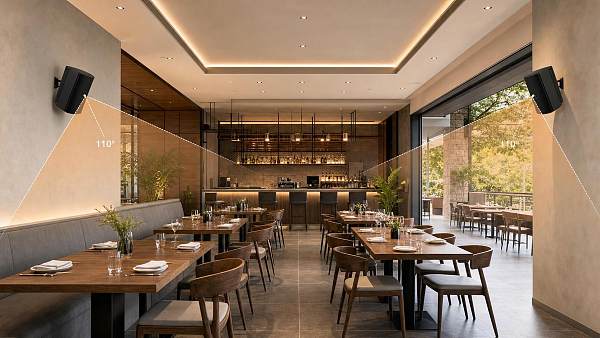
In hospitality spaces, reflective finishes often dominate the problem. Glass, stone, decorative metal, and high ceilings create long reverberation tails that blur consonants and reduce articulation.
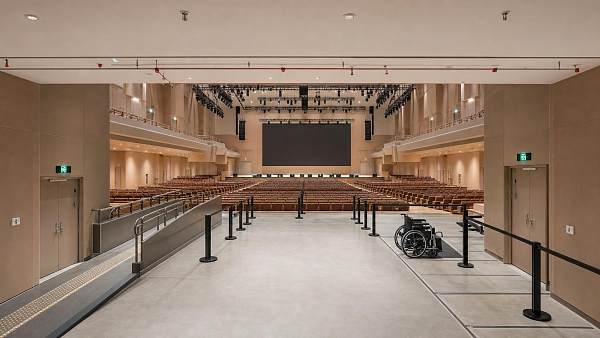
In educational settings, the bigger issue may be uneven coverage. Listeners in the front hear direct sound clearly, while listeners farther back hear delayed reflections and insufficient direct energy.
Leisure venues introduce another challenge: fluctuating ambient noise. Crowd energy, mechanical rides, HVAC, and open circulation paths can mask speech even when the system itself is well specified.
This is why sound reinforcement speech clarity must be judged against actual use patterns, not generic product ratings. Similar room sizes can still require very different audio decisions.
A quick comparison of common commercial conditions
The table shows why no single recipe solves every room. Sound reinforcement speech clarity improves fastest when the fault pattern is identified before any retuning begins.
In meeting and hospitality spaces, reverberation is often the real enemy
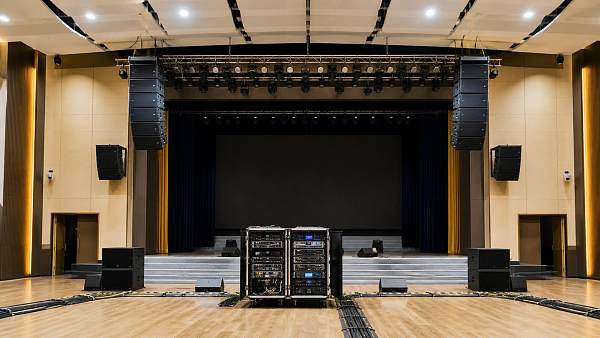
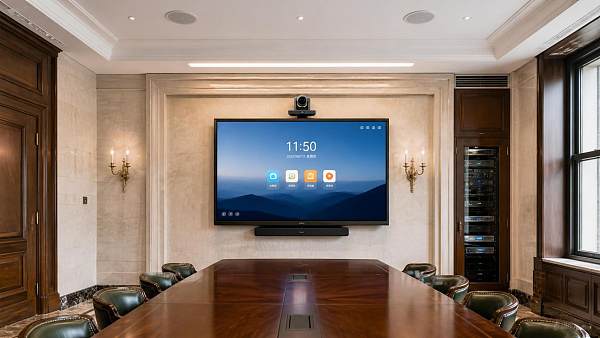
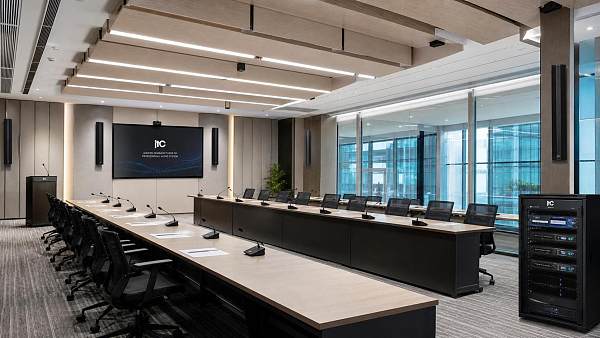
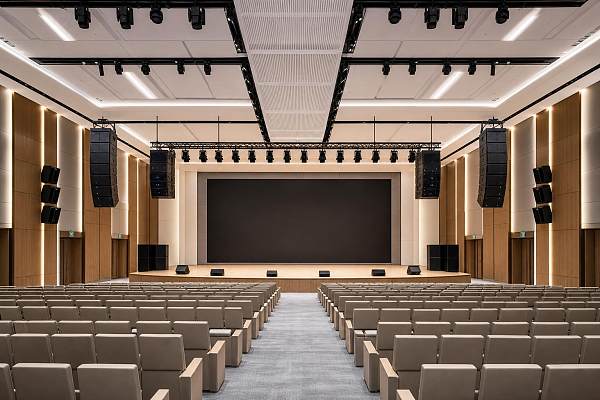
Conference suites, banquet halls, and multifunction rooms often prioritize visual impact first. That design decision can quietly work against speech intelligibility if hard finishes dominate too much surface area.
In these rooms, operators may push level higher to compensate. The result is rarely better clarity. It usually produces louder reflections, more feedback risk, and listener fatigue.
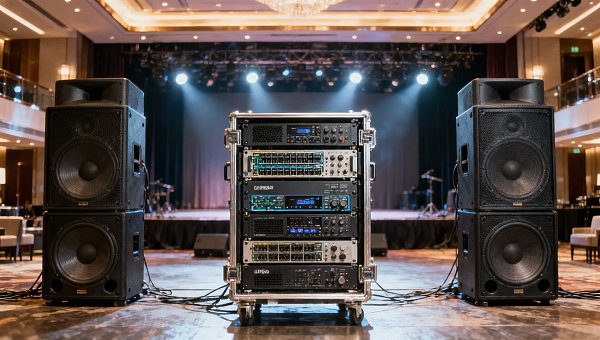
A better approach is to shorten the acoustic tail and increase the ratio of direct sound. Column arrays, carefully aimed point source boxes, and speech-prioritized DSP often outperform brute-force level increases.
Microphone choice also matters more than many sites expect. A presenter walking with a badly positioned lavalier can undo a strong loudspeaker design in minutes.
For these spaces, sound reinforcement speech clarity depends on four checks: reverberation time, loudspeaker aiming, microphone distance, and how often the room changes layout between events.
Classrooms and training rooms expose coverage problems quickly
Educational and briefing environments tend to reveal smaller system errors faster. Listeners stay seated longer, spoken detail matters more, and repeated daily use makes weak intelligibility impossible to ignore.
Here, the common mistake is assuming a modest room does not need careful system design. In practice, a shallow room with low ceilings can still suffer from destructive reflections and inconsistent arrival times.
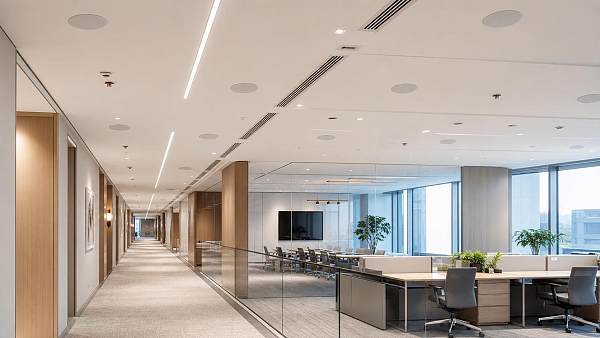
Ceiling speakers may be acceptable for general paging, but they are not automatically the best route for sound reinforcement speech clarity during instruction or formal presentations.
The key judgment is how much spoken detail must be preserved. If the room supports language learning, technical training, or hybrid sessions, intelligibility requirements rise sharply.
- Keep loudspeaker zones simple enough to align and manage consistently.
- Avoid over-EQ that boosts low mids and masks articulation.
- Confirm lapel and headset microphones match actual speaking behavior.
- Measure intelligibility after furniture, screens, and occupancy are in place.
That last point is often missed. Empty-room tuning can look acceptable, then fall apart once bodies, bags, partitions, and active ventilation change the acoustic balance.
Retail, leisure, and public zones need control more than raw power
Open commercial spaces rarely behave like dedicated auditoriums. Speech must compete with movement, music, architectural openness, and changing noise throughout the day.
In a premium showroom, speech should feel present without interrupting the brand atmosphere. In a family entertainment venue, emergency and operational announcements must cut through crowd noise immediately.
Those are different priorities. One favors subtle zoning and tonal balance. The other favors message priority, redundancy, and highly predictable coverage.
Sound reinforcement speech clarity in these sites depends heavily on system logic. Paging priority, ducking behavior, latency across distributed zones, and ambient noise compensation all affect intelligibility.
More speakers are not always better. Overlapping sources with poor timing can smear speech and create exactly the muddiness the upgrade was meant to solve.
What to judge before choosing a fix
- Is speech occasional, scheduled, or mission critical?
- Does background music occupy the same zones as announcements?
- Will users hear one source clearly, or several delayed sources at once?
- Do materials and finishes change between day and night operation?
- Can maintenance teams keep microphones, DSP presets, and gain structure consistent?
The most common misread is blaming EQ for every clarity problem
When speech sounds muddy, many sites jump straight to EQ changes. That can help at the margin, but it rarely fixes the root issue by itself.
If the microphone is too far from the mouth, low-level room pickup rises. If loudspeakers are firing at reflective surfaces, consonant detail gets buried. If delay timing is wrong, syllables smear.
In those conditions, aggressive EQ becomes a bandage. It may even worsen listener fatigue by overemphasizing harsh bands while leaving intelligibility largely unchanged.
Another common mistake is evaluating speech clarity only during commissioning. Real performance should be checked during active service, with normal occupancy and realistic background noise.
This is especially relevant in international commercial projects. Compliance, reliability, and acoustic results need to hold together, not compete with one another.
Practical steps that usually improve sound reinforcement speech clarity
The most reliable improvements are usually straightforward, provided they follow the room’s actual use case instead of a generic tuning checklist.
- Reduce unnecessary low-mid buildup before boosting presence bands.
- Re-aim or re-zone loudspeakers to increase direct energy at listeners.
- Tighten microphone practice, especially placement and gain discipline.
- Align delays across distributed systems instead of relying on level alone.
- Address reverberant surfaces where architecture allows practical treatment.
- Test with recorded speech and live talkers, not music only.
In real-world commercial evaluation, the strongest results often come from combining modest acoustic treatment with disciplined system optimization. Neither part works as well alone.
A better next step is building a room-by-room clarity standard
Sound reinforcement speech clarity improves when sites stop treating every venue as acoustically interchangeable. A ballroom, seminar room, attraction queue, and branded retail floor each deserve separate criteria.
Start by mapping where speech must be understood, under what noise conditions, and with which microphone types. Then review coverage, reverberation, DSP logic, and ongoing maintenance constraints together.
That process fits the wider commercial intelligence approach used across GCT sectors. Performance decisions are stronger when they connect technical quality, operational reliability, and long-term site suitability.
If a system still sounds muddy, the next useful move is not another broad hardware change. It is a structured comparison of room conditions, speech tasks, and deployment assumptions before the next upgrade cycle.
Search News
Hot Articles
- Restaurant FurnitureFast-Casual Restaurant Interiors: Design Choices That Improve Speed and Guest FlowOct 04, 2026
- Outdoor RidesHow to Select Leisure Park Equipment for Safe, High-Throughput Visitor AreasOct 03, 2026
- Fashion & Gem JewelryDiamond Tester Wholesale: How to Vet Accuracy, Calibration, and MOQ Before OrderingOct 02, 2026
Popular Tags
Need ExpertConsultation?
Connect with our specialized leisureengineering team for procurementstrategies.
Recommended News
 Sep 30, 2026How to Choose an Aluminum Projector Ceiling Mount for Load, Drop, and Ceiling TypeChoose an aluminum projector ceiling mount with confidence. Learn how load capacity, drop length, ceiling structure, safety retention, and service access shape a reliable commercial AV installation.● Pro Audio Engineer
 Sep 26, 2026How to Choose Dynamic Microphones for Vocals in Live Stage SettingsDynamic microphones for vocals: learn how to match polar patterns, feedback control, durability, and clarity to live stage needs for reliable, professional sound.● Pro Audio Engineer
 Sep 07, 2026How to Choose Wall Mount Speakers for Clear Audio in Commercial SpacesWall mount speakers for commercial spaces: learn how to optimize coverage, SPL, directivity, installation, and system design for clear, reliable audio.● Pro Audio Engineer
 Sep 03, 2026How to Choose Locking Speakon Speaker Cables for Reliable Live Sound ConnectionsLocking Speakon speaker cables: learn how to select the right gauge, connector pinout, strain relief, and durable construction for reliable live sound connections.● Pro Audio Engineer
 Sep 08, 2026Is It Worth Upgrading a Stage Sound System Mid-Project?Is it worth upgrading stage sound systems mid-project? Discover how to assess performance gaps, costs, compatibility, and long-term venue value.● Pro Audio Engineer
 Sep 04, 2026Can AV Systems Be Retrofitted Into Older Commercial Buildings?Can AV integration be retrofitted into older commercial buildings? Discover practical strategies for reliable, code-aware AV upgrades with minimal disruption.● Pro Audio Engineer
 Jul 17, 2026How to Choose a Crossover Networks Supplier: Key Specs, Quality Checks, and OEM FactorsFind the right crossover networks supplier with this practical guide to key specs, quality checks, OEM factors, and supply chain risks for better audio performance and sourcing confidence.● Pro Audio Engineer
 Jul 16, 2026How to Evaluate ODM Services for Pro Audio: Design, Certification, and Production CapabilitiesODM services for pro audio: learn how to assess design depth, certification readiness, and production strength to choose a reliable partner and launch better audio products with less risk.● Pro Audio Engineer
 Jul 15, 2026JETRO Flags Modular, Low-Power Shift in Pro Stage AudioPro Stage Audio buyers in Japan are shifting fast: JETRO flags modular amplifiers, IP65 line arrays, low standby power, and JIS compliance as key to channel entry.● Pro Audio Engineer
 Jul 15, 2026Paper Speaker Cones Explained: How Cone Weight and Stiffness Affect SoundPaper speaker cones explained: discover how cone weight and stiffness shape sensitivity, clarity, breakup control, and real-world speaker performance for smarter audio sourcing.● Pro Audio Engineer
 Jul 15, 2026Performance Venues Compliance Checklist: Fire Safety, Accessibility, and Crowd RulesPerformance venues compliance checklist covering fire safety, accessibility, and crowd rules. Learn how to reduce delays, improve approvals, and open safer, more resilient venues.● Pro Audio Engineer
 Jul 14, 2026Japan Adds EMC Immunity Test for Stage AmplifiersJapan Adds EMC Immunity Test for Stage Amplifiers: learn how Japan’s 2026 JIS update affects EMC testing, JIS marking, certification timing, and market access for exporters.● Pro Audio Engineer
 Jul 13, 2026CISCE 2026 Adds Pro Stage Audio ZoneCISCE 2026 Adds Pro Stage Audio Zone as free overseas pre-registration opens. Explore key updates for pro audio suppliers, distributors, and system integrators before the Shanghai expo.● Pro Audio Engineer
 Jul 12, 2026Japan Tightens Pro Stage Audio Efficiency Limits Under JIS C 8105-2026Japan Tightens Pro Stage Audio Efficiency Limits Under JIS C 8105-2026: learn how new PSE compliance rules reshape market access, product eligibility, and shipment planning in Japan.● Pro Audio Engineer
 Jul 12, 2026How to Choose Low Profile Ceiling Speakers for Hotels, Offices, and Retrofit ProjectsLow profile ceiling speakers for hotels, offices, and retrofit projects: learn how to compare depth, coverage, compliance, and installation factors to choose the right fit.● Pro Audio Engineer
 Jul 11, 2026Japan Tightens JIS C 8105-2026 for Pro AudioJapan Tightens JIS C 8105-2026 for Pro Audio: learn how stricter standby power, PSE diamond mark rules, and the 2026 deadline impact exports, compliance, and market access.● Pro Audio Engineer
 Jul 10, 2026JETRO Q2 Outlook Signals Higher Stage Audio DemandJETRO Q2 Outlook signals higher stage audio demand in Japan, with 37% procurement growth and stricter PSE Annex D compliance. See what importers, manufacturers, and rental channels must act on now.● Pro Audio Engineer
 Jul 10, 2026How to Choose Wall Mount Speakers for Restaurants by Layout, Coverage, and SPLWall mount speakers for restaurants should match layout, coverage, and SPL. Learn how to choose the right setup for even sound, guest comfort, and reliable performance.● Pro Audio Engineer
 Jul 09, 2026JIS T 9001:2026 Adds Mandatory AI Noise LabelsJIS T 9001:2026 adds mandatory AI noise labels for pro audio gear from October 2026. Learn how it impacts compliance, testing, exports, and product launches.● Pro Audio Engineer
 Jul 06, 2026Improving Sound Reinforcement Speech Clarity: Key Causes of Muddiness and How to Fix ThemSound reinforcement speech clarity starts with identifying reverberation, coverage, noise, and timing issues. Discover practical fixes that make announcements clearer and commercial spaces perform better.● Pro Audio Engineer
 Jul 05, 2026Saudi Rule Adds Arabic UI Requirement for Pro Audio ImportsSaudi Rule Adds Arabic UI Requirement for Pro Audio Imports: learn how SASO’s new Arabic UI mandate affects digital amplifiers, DSP processors, and network audio interfaces before Sept. 1, 2026.● Pro Audio Engineer
 Jul 02, 2026How to Choose Audio Mixing Consoles for Live Venues: Channels, Buses, and I/O ExplainedAudio mixing consoles explained for live venues: learn how to choose the right channels, buses, and I/O to improve workflow, support growth, and avoid costly mistakes.● Pro Audio Engineer
 Jul 01, 2026UL 62368-3:2026 Adds EMC Rules for Pro Stage AudioUL 62368-3:2026 adds EMC rules for Pro Stage Audio, requiring Level 4 immunity and manual labeling by Oct 1, 2026. See what exporters, makers, and buyers must do now.● Pro Audio Engineer
 Jun 30, 2026Sound Reinforcement Design Basics: How to Plan Coverage, SPL, and Speaker PlacementSound reinforcement design starts with smarter coverage, target SPL, and speaker placement. Learn how to plan clearer, more reliable audio performance for commercial spaces.● Pro Audio Engineer