What to Check Before Buying Space Saving Ironing Boards Wholesale for Hotels
Start with the room, not the catalog
When hotel teams buy space saving ironing boards wholesale, the real cost is rarely the unit price alone. A board that looks efficient on paper can create housekeeping delays, guest complaints, damaged walls, awkward room layouts, or replacement cycles that come too fast. In hotels, these boards are touched by guests, room attendants, engineering, and sometimes brand auditors. That is why the first check is simple: do not evaluate the item in isolation. Evaluate it in the room type where it will actually live.
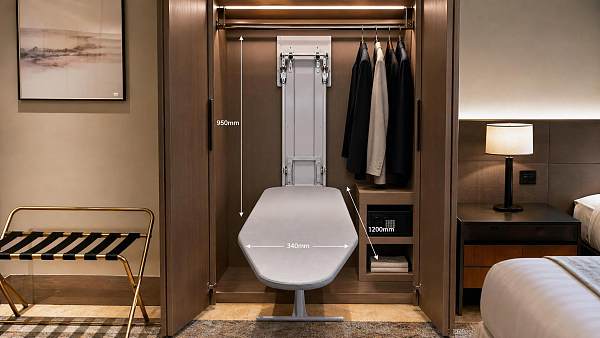
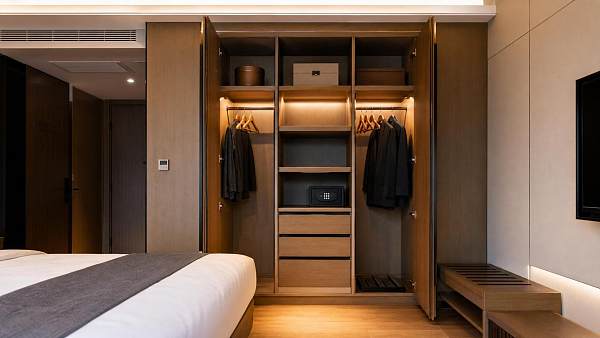
Measure the wardrobe cavity, the inside depth of the cabinet, door swing clearance, nearby hangers, luggage rack position, and how much standing space a guest has once the board is opened. A compact folded size matters, but so does the open position. Some models save space only when stored; once deployed, they block circulation or force the user into a bad angle. If your hotel has mixed room layouts, do not assume one SKU works everywhere. Standard rooms, accessible rooms, suites, and long-stay inventory often need different mounting logic.
Check the mounting style against your installation reality
This is where many bulk purchases go sideways. Buyers focus on finished appearance and forget installation conditions.
- Wall-mounted units can save floor space, but they depend on wall strength, fixing points, and clean alignment across many rooms.
- Cabinet-mounted or pull-out designs work well in joinery-led room schemes, yet they require exact interior dimensions and enough structural support inside the wardrobe.
- Over-door or hanging formats may seem convenient, but they can interfere with door closers, hinges, and guest perception if the finish feels too residential.
Before placing a wholesale order, ask engineering or fit-out teams to review the fixing method, screw locations, and load path. The issue is not just whether the board can be installed. The issue is whether it can be installed repeatedly, quickly, and consistently across dozens or hundreds of rooms without rework.
Do not treat dimensions as a single number
Procurement sheets often reduce size to folded length and board width. That is not enough. Ask for the full dimensional drawing, including folded depth, projection from wall or cabinet, clearance required to rotate or unfold, and the usable ironing surface.
A board can be technically compact and still feel unusable to guests if the ironing surface is too short for shirts, dresses, or trousers. On the other hand, an oversized board can be a poor fit for urban hotels where every centimeter matters. The right balance depends on the room category and guest profile. Business hotels usually need a practical surface for quick shirt pressing. Extended-stay properties may see more frequent use and broader garment types. That changes what “sufficient” looks like.
Look hard at the mechanism, because that is where failures start
The mechanical action matters more than the finish. Guests will not forgive a board that sticks, drops suddenly, wobbles, or refuses to lock. Housekeeping will dislike it even faster.
Check the hinge quality, locking points, rotation stops, spring tension if applicable, and whether the board opens smoothly with one hand. Ask the supplier how the mechanism performs under repeated use, and request a sample for operational handling. You are not trying to engineer the product from scratch; you are trying to identify where fatigue, looseness, or misalignment is likely to appear. In hospitality, a mechanism that feels acceptable in a showroom may become a maintenance issue once hundreds of guests use it with very little care.
Review cover material and padding as operating items, not decoration
The board cover is often treated as a minor accessory. It should not be. Covers stain, scorch, tear, and loosen. Padding compresses over time. If replacement covers are hard to source, your team ends up replacing entire units earlier than planned or running rooms with tired-looking equipment.
Ask what the cover is made of, how it is attached, and whether replacement covers can be ordered separately in bulk. Check whether the fabric stays taut after repeated use and whether the edges fray easily. A removable, serviceable cover often gives better lifecycle value than a neat-looking sealed setup that becomes unattractive after heavy use.
Match durability expectations to hotel use, not residential use
Many space-saving boards look similar online, but they are not built for the same duty cycle. A hotel room product needs to tolerate repeated opening, uneven handling, cleaning chemicals nearby, occasional knocks from luggage, and guest misuse. If a supplier mainly serves retail home furnishing channels, ask extra questions.
What you want to know is practical:
- What is the frame material and finish?
- Which parts are most likely to wear first?
- Are spare parts available for hinges, brackets, covers, or latches?
- Is the model intended for commercial hospitality supply, or simply offered into that channel?
Those questions usually reveal more than polished brochures do.
Check compliance by market and by product configuration
Compliance is not a box to tick after price negotiation. For hotel buyers, it needs to be checked before commitment, especially if the board includes integrated electrical features such as an iron holder, power point arrangement, or any built-in electrical component. Requirements vary by destination market and by the exact product configuration being imported or installed.
Ask for the technical file or product documentation relevant to your model, then review the fields that actually matter: manufacturer identity, model number, material information where relevant, test references if supplied, and any market-specific declarations tied to that configuration. If your project team is sourcing for more than one country, do not assume a document set prepared for one market covers the others. The board itself, the mounting kit, and any electrical element may trigger different checks.
Test guest usability, not just fit
A board can fit the room and still be a poor guest-facing product. That usually shows up in reviews, not at tender stage. Open the sample unit in a mock-up room or a live room. Try it as a guest would. Is it obvious how to release it? Does it feel stable when pressure is applied? Can a right-handed or left-handed user stand comfortably? Does the stored unit look tidy when folded away?
One common mistake is choosing a model that technically saves space but feels cheap or inconvenient in an upscale room. Another is overbuying a premium mechanism for economy inventory where replacement speed and part availability matter more than a refined movement. Brand standard and operating logic both count.
Price the full landed and installed cost
When comparing wholesale offers, create a buying sheet that goes beyond EXW or FOB pricing. Include installation hardware, replacement covers, spare parts, packaging efficiency, inspection cost, freight impact by carton size, import charges where applicable, and labor time for installation. Low-cost units often become expensive when the packaging is bulky, the mounting kit is incomplete, or engineering spends too long correcting alignment issues room by room.
Audit the supplier for repeatability, not just responsiveness
Fast replies are useful. They are not the same as supply reliability. For hotel projects, especially rollouts and refurbishments, the bigger question is whether the supplier can deliver the same specification repeatedly across batches.
Review the quotation, drawing, packaging spec, lead time, and sample approval process together. If details shift from one document to another, expect problems later. Ask who controls final packing, how model revisions are identified, and whether replacement parts remain available after the first bulk order. A supplier that can maintain documentation discipline is usually easier to work with when punch-list issues appear.
Inspect samples the way operations will experience them
Do not stop at a visual sample review on a conference table. Mount the unit. Open and close it repeatedly. Let housekeeping and engineering handle it. Check for pinch points, loose fasteners after repeated movement, fabric sagging, rough edges, and whether the stored unit rattles. If your team uses room condition checklists, add the ironing board to that workflow before final approval. It is better to find a nuisance now than after hundreds of rooms are live.
Keep the buying decision narrow and practical
The cleanest approach is to decide in this order: room fit, mounting compatibility, mechanism quality, serviceability, compliance documents for the target market, then total installed cost. If a model fails early on room fit or installation logic, stop there. Do not let a strong unit price pull a weak product through the process.
For most hotel procurement teams, the best wholesale choice is not the smallest board and not the cheapest one. It is the model that installs cleanly, works intuitively, survives repeated use, and can be maintained without turning a small room accessory into a recurring operating problem.
Search News
Hot Articles
- Outdoor RidesWhat Drives Animatronic Dinosaur Manufacturer Prices for Theme Park Projects?Sep 18, 2026
- Stationery & UniformsHow to Source Wholesale Packing Tape Without Compromising Carton Seal StrengthSep 17, 2026
- Smart Campus TechHow to Source Educational Furniture Worldwide for Safe, Flexible Learning SpacesSep 16, 2026
Popular Tags
Need ExpertConsultation?
Connect with our specialized leisureengineering team for procurementstrategies.
Recommended News
 Sep 03, 2026What Lead Times Should Buyers Expect for Custom Luxury Fixtures?What delivery lead times should I expect for custom luxury fixtures? Discover realistic 12–24 week timelines, approval milestones, freight factors, and ways to avoid costly delays.● Hospitality Sourcing Dir
 Sep 05, 2026Hotel Hair Dryers Compared: Wattage, Safety Features, and Guest-Room DurabilityHair dryer for hotels: compare wattage, thermal safety, noise, mounting, and durability to select reliable guest-room dryers that elevate comfort and reduce maintenance costs.● Hospitality Sourcing Dir
 Aug 04, 2026What to Check Before Buying Space Saving Ironing Boards Wholesale for HotelsSpace saving ironing boards wholesale for hotels: learn what to check before buying, from room fit and mounting to durability, compliance, and total installed cost.● Hospitality Sourcing Dir
 Jul 12, 2026Saudi e-SABER Label Rule Hits Hotel Amenities ExportsSaudi e-SABER label rule will reshape hotel amenities exports from August 1, 2026. Learn how SASO compliance, port clearance risks, and supplier readiness may impact shipments.● Hospitality Sourcing Dir
 Jul 11, 2026SASO Requires e-SABER Labels for Hotel AmenitiesSASO requires e-SABER labels for hotel amenities from August 1, 2026. Learn how QR code, SABER, and GCC compliance rules may impact Saudi shipments and port clearance.● Hospitality Sourcing Dir
 Jul 10, 2026Saudi SABER Update Adds GCC and Arabic Manual RuleSaudi SABER Update Adds GCC and Arabic Manual Rule: learn how the new SABER requirements affect hotel amenities certification, timelines, costs, and Saudi market access planning.● Hospitality Sourcing Dir
 Jul 03, 2026Wet and Dry Vacuum Cleaners Quiet Enough for Hotels: What Noise Level and Features Matter?Wet and dry vacuum cleaners quiet enough for hotels: compare ideal dB ranges, filtration, maneuverability, and lifecycle cost to choose cleaner, quieter machines with confidence.● Hospitality Sourcing Dir
 Jul 01, 2026How to Choose Hotel Hospitality Supplies for Different Property TypesHotel hospitality supplies buying guide for resorts, boutique, business, and economy hotels. Learn how to match supplies to property type, durability, brand image, and lifecycle value.● Hospitality Sourcing Dir
 Jun 27, 2026Memory Foam Hotel Mattresses vs Hybrid Beds: Which Option Fits Your Property?Memory foam hotel mattresses or hybrid beds? Compare comfort, durability, cooling, and lifecycle cost to find the best fit for your property and guest experience.● Hospitality Sourcing Dir
 Jun 26, 2026Hotel Desks: Types, Materials, and Layout Tips for Modern Guest RoomsHotel desks guide covering desk types, durable materials, and smart layout tips for modern guest rooms. Discover practical ideas to improve comfort, style, and space efficiency.● Hospitality Sourcing Dir
 Jun 23, 2026How to Choose Hotel Wardrobes: Materials, Storage Layout, and Durability StandardsHotel wardrobes guide: learn how to compare materials, storage layout, and durability standards to choose wardrobes that improve guest experience and reduce long-term maintenance costs.● Hospitality Sourcing Dir
 Jun 20, 2026Artificial Plants for Hotels: How to Compare Fire Ratings, Materials, and Maintenance NeedsArtificial plants for hotels: compare fire ratings, materials, and maintenance needs to choose safer, longer-lasting greenery that protects design quality and lifecycle cost.● Hospitality Sourcing Dir
 Jun 17, 2026How to Choose Hotel Hair Dryers Wall Mounted for Safety, Power, and Room TypeHotel hair dryers wall mounted buying guide: learn how to compare safety features, power levels, noise, and room-fit options to choose reliable models for every hotel segment.● Hospitality Sourcing Dir
 Jun 04, 2026Wholesale Hotel Safes Buying Guide: Lock Types, Size Options, and Installation PointsWholesale hotel safes buying guide covering lock types, size options, and installation points. Compare models, reduce procurement risk, and choose the right safe for your hotel project.● Hospitality Sourcing Dir
 May 30, 2026Is glamping furniture worth the higher project cost?Glamping furniture can justify higher project costs when it boosts bookings, durability, guest reviews, and long-term ROI. Learn where premium upgrades truly pay off.● Hospitality Sourcing Dir
 May 29, 2026Do blackout curtains for hotels Cut Energy Costs?Blackout curtains for hotels can lower HVAC costs, improve guest comfort, and boost room performance. Learn when they save energy and how to specify the right system.● Hospitality Sourcing Dir
 May 09, 2026Glamping furniture mistakes that make premium stays feel cheapGlamping furniture mistakes can make premium stays feel cheap. Learn how to choose durable, comfortable, brand-aligned pieces that elevate guest experience and protect long-term value.● Hospitality Sourcing Dir
 May 04, 2026Commercial Carpet Tiles for Hotels: What Wears Out First?Commercial carpet tiles hotel buyers: discover what wears out first in entrances, corridors, and transition zones, and learn how to specify longer-lasting, guest-ready flooring.● Hospitality Sourcing Dir
 May 04, 2026Custom Hotel Signage That Looks Premium and Stays ReadableCustom hotel signage that balances premium aesthetics with readability, durability, and compliance. Discover a practical checklist to improve guest experience and streamline hotel projects.● Hospitality Sourcing Dir
 May 04, 2026Luxury Vinyl Tile Commercial Flooring in High-Traffic AreasLuxury vinyl tile commercial flooring for high-traffic spaces: discover how to compare durability, maintenance, installation risks, and lifecycle value before you specify.● Hospitality Sourcing Dir
 May 03, 2026AC Milan’s Smart Locker Room Procurement Triggers UNI 11743 Compliance ReviewAC Milan’s smart locker room procurement triggers UNI 11743:2025 compliance review — critical for sports infrastructure suppliers, EU exporters & integrators.● Hospitality Sourcing Dir
 May 03, 2026Hotel room minibar fridges: silent operation is not enoughHotel room minibar fridges now require more than silent operation. Explore how energy efficiency, design fit, compliance, and lifecycle value shape smarter hotel sourcing.● Hospitality Sourcing Dir
 May 03, 2026HVAC systems for hotels: poor zoning raises energy bills quietlyHVAC systems for hotels can silently inflate energy bills when zoning is weak. Learn how smarter controls cut costs, improve guest comfort, and protect long-term hotel asset value.● Hospitality Sourcing Dir
 May 03, 2026Wooden coat hangers hotel projects should not overlook finish qualityWooden coat hangers hotel buyers should not ignore finish quality. Learn how smoothness, coating safety, and color consistency reduce complaints, protect brand image, and lower replacement costs.● Hospitality Sourcing Dir