Wholesale Hotel Safes Buying Guide: Lock Types, Size Options, and Installation Points
Choosing the right wholesale hotel safes is critical for procurement teams balancing guest security, brand standards, and budget control. From electronic and biometric lock types to size selection and installation planning, each detail affects operational efficiency and long-term value. This guide outlines the key buying points commercial buyers should review before sourcing hotel safes at scale.
For hotel groups, serviced apartments, resorts, and mixed-use hospitality projects, in-room safes are no longer a minor accessory. They affect guest confidence, front-desk workload, replacement cycles, and even room furniture design. A poor specification can create service calls within the first 6 to 12 months, while a well-matched model can perform reliably across a 5 to 8 year operating window.
Procurement teams sourcing wholesale hotel safes at volume should therefore evaluate more than unit price. Lock technology, internal dimensions, fixing points, door swing, battery access, emergency override, and after-sales support all influence total cost of ownership. The sections below break down the most practical buying criteria for commercial projects.
Understanding Lock Types for Different Hotel Operating Models
Lock type is usually the first technical decision in a wholesale hotel safes purchase. It directly affects guest ease of use, staff intervention frequency, and maintenance planning. In most projects, buyers compare 3 core options: electronic keypad, biometric fingerprint, and mechanical override-based systems with digital front-end control.
Electronic keypad safes
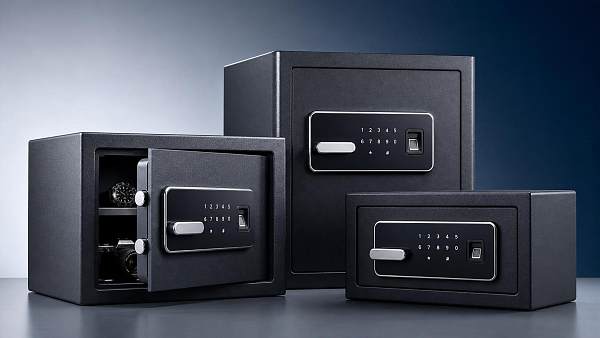
Electronic keypad models remain the most common choice for midscale and upscale hotels. They usually support 3-digit to 8-digit guest codes, low-battery alerts, internal audit trails on selected versions, and manager override using a master code or emergency key. For projects above 80 rooms, this format is often preferred because replacement parts and staff training are easier to standardize.
From a procurement perspective, keypad safes offer a good balance between cost and usability. Battery replacement intervals often fall within 12 to 18 months depending on usage, and guest education is simple enough to limit support calls. For chain hotels seeking consistency across multiple sites, this is often the most scalable lock platform.
Biometric fingerprint safes
Biometric models appeal to premium and lifestyle properties that want a more modern guest experience. They can reduce forgotten-code incidents, but they also require closer review of sensor reliability, environmental tolerance, and backup access methods. In humid coastal resorts or dusty leisure environments, fingerprint readers may need more frequent cleaning and testing than keypad panels.
These units can strengthen a premium brand story, yet procurement managers should confirm whether the supplier provides a dual-failback system, such as biometric entry plus manager code plus emergency key. Without at least 2 backup access routes, operational risk rises during battery failure, sensor wear, or user error.
Mechanical lock and hybrid options
Purely mechanical safes are less common in guest rooms today, but hybrid formats still appear in economy hotels, staff lockers, and low-maintenance remote properties. They can work well where digital servicing resources are limited, though they usually deliver lower guest convenience and weaker brand perception than electronic options.
When reviewing wholesale hotel safes for multi-property procurement, buyers should match lock type to operating profile rather than defaulting to the newest technology. A city business hotel, an all-inclusive resort, and an extended-stay project often have different guest behavior patterns and staffing levels.
The table below compares common lock formats against practical hospitality buying criteria, including maintenance frequency, guest usability, and suitability by property type.
For most room programs, electronic keypad units remain the safest mainstream choice. Biometric formats can add value in premium environments, but only when the supplier can support spare parts, emergency access tools, and service training across the full project lifecycle.
Lock-related questions buyers should ask
- How many override methods are included: 1, 2, or 3?
- Is battery replacement external or does the door need special opening steps?
- Can the safe store an audit trail for at least the last 50 to 100 openings?
- What is the recommended preventive maintenance interval: every 6 months or every 12 months?
- Are lock components standardized across all room categories?
Choosing the Right Size and Capacity for Guest Use
Size selection is one of the most overlooked parts of buying wholesale hotel safes. Many procurement teams focus on cabinet dimensions without fully checking what guests actually place inside. Today, travelers commonly expect space for passports, wallets, jewelry, tablets, and increasingly a 13-inch to 15-inch laptop.
Internal dimensions matter more than external footprint
A safe may appear compact from the outside but lose usable volume due to thick door construction, internal hinges, battery compartment placement, or control panel depth. Buyers should always request both external dimensions and clear internal dimensions. A difference of just 20 to 40 mm can determine whether a standard laptop fits flat inside.
For economy hotels, compact units may be sufficient if the target use is documents, phones, and small valuables. For business hotels and international chain properties, laptop-compatible designs are often the practical baseline. In premium suites, larger units may also need to accommodate watches, luxury accessories, and small electronics chargers.
Typical capacity planning by room category
A useful procurement method is to divide room types into 3 storage categories: compact, standard, and oversized. Compact formats often fall under 20 liters. Standard units may range from 20 to 35 liters. Oversized or laptop-ready models often exceed 35 liters, depending on the room furniture layout and drawer cavity.
This approach allows buyers to avoid over-specifying every room. For example, a 200-room property may install standard safes in 160 rooms, oversized models in 30 executive rooms, and premium-capacity versions in 10 suites. That tiered mix can control budget while still aligning with room-rate strategy.
The table below helps procurement teams map size options to guest expectations and furniture integration constraints.
For many projects, the standard 20L to 35L segment offers the strongest commercial value. It satisfies most guest storage needs while still fitting common wardrobe and millwork dimensions. Larger units should be specified selectively where room ADR, traveler profile, or brand standards justify the added cost.
A 5-point size checklist
- Confirm internal dimensions, not only external cabinet size.
- Test fit for common devices such as a 14-inch laptop.
- Check shelf, wardrobe, or drawer cavity clearance on all sides.
- Review door opening angle, especially in recessed installations.
- Match safe size to room category instead of applying one size to every room.
Installation Points That Affect Safety, Compliance, and Serviceability
Installation is where many wholesale hotel safes projects succeed or fail. A well-built safe can still perform poorly if it is loosely fixed, blocked by furniture, or placed where batteries cannot be changed quickly. Procurement should coordinate early with interior designers, millwork contractors, and property engineering teams.
Fixing method and anchoring positions
Most in-room safes are designed for base fixing, rear fixing, or both. Commercial buyers should prefer models with at least 2 anchoring points, and often 4 points are better for higher-theft-risk environments. The mounting surface also matters. Solid timber, reinforced cabinetry, or structural wall backing will perform differently from lightweight panel board.
When the project includes custom joinery, the cabinet should be designed around the safe rather than forcing the safe into leftover space. Even a 5 mm to 10 mm clearance planning error can compromise ventilation, cable routing, or door swing.
Location inside the room
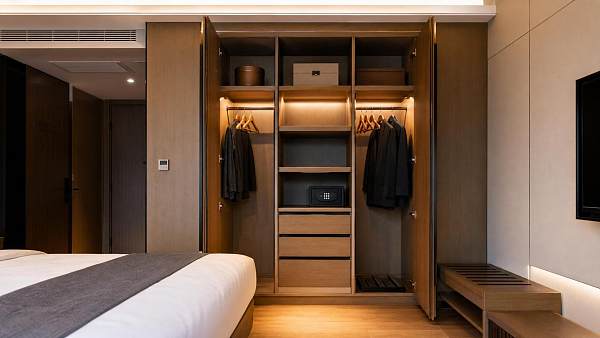
The most common installation points are wardrobes, drawers, bedside cabinets, and built-in console units. Each has trade-offs. Wardrobe installations are discreet and easy to standardize. Drawer-mounted units can improve accessibility but may limit safe depth. Low cabinet positions reduce visibility yet may be less comfortable for older guests.
From an operations perspective, the best location supports 3 goals at the same time: easy guest use, secure fixing, and fast staff access for maintenance. If the engineering team needs 20 minutes to remove a panel for every battery change, service costs will accumulate across a 100-room or 300-room asset.
Power, batteries, and emergency access
Most hotel safes run on internal batteries rather than hardwired power. That simplifies installation, but the battery compartment must be accessible without destructive entry. Procurement teams should ask whether low-battery alerts appear early enough to avoid lockouts and whether staff can change batteries in under 5 minutes per unit.
Emergency opening tools must also be stored and controlled properly. Manager codes, override keys, and handheld service devices should be documented in the hotel’s security SOP. This is especially important for multi-site groups that centralize procurement but rely on local engineering teams for day-to-day support.
Key installation mistakes to avoid
- Specifying the safe before finalizing furniture drawings.
- Using only 1 fixing point where 2 to 4 are available.
- Ignoring door swing clearance in narrow wardrobes.
- Placing the unit where battery replacement requires furniture dismantling.
- Failing to standardize override control across properties.
For procurement managers, installation review should be part of the pre-production sample approval process. A safe that looks correct on paper may still create avoidable site issues if fixing hardware, cabinet cutouts, or access procedures are not verified before bulk shipment.
Commercial Buying Criteria Beyond the Product Itself
When comparing wholesale hotel safes suppliers, product specification is only one part of the decision. Large hospitality buyers should also assess packaging durability, spare parts availability, warranty terms, production consistency, and the supplier’s ability to support phased rollouts across multiple projects or countries.
Lead time, MOQ, and project phasing
Typical lead times for standard configurations may range from 3 to 6 weeks, while customized dimensions, branding, or packaging can extend production by another 2 to 4 weeks. If the hotel opening schedule is fixed, buyers should lock the final specification early and confirm whether partial shipments are possible for staged fit-out.
MOQ varies by factory and finish type. A standard model may be available in relatively low volumes, but custom color, logo plate, or electronic programming adjustments may require higher thresholds. This matters for owners developing one flagship property versus groups standardizing across 5 to 20 sites.
After-sales support and replacement planning
Good after-sales support reduces long-term procurement risk. Buyers should confirm availability of replacement keypads, lock modules, override keys, and battery covers for at least several years after installation. A safe is not a high-touch daily appliance, but when failures happen, response speed matters because guest satisfaction is involved immediately.
It is also practical to order a small buffer stock, often around 1% to 3% of project volume, for immediate replacement needs. This is especially useful in remote resorts or properties where international spare part lead times can exceed 2 weeks.
The table below summarizes common B2B buying factors that should sit alongside product price during supplier evaluation.
This wider evaluation framework helps buyers avoid false savings. A low-priced unit can become expensive if replacement parts are unavailable, installation is inefficient, or service teams lack clear override procedures. The strongest sourcing decisions balance acquisition cost with service continuity and brand protection.
A practical sourcing workflow for procurement teams
- Define room categories and required storage use cases.
- Shortlist 2 to 4 lock formats based on property positioning.
- Review dimensions against furniture drawings and fixing surfaces.
- Approve a physical sample and test installation access.
- Confirm lead time, spare parts, and override control procedures before bulk order.
Selecting wholesale hotel safes at scale is ultimately a cross-functional decision. Security, operations, engineering, interior design, and procurement all influence whether the final specification performs well in live hotel conditions. Buyers who define lock requirements, right-size capacity, and validate installation details early are far more likely to protect both guest experience and project budget.
For hospitality groups, procurement firms, and commercial developers seeking dependable sourcing support, GCT helps turn product comparison into a more informed commercial decision. To review suitable wholesale hotel safes for your property type, compare sourcing options, or request a tailored specification shortlist, contact us today and get a customized solution for your next project.
Search News
Hot Articles
- Musical InstrumentsProfessional String Instruments: How to Evaluate Tone, Response, and ProjectionOct 17, 2026
- Restaurant FurnitureBuying Hotel Lobby Furniture Wholesale: MOQs, Freight Costs, and Lead TimesOct 16, 2026
- Pro Stage AudioDesigning Theater Sound Systems for Clear Dialogue and Even Audience CoverageOct 15, 2026
Popular Tags
Need ExpertConsultation?
Connect with our specialized leisureengineering team for procurementstrategies.
Recommended News
 Oct 05, 2026How to Select Hotel Hair Dryers That Balance Guest Safety, Durability, and CostHair dryer for hotels: learn how to select safe, durable, cost-efficient models with the right certifications, performance, maintenance, and supplier support.● Hospitality Sourcing Dir
 Oct 01, 2026How Hotels Can Choose Amenity Bottles That Balance Brand Image and Refill CostsHotel amenity bottles: learn how to balance premium brand presentation, refill costs, hygiene, durability, and efficient housekeeping workflows.● Hospitality Sourcing Dir
 Sep 25, 2026How to Evaluate a Wall-Mounted Hotel Hair Dryer Manufacturer for Bulk ProjectsHotel hair dryers wall mounted manufacturer evaluation guide: compare safety, durability, installation fit, OEM options, total cost, and reliable bulk-project support.● Hospitality Sourcing Dir
 Sep 03, 2026What Lead Times Should Buyers Expect for Custom Luxury Fixtures?What delivery lead times should I expect for custom luxury fixtures? Discover realistic 12–24 week timelines, approval milestones, freight factors, and ways to avoid costly delays.● Hospitality Sourcing Dir
 Sep 05, 2026Hotel Hair Dryers Compared: Wattage, Safety Features, and Guest-Room DurabilityHair dryer for hotels: compare wattage, thermal safety, noise, mounting, and durability to select reliable guest-room dryers that elevate comfort and reduce maintenance costs.● Hospitality Sourcing Dir
 Aug 04, 2026What to Check Before Buying Space Saving Ironing Boards Wholesale for HotelsSpace saving ironing boards wholesale for hotels: learn what to check before buying, from room fit and mounting to durability, compliance, and total installed cost.● Hospitality Sourcing Dir
 Jul 12, 2026Saudi e-SABER Label Rule Hits Hotel Amenities ExportsSaudi e-SABER label rule will reshape hotel amenities exports from August 1, 2026. Learn how SASO compliance, port clearance risks, and supplier readiness may impact shipments.● Hospitality Sourcing Dir
 Jul 11, 2026SASO Requires e-SABER Labels for Hotel AmenitiesSASO requires e-SABER labels for hotel amenities from August 1, 2026. Learn how QR code, SABER, and GCC compliance rules may impact Saudi shipments and port clearance.● Hospitality Sourcing Dir
 Jul 10, 2026Saudi SABER Update Adds GCC and Arabic Manual RuleSaudi SABER Update Adds GCC and Arabic Manual Rule: learn how the new SABER requirements affect hotel amenities certification, timelines, costs, and Saudi market access planning.● Hospitality Sourcing Dir
 Jul 03, 2026Wet and Dry Vacuum Cleaners Quiet Enough for Hotels: What Noise Level and Features Matter?Wet and dry vacuum cleaners quiet enough for hotels: compare ideal dB ranges, filtration, maneuverability, and lifecycle cost to choose cleaner, quieter machines with confidence.● Hospitality Sourcing Dir
 Jul 01, 2026How to Choose Hotel Hospitality Supplies for Different Property TypesHotel hospitality supplies buying guide for resorts, boutique, business, and economy hotels. Learn how to match supplies to property type, durability, brand image, and lifecycle value.● Hospitality Sourcing Dir
 Jun 27, 2026Memory Foam Hotel Mattresses vs Hybrid Beds: Which Option Fits Your Property?Memory foam hotel mattresses or hybrid beds? Compare comfort, durability, cooling, and lifecycle cost to find the best fit for your property and guest experience.● Hospitality Sourcing Dir
 Jun 26, 2026Hotel Desks: Types, Materials, and Layout Tips for Modern Guest RoomsHotel desks guide covering desk types, durable materials, and smart layout tips for modern guest rooms. Discover practical ideas to improve comfort, style, and space efficiency.● Hospitality Sourcing Dir
 Jun 23, 2026How to Choose Hotel Wardrobes: Materials, Storage Layout, and Durability StandardsHotel wardrobes guide: learn how to compare materials, storage layout, and durability standards to choose wardrobes that improve guest experience and reduce long-term maintenance costs.● Hospitality Sourcing Dir
 Jun 20, 2026Artificial Plants for Hotels: How to Compare Fire Ratings, Materials, and Maintenance NeedsArtificial plants for hotels: compare fire ratings, materials, and maintenance needs to choose safer, longer-lasting greenery that protects design quality and lifecycle cost.● Hospitality Sourcing Dir
 Jun 17, 2026How to Choose Hotel Hair Dryers Wall Mounted for Safety, Power, and Room TypeHotel hair dryers wall mounted buying guide: learn how to compare safety features, power levels, noise, and room-fit options to choose reliable models for every hotel segment.● Hospitality Sourcing Dir
 Jun 04, 2026Wholesale Hotel Safes Buying Guide: Lock Types, Size Options, and Installation PointsWholesale hotel safes buying guide covering lock types, size options, and installation points. Compare models, reduce procurement risk, and choose the right safe for your hotel project.● Hospitality Sourcing Dir
 May 30, 2026Is glamping furniture worth the higher project cost?Glamping furniture can justify higher project costs when it boosts bookings, durability, guest reviews, and long-term ROI. Learn where premium upgrades truly pay off.● Hospitality Sourcing Dir
 May 29, 2026Do blackout curtains for hotels Cut Energy Costs?Blackout curtains for hotels can lower HVAC costs, improve guest comfort, and boost room performance. Learn when they save energy and how to specify the right system.● Hospitality Sourcing Dir
 May 09, 2026Glamping furniture mistakes that make premium stays feel cheapGlamping furniture mistakes can make premium stays feel cheap. Learn how to choose durable, comfortable, brand-aligned pieces that elevate guest experience and protect long-term value.● Hospitality Sourcing Dir
 May 04, 2026Commercial Carpet Tiles for Hotels: What Wears Out First?Commercial carpet tiles hotel buyers: discover what wears out first in entrances, corridors, and transition zones, and learn how to specify longer-lasting, guest-ready flooring.● Hospitality Sourcing Dir
 May 04, 2026Custom Hotel Signage That Looks Premium and Stays ReadableCustom hotel signage that balances premium aesthetics with readability, durability, and compliance. Discover a practical checklist to improve guest experience and streamline hotel projects.● Hospitality Sourcing Dir
 May 04, 2026Luxury Vinyl Tile Commercial Flooring in High-Traffic AreasLuxury vinyl tile commercial flooring for high-traffic spaces: discover how to compare durability, maintenance, installation risks, and lifecycle value before you specify.● Hospitality Sourcing Dir
 May 03, 2026AC Milan’s Smart Locker Room Procurement Triggers UNI 11743 Compliance ReviewAC Milan’s smart locker room procurement triggers UNI 11743:2025 compliance review — critical for sports infrastructure suppliers, EU exporters & integrators.● Hospitality Sourcing Dir