Playground Inspection Checklist: What to Review for Safety, Wear, and Compliance
A reliable playground inspection process helps technical evaluators identify hidden hazards, material wear, structural weakness, and compliance gaps before they lead to injury or liability. This checklist outlines the critical points to review, from surfacing and fasteners to spacing, stability, and standards alignment, so inspection teams can make accurate assessments and support safer, longer-lasting play environments.
Why does a playground inspection need more than a quick visual check?
For technical evaluators, a playground inspection is not a simple maintenance walk-through. It is a structured risk review that connects safety performance, asset life, compliance exposure, and repair planning. In commercial settings such as schools, parks, hospitality properties, mixed-use developments, and leisure venues, a missed defect can quickly become an injury claim, unplanned closure, or capital replacement issue.
The challenge is that many hazards do not appear dramatic at first glance. A slightly loose connector, localized surfacing compaction, hairline cracking in plastic panels, or minor corrosion around anchor points may signal broader failure patterns. A strong playground inspection process helps evaluators prioritize what must be repaired immediately, what should be monitored, and what may require redesign or supplier escalation.
- It reduces reliance on subjective judgment by using repeatable checkpoints and measurable observations.
- It supports procurement and lifecycle planning by linking defects to replacement parts, material suitability, and vendor performance.
- It improves documentation quality for owners, insurers, facility managers, and compliance reviewers.
This is especially relevant in the broader commercial trade environment served by GCT, where buyers often source across regions, compare OEM and ODM capabilities, and need inspection data that informs future sourcing decisions rather than only immediate repairs.
What should a technical playground inspection checklist always include?
A practical playground inspection checklist should cover equipment condition, impact zones, user entrapment risks, structural integrity, and compliance markers. The aim is to review both visible wear and failure conditions that develop under repeated loading, weather exposure, and high user traffic.
The checklist below gives technical evaluators a working structure for routine, periodic, or pre-handover playground inspection activity.
This checklist is most useful when paired with photos, location tags, severity ranking, and repair deadlines. A playground inspection should not stop at “pass” or “fail.” It should define the exact defect, probable cause, and recommended next action.
How to inspect surfacing, fall zones, and site conditions
Surfacing is often the first compliance gap
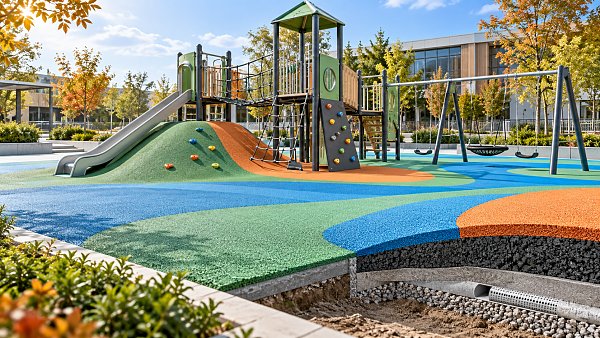
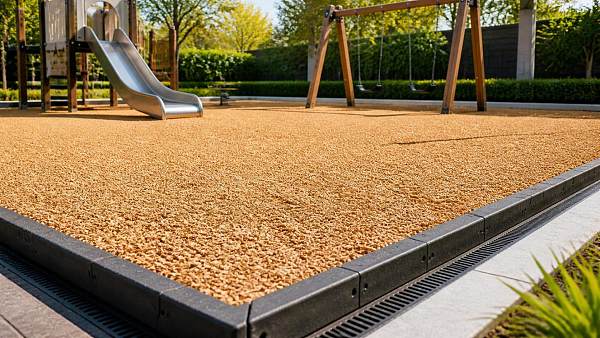
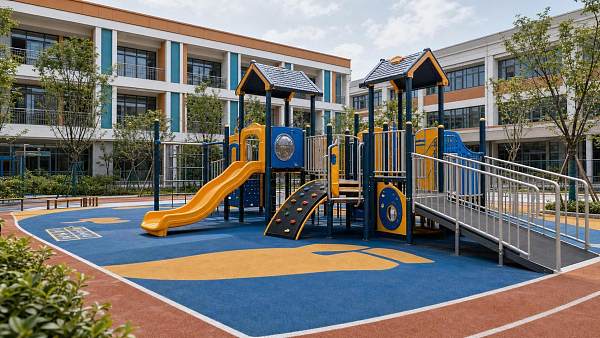
Many technical evaluators find that the playground structure is acceptable, but the surface below it is not. Loose-fill materials can migrate, compact, or thin out under swings and slide exits. Unitary surfaces may crack, separate at seams, or lose shock attenuation over time. Water retention can also accelerate material breakdown and reduce usability.
- Check impact areas under swings, climbers, slide exits, and at transfer points.
- Review transitions between surfacing types, especially where edges curl or settle unevenly.
- Inspect drainage paths to identify washout, pooling, or frost-related lifting.
Site conditions can create secondary hazards
A complete playground inspection also examines what surrounds the equipment. Exposed roots, broken curbs, low branches, fence damage, lighting limitations, and poor accessibility routes can affect safety and operational suitability. In commercial and institutional environments, these issues often influence maintenance budgeting and liability assessment as much as the equipment itself.
What wear patterns signal deeper equipment problems?
Not all wear is equal. Some signs are cosmetic, while others indicate load path changes, connection failure, or material fatigue. During a playground inspection, evaluators should distinguish between surface aging and structural risk.
The table below helps technical teams compare common wear indicators and likely implications before they prioritize repair, replacement, or supplier review.
This type of comparison is useful for technical evaluators who must justify repair spend or advise procurement teams on whether replacement parts are enough. When recurring wear appears across multiple sites, it may point to a specification issue rather than isolated misuse.
Which compliance points are most often missed during playground inspection?
Entrapment, spacing, and protrusion risks
Technical evaluators often focus on obvious damage first, but dimensional hazards deserve equal attention. Openings that are too large or too narrow, projecting bolts, snag points, and incomplete guarding can create severe incidents even when the structure looks sound. These issues are especially important when reviewing older installations that may predate current layout expectations.
Standards alignment matters across regions
Depending on project location and buyer requirements, a playground inspection may reference standards such as ASTM, EN, or other national guidance. Evaluators should verify which framework applies before the site visit. The objective is not to cite every clause on site, but to inspect against the correct compliance logic for use zones, impact attenuation, entrapment, guardrails, and maintenance obligations.
- Confirm the applicable standard set in project documents, tenders, or owner policies.
- Check whether post-installation modifications changed the original compliance status.
- Record where missing documentation prevents a full compliance conclusion.
For cross-border sourcing and refurbishment projects, this is where GCT adds value. Buyers and technical teams often need sourcing intelligence that connects inspection findings with supplier capability, material compatibility, and realistic compliance pathways for replacement components.
How should technical evaluators prioritize findings after a playground inspection?
A useful playground inspection report ranks findings by risk severity, user exposure, and repair complexity. Without prioritization, operators may spend budget on visible but low-risk defects while missing urgent hazards that require immediate control measures.
- Identify critical hazards that require immediate isolation, shutdown, or removal from service.
- Separate short-term repairs from medium-term capital items such as surfacing renewal or frame replacement.
- Link repeated defects to sourcing decisions, installation quality, or unsuitable material selection.
- Document parts availability, lead times, and whether equivalent compliant replacements can be sourced.
This approach is particularly important in education, hospitality, municipal, and leisure projects where downtime affects public access and contractual obligations. A technical evaluator who can translate inspection findings into a procurement and maintenance roadmap adds measurable value.
What should buyers and inspectors compare before repair or replacement?
When a playground inspection identifies recurring problems, the next decision is not always simple repair. In many cases, teams must compare patch repair, component replacement, and full system upgrade. The best choice depends on age, compliance status, part compatibility, and total lifecycle cost.
The matrix below supports practical decision-making for commercial buyers and technical reviewers.
A structured playground inspection helps avoid false economy. Repeated low-cost repairs can become more expensive than targeted replacement if they do not address the underlying design or material issue.
Application scenarios: where inspection priorities change
Schools and campuses
In education settings, inspectors should pay close attention to traffic concentration, age-group suitability, supervision lines, and maintenance logs. Budget limits often delay corrective works, so risk ranking must be clear and defensible.
Hotels, resorts, and family leisure venues
For hospitality projects, a playground inspection must consider aesthetic wear, guest perception, and rapid turnaround expectations alongside safety. Salt air, poolside moisture, and high seasonal usage can accelerate corrosion and surfacing deterioration.
Public parks and municipal sites
Open-access environments introduce vandalism, unsupervised use, and weather extremes. Here, inspectors should review tamper resistance, exposed foundations, loose-fill displacement, and drainage resilience more aggressively.
Common mistakes during playground inspection
- Treating cosmetic wear and structural deterioration as the same issue, which distorts repair priorities.
- Reviewing the equipment but not the surrounding fall zone, drainage condition, or approach route.
- Using a generic checklist without adapting it to local standards, climate, site traffic, and equipment type.
- Failing to link recurring inspection findings to sourcing quality, part availability, or installation method.
The most effective technical evaluators move beyond defect spotting. They connect each playground inspection result to maintenance planning, replacement strategy, and supplier decision-making.
FAQ: practical questions technical evaluators often ask
How often should a playground inspection be performed?
Frequency depends on traffic, environment, and owner policy. High-use commercial sites may need routine visual checks weekly or even daily, with more detailed operational and periodic inspections scheduled monthly, quarterly, or annually. The critical point is to align frequency with risk exposure, not just calendar habit.
What is the biggest red flag in a playground inspection?
There is rarely one universal red flag, but unstable structural connections, inadequate impact surfacing, and entrapment hazards usually demand the fastest response. These conditions can cause severe injury and often justify immediate restriction of use.
Can replacement parts solve most compliance issues?
Not always. Replacement parts work well when the original design remains suitable and the issue is localized. If the equipment has multiple dimensional, structural, or surfacing deficiencies, part replacement alone may not restore acceptable safety performance or current compliance expectations.
What documentation should accompany a playground inspection report?
A strong report should include asset identification, inspection date, weather context if relevant, defect location, photos, severity ranking, immediate actions, recommended repair method, and any standard references used. For procurement follow-up, it should also note part descriptions, material type, and sourcing constraints.
Why work with us for sourcing insight and inspection-linked decisions?
GCT supports commercial buyers and technical evaluators who need more than a generic playground inspection checklist. Our strength is connecting inspection findings with broader sourcing decisions across amusement and leisure environments, especially where safety, design consistency, compliance expectations, and supply chain reliability must all align.
If you are reviewing a new project, retrofit, or replacement plan, you can consult us on practical topics such as component compatibility, material selection for climate exposure, lead-time expectations, OEM or ODM options, documentation gaps, and supplier comparison for commercial-grade playground systems.
- Ask for support on parameter confirmation for surfacing, hardware, structural materials, and age-group suitability.
- Discuss product selection based on inspection findings, replacement urgency, and lifecycle budget.
- Review delivery timelines, sample availability, and customization pathways for commercial projects.
- Clarify certification expectations and documentation needs before placing orders or approving substitutions.
When a playground inspection reveals risk, the next step should be informed action. Contact GCT to turn inspection data into a safer, more defensible, and more efficient sourcing decision.
Search News
Hot Articles
- Musical InstrumentsProfessional String Instruments: How to Evaluate Tone, Response, and ProjectionOct 17, 2026
- Restaurant FurnitureBuying Hotel Lobby Furniture Wholesale: MOQs, Freight Costs, and Lead TimesOct 16, 2026
- Pro Stage AudioDesigning Theater Sound Systems for Clear Dialogue and Even Audience CoverageOct 15, 2026
Popular Tags
Need ExpertConsultation?
Connect with our specialized leisureengineering team for procurementstrategies.
Recommended News
 Oct 08, 2026How to Choose Animatronic Haunted House Props for High-Throughput AttractionsAnimatronic haunted house props for high-throughput attractions: compare motion, triggers, safety, and maintenance to create reliable scares that keep guests moving.● Theme Park Strategist
 Sep 29, 2026Poured Playground Safety Surfacing: How to Specify Thickness for Fall HeightsPoured playground safety surfacing: learn how to specify tested thickness by fall height, ASTM standards, substrate conditions, accessibility, and field verification.● Theme Park Strategist
 Sep 27, 2026Custom Trampoline Park Equipment: Planning Capacity, Safety, and LayoutCustom trampoline park equipment for safer capacity, smooth guest flow, and efficient layouts. Explore practical planning insights for a high-performing park.● Theme Park Strategist
 Aug 30, 2026Entertainment Venue Master Planning: How to Balance Capacity, Flow, and RevenueEntertainment venue development master planning: balance capacity, guest flow, and revenue with practical strategies for resilient, high-performing venues.● Theme Park Strategist
 Sep 07, 2026What Should Buyers Do When a Supplier Delivers Non-Compliant Products?What to do if a supplier delivers non-compliant commercial products: contain risks, document evidence, protect your project, and secure the right remedy.● Theme Park Strategist
 Sep 02, 2026Waterpark Capacity Management: Balancing Queue Times, Safety, and Guest ThroughputWaterpark capacity management strategies to reduce queue times, protect safety, optimize guest throughput, and build a smoother, more profitable park operation.● Theme Park Strategist
 Sep 01, 2026ASTM F2075 Explained: Testing Engineered Wood Fiber for Playground Impact SafetyASTM F2075 explained: learn how engineered wood fiber supports playground impact safety, smarter sourcing, compliance documentation, and reliable maintenance planning.● Theme Park Strategist
 Aug 24, 2026How to Evaluate an Indoor Ninja Warrior Course Supplier in Europe?indoor ninja warrior course Europe supplier guide: learn how to assess safety, EN compliance, engineering, installation, and maintenance support before you choose.● Theme Park Strategist
 Aug 20, 2026How to Choose Modular Indoor Play Equipment for Different Venue Sizes and Age GroupsModular indoor play equipment buying guide: learn how to match venue size, ceiling height, traffic flow, and age groups to create safer, smarter, and more profitable play spaces.● Theme Park Strategist
 Aug 14, 2026POB Push Lifts Overseas Pre-Registrations 45.74%POB boosts overseas pre-registrations for the 2026 China Sport Show by 45.74%, signaling stronger global buyer interest and smarter sourcing opportunities in sports manufacturing.● Theme Park Strategist
 Aug 02, 2026What to Check Before Buying Thick Gymnastic Mats Wholesale for Schools and GymsThick gymnastic mats wholesale buying guide for schools and gyms: learn how to check foam, cover durability, safety documents, samples, and true long-term value before placing a bulk order.● Theme Park Strategist
 Jul 28, 2026How to Design Inclusive Sensory Play Areas for Different Age Groups and NeedsInclusive sensory play starts with smart zoning, age planning, accessibility, and acoustics. Discover practical design tips to create safer, engaging spaces that truly work.● Theme Park Strategist
 Jul 26, 2026How to Evaluate a Bowling Alley Equipment Factory Before Requesting a QuoteBowling alley equipment factory evaluation starts before price. Learn how to check manufacturing scope, engineering, compliance, spare parts, and installation support to avoid costly sourcing mistakes.● Theme Park Strategist
 Jul 16, 2026EN 1176:2026 Takes Effect for Indoor PlaygroundsEN 1176:2026 takes effect for indoor playgrounds in the EU, making conformity assessment mandatory. Learn how this impacts certification, customs clearance, suppliers, and market access.● Theme Park Strategist
 Jul 15, 2026CPSC Sets New ASTM Impact Test for Indoor Playground Metal PartsCPSC sets new ASTM impact test rules for indoor playground metal parts effective Oct. 1, 2026. Learn how the 15kN requirement may affect compliance, testing timelines, and U.S. export delivery.● Theme Park Strategist
 Jul 14, 2026CPSC Tightens Phthalate Limit for Indoor Playground Soft MaterialsCPSC tightens phthalate limits for indoor playground soft materials from Aug 15, 2026. Learn how DIBP control, CBP detention risk, and testing changes impact sourcing, exports, and compliance.● Theme Park Strategist
 Jul 13, 2026Vietnam Tightens IoT Rule for Indoor Playground ImportsVietnam Tightens IoT Rule for Indoor Playground Imports: learn how VNSS-2025 gateway requirements affect exporters, buyers, installers, and delivery timelines before the 2026 deadline.● Theme Park Strategist
 Jul 13, 2026How a Recreational Facility Planning Company Helps Reduce Layout MistakesRecreational facility planning company insights: learn how early layout strategy reduces costly mistakes, improves flow, compliance, and buildability for smoother project delivery.● Theme Park Strategist
 Jul 12, 2026CPSC Halts Imports of Indoor Playground Soft PartsCPSC halts imports of indoor playground soft parts from China under ASTM F3432-26. Learn the compliance risks, testing requirements, and urgent steps importers must take now.● Theme Park Strategist
 Jul 11, 2026CPSC Import Alert Tightens Fire Test Rule for Indoor Playground PaddingCPSC import alert updates indoor playground padding rules to ASTM F3432-26. See how the new fire test affects foam mats, shipments, and U.S. market access.● Theme Park Strategist
 Jul 11, 2026Ice Bumper Cars Bulk Order Checklist for Indoor Parks: Space, Power, and Safety PointsIce bumper cars bulk order guide for indoor parks: learn how to assess space, power, safety, and throughput before buying, so you can avoid costly mistakes and choose the right fleet with confidence.● Theme Park Strategist
 Jul 10, 2026Commercial Playground Equipment for Campuses: Key Safety Standards and Planning TipsCommercial playground equipment for campuses: explore key safety standards, inclusive layout planning, durable materials, and smart procurement tips to avoid costly mistakes.● Theme Park Strategist
 Jul 09, 2026CPSC Recall Escalates Over Phthalates in Indoor Playground PadsCPSC recall escalates over phthalates in indoor playground pads as affected batches exceed CPSIA limits. Learn the risks, supply chain impact, and what buyers should monitor now.● Theme Park Strategist
 Jul 07, 2026How to Choose Ice Skating Rink Equipment in Europe: Key Systems, Standards, and Budget Factorsice skating rink equipment Europe guide: compare refrigeration, rink floors, boards, EU compliance, and total budget factors to choose a safer, more efficient commercial rink solution.● Theme Park Strategist