Hotel Desks: Types, Materials, and Layout Tips for Modern Guest Rooms
Choosing the right hotel desks can shape how a guest experiences the room from the first hour of stay. A desk is no longer just a place to place a laptop. In many guest rooms, it has become a compact work zone, a luggage staging surface, and part of the room’s visual balance. That is why hotel desks deserve careful attention in hospitality planning, especially when comfort, durability, and efficient use of space all have to work together.
Why hotel desks matter in guest-room planning
In the broader hospitality and commercial interiors market, furniture decisions are rarely isolated. A desk affects circulation, lighting, housekeeping routines, and even how premium a room feels. For properties that compete on experience, hotel desks often influence whether a room feels business-ready, relaxed, or overcrowded.
This is especially relevant for sourcing teams and design specifiers who work across hotel, catering, office, and mixed-use commercial projects. GCT’s editorial focus on commercial spaces reflects the same reality: furniture choices must satisfy aesthetics, safety, supply reliability, and long-term use. A well-chosen desk supports all four.
The main types of hotel desks
Hotel desks usually fall into a few practical categories, each serving a different room size and guest profile. The goal is not to make every room look like an office, but to offer a surface that feels intentional and usable.
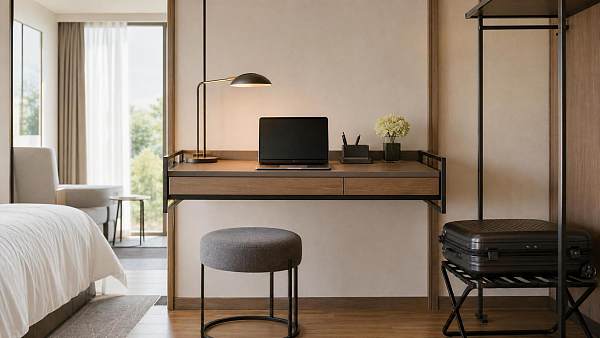
Compact writing tables work well in smaller rooms and shorter-stay properties. They keep the footprint light while still giving guests a place for notes, devices, and room-service paperwork. Wall-mounted desks go further by freeing floor area, which can make a tight room feel more open.
Multifunctional workstations are common in upscale business hotels. These hotel desks often include integrated power, modest storage, and enough depth for a laptop plus documents. Some designs extend into vanity combinations, which is useful when the room needs one piece of furniture to do more than one job.
Common desk formats
- Straight desks for efficient, linear layouts.
- Corner desks for better space use in irregular rooms.
- Floating or wall-fixed desks for compact guest rooms.
- Combo desks with vanity functions for mixed-use rooms.
Material choices shape durability and perception
Material selection has a direct impact on maintenance, service life, and the room’s overall tone. In hotel desks, appearance matters, but resistance to scratches, moisture, and repeated cleaning matters just as much. The best material is the one that supports the property’s operating rhythm without losing visual quality.
Engineered wood remains a common choice because it is adaptable, cost-effective, and easy to finish in many styles. Veneered surfaces can elevate the look while preserving control over budget and weight. For higher-traffic properties, laminate finishes often provide the best balance of wear resistance and easy upkeep.
Metal frames add structure and a cleaner contemporary profile, especially when paired with wood or composite tops. Solid wood still has a place in premium rooms, but it usually requires more careful maintenance planning. In practice, hotel desks succeed when the material choice matches both brand positioning and operating reality.
Layout tips that improve room flow
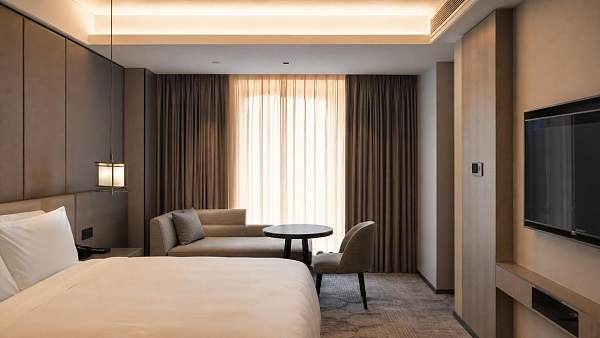
A desk can look good on a drawing and still fail in use if its placement blocks movement or creates awkward reach distances. The most successful hotel desks are positioned with clear intent. Guests should be able to sit, plug in devices, and move between the bed, window, and storage without friction.
Natural light is valuable, but direct glare from a window can make work uncomfortable. Many room layouts benefit from placing hotel desks near the window yet slightly offset from the brightest line of sight. That allows daylight without forcing the screen into harsh reflection.
Power access is another practical point. If outlets are too far away, even a well-designed desk feels inconvenient. Integrated cable management, USB ports, and an unobtrusive task lamp can make the difference between decorative furniture and genuinely useful furniture.
- Leave enough knee space for comfortable seated use.
- Avoid blocking wardrobe doors, drawers, or balcony access.
- Match desk depth to the room’s actual circulation width.
- Keep cords and adapters visually controlled.
What modern hospitality buyers look for
In current sourcing conversations, hotel desks are judged less by isolated style and more by overall performance. Decision makers often compare durability, batch consistency, finish quality, and how easily the piece can be customized for room categories. For large hotel groups, standardization matters because maintenance and replacement become simpler when desk components are consistent.
There is also growing attention to compliance and supply-chain reliability. Within GCT’s broader commercial sourcing context, that means furniture is not viewed as a simple furnishing item. It is part of a coordinated procurement system that needs dependable production timelines, stable materials, and a finish that holds up under repeated guest turnover.
Turning specification into a better guest-room result
A practical approach starts with room type. Standard rooms usually benefit from compact hotel desks with clean lines and minimal bulk. Executive rooms can justify larger work surfaces, better lighting, and more storage. Suites may need a desk that feels closer to a refined workspace while still blending into the bedroom setting.
From there, it helps to check three questions: will the desk fit the room without crowding it, will the material survive the operating cycle, and will the layout make work easy rather than forced? If the answer is yes to all three, the desk is likely serving the room well.
A practical way to move forward
Hotel desks are a small part of guest-room design, but they carry more influence than their size suggests. The right choice supports comfort, reinforces the brand, and helps the room perform across different stay patterns. For buyers comparing options, the most useful next step is to map desk type, material, and layout against actual room dimensions and operating needs, rather than treating them as separate decisions.
That is where a clearer sourcing standard pays off. Once the expected use case is defined, hotel desks become easier to evaluate, compare, and specify with confidence.
Search News
Hot Articles
- Restaurant FurnitureFast-Casual Restaurant Interiors: Design Choices That Improve Speed and Guest FlowOct 04, 2026
- Outdoor RidesHow to Select Leisure Park Equipment for Safe, High-Throughput Visitor AreasOct 03, 2026
- Fashion & Gem JewelryDiamond Tester Wholesale: How to Vet Accuracy, Calibration, and MOQ Before OrderingOct 02, 2026
Popular Tags
Need ExpertConsultation?
Connect with our specialized leisureengineering team for procurementstrategies.
Recommended News
 Oct 01, 2026How Hotels Can Choose Amenity Bottles That Balance Brand Image and Refill CostsHotel amenity bottles: learn how to balance premium brand presentation, refill costs, hygiene, durability, and efficient housekeeping workflows.● Hospitality Sourcing Dir
 Sep 25, 2026How to Evaluate a Wall-Mounted Hotel Hair Dryer Manufacturer for Bulk ProjectsHotel hair dryers wall mounted manufacturer evaluation guide: compare safety, durability, installation fit, OEM options, total cost, and reliable bulk-project support.● Hospitality Sourcing Dir
 Sep 03, 2026What Lead Times Should Buyers Expect for Custom Luxury Fixtures?What delivery lead times should I expect for custom luxury fixtures? Discover realistic 12–24 week timelines, approval milestones, freight factors, and ways to avoid costly delays.● Hospitality Sourcing Dir
 Sep 05, 2026Hotel Hair Dryers Compared: Wattage, Safety Features, and Guest-Room DurabilityHair dryer for hotels: compare wattage, thermal safety, noise, mounting, and durability to select reliable guest-room dryers that elevate comfort and reduce maintenance costs.● Hospitality Sourcing Dir
 Aug 04, 2026What to Check Before Buying Space Saving Ironing Boards Wholesale for HotelsSpace saving ironing boards wholesale for hotels: learn what to check before buying, from room fit and mounting to durability, compliance, and total installed cost.● Hospitality Sourcing Dir
 Jul 12, 2026Saudi e-SABER Label Rule Hits Hotel Amenities ExportsSaudi e-SABER label rule will reshape hotel amenities exports from August 1, 2026. Learn how SASO compliance, port clearance risks, and supplier readiness may impact shipments.● Hospitality Sourcing Dir
 Jul 11, 2026SASO Requires e-SABER Labels for Hotel AmenitiesSASO requires e-SABER labels for hotel amenities from August 1, 2026. Learn how QR code, SABER, and GCC compliance rules may impact Saudi shipments and port clearance.● Hospitality Sourcing Dir
 Jul 10, 2026Saudi SABER Update Adds GCC and Arabic Manual RuleSaudi SABER Update Adds GCC and Arabic Manual Rule: learn how the new SABER requirements affect hotel amenities certification, timelines, costs, and Saudi market access planning.● Hospitality Sourcing Dir
 Jul 03, 2026Wet and Dry Vacuum Cleaners Quiet Enough for Hotels: What Noise Level and Features Matter?Wet and dry vacuum cleaners quiet enough for hotels: compare ideal dB ranges, filtration, maneuverability, and lifecycle cost to choose cleaner, quieter machines with confidence.● Hospitality Sourcing Dir
 Jul 01, 2026How to Choose Hotel Hospitality Supplies for Different Property TypesHotel hospitality supplies buying guide for resorts, boutique, business, and economy hotels. Learn how to match supplies to property type, durability, brand image, and lifecycle value.● Hospitality Sourcing Dir
 Jun 27, 2026Memory Foam Hotel Mattresses vs Hybrid Beds: Which Option Fits Your Property?Memory foam hotel mattresses or hybrid beds? Compare comfort, durability, cooling, and lifecycle cost to find the best fit for your property and guest experience.● Hospitality Sourcing Dir
 Jun 26, 2026Hotel Desks: Types, Materials, and Layout Tips for Modern Guest RoomsHotel desks guide covering desk types, durable materials, and smart layout tips for modern guest rooms. Discover practical ideas to improve comfort, style, and space efficiency.● Hospitality Sourcing Dir
 Jun 23, 2026How to Choose Hotel Wardrobes: Materials, Storage Layout, and Durability StandardsHotel wardrobes guide: learn how to compare materials, storage layout, and durability standards to choose wardrobes that improve guest experience and reduce long-term maintenance costs.● Hospitality Sourcing Dir
 Jun 20, 2026Artificial Plants for Hotels: How to Compare Fire Ratings, Materials, and Maintenance NeedsArtificial plants for hotels: compare fire ratings, materials, and maintenance needs to choose safer, longer-lasting greenery that protects design quality and lifecycle cost.● Hospitality Sourcing Dir
 Jun 17, 2026How to Choose Hotel Hair Dryers Wall Mounted for Safety, Power, and Room TypeHotel hair dryers wall mounted buying guide: learn how to compare safety features, power levels, noise, and room-fit options to choose reliable models for every hotel segment.● Hospitality Sourcing Dir
 Jun 04, 2026Wholesale Hotel Safes Buying Guide: Lock Types, Size Options, and Installation PointsWholesale hotel safes buying guide covering lock types, size options, and installation points. Compare models, reduce procurement risk, and choose the right safe for your hotel project.● Hospitality Sourcing Dir
 May 30, 2026Is glamping furniture worth the higher project cost?Glamping furniture can justify higher project costs when it boosts bookings, durability, guest reviews, and long-term ROI. Learn where premium upgrades truly pay off.● Hospitality Sourcing Dir
 May 29, 2026Do blackout curtains for hotels Cut Energy Costs?Blackout curtains for hotels can lower HVAC costs, improve guest comfort, and boost room performance. Learn when they save energy and how to specify the right system.● Hospitality Sourcing Dir
 May 09, 2026Glamping furniture mistakes that make premium stays feel cheapGlamping furniture mistakes can make premium stays feel cheap. Learn how to choose durable, comfortable, brand-aligned pieces that elevate guest experience and protect long-term value.● Hospitality Sourcing Dir
 May 04, 2026Commercial Carpet Tiles for Hotels: What Wears Out First?Commercial carpet tiles hotel buyers: discover what wears out first in entrances, corridors, and transition zones, and learn how to specify longer-lasting, guest-ready flooring.● Hospitality Sourcing Dir
 May 04, 2026Custom Hotel Signage That Looks Premium and Stays ReadableCustom hotel signage that balances premium aesthetics with readability, durability, and compliance. Discover a practical checklist to improve guest experience and streamline hotel projects.● Hospitality Sourcing Dir
 May 04, 2026Luxury Vinyl Tile Commercial Flooring in High-Traffic AreasLuxury vinyl tile commercial flooring for high-traffic spaces: discover how to compare durability, maintenance, installation risks, and lifecycle value before you specify.● Hospitality Sourcing Dir
 May 03, 2026AC Milan’s Smart Locker Room Procurement Triggers UNI 11743 Compliance ReviewAC Milan’s smart locker room procurement triggers UNI 11743:2025 compliance review — critical for sports infrastructure suppliers, EU exporters & integrators.● Hospitality Sourcing Dir
 May 03, 2026Hotel room minibar fridges: silent operation is not enoughHotel room minibar fridges now require more than silent operation. Explore how energy efficiency, design fit, compliance, and lifecycle value shape smarter hotel sourcing.● Hospitality Sourcing Dir