Wet and Dry Vacuum Cleaners Quiet Enough for Hotels: What Noise Level and Features Matter?
Wet and dry vacuum cleaners quiet enough for hotels: where should the evaluation begin?
In hotels, cleaning equipment is judged twice.
First by housekeeping teams using it every day.
Then by guests who may never see the machine, but immediately notice the noise.
That is why wet and dry vacuum cleaners quiet enough for hotels are not a niche preference.
They are part of service quality, labor efficiency, and asset planning.
A unit that cleans well but disrupts corridors, suites, or lobby traffic can raise complaints and limit cleaning windows.
A quieter machine gives more scheduling flexibility, especially during early morning turnover and daytime maintenance.
Within GCT’s hotel and catering equipment coverage, the stronger sourcing decisions usually balance acoustics, filtration, durability, and after-sales support together.
The real question is not simply, “Is this model quiet?”
It is whether the machine stays acceptably quiet in real hotel conditions while delivering dependable wet and dry pickup.
How quiet is quiet enough for a hotel environment?
This is usually the first search question, and for good reason.
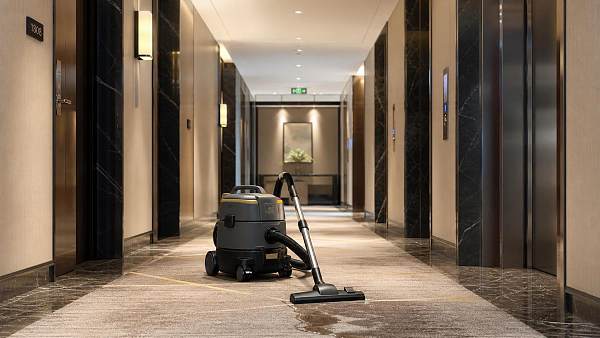
Noise claims can look good on a brochure but still feel intrusive on carpeted guest floors.
For many hotel applications, a practical target is below 70 dB.
Premium properties often prefer wet and dry vacuum cleaners quiet enough to operate closer to 60 to 67 dB.
That range is generally more suitable for occupied floors and daytime spot cleaning.
Anything above 72 dB may still work in back-of-house zones, loading areas, or deep cleaning schedules.
It is less comfortable near room entrances and lift lobbies.
Need to be careful here: laboratory decibel ratings do not tell the whole story.
Tone matters too.
A higher-pitched motor often feels more disturbing than a lower, steadier sound, even at similar measured levels.
In actual buying decisions, the more reliable method is to compare rated dB, motor housing design, and user trial feedback together.
This table is a guide, not a fixed rule.
Luxury, business, resort, and extended-stay properties often set different thresholds.
If the decibel rating looks acceptable, what features actually keep the machine quieter?
A low number on a specification sheet is only the starting point.
Wet and dry vacuum cleaners quiet enough for hotel use usually combine several design choices.
- Bypass motor insulation that reduces vibration and softens motor pitch.
- Well-sealed housing that prevents rattling and air leakage noise.
- Balanced airflow paths that preserve suction without harsh whistling sounds.
- Rubberized wheels that roll quietly over tile, stone, and corridor carpet.
- Stable hose and wand fittings that do not chatter during movement.
Motor wattage should also be interpreted carefully.
Higher wattage does not automatically mean better cleaning results.
In many hospitality settings, efficient airflow and lift performance matter more than raw motor size.
The better hotel-ready machines are often those that keep steady suction at moderate noise rather than chasing maximum output.
A variable power setting is another useful feature.
It allows quieter operation for light debris in guest-facing areas, then higher power for wet spills or heavier cleanup.
Beyond noise, which specifications affect daily hotel operations the most?
This is where many sourcing mistakes happen.
A machine can be quiet and still be inefficient in daily use.
For hotels, four factors usually shape operating performance more than expected.
Tank size should match the cleaning route
Larger tanks reduce emptying frequency, but they also increase total weight.
For corridor and room work, oversized tanks can slow movement between elevators and narrow passages.
For public areas or banquet spill response, extra capacity may save time.
Filtration quality affects both cleanliness and guest perception
HEPA or high-efficiency filtration is especially relevant in premium hospitality environments.
It helps control fine dust recirculation, which matters in suites, lounges, and allergy-sensitive spaces.
Poor filtration can leave a room looking clean but feeling dusty.
Cable length and maneuverability influence labor time
Frequent socket changes waste time across long corridors.
A longer power cable, compact footprint, and smooth caster movement often improve productivity more than small suction gains.
Accessory quality matters in mixed surfaces
Hotels rarely clean one surface type only.
There may be stone, carpet, upholstery, drapery edges, and bathroom moisture within one route.
Wet and dry vacuum cleaners quiet enough for hotel use should come with usable nozzles, not token accessories.
Should one machine cover every hotel zone, or is a mixed fleet more practical?
A single model strategy sounds simpler, but it is not always the lowest-cost choice.
In practice, many properties perform better with a mixed equipment plan.
One quieter, lighter unit can handle guestrooms, corridors, and day cleaning.
A second, higher-capacity unit can handle spill recovery, function rooms, service areas, and heavy-duty maintenance.
This avoids overpaying for all machines to meet the toughest duty cycle.
It also prevents large wet-capable units from becoming awkward on guest floors.
A useful decision test is to map cleaning tasks by frequency, timing, and visibility.
If most cleaning happens near guests, acoustic comfort deserves a stronger weight.
If emergency spill pickup is common, wet recovery speed and tank design may deserve separate consideration.
This kind of category planning is consistent with how GCT frames commercial sourcing decisions across hospitality and other experience-led sectors.
The best specification is often the one aligned to the operating scenario, not the broadest marketing claim.
What are the common buying mistakes with wet and dry vacuum cleaners quiet enough for hotels?
The most common mistake is focusing on purchase price alone.
A cheaper unit may create hidden costs through slower routes, guest disturbance, filter replacements, or early motor failure.
Another frequent issue is accepting a decibel claim without test conditions.
Ask whether the rating was measured at full power, at what distance, and with which accessory setup.
Ignoring serviceability is also risky.
Filters, hoses, latches, wheels, and cables wear out faster than many teams expect.
If spare parts are slow or inconsistent, a low-cost machine becomes expensive very quickly.
There is also a misunderstanding around “wet and dry” capability.
Not every model handles repeated liquid pickup equally well.
Some are suitable for occasional spills, while others are built for regular wet recovery tasks.
How should total cost be judged over the full operating cycle?
A useful sourcing comparison should look beyond the unit price.
The better question is what the machine will cost over three to five years.
That includes filters, parts, labor time, downtime risk, and replacement timing.
Wet and dry vacuum cleaners quiet enough to protect the guest experience often support longer cleaning windows.
That operational flexibility has value, even when it does not appear as a direct line item.
More common in strong procurement reviews is a simple scoring model.
- Noise level and sound character in guest-facing spaces.
- Dry pickup and wet recovery performance for actual hotel tasks.
- Filtration standard and consumable replacement frequency.
- Mobility, cable reach, storage footprint, and operator comfort.
- Warranty terms, service response, and spare parts availability.
This keeps the decision grounded in operating reality.
It also makes supplier comparisons easier when marketing language varies.
What is the sensible next step before final selection?
Start with a site-specific checklist, not a catalog shortlist.
Document where cleaning happens, when it happens, and how visible it is to guests.
Separate routine corridor cleaning from spill response and back-of-house maintenance.
Then compare wet and dry vacuum cleaners quiet enough for each zone rather than looking for one universal answer.
Short trials are worth arranging whenever possible.
A ten-minute corridor test often reveals more than a long technical sheet.
Pay attention to turning radius, wheel noise, hose drag, and how the sound carries near room doors.
The right machine is usually the one that fits the property’s service standards, not simply the loudest promise of power.
For sourcing teams using GCT-style evaluation methods, the strongest result comes from combining acoustic targets, lifecycle cost, compliance, and supplier reliability into one decision framework.
That approach makes the final purchase easier to justify and easier to operate over time.
Search News
Hot Articles
- Outdoor RidesHow to Select Leisure Park Equipment for Safe, High-Throughput Visitor AreasOct 03, 2026
- Fashion & Gem JewelryDiamond Tester Wholesale: How to Vet Accuracy, Calibration, and MOQ Before OrderingOct 02, 2026
- Hotel Room AmenitiesHow Hotels Can Choose Amenity Bottles That Balance Brand Image and Refill CostsOct 01, 2026
Popular Tags
Need ExpertConsultation?
Connect with our specialized leisureengineering team for procurementstrategies.
Recommended News
 Oct 01, 2026How Hotels Can Choose Amenity Bottles That Balance Brand Image and Refill CostsHotel amenity bottles: learn how to balance premium brand presentation, refill costs, hygiene, durability, and efficient housekeeping workflows.● Hospitality Sourcing Dir
 Sep 25, 2026How to Evaluate a Wall-Mounted Hotel Hair Dryer Manufacturer for Bulk ProjectsHotel hair dryers wall mounted manufacturer evaluation guide: compare safety, durability, installation fit, OEM options, total cost, and reliable bulk-project support.● Hospitality Sourcing Dir
 Sep 03, 2026What Lead Times Should Buyers Expect for Custom Luxury Fixtures?What delivery lead times should I expect for custom luxury fixtures? Discover realistic 12–24 week timelines, approval milestones, freight factors, and ways to avoid costly delays.● Hospitality Sourcing Dir
 Sep 05, 2026Hotel Hair Dryers Compared: Wattage, Safety Features, and Guest-Room DurabilityHair dryer for hotels: compare wattage, thermal safety, noise, mounting, and durability to select reliable guest-room dryers that elevate comfort and reduce maintenance costs.● Hospitality Sourcing Dir
 Aug 04, 2026What to Check Before Buying Space Saving Ironing Boards Wholesale for HotelsSpace saving ironing boards wholesale for hotels: learn what to check before buying, from room fit and mounting to durability, compliance, and total installed cost.● Hospitality Sourcing Dir
 Jul 12, 2026Saudi e-SABER Label Rule Hits Hotel Amenities ExportsSaudi e-SABER label rule will reshape hotel amenities exports from August 1, 2026. Learn how SASO compliance, port clearance risks, and supplier readiness may impact shipments.● Hospitality Sourcing Dir
 Jul 11, 2026SASO Requires e-SABER Labels for Hotel AmenitiesSASO requires e-SABER labels for hotel amenities from August 1, 2026. Learn how QR code, SABER, and GCC compliance rules may impact Saudi shipments and port clearance.● Hospitality Sourcing Dir
 Jul 10, 2026Saudi SABER Update Adds GCC and Arabic Manual RuleSaudi SABER Update Adds GCC and Arabic Manual Rule: learn how the new SABER requirements affect hotel amenities certification, timelines, costs, and Saudi market access planning.● Hospitality Sourcing Dir
 Jul 03, 2026Wet and Dry Vacuum Cleaners Quiet Enough for Hotels: What Noise Level and Features Matter?Wet and dry vacuum cleaners quiet enough for hotels: compare ideal dB ranges, filtration, maneuverability, and lifecycle cost to choose cleaner, quieter machines with confidence.● Hospitality Sourcing Dir
 Jul 01, 2026How to Choose Hotel Hospitality Supplies for Different Property TypesHotel hospitality supplies buying guide for resorts, boutique, business, and economy hotels. Learn how to match supplies to property type, durability, brand image, and lifecycle value.● Hospitality Sourcing Dir
 Jun 27, 2026Memory Foam Hotel Mattresses vs Hybrid Beds: Which Option Fits Your Property?Memory foam hotel mattresses or hybrid beds? Compare comfort, durability, cooling, and lifecycle cost to find the best fit for your property and guest experience.● Hospitality Sourcing Dir
 Jun 26, 2026Hotel Desks: Types, Materials, and Layout Tips for Modern Guest RoomsHotel desks guide covering desk types, durable materials, and smart layout tips for modern guest rooms. Discover practical ideas to improve comfort, style, and space efficiency.● Hospitality Sourcing Dir
 Jun 23, 2026How to Choose Hotel Wardrobes: Materials, Storage Layout, and Durability StandardsHotel wardrobes guide: learn how to compare materials, storage layout, and durability standards to choose wardrobes that improve guest experience and reduce long-term maintenance costs.● Hospitality Sourcing Dir
 Jun 20, 2026Artificial Plants for Hotels: How to Compare Fire Ratings, Materials, and Maintenance NeedsArtificial plants for hotels: compare fire ratings, materials, and maintenance needs to choose safer, longer-lasting greenery that protects design quality and lifecycle cost.● Hospitality Sourcing Dir
 Jun 17, 2026How to Choose Hotel Hair Dryers Wall Mounted for Safety, Power, and Room TypeHotel hair dryers wall mounted buying guide: learn how to compare safety features, power levels, noise, and room-fit options to choose reliable models for every hotel segment.● Hospitality Sourcing Dir
 Jun 04, 2026Wholesale Hotel Safes Buying Guide: Lock Types, Size Options, and Installation PointsWholesale hotel safes buying guide covering lock types, size options, and installation points. Compare models, reduce procurement risk, and choose the right safe for your hotel project.● Hospitality Sourcing Dir
 May 30, 2026Is glamping furniture worth the higher project cost?Glamping furniture can justify higher project costs when it boosts bookings, durability, guest reviews, and long-term ROI. Learn where premium upgrades truly pay off.● Hospitality Sourcing Dir
 May 29, 2026Do blackout curtains for hotels Cut Energy Costs?Blackout curtains for hotels can lower HVAC costs, improve guest comfort, and boost room performance. Learn when they save energy and how to specify the right system.● Hospitality Sourcing Dir
 May 09, 2026Glamping furniture mistakes that make premium stays feel cheapGlamping furniture mistakes can make premium stays feel cheap. Learn how to choose durable, comfortable, brand-aligned pieces that elevate guest experience and protect long-term value.● Hospitality Sourcing Dir
 May 04, 2026Commercial Carpet Tiles for Hotels: What Wears Out First?Commercial carpet tiles hotel buyers: discover what wears out first in entrances, corridors, and transition zones, and learn how to specify longer-lasting, guest-ready flooring.● Hospitality Sourcing Dir
 May 04, 2026Custom Hotel Signage That Looks Premium and Stays ReadableCustom hotel signage that balances premium aesthetics with readability, durability, and compliance. Discover a practical checklist to improve guest experience and streamline hotel projects.● Hospitality Sourcing Dir
 May 04, 2026Luxury Vinyl Tile Commercial Flooring in High-Traffic AreasLuxury vinyl tile commercial flooring for high-traffic spaces: discover how to compare durability, maintenance, installation risks, and lifecycle value before you specify.● Hospitality Sourcing Dir
 May 03, 2026AC Milan’s Smart Locker Room Procurement Triggers UNI 11743 Compliance ReviewAC Milan’s smart locker room procurement triggers UNI 11743:2025 compliance review — critical for sports infrastructure suppliers, EU exporters & integrators.● Hospitality Sourcing Dir
 May 03, 2026Hotel room minibar fridges: silent operation is not enoughHotel room minibar fridges now require more than silent operation. Explore how energy efficiency, design fit, compliance, and lifecycle value shape smarter hotel sourcing.● Hospitality Sourcing Dir