How to Choose Hotel Hair Dryers Wall Mounted for Safety, Power, and Room Type
Choosing hotel hair dryers wall mounted is a specification decision, not a minor bathroom detail. The right unit influences guest safety, drying speed, room layout, maintenance routines, and long-term brand consistency across properties with different room categories and operating demands.
That matters even more in hospitality projects shaped by tighter compliance expectations, premium guest standards, and closer scrutiny of lifecycle cost. In the sourcing environment tracked by Global Commercial Trade, even compact equipment categories now require better technical judgment, cleaner documentation, and more reliable supply alignment.
Why wall-mounted hair dryers deserve closer evaluation
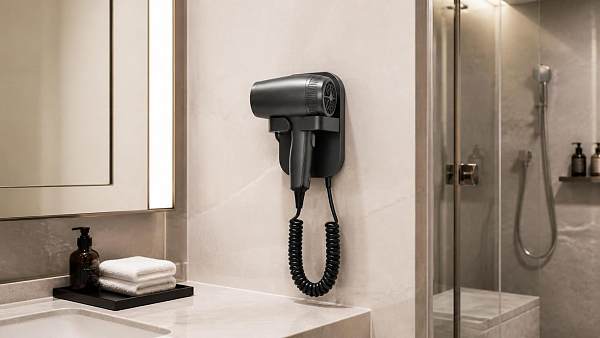
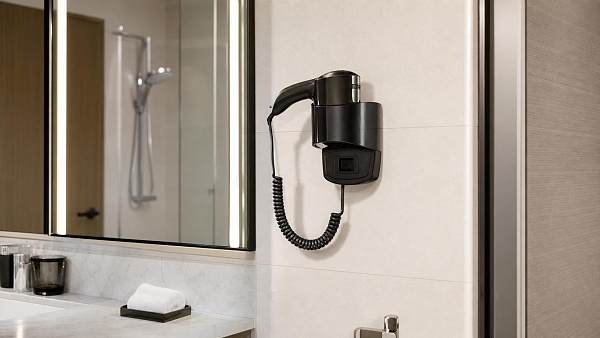
A wall-mounted unit solves several hotel problems at once. It reduces countertop clutter, limits loss or theft, standardizes placement, and supports faster housekeeping checks. In smaller bathrooms, it also protects usable space.
Still, not all hotel hair dryers wall mounted models perform the same way. Two products may look similar, yet differ sharply in motor durability, heat control, electrical protection, bracket strength, and spare-part availability.
For that reason, selection should start with operational reality. A city business hotel, luxury resort, serviced apartment, and airport transit property do not use this product under the same conditions.
Start with safety before comparing power
Safety is the first screening layer for hotel hair dryers wall mounted. Bathrooms combine moisture, repeated use, and limited supervision, so certified protection features matter more than headline wattage.
Core protections to verify
- Automatic shut-off when the handset is returned to the holder.
- Overheat protection that stops operation before internal damage occurs.
- Double insulation or grounded construction, depending on regional standards.
- Moisture-aware design for bathroom installation conditions.
- Certified compliance such as CE, GS, ETL, UL, or equivalent local requirements.
It is also worth checking whether the housing material resists yellowing, cracking, and heat deformation. In heavy-use properties, material stability affects both safety perception and replacement cycles.
A common mistake is approving a unit with acceptable paperwork but weak installation guidance. Safety depends on the full system: cable routing, wall anchors, electrical load, mounting height, and service access.
Power should match room type, not marketing claims
Higher wattage does not automatically mean better guest experience. With hotel hair dryers wall mounted, useful performance comes from the balance between airflow, heat output, noise, and drying time.
In practice, many hospitality projects work within a moderate range. Units that are too weak create complaints. Units that are too powerful may add noise, stress circuits, and feel excessive in compact guest bathrooms.
Noise deserves more attention than it usually gets. A dryer that sounds acceptable in testing may feel intrusive in a premium room, especially during early morning or late-night use.
Installation conditions often decide the best model
The best-performing unit on paper may still be the wrong fit if the wall structure, electrical point, or bathroom layout is unsuitable. This is where many specification issues begin.
Key site questions
- Is the wall solid, tiled, drywall-backed, or part of a modular bathroom system?
- Will the unit connect to a concealed power point or visible plug source?
- Does the mounting location maintain safe distance from basins and shower zones?
- Can maintenance teams remove the cover without damaging surrounding finishes?
- Is the hose or handset length practical for the actual mirror position?
During renovation projects, consistency across room stacks also matters. If bathroom layouts vary floor by floor, a single universal model may still require different mounting kits or wiring approaches.
This is one reason GCT-style sourcing analysis values technical documentation. Good suppliers do not only quote a unit. They provide dimensional drawings, compliance records, installation notes, and service parts planning.
The right choice changes by property segment
When evaluating hotel hair dryers wall mounted, it helps to classify rooms by expected behavior rather than star rating alone. Usage intensity, guest stay length, and bathroom size usually reveal more.
Compact guest bathrooms
Space-saving housings, tidy cable management, and quick one-hand use are usually more important than multiple styling settings. The unit should feel intuitive and should not crowd mirrors or amenities.
Premium suites
Appearance matters more here. Finishes, touch quality, lower noise, and faster drying time can shape guest perception. Even so, the wall base must remain robust enough for repeated use.
Resort and spa environments
Humidity exposure may be higher, and guests may use the dryer after pool or wellness activities. Materials, sealing quality, and stable heat management deserve extra review.
Long-stay properties
These rooms benefit from a stronger balance of comfort and endurance. More frequent personal use means weak buttons, loose holders, or inconsistent airflow become visible sooner.
What to compare beyond the product brochure
Brochures often emphasize wattage, color, and price. Those details matter, but operational value usually depends on what happens after installation.
- Lead-time stability for phased openings or multi-site rollouts.
- Availability of spare handsets, hoses, brackets, and internal switches.
- Batch consistency across different production runs.
- Warranty terms that make sense for commercial use, not household assumptions.
- Packaging and labeling quality for site delivery and room-by-room installation.
A lower unit price can become expensive if replacements are frequent or parts are unavailable. For multi-property groups, visual standardization also carries value. Inconsistent bathroom accessories weaken brand coherence.
A practical selection framework for sourcing teams
A reliable evaluation path is usually straightforward. Define the room categories first, then map safety requirements, electrical conditions, and expected usage intensity for each category.
Next, narrow the field to compliant models with suitable power ranges. After that, compare dimensions, mounting method, acoustic comfort, serviceability, and supplier support.
If possible, request sample testing in a mock-up room rather than judging only from catalog data. Real installation often reveals issues with reach, noise, switch feel, or visual fit.
For larger projects, a simple scorecard helps. Weight safety, performance, finish quality, replacement logistics, and total operating cost instead of choosing by initial price alone.
Where the final decision should lead
The best hotel hair dryers wall mounted solution is the one that fits the room, complies with the site, supports housekeeping, and stays dependable through heavy guest turnover. That balance is usually more valuable than chasing the strongest motor or the cheapest quotation.
Before final approval, it helps to confirm five things: safety certification, installation compatibility, drying performance, service-part access, and consistency with the property’s room mix. With those points clear, the next comparison becomes far more precise and defensible.
Search News
Hot Articles
- Arcade & VR MachinesHow to Choose Coin-Operated Pool Tables for Bars, Hotels, and Arcade VenuesSep 15, 2026
- Commercial KitchenHow Restaurants Can Choose Disposable Wooden Cutlery for Takeout and CateringSep 14, 2026
- Jewelry Packaging & DisplayHow U.S. Retailers Can Choose Jewelry Displays for Better Security and SalesSep 13, 2026
Popular Tags
Need ExpertConsultation?
Connect with our specialized leisureengineering team for procurementstrategies.
Recommended News
 Sep 03, 2026What Lead Times Should Buyers Expect for Custom Luxury Fixtures?What delivery lead times should I expect for custom luxury fixtures? Discover realistic 12–24 week timelines, approval milestones, freight factors, and ways to avoid costly delays.● Hospitality Sourcing Dir
 Sep 05, 2026Hotel Hair Dryers Compared: Wattage, Safety Features, and Guest-Room DurabilityHair dryer for hotels: compare wattage, thermal safety, noise, mounting, and durability to select reliable guest-room dryers that elevate comfort and reduce maintenance costs.● Hospitality Sourcing Dir
 Aug 04, 2026What to Check Before Buying Space Saving Ironing Boards Wholesale for HotelsSpace saving ironing boards wholesale for hotels: learn what to check before buying, from room fit and mounting to durability, compliance, and total installed cost.● Hospitality Sourcing Dir
 Jul 12, 2026Saudi e-SABER Label Rule Hits Hotel Amenities ExportsSaudi e-SABER label rule will reshape hotel amenities exports from August 1, 2026. Learn how SASO compliance, port clearance risks, and supplier readiness may impact shipments.● Hospitality Sourcing Dir
 Jul 11, 2026SASO Requires e-SABER Labels for Hotel AmenitiesSASO requires e-SABER labels for hotel amenities from August 1, 2026. Learn how QR code, SABER, and GCC compliance rules may impact Saudi shipments and port clearance.● Hospitality Sourcing Dir
 Jul 10, 2026Saudi SABER Update Adds GCC and Arabic Manual RuleSaudi SABER Update Adds GCC and Arabic Manual Rule: learn how the new SABER requirements affect hotel amenities certification, timelines, costs, and Saudi market access planning.● Hospitality Sourcing Dir
 Jul 03, 2026Wet and Dry Vacuum Cleaners Quiet Enough for Hotels: What Noise Level and Features Matter?Wet and dry vacuum cleaners quiet enough for hotels: compare ideal dB ranges, filtration, maneuverability, and lifecycle cost to choose cleaner, quieter machines with confidence.● Hospitality Sourcing Dir
 Jul 01, 2026How to Choose Hotel Hospitality Supplies for Different Property TypesHotel hospitality supplies buying guide for resorts, boutique, business, and economy hotels. Learn how to match supplies to property type, durability, brand image, and lifecycle value.● Hospitality Sourcing Dir
 Jun 27, 2026Memory Foam Hotel Mattresses vs Hybrid Beds: Which Option Fits Your Property?Memory foam hotel mattresses or hybrid beds? Compare comfort, durability, cooling, and lifecycle cost to find the best fit for your property and guest experience.● Hospitality Sourcing Dir
 Jun 26, 2026Hotel Desks: Types, Materials, and Layout Tips for Modern Guest RoomsHotel desks guide covering desk types, durable materials, and smart layout tips for modern guest rooms. Discover practical ideas to improve comfort, style, and space efficiency.● Hospitality Sourcing Dir
 Jun 23, 2026How to Choose Hotel Wardrobes: Materials, Storage Layout, and Durability StandardsHotel wardrobes guide: learn how to compare materials, storage layout, and durability standards to choose wardrobes that improve guest experience and reduce long-term maintenance costs.● Hospitality Sourcing Dir
 Jun 20, 2026Artificial Plants for Hotels: How to Compare Fire Ratings, Materials, and Maintenance NeedsArtificial plants for hotels: compare fire ratings, materials, and maintenance needs to choose safer, longer-lasting greenery that protects design quality and lifecycle cost.● Hospitality Sourcing Dir
 Jun 17, 2026How to Choose Hotel Hair Dryers Wall Mounted for Safety, Power, and Room TypeHotel hair dryers wall mounted buying guide: learn how to compare safety features, power levels, noise, and room-fit options to choose reliable models for every hotel segment.● Hospitality Sourcing Dir
 Jun 04, 2026Wholesale Hotel Safes Buying Guide: Lock Types, Size Options, and Installation PointsWholesale hotel safes buying guide covering lock types, size options, and installation points. Compare models, reduce procurement risk, and choose the right safe for your hotel project.● Hospitality Sourcing Dir
 May 30, 2026Is glamping furniture worth the higher project cost?Glamping furniture can justify higher project costs when it boosts bookings, durability, guest reviews, and long-term ROI. Learn where premium upgrades truly pay off.● Hospitality Sourcing Dir
 May 29, 2026Do blackout curtains for hotels Cut Energy Costs?Blackout curtains for hotels can lower HVAC costs, improve guest comfort, and boost room performance. Learn when they save energy and how to specify the right system.● Hospitality Sourcing Dir
 May 09, 2026Glamping furniture mistakes that make premium stays feel cheapGlamping furniture mistakes can make premium stays feel cheap. Learn how to choose durable, comfortable, brand-aligned pieces that elevate guest experience and protect long-term value.● Hospitality Sourcing Dir
 May 04, 2026Commercial Carpet Tiles for Hotels: What Wears Out First?Commercial carpet tiles hotel buyers: discover what wears out first in entrances, corridors, and transition zones, and learn how to specify longer-lasting, guest-ready flooring.● Hospitality Sourcing Dir
 May 04, 2026Custom Hotel Signage That Looks Premium and Stays ReadableCustom hotel signage that balances premium aesthetics with readability, durability, and compliance. Discover a practical checklist to improve guest experience and streamline hotel projects.● Hospitality Sourcing Dir
 May 04, 2026Luxury Vinyl Tile Commercial Flooring in High-Traffic AreasLuxury vinyl tile commercial flooring for high-traffic spaces: discover how to compare durability, maintenance, installation risks, and lifecycle value before you specify.● Hospitality Sourcing Dir
 May 03, 2026AC Milan’s Smart Locker Room Procurement Triggers UNI 11743 Compliance ReviewAC Milan’s smart locker room procurement triggers UNI 11743:2025 compliance review — critical for sports infrastructure suppliers, EU exporters & integrators.● Hospitality Sourcing Dir
 May 03, 2026Hotel room minibar fridges: silent operation is not enoughHotel room minibar fridges now require more than silent operation. Explore how energy efficiency, design fit, compliance, and lifecycle value shape smarter hotel sourcing.● Hospitality Sourcing Dir
 May 03, 2026HVAC systems for hotels: poor zoning raises energy bills quietlyHVAC systems for hotels can silently inflate energy bills when zoning is weak. Learn how smarter controls cut costs, improve guest comfort, and protect long-term hotel asset value.● Hospitality Sourcing Dir
 May 03, 2026Wooden coat hangers hotel projects should not overlook finish qualityWooden coat hangers hotel buyers should not ignore finish quality. Learn how smoothness, coating safety, and color consistency reduce complaints, protect brand image, and lower replacement costs.● Hospitality Sourcing Dir