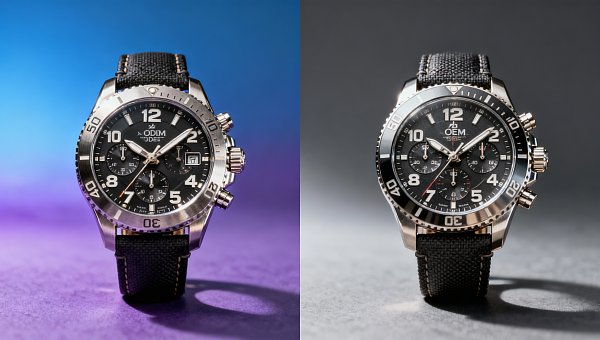
Automatic Watches OEM Explained: Movement Options, Case Materials, and Customization
Automatic watches OEM has become a more strategic topic as premium accessories move deeper into branded retail, hospitality gifting, and luxury merchandising. For any serious evaluation, the issue is not only design appeal. Movement reliability, case durability, finishing control, and customization discipline directly shape commercial value, warranty exposure, and long-term brand perception.
That is why automatic watches OEM deserves close technical review. A watch may look refined in a sample room, yet small differences in movement sourcing, case machining, plating stability, or dial assembly can create major gaps in field performance. In sectors tracked by Global Commercial Trade, where presentation and trust matter, these details often decide whether a supplier is scalable or merely attractive at first glance.
Why automatic watches OEM matters now
The luxury accessories segment is no longer driven only by heritage brands. Private label programs, hotel boutiques, concept retail, corporate collections, and cross-industry collaborations all create demand for tailored timepieces.
In this environment, automatic watches OEM sits at the meeting point of design, engineering, and supply chain execution. Buyers are comparing not just unit price, but consistency across batches, customization depth, and the ability to hold quality standards under commercial deadlines.
This is especially relevant when a watch supports brand storytelling. A luxury accessory tied to a hospitality group, a retail concept, or a special edition collection must feel premium in the hand, not only in the brochure.
The core structure behind an OEM automatic watch
At a basic level, automatic watches OEM means a supplier manufactures watches to a buyer’s brand and specification. The visible parts attract attention, but the real evaluation starts deeper.
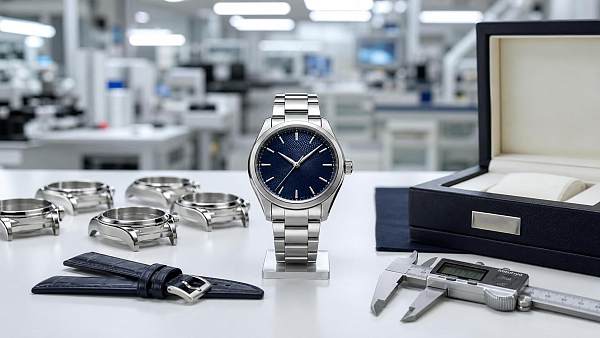
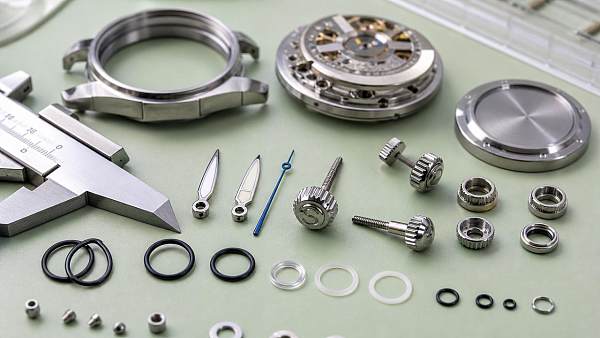
A complete watch program usually combines movement selection, case construction, dial and hand production, crystal choice, strap integration, water resistance testing, and final assembly control.
OEM capability also varies. Some factories mainly assemble standard catalogs with light branding. Others can re-engineer cases, adjust movement holders, develop custom dials, or manage stricter finishing tolerances.
That distinction matters because two suppliers may both claim automatic watches OEM expertise, while one is actually a packaging assembler and the other is a true manufacturing partner.
Movement options define credibility
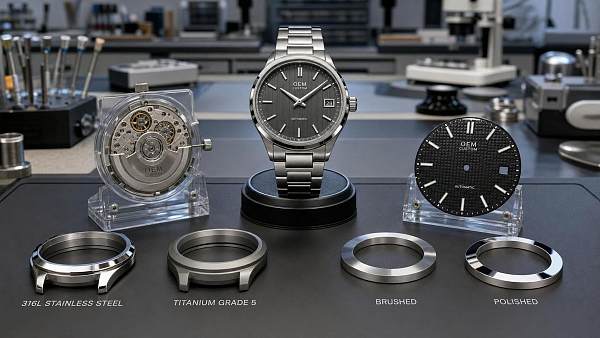
The movement is still the most scrutinized part of an automatic watch. It influences accuracy, serviceability, reserve stability, rotor feel, case thickness, and perceived market tier.
Common movement paths
In automatic watches OEM, movement choice should match target positioning, not just budget. A hospitality gift watch and a boutique luxury collaboration may require very different logic, even at similar retail prices.
More importantly, the evaluation should go beyond brand names. Regulated accuracy range, shock response, winding efficiency, lubrication control, and after-sales parts availability are often better indicators of manufacturing seriousness.
Questions worth testing early
- What movement grades are offered for the same reference?
- Are timing checks done before and after casing?
- Can the supplier provide traceability by batch?
- How are repair parts supported after delivery?
Case materials shape both performance and positioning
Case material decisions affect wear resistance, corrosion behavior, machining complexity, finishing quality, and product story. In automatic watches OEM, material selection is often where branding ambitions meet engineering reality.
Stainless steel remains the commercial baseline
316L stainless steel is still the most common option for good reason. It balances corrosion resistance, polishability, structural strength, and broad market acceptance.
For higher-end programs, case evaluation should include edge sharpness, brushing consistency, lug symmetry, and the transition between polished and satin surfaces. These details reveal machining and finishing discipline.
Titanium supports lighter premium builds
Titanium offers lower weight and strong corrosion resistance. It suits active lifestyle collections and modern design language, especially where comfort and understated luxury matter.
Yet titanium is less forgiving in finishing. Inconsistent blasting or poor edge control can make the product look dull rather than refined.
Bronze, ceramic, and plated alloys need stricter evaluation
Bronze creates a strong story through patina, but color change must be expected and clearly aligned with the intended user experience. Ceramic offers scratch resistance and visual depth, though breakage risk and cost are different concerns.
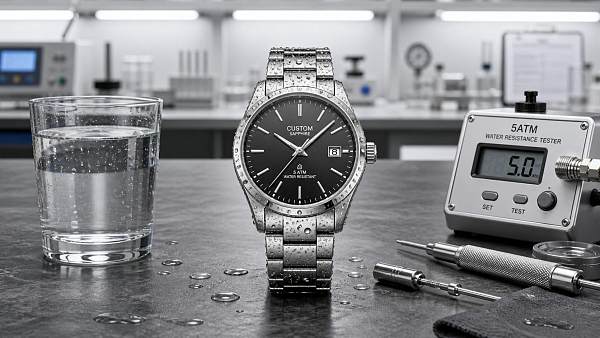
Plated alloy cases can work in entry or fashion-led programs, but coating thickness, adhesion, and wear performance need careful validation. In automatic watches OEM, surface failure often becomes a faster source of complaints than movement defects.
Customization is more than adding a logo
Many suppliers advertise full customization, but practical depth varies widely. True automatic watches OEM customization should cover design intent, manufacturability, and repeatability together.
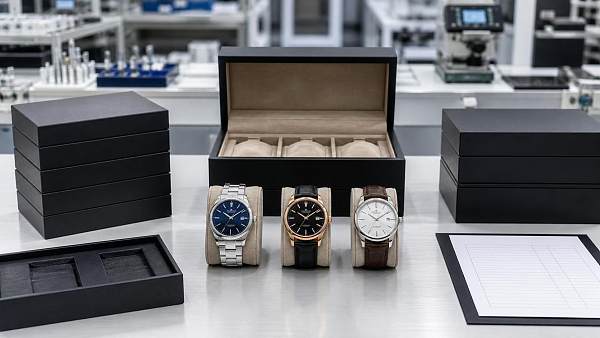
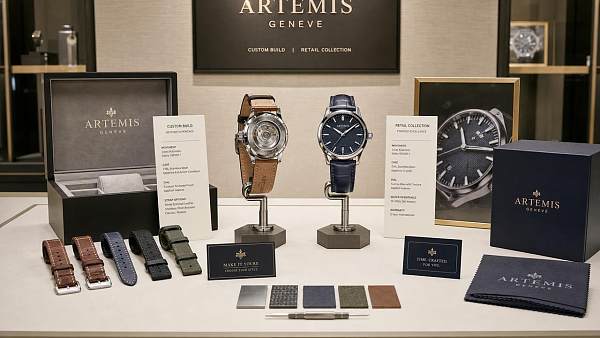
The most common visible options include custom dials, branded rotors, engraved casebacks, bezel treatments, crown logos, strap materials, buckles, and packaging alignment.
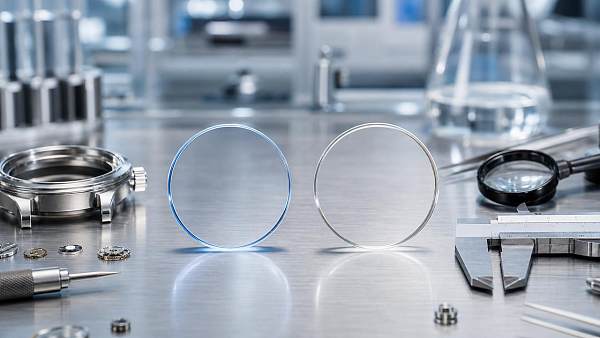
Less visible changes can be even more important. These include case thickness adjustment, crystal profile selection, lume specification, hand stack compatibility, gasket design, and clasp endurance.
A capable OEM partner will explain what can be customized without destabilizing assembly yield or water resistance performance. That conversation is often more valuable than an attractive render.
Customization checkpoints that affect feasibility
- Minimum order quantity for each unique case or dial
- Tooling ownership and revision policy
- Pantone, plating, and texture matching consistency
- Prototype lead time versus mass production lead time
- Tolerance control after design modifications
Production consistency is where OEM claims are tested
In commercial sourcing, a strong prototype is only the opening stage. The real measure of automatic watches OEM capability is whether the supplier can repeat finish, fit, and performance across larger runs.
That includes incoming inspection for components, in-process checks during assembly, pressure testing, timing control, cosmetic review, and packaging verification. Weakness in any one step can damage overall perceived quality.
For GCT-aligned sourcing logic, this matters because luxury accessories are often judged by the final experience rather than the specification sheet. A misaligned hand, uneven lume fill, or inconsistent clasp tension immediately reduces confidence.
Useful indicators during supplier review
Where automatic watches OEM creates business value
The value of automatic watches OEM is not limited to traditional watch brands. It also supports commercial projects that need premium physical products with strong identity and controlled supply.
Typical use cases include luxury gift programs, boutique retail assortments, destination merchandise, branded collaborations, and commemorative collections tied to special venues or experiences.
In these settings, the watch must function as both object and signal. It should communicate permanence, craftsmanship, and credibility. That is why technical decisions in automatic watches OEM often carry marketing consequences, even when the discussion begins with engineering.
A practical path for the next evaluation stage
A useful next step is to narrow the program around three linked decisions: target price architecture, movement tier, and case material strategy. Once those are fixed, customization choices become easier to judge.
It also helps to compare suppliers using the same sample brief. Ask for identical movement assumptions, matching water resistance targets, and clear finishing standards. That makes automatic watches OEM comparisons more meaningful.
From there, prototype review should focus on evidence, not claims. Check timing data, inspect finishing under magnification, verify material declarations, and test how customization affects manufacturability.
When the goal is a durable, premium product, the strongest OEM decision usually comes from balanced judgment. Movement integrity, case performance, and customization ambition need to support each other, not compete with each other.
Search News
Hot Articles
- Outdoor RidesWhat Drives Animatronic Dinosaur Manufacturer Prices for Theme Park Projects?Sep 18, 2026
- Stationery & UniformsHow to Source Wholesale Packing Tape Without Compromising Carton Seal StrengthSep 17, 2026
- Smart Campus TechHow to Source Educational Furniture Worldwide for Safe, Flexible Learning SpacesSep 16, 2026
Popular Tags
Need ExpertConsultation?
Connect with our specialized leisureengineering team for procurementstrategies.
Recommended News
 Sep 08, 2026Water-Resistant Commercial Watches: Choosing Ratings for Workwear and Promotional UseWater resistant commercial watch guide: match 3, 5, or 10 ATM ratings to workwear and promotional needs, verify testing, and protect your budget and brand.● Luxury Retail Analyst
 Sep 07, 2026Commercial Watch Bulk Orders: How to Evaluate Pricing Tiers, Lead Times, and SamplesCommercial watch bulk order guide: evaluate pricing tiers, lead times, samples, landed costs, and supplier readiness to protect margins and launch on schedule.● Luxury Retail Analyst
 Sep 06, 2026Private Label Commercial Watches: A Buyer's Checklist for Branding, MOQ, and QCPrivate label commercial watch sourcing made simple: explore branding, MOQ, materials, supplier QC, and approval steps to build a reliable, market-ready watch program.● Luxury Retail Analyst
 Aug 16, 2026Where to Source Moissanite Iced Out Watches Wholesale Without Sacrificing QualityMoissanite iced out watches wholesale buyers: learn how to source factory-direct quality, verify stone setting and plating, and reduce risk before placing bulk orders.● Luxury Retail Analyst
 Aug 12, 2026How to Evaluate Luxury Watch Winders Wholesale for Retail and Gift Supply?Luxury watch winders wholesale buying guide: learn how to assess quality, noise, compatibility, OEM options, and supplier risk for retail, hospitality, and premium gift supply.● Luxury Retail Analyst
 Jul 15, 2026Kids Smart Watches for School: Key Features Parents Should Compare Before BuyingKids smart watches for school: compare school mode, safe calling, GPS accuracy, battery life, comfort, and privacy controls before you buy the best fit for your child.● Luxury Retail Analyst
 Jul 07, 2026Wholesale Mechanical Watches Stainless Steel: What to Check Before Placing a Bulk OrderWholesale mechanical watches stainless steel sourcing guide: learn how to verify movement quality, steel grade, compliance, and supplier reliability before placing a bulk order.● Luxury Retail Analyst
 Jul 05, 2026Nurse Watches Bulk Buying Guide: Styles, Compliance, and Order QuantitiesNurse watches bulk buying made simple: compare styles, compliance checks, MOQ strategy, and supplier reliability to reduce risk and place smarter orders.● Luxury Retail Analyst
 Jul 05, 2026Stainless Steel Watch Bands Clasp Guide: Types, Fit, and Common Locking IssuesStainless steel watch bands clasp guide covering clasp types, fit checks, and common locking issues. Learn how to compare options, avoid failures, and choose a secure, comfortable band with confidence.● Luxury Retail Analyst
 Jun 30, 2026SASO Arabic UI Rule Tightens Smartwatch ExportsSASO Arabic UI Rule Tightens Smartwatch Exports as Saudi Arabia mandates full Arabic support by Oct 1, 2026. Learn the compliance risks, testing impact, and export actions now.● Luxury Retail Analyst
 Jun 30, 2026How to Source Silicone Watch Bands Bulk: MOQ, Material Grades, and OEM OptionsSilicone watch bands bulk sourcing made simple: compare MOQ, material grades, quality control, and OEM options to reduce risk, choose reliable suppliers, and buy with confidence.● Luxury Retail Analyst
 Jun 29, 2026Saudi SASO Adds Arabic UI Check for SmartwatchesSaudi SASO Adds Arabic UI Check for Smartwatches: learn how the 2026 Arabic UI verification may affect OEM models, certification, imports, and retail listings in Saudi Arabia.● Luxury Retail Analyst
 Jun 17, 2026Automatic Watches OEM Explained: Movement Options, Case Materials, and CustomizationAutomatic watches OEM explained: compare movement options, case materials, and customization factors that shape quality, brand value, and supplier reliability.● Luxury Retail Analyst
 Jun 11, 2026REACH SVHC Update Hits Watch OEMs and SmartwatchesREACH SVHC update puts Watch OEM and smartwatch exports to the EU under new pressure. See how SCIP filing, supplier declarations, and material checks can protect shipments before the 2026 deadline.● Luxury Retail Analyst
 Jun 10, 2026REACH SVHC Update Adds New Watch Export Compliance DutiesREACH SVHC update puts Watch OEM and smartwatch exporters under new EU compliance pressure. Learn the new SCIP duties, 0.1% threshold risks, and what teams must do before December 2026.● Luxury Retail Analyst
 Jun 08, 2026Commercial Watch vs Retail Watch: Key Differences in OEM Specs, Pricing, and Use CasesCommercial watch vs retail watch: discover key OEM specs, pricing factors, and use cases to choose the right sourcing strategy, reduce risk, and improve brand fit.● Luxury Retail Analyst
 Jun 05, 2026Watch Hands and Crowns: Key Specs to Check for OEM Repair and AssemblyWatch hands and crowns for OEM repair and assembly: learn the key specs to verify for fit, sealing, durability, and repeatable quality before approval.● Luxury Retail Analyst
 Jun 02, 2026Sapphire Watch Glass vs Mineral Glass: Durability, Clarity, and Cost DifferencesSapphire watch glass vs mineral glass: compare scratch resistance, clarity, impact behavior, and cost to choose the right lens for premium or value-driven watches.● Luxury Retail Analyst
 May 23, 2026What should buyers check before sourcing iced out watches wholesale?Iced out watches wholesale buyers should check material honesty, stone setting, durability, and supplier compliance before ordering to reduce returns and protect profit.● Luxury Retail Analyst
 May 02, 2026Zheng Qinwen’s Madrid Exit Delays EU Orders for Smart Tennis WearablesSmart tennis wearables face EU procurement delays after Zheng Qinwen’s Madrid Open exit — key for manufacturers navigating WTA data privacy guidelines.● Luxury Retail Analyst
 Apr 30, 2026What separates a commercial watch from a fashion driven modelCommercial watch buying explained: discover how durability, precision, serviceability, and channel fit separate true commercial models from fashion-led watches for retail, gifting, and hospitality.● Luxury Retail Analyst
 Apr 30, 2026ODM watches or private label, which model fits betterODM watches or private label? Compare speed, customization, MOQ, and sourcing risk to choose the best watch model for your brand, launch timeline, and profit goals.● Luxury Retail Analyst
 Apr 24, 2026ODM Watches: Costs, MOQ, and Lead TimesODM watches guide: compare costs, MOQ, and lead times for sports and entertainment sourcing. Ideal for hospitality procurement, resort retail, and branded event merchandise buyers.● Luxury Retail Analyst
 Apr 24, 2026ODM Watches vs OEM: Which Fits Your Brand?ODM watches vs OEM: compare speed, cost, design control, MOQ, and brand value. A practical guide for hospitality procurement, retailers, and distributors.● Luxury Retail Analyst