Sapphire Watch Glass vs Mineral Glass: Durability, Clarity, and Cost Differences
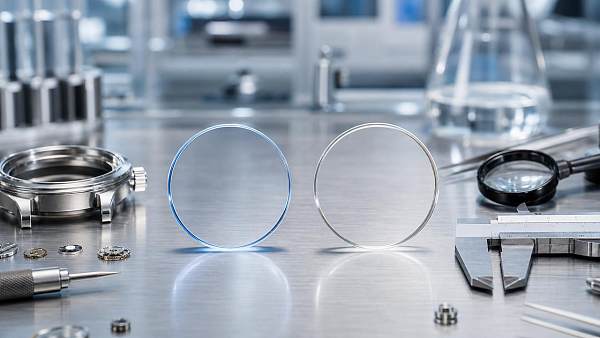
For technical evaluators comparing watch components, the choice between sapphire watch glass and mineral glass directly affects product durability, optical performance, service life, and total cost.
While sapphire is widely valued for superior scratch resistance and premium positioning, mineral glass can offer impact tolerance and cost efficiency for specific commercial applications.
This guide breaks down the practical differences in hardness, clarity, fracture behavior, manufacturing cost, and sourcing considerations for watches across luxury, mid-range, and volume markets.
Why a Checklist Matters When Comparing Sapphire Watch Glass
Watch glass selection is rarely a single-material decision. It affects case design, assembly yield, after-sales claims, retail positioning, and long-term customer satisfaction.
A clear checklist helps compare sapphire watch glass and mineral glass under measurable conditions, rather than relying on broad claims such as “premium” or “durable.”
The best option depends on price tier, expected wear environment, case geometry, coating requirements, and acceptable replacement risk over the product lifecycle.
Core Difference: Hardness, Scratches, and Daily Wear
Sapphire watch glass is synthetic corundum, typically rated 9 on the Mohs hardness scale. Only diamond and a few materials are harder.
Mineral glass is hardened glass, usually more scratch-resistant than acrylic but far softer than sapphire watch glass in normal abrasive environments.
Keys, desk edges, sand, tools, and metal fixtures can mark mineral glass over time. Sapphire watch glass resists most of these daily contacts.
- Check the target wear environment before choosing. Office use, outdoor activity, retail handling, and travel exposure create very different abrasion risks.
- Specify sapphire watch glass when long-term surface appearance is central to brand value, resale perception, or premium gifting applications.
- Consider mineral glass when the watch is low-cost, frequently replaced, or positioned for promotional, school, or entry-level use.
- Review polishing expectations carefully. Scratched mineral glass is often replaced, while scratched sapphire watch glass is uncommon but difficult to refinish.
Impact Behavior: Toughness Is Not the Same as Hardness
Hardness measures resistance to scratching. Toughness measures resistance to cracking, chipping, or breaking under sudden impact.
Sapphire watch glass is extremely hard, but it can be brittle under concentrated shock. Edges are especially vulnerable if poorly supported.
Mineral glass can sometimes absorb impact better in basic watch structures. It may chip or crack, yet replacement cost is usually lower.
- Evaluate bezel height, gasket support, and edge exposure. Even high-grade sapphire watch glass performs poorly if the case design leaves edges unprotected.
- Request impact test data instead of accepting generic durability claims. Drop height, striker shape, and fixture conditions should be documented.
- Use thicker or shaped sapphire watch glass only after checking assembly pressure, case tolerance, and crown-side clearance.
- Compare service scenarios. A broken mineral lens may be inexpensive to replace, while sapphire replacement can affect warranty economics.
Optical Clarity and Coating Performance
Both materials can deliver good visibility when manufactured well. However, sapphire watch glass is often selected for higher-end optical consistency.
Sapphire has high transparency, but it also reflects more light than ordinary glass. Anti-reflective coating is therefore important for legibility.
Mineral glass may appear clear in standard conditions, yet it can show more wear-related haze after repeated abrasion or cleaning.
- Confirm whether anti-reflective coating is applied inside, outside, or both. External coatings can scratch before the sapphire watch glass itself.
- Inspect clarity under retail lighting, daylight, and angled viewing. Reflections can affect perceived dial quality more than raw transparency.
- Check tint consistency across production lots. Low-quality coating can create blue, purple, or green shifts that alter dial color.
- Specify cleaning resistance. Perfume, sweat, sanitizers, and display-case cleaners can degrade weak coatings faster than expected.
Cost Structure: Material Price, Machining, and Yield
Sapphire watch glass costs more because synthetic sapphire growth, slicing, grinding, polishing, and coating require controlled processes and harder tooling.
Mineral glass is easier to produce at scale. It supports attractive pricing for fashion watches, institutional programs, and large seasonal orders.
The true cost difference is not just the lens. It includes breakage during assembly, inspection time, packaging protection, and warranty exposure.
Checklist for Selecting Sapphire Watch Glass or Mineral Glass
- Define the watch price tier first. Use sapphire watch glass when premium perception supports the higher component and assembly cost.
- Map the expected use environment. Choose mineral glass for controlled, low-risk use when replacement cost matters more than scratch resistance.
- Confirm hardness and material claims. Ask for test references, supplier specifications, and proof that the lens is real sapphire watch glass.
- Review case geometry before approval. Flat, domed, boxed, and curved lenses create different machining difficulty and breakage probability.
- Set coating requirements early. Anti-reflective coating can improve sapphire watch glass visibility but may add cost and inspection complexity.
- Test under actual assembly pressure. Gasket compression, press-fit operations, and caseback closure can reveal hidden fracture risks.
- Compare lifecycle cost, not unit price. A cheaper lens may create more returns if scratches conflict with customer expectations.
- Document tolerances clearly. Diameter, thickness, chamfer, curvature, and surface finish should be controlled before production release.
Scenario Notes for Luxury, Mid-Range, and Volume Watches
Luxury and Jewelry-Style Watches
Sapphire watch glass is usually the stronger choice for luxury pieces. The clean surface supports premium dials, precious metals, and high-value retail presentation.
For gem-set cases or thin bezels, edge protection is critical. Beautiful case architecture should not compromise sapphire watch glass support.
Mid-Range Daily Watches
Mid-range models require balanced decisions. Sapphire watch glass can justify a higher selling price when paired with reliable movement and refined finishing.
Mineral glass may still fit sport-inspired or casual designs where accessible repair, lower price, and broad distribution are more important.
High-Volume Commercial Programs
For large-volume programs, mineral glass often offers better budget control. It simplifies sourcing and keeps replacement costs predictable.
However, sapphire watch glass can reduce appearance-related complaints when the product is intended for long-term use or premium corporate gifting.
Commonly Overlooked Risks
Confusing coated mineral glass with sapphire: Some descriptions use premium wording without confirming true sapphire watch glass. Material verification prevents specification drift.
Ignoring edge finish: Chips often begin at weak edges. Chamfer quality matters as much as central surface hardness.
Overlooking coating durability: A scratched outer coating can make sapphire watch glass look damaged, even when the base material remains intact.
Using one test for every model: A flat dress watch and a domed sports watch need different checks for pressure, shock, and reflection.
Focusing only on purchase price: Mineral glass can be cheaper upfront, but visible scratching may weaken perceived quality in premium channels.
Practical Execution Recommendations
- Build a sample comparison set with identical case designs. Compare sapphire watch glass and mineral glass under the same lighting and handling conditions.
- Run abrasion, drop, thermal, and cleaning tests before final approval. Keep records tied to batch numbers and lens specifications.
- Create separate acceptance criteria for surface scratches, coating marks, bubbles, chips, edge flaws, and dimensional deviation.
- Negotiate packaging protection for finished watches. Even sapphire watch glass can arrive with coating scuffs or edge damage if packed poorly.
- Align claims with reality. If marketing highlights sapphire watch glass, the product should prove scratch resistance and optical quality in use.
Summary and Next-Step Action Guide
Sapphire watch glass delivers superior scratch resistance, premium appearance, and strong long-term clarity when paired with proper coating and case design.
Mineral glass remains valuable where cost control, simple replacement, and broad-scale production outweigh the need for maximum surface durability.
The most reliable decision comes from testing actual designs, not comparing material names alone. Hardness, impact behavior, coating, and cost must be assessed together.
Before sourcing, prepare a specification sheet covering lens material, thickness, curvature, coating location, inspection standards, and required test evidence.
For premium and long-life watches, shortlist sapphire watch glass with verified material data. For value-driven programs, compare mineral glass using lifecycle cost and service assumptions.
Search News
Hot Articles
- Pro Stage AudioDesigning Theater Sound Systems for Clear Dialogue and Even Audience CoverageOct 15, 2026
- Musical InstrumentsHow Do You Choose Music Education Equipment for a New Campus?Oct 15, 2026
- Arcade & VR MachinesChoosing a Racing Simulator Cockpit for an FEC: Durability and Guest FitOct 14, 2026
Popular Tags
Need ExpertConsultation?
Connect with our specialized leisureengineering team for procurementstrategies.
Recommended News
 Sep 08, 2026Water-Resistant Commercial Watches: Choosing Ratings for Workwear and Promotional UseWater resistant commercial watch guide: match 3, 5, or 10 ATM ratings to workwear and promotional needs, verify testing, and protect your budget and brand.● Luxury Retail Analyst
 Sep 07, 2026Commercial Watch Bulk Orders: How to Evaluate Pricing Tiers, Lead Times, and SamplesCommercial watch bulk order guide: evaluate pricing tiers, lead times, samples, landed costs, and supplier readiness to protect margins and launch on schedule.● Luxury Retail Analyst
 Sep 06, 2026Private Label Commercial Watches: A Buyer's Checklist for Branding, MOQ, and QCPrivate label commercial watch sourcing made simple: explore branding, MOQ, materials, supplier QC, and approval steps to build a reliable, market-ready watch program.● Luxury Retail Analyst
 Aug 16, 2026Where to Source Moissanite Iced Out Watches Wholesale Without Sacrificing QualityMoissanite iced out watches wholesale buyers: learn how to source factory-direct quality, verify stone setting and plating, and reduce risk before placing bulk orders.● Luxury Retail Analyst
 Aug 12, 2026How to Evaluate Luxury Watch Winders Wholesale for Retail and Gift Supply?Luxury watch winders wholesale buying guide: learn how to assess quality, noise, compatibility, OEM options, and supplier risk for retail, hospitality, and premium gift supply.● Luxury Retail Analyst
 Jul 15, 2026Kids Smart Watches for School: Key Features Parents Should Compare Before BuyingKids smart watches for school: compare school mode, safe calling, GPS accuracy, battery life, comfort, and privacy controls before you buy the best fit for your child.● Luxury Retail Analyst
 Jul 07, 2026Wholesale Mechanical Watches Stainless Steel: What to Check Before Placing a Bulk OrderWholesale mechanical watches stainless steel sourcing guide: learn how to verify movement quality, steel grade, compliance, and supplier reliability before placing a bulk order.● Luxury Retail Analyst
 Jul 05, 2026Nurse Watches Bulk Buying Guide: Styles, Compliance, and Order QuantitiesNurse watches bulk buying made simple: compare styles, compliance checks, MOQ strategy, and supplier reliability to reduce risk and place smarter orders.● Luxury Retail Analyst
 Jul 05, 2026Stainless Steel Watch Bands Clasp Guide: Types, Fit, and Common Locking IssuesStainless steel watch bands clasp guide covering clasp types, fit checks, and common locking issues. Learn how to compare options, avoid failures, and choose a secure, comfortable band with confidence.● Luxury Retail Analyst
 Jun 30, 2026SASO Arabic UI Rule Tightens Smartwatch ExportsSASO Arabic UI Rule Tightens Smartwatch Exports as Saudi Arabia mandates full Arabic support by Oct 1, 2026. Learn the compliance risks, testing impact, and export actions now.● Luxury Retail Analyst
 Jun 30, 2026How to Source Silicone Watch Bands Bulk: MOQ, Material Grades, and OEM OptionsSilicone watch bands bulk sourcing made simple: compare MOQ, material grades, quality control, and OEM options to reduce risk, choose reliable suppliers, and buy with confidence.● Luxury Retail Analyst
 Jun 29, 2026Saudi SASO Adds Arabic UI Check for SmartwatchesSaudi SASO Adds Arabic UI Check for Smartwatches: learn how the 2026 Arabic UI verification may affect OEM models, certification, imports, and retail listings in Saudi Arabia.● Luxury Retail Analyst
 Jun 17, 2026Automatic Watches OEM Explained: Movement Options, Case Materials, and CustomizationAutomatic watches OEM explained: compare movement options, case materials, and customization factors that shape quality, brand value, and supplier reliability.● Luxury Retail Analyst
 Jun 11, 2026REACH SVHC Update Hits Watch OEMs and SmartwatchesREACH SVHC update puts Watch OEM and smartwatch exports to the EU under new pressure. See how SCIP filing, supplier declarations, and material checks can protect shipments before the 2026 deadline.● Luxury Retail Analyst
 Jun 10, 2026REACH SVHC Update Adds New Watch Export Compliance DutiesREACH SVHC update puts Watch OEM and smartwatch exporters under new EU compliance pressure. Learn the new SCIP duties, 0.1% threshold risks, and what teams must do before December 2026.● Luxury Retail Analyst
 Jun 08, 2026Commercial Watch vs Retail Watch: Key Differences in OEM Specs, Pricing, and Use CasesCommercial watch vs retail watch: discover key OEM specs, pricing factors, and use cases to choose the right sourcing strategy, reduce risk, and improve brand fit.● Luxury Retail Analyst
 Jun 05, 2026Watch Hands and Crowns: Key Specs to Check for OEM Repair and AssemblyWatch hands and crowns for OEM repair and assembly: learn the key specs to verify for fit, sealing, durability, and repeatable quality before approval.● Luxury Retail Analyst
 Jun 02, 2026Sapphire Watch Glass vs Mineral Glass: Durability, Clarity, and Cost DifferencesSapphire watch glass vs mineral glass: compare scratch resistance, clarity, impact behavior, and cost to choose the right lens for premium or value-driven watches.● Luxury Retail Analyst
 May 23, 2026What should buyers check before sourcing iced out watches wholesale?Iced out watches wholesale buyers should check material honesty, stone setting, durability, and supplier compliance before ordering to reduce returns and protect profit.● Luxury Retail Analyst
 May 02, 2026Zheng Qinwen’s Madrid Exit Delays EU Orders for Smart Tennis WearablesSmart tennis wearables face EU procurement delays after Zheng Qinwen’s Madrid Open exit — key for manufacturers navigating WTA data privacy guidelines.● Luxury Retail Analyst
 Apr 30, 2026What separates a commercial watch from a fashion driven modelCommercial watch buying explained: discover how durability, precision, serviceability, and channel fit separate true commercial models from fashion-led watches for retail, gifting, and hospitality.● Luxury Retail Analyst
 Apr 30, 2026ODM watches or private label, which model fits betterODM watches or private label? Compare speed, customization, MOQ, and sourcing risk to choose the best watch model for your brand, launch timeline, and profit goals.● Luxury Retail Analyst
 Apr 24, 2026ODM Watches: Costs, MOQ, and Lead TimesODM watches guide: compare costs, MOQ, and lead times for sports and entertainment sourcing. Ideal for hospitality procurement, resort retail, and branded event merchandise buyers.● Luxury Retail Analyst
 Apr 24, 2026ODM Watches vs OEM: Which Fits Your Brand?ODM watches vs OEM: compare speed, cost, design control, MOQ, and brand value. A practical guide for hospitality procurement, retailers, and distributors.● Luxury Retail Analyst