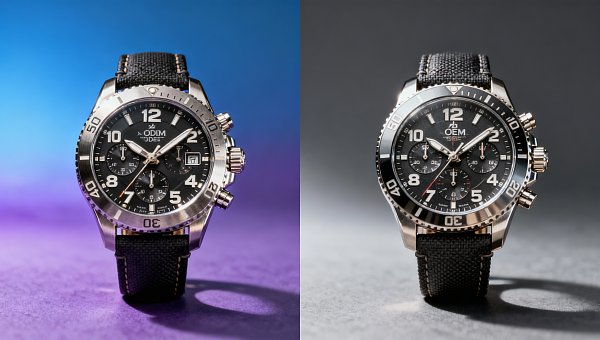
Wholesale Mechanical Watches Stainless Steel: What to Check Before Placing a Bulk Order
Wholesale Mechanical Watches Stainless Steel: What to Check Before Placing a Bulk Order
Sourcing wholesale mechanical watches stainless steel for procurement projects involves more than comparing prices.
A low quote can hide movement issues, uneven finishing, or weak delivery control.
That matters even more when watches support retail programs, branded gifting, or luxury accessory lines.
In actual sourcing work, the safest decision usually comes from structured checking before any deposit is paid.
This guide breaks down the core checkpoints that help reduce risk, protect brand value, and support stable long-term supply.
Start with the Real Product Positioning
Before requesting quotations, define where the watch will sit in the market.
Wholesale mechanical watches stainless steel can target entry luxury, fashion retail, corporate gifting, or private label collections.
Each segment has different expectations for movement origin, case weight, finishing quality, and packaging.
If positioning is vague, suppliers will quote against different assumptions.
That leads to price gaps that look attractive but are not truly comparable.
A short internal brief should confirm:
- target price band
- sales channel and customer profile
- expected movement grade
- required stainless steel specification
- logo, dial, and packaging needs
- compliance market and destination country
This first step makes every later negotiation much more precise.
Check the Mechanical Movement Behind the Quote
For wholesale mechanical watches stainless steel, the movement is the main cost and quality driver.
Two watches can look nearly identical while performing very differently over time.
Ask for the exact caliber reference, not just terms like automatic or mechanical.
It is also worth confirming whether the movement is imported, locally assembled, or fully domestic.
The key points to verify include:
- daily accuracy tolerance
- power reserve hours
- jewel count and beat rate
- shock resistance performance
- serviceability and spare parts access
- historical defect rate from mass production
Request timing test records for sample units.
Recent market shifts show more buyers asking for consistency, not just movement branding.
That is a smarter approach for procurement teams managing returns and after-sales costs.
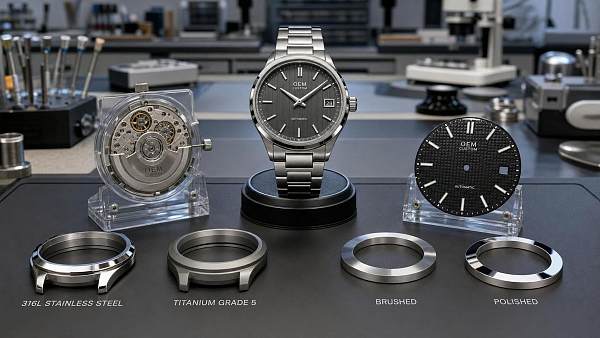
Verify the Stainless Steel Grade and Case Construction
In wholesale mechanical watches stainless steel projects, material claims deserve close checking.
Many suppliers mention stainless steel, but the actual grade may differ across case, buckle, and bracelet.
The common comparison is 304 versus 316L.
For better corrosion resistance and premium positioning, 316L is usually preferred.
Still, grade alone is not enough.
Construction quality affects feel, durability, and customer perception.
Confirm these details before approving production:
- steel grade certificates
- case thickness and total weight tolerance
- solid or hollow bracelet links
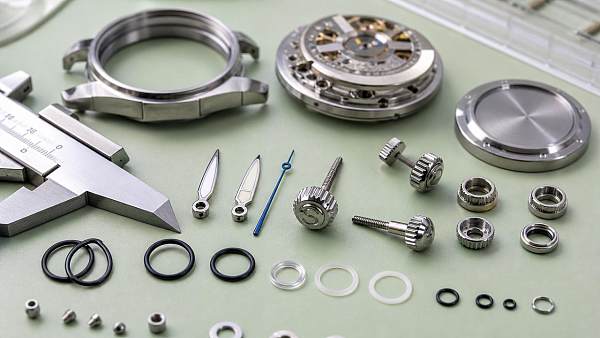
- screw-down or push-pull crown type
- case back construction and sealing method
- surface treatment, brushing, and polishing consistency
This is where sample evaluation should be hands-on.
Look for sharp edges, loose bracelets, uneven gaps, and poor clasp action.
Those defects usually get worse, not better, in bulk runs.
Assess Dial, Crystal, and Finishing Consistency
Visual quality drives the first buying decision in almost every watch program.
That means wholesale mechanical watches stainless steel must be checked far beyond movement performance.
Dial printing, hand alignment, lume application, and crystal clarity should all be reviewed under consistent lighting.
If the project includes custom branding, ask for pre-production artwork approval and golden sample sign-off.
Pay attention to:
- font sharpness on dial text
- marker placement and symmetry
- hand clearance and alignment at 12 o'clock
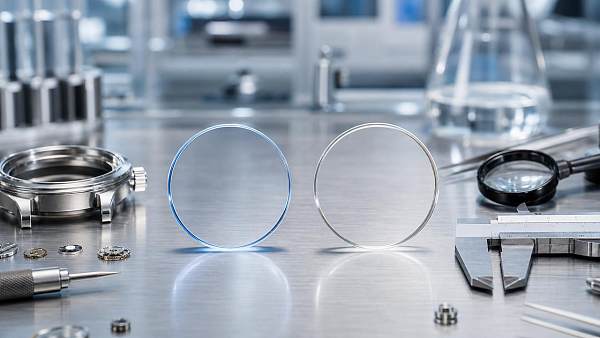
- sapphire or mineral crystal specification
- anti-reflective coating quality
- color consistency across the full lot
This also affects return rates in e-commerce and distributor channels.
A watch that photographs differently from the approved sample can create immediate friction.
Review OEM and ODM Capability Before Scaling
Many bulk orders fail because the supplier can make samples but cannot scale custom production smoothly.
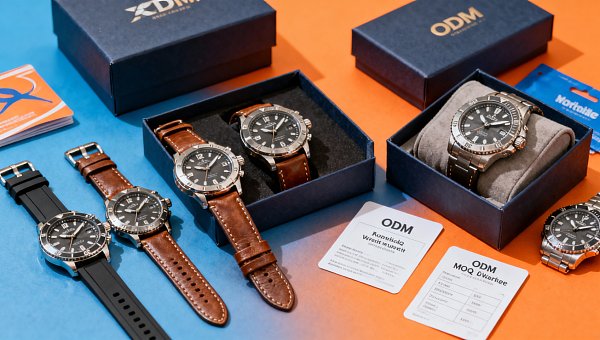
For wholesale mechanical watches stainless steel, OEM and ODM capability should be tested early.
Ask whether the supplier controls case making, assembly, engraving, packaging, and quality inspection internally.
If several steps are outsourced, lead times and accountability usually become harder to control.
Useful questions include:
- What is the minimum order quantity for custom dials and cases?
- Can the supplier support exclusive molds or protected designs?
- How are sample revisions documented?
- What is the standard lead time for repeat orders?
- Is packaging developed in-house or through external vendors?
In practical terms, capability matters as much as price.
A slightly higher unit cost can still be cheaper if the factory manages revisions well and ships on schedule.
Confirm Compliance, Testing, and Market Access Needs
Compliance checks are often overlooked in watch sourcing until a shipment is already moving.
That is expensive and avoidable.
For wholesale mechanical watches stainless steel, required documents may depend on market, materials, and packaging content.
Common checkpoints include nickel release concerns, REACH-related material declarations, and packaging compliance requirements.
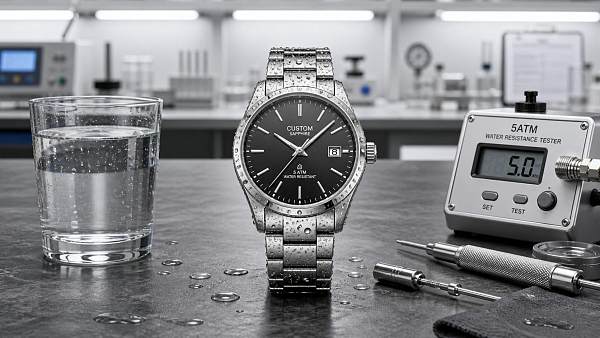
Water resistance claims should also be supported by test methods, not sales language alone.
The stronger signal here is simple.
Reliable suppliers answer compliance questions clearly and quickly.
Measure Supplier Reliability Beyond the Sales Response
Fast replies are helpful, but they are not proof of operational reliability.
When sourcing wholesale mechanical watches stainless steel, review the supplier as a delivery partner.
Look at production capacity, repeat-order performance, and quality control discipline.
A few practical verification steps can reveal a lot:
- Request recent bulk shipment references for similar watch categories.
- Review inspection flow, including incoming materials and final random checks.
- Confirm how defects are handled after arrival.
- Check whether the factory supports third-party inspections before shipment.
- Evaluate communication speed during technical revisions, not only during quotation.
This is often where stronger suppliers separate themselves from trading-only operations.
A dependable sourcing partner documents changes, confirms tolerances, and manages exceptions before they become claims.
Build the Cost Model Around Total Risk
The cheapest quotation for wholesale mechanical watches stainless steel is rarely the cheapest landed result.
A better sourcing model includes unit price, tooling, packaging, inspection, freight, duties, defect exposure, and reorder stability.
It also helps to estimate the commercial impact of delayed launches or inconsistent quality.
Before placing the final order, confirm:
- approved golden sample
- written specification sheet
- inspection standard and AQL level
- lead time by production stage
- payment terms tied to milestones
- warranty and defect handling agreement
That final review is where procurement discipline pays off.
A controlled order process makes wholesale mechanical watches stainless steel more predictable, scalable, and commercially useful.
When every checkpoint is documented, the buying decision becomes clearer, the negotiation becomes stronger, and long-term supply becomes easier to protect.
Search News
Hot Articles
- Hotel Room AmenitiesHow to Select Hotel Hair Dryers That Balance Guest Safety, Durability, and CostOct 05, 2026
- Restaurant FurnitureFast-Casual Restaurant Interiors: Design Choices That Improve Speed and Guest FlowOct 04, 2026
- Outdoor RidesHow to Select Leisure Park Equipment for Safe, High-Throughput Visitor AreasOct 03, 2026
Popular Tags
Need ExpertConsultation?
Connect with our specialized leisureengineering team for procurementstrategies.
Recommended News
 Sep 08, 2026Water-Resistant Commercial Watches: Choosing Ratings for Workwear and Promotional UseWater resistant commercial watch guide: match 3, 5, or 10 ATM ratings to workwear and promotional needs, verify testing, and protect your budget and brand.● Luxury Retail Analyst
 Sep 07, 2026Commercial Watch Bulk Orders: How to Evaluate Pricing Tiers, Lead Times, and SamplesCommercial watch bulk order guide: evaluate pricing tiers, lead times, samples, landed costs, and supplier readiness to protect margins and launch on schedule.● Luxury Retail Analyst
 Sep 06, 2026Private Label Commercial Watches: A Buyer's Checklist for Branding, MOQ, and QCPrivate label commercial watch sourcing made simple: explore branding, MOQ, materials, supplier QC, and approval steps to build a reliable, market-ready watch program.● Luxury Retail Analyst
 Aug 16, 2026Where to Source Moissanite Iced Out Watches Wholesale Without Sacrificing QualityMoissanite iced out watches wholesale buyers: learn how to source factory-direct quality, verify stone setting and plating, and reduce risk before placing bulk orders.● Luxury Retail Analyst
 Aug 12, 2026How to Evaluate Luxury Watch Winders Wholesale for Retail and Gift Supply?Luxury watch winders wholesale buying guide: learn how to assess quality, noise, compatibility, OEM options, and supplier risk for retail, hospitality, and premium gift supply.● Luxury Retail Analyst
 Jul 15, 2026Kids Smart Watches for School: Key Features Parents Should Compare Before BuyingKids smart watches for school: compare school mode, safe calling, GPS accuracy, battery life, comfort, and privacy controls before you buy the best fit for your child.● Luxury Retail Analyst
 Jul 07, 2026Wholesale Mechanical Watches Stainless Steel: What to Check Before Placing a Bulk OrderWholesale mechanical watches stainless steel sourcing guide: learn how to verify movement quality, steel grade, compliance, and supplier reliability before placing a bulk order.● Luxury Retail Analyst
 Jul 05, 2026Nurse Watches Bulk Buying Guide: Styles, Compliance, and Order QuantitiesNurse watches bulk buying made simple: compare styles, compliance checks, MOQ strategy, and supplier reliability to reduce risk and place smarter orders.● Luxury Retail Analyst
 Jul 05, 2026Stainless Steel Watch Bands Clasp Guide: Types, Fit, and Common Locking IssuesStainless steel watch bands clasp guide covering clasp types, fit checks, and common locking issues. Learn how to compare options, avoid failures, and choose a secure, comfortable band with confidence.● Luxury Retail Analyst
 Jun 30, 2026SASO Arabic UI Rule Tightens Smartwatch ExportsSASO Arabic UI Rule Tightens Smartwatch Exports as Saudi Arabia mandates full Arabic support by Oct 1, 2026. Learn the compliance risks, testing impact, and export actions now.● Luxury Retail Analyst
 Jun 30, 2026How to Source Silicone Watch Bands Bulk: MOQ, Material Grades, and OEM OptionsSilicone watch bands bulk sourcing made simple: compare MOQ, material grades, quality control, and OEM options to reduce risk, choose reliable suppliers, and buy with confidence.● Luxury Retail Analyst
 Jun 29, 2026Saudi SASO Adds Arabic UI Check for SmartwatchesSaudi SASO Adds Arabic UI Check for Smartwatches: learn how the 2026 Arabic UI verification may affect OEM models, certification, imports, and retail listings in Saudi Arabia.● Luxury Retail Analyst
 Jun 17, 2026Automatic Watches OEM Explained: Movement Options, Case Materials, and CustomizationAutomatic watches OEM explained: compare movement options, case materials, and customization factors that shape quality, brand value, and supplier reliability.● Luxury Retail Analyst
 Jun 11, 2026REACH SVHC Update Hits Watch OEMs and SmartwatchesREACH SVHC update puts Watch OEM and smartwatch exports to the EU under new pressure. See how SCIP filing, supplier declarations, and material checks can protect shipments before the 2026 deadline.● Luxury Retail Analyst
 Jun 10, 2026REACH SVHC Update Adds New Watch Export Compliance DutiesREACH SVHC update puts Watch OEM and smartwatch exporters under new EU compliance pressure. Learn the new SCIP duties, 0.1% threshold risks, and what teams must do before December 2026.● Luxury Retail Analyst
 Jun 08, 2026Commercial Watch vs Retail Watch: Key Differences in OEM Specs, Pricing, and Use CasesCommercial watch vs retail watch: discover key OEM specs, pricing factors, and use cases to choose the right sourcing strategy, reduce risk, and improve brand fit.● Luxury Retail Analyst
 Jun 05, 2026Watch Hands and Crowns: Key Specs to Check for OEM Repair and AssemblyWatch hands and crowns for OEM repair and assembly: learn the key specs to verify for fit, sealing, durability, and repeatable quality before approval.● Luxury Retail Analyst
 Jun 02, 2026Sapphire Watch Glass vs Mineral Glass: Durability, Clarity, and Cost DifferencesSapphire watch glass vs mineral glass: compare scratch resistance, clarity, impact behavior, and cost to choose the right lens for premium or value-driven watches.● Luxury Retail Analyst
 May 23, 2026What should buyers check before sourcing iced out watches wholesale?Iced out watches wholesale buyers should check material honesty, stone setting, durability, and supplier compliance before ordering to reduce returns and protect profit.● Luxury Retail Analyst
 May 02, 2026Zheng Qinwen’s Madrid Exit Delays EU Orders for Smart Tennis WearablesSmart tennis wearables face EU procurement delays after Zheng Qinwen’s Madrid Open exit — key for manufacturers navigating WTA data privacy guidelines.● Luxury Retail Analyst
 Apr 30, 2026What separates a commercial watch from a fashion driven modelCommercial watch buying explained: discover how durability, precision, serviceability, and channel fit separate true commercial models from fashion-led watches for retail, gifting, and hospitality.● Luxury Retail Analyst
 Apr 30, 2026ODM watches or private label, which model fits betterODM watches or private label? Compare speed, customization, MOQ, and sourcing risk to choose the best watch model for your brand, launch timeline, and profit goals.● Luxury Retail Analyst
 Apr 24, 2026ODM Watches: Costs, MOQ, and Lead TimesODM watches guide: compare costs, MOQ, and lead times for sports and entertainment sourcing. Ideal for hospitality procurement, resort retail, and branded event merchandise buyers.● Luxury Retail Analyst
 Apr 24, 2026ODM Watches vs OEM: Which Fits Your Brand?ODM watches vs OEM: compare speed, cost, design control, MOQ, and brand value. A practical guide for hospitality procurement, retailers, and distributors.● Luxury Retail Analyst