How to Evaluate Luxury Watch Winders Wholesale for Retail and Gift Supply?
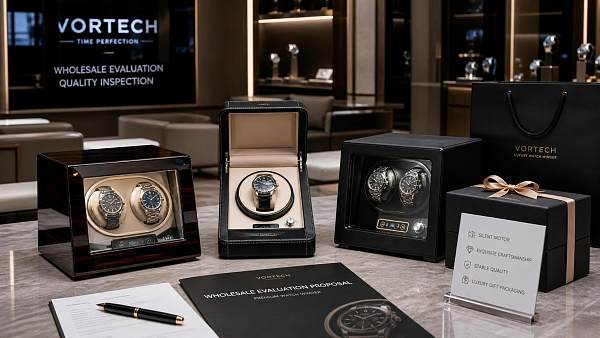
For procurement professionals serving retail, hospitality, or premium gifting channels, evaluating luxury watch winders wholesale options goes far beyond unit price. The right supplier must combine refined craftsmanship, dependable movement compatibility, consistent quality control, and flexible OEM capabilities. This guide explores how to assess wholesale partners strategically, helping buyers reduce sourcing risk while securing products that meet the expectations of luxury-focused customers.
In practice, watch winders sit in an awkward category for buyers: they are accessory products, but customers often judge them as if they were luxury goods in their own right. That creates a sourcing challenge. A winder may look impressive in a catalog and still fail where it matters most—quiet operation, stable winding performance, finish consistency, packaging quality, and after-sales defect control. For buyers handling luxury watch winders wholesale, the key question is not simply whether the product is attractive. It is whether the supplier can support a premium channel without creating hidden operational costs.
Why procurement mistakes happen in this category
Many sourcing errors come from treating watch winders as small electronics or as decorative gift boxes. They are both, but also neither. A luxury-oriented winder has to satisfy three different expectations at the same time:
- It must function as a mechanical support product for automatic watches.
- It must perform like a consumer electrical item with acceptable reliability and safety.
- It must present like a premium display object suitable for boutiques, executive gifting, or hospitality suites.
When buyers evaluate only one of those dimensions, trouble begins. A product selected purely for aesthetics may produce unacceptable return rates because of motor noise or compatibility issues. A product chosen mainly for technical specifications may fail in premium retail because the lacquer, hinges, lining, or packaging do not meet customer expectations. A low-cost OEM offer may look competitive until freight damage, inconsistent wood finish, or weak power adapters start eroding margin.
Start with the channel, not the product spec sheet
Procurement decisions are clearer when the end use is defined precisely. A watch winder for a luxury multi-brand retailer is not judged the same way as one for a corporate gift distributor or a hotel VIP amenities program.
Retail buyers usually need:
- strong shelf presentation;
- low visible defect rate;
- stable replenishment for repeat SKUs;
- packaging that supports premium unboxing;
- clear warranty handling.
Gift supply buyers often prioritize:
- custom branding options;
- predictable delivery windows for seasonal campaigns;
- price discipline across volume tiers;
- presentation boxes and insert customization;
- acceptable quality at a target landed cost.
Hospitality or private client sourcing teams may care more about:
- silent operation in guest environments;
- electrical safety for international use;
- compact dimensions;
- refined appearance consistent with room or suite interiors;
- low maintenance burden.
This matters because the “best” wholesale option changes depending on channel risk. A model that works well for online gifting may be unsuitable for boutique retail if wood veneer matching is inconsistent across units. A technically capable winder may be unacceptable in hotel applications if the motor emits low-frequency noise at night.
Movement compatibility is more important than many buyers assume
One of the most common misunderstandings in this category is assuming that any automatic watch can be safely supported by any decent-quality winder. In reality, compatibility is shaped by the winding program, rotation direction, turns per day, cushion fit, and motor consistency.
Procurement teams do not need to become watch technicians, but they do need to ask suppliers structured questions:
- What rotation settings are available—clockwise, counterclockwise, and bidirectional?
- What turns-per-day ranges are supported?
- Are rest cycles programmable or fixed?
- Is the cushion designed for larger modern cases as well as smaller dress watches?
- Can the unit handle heavier watches without slippage or strain?
For general retail or gifting channels, broad compatibility is usually safer than technical specialization. A wholesale buyer is rarely sourcing for one single watch brand or one movement family. The real objective is to reduce post-sale dissatisfaction from customers who discover that their watch either does not fit securely or appears not to remain wound as expected.
If a supplier cannot explain the logic behind its winding programs in a credible way, that is a warning sign. Some factories can manufacture an attractive enclosure while relying on generic motor modules with limited tuning and poor consistency.
Quiet operation is a commercial issue, not just a product feature
Noise complaints are one of the fastest ways to damage a premium accessory line. In showroom conditions, nearly any winder can seem quiet enough. In a bedroom, study, hotel suite, or executive office, small differences in motor quality become obvious.
Buyers should avoid relying on vague claims like “ultra-silent” unless they are backed by repeatable internal testing methods. In many factories, noise evaluation is still subjective. Ask how the supplier tests operating noise, at what distance, under what load, and whether finished goods testing includes assembled units rather than just motor components. If the answer is unclear, assume defect exposure is higher than advertised.
For premium channels, quietness should be treated as a return-risk factor with direct cost implications:
- higher return freight;
- replacement handling cost;
- retailer reputation damage;
- customer service workload;
- reduced repeat orders.
That means a slightly higher ex-factory price from a supplier with better motor control may produce a better total procurement outcome.
Material quality needs inspection beyond the headline finish
Luxury presentation in this category is usually built from visible and tactile details rather than expensive materials alone. Buyers often focus on the outer shell—wood, leatherette, carbon-look finish, piano lacquer, metal trim—but end-customer judgment is formed by a combination of factors:
- uniformity of color and grain across production lots;
- smoothness and durability of lacquer or coating;
- hinge alignment and lid closing feel;
- interior lining adhesion and cleanliness;
- cushion compression and long-term shape retention;
- absence of glue marks, dust, scratches, or odor.
These are not cosmetic details in a trivial sense. In luxury-adjacent retail, cosmetic inconsistency quickly becomes commercial waste. Even when the core function is acceptable, visible defects can lead to markdowns, rejected batches, or channel-specific noncompliance with brand standards.
For wholesale sourcing, it is useful to distinguish between showroom sample quality and mass-production quality. Request batch-level photos, in-line QC criteria, and defect tolerance standards. A polished pre-production sample proves very little if the factory’s finishing process is unstable at scale.
OEM and private label capability should be evaluated realistically
Many suppliers advertise OEM or ODM capability, but the term is often used loosely. Procurement teams should separate superficial customization from actual development capability.
Basic OEM usually means:
- logo printing or metal plaque changes;
- packaging adjustments;
- minor color or lining changes.
More advanced capability may include:
- custom enclosure dimensions;
- new control panel layout;
- material redevelopment;
- gift-set integration;
- electrical adaptation for target markets.
If your channel depends on differentiated presentation, you need to confirm whether the supplier controls tooling, electronics integration, finishing processes, and packaging internally or through subcontractors. The more fragmented the process, the harder it becomes to maintain lead time and consistency.
OEM programs also need careful minimum order planning. A low MOQ offer can sound attractive, but if it comes with unstable color matching, long replenishment cycles, or limited spare part support, it may not suit premium distribution.
Compliance is not optional, even for gift-oriented purchases
Because watch winders involve powered components, buyers should not treat them as simple decorative products. Applicable requirements depend on destination market, product design, and power configuration. Procurement teams should verify product safety documentation and market-entry obligations relevant to their sales region. Specific certifications and declarations may vary, and buyers should confirm current requirements with their compliance teams or import specialists, especially where regulations have changed. Where documentation is unclear, mark it as 【待核实】 rather than assuming marketability.
In practical terms, buyers should check:
- plug and adapter suitability for the target market;
- labeling consistency;
- battery use, if applicable;
- packaging warning requirements;
- traceability for production lots.
For luxury retail and corporate gifting, compliance failure creates disproportionate damage. A shipment delay during a seasonal campaign or gifting window can erase the margin advantage of a low-cost buy.
Supplier evaluation should go deeper than catalog breadth
A supplier offering many models is not necessarily a stronger sourcing partner. In this category, reliability often depends more on process discipline than range size. Procurement teams should probe a few operational questions:
- What percentage of production is dedicated to watch winders versus unrelated gift items?
- Are motors sourced from one stable supply chain or multiple interchangeable vendors?
- What is the standard incoming inspection process for electronic parts?
- How are cosmetic defects classified and controlled?
- What is the actual lead time in peak season?
- How are replacement units or spare components handled?
Factories that mainly assemble mixed gift products may have acceptable appearance control but weak technical consistency. Conversely, technically competent manufacturers may underinvest in premium packaging and presentation. Buyers need to know which weakness is manageable for their channel and which one is not.
Cost evaluation should focus on landed risk, not only purchase price
In luxury watch winders wholesale procurement, the cheapest offer often becomes expensive after distribution. A more useful comparison model includes:
- ex-factory price;
- packaging strength and carton efficiency;
- defect allowance and return rate expectation;
- warranty replacement policy;
- sample and tooling cost for customization;
- lead time stability;
- compliance readiness;
- reorder flexibility.
For example, a supplier with a 7% lower unit price may still be the weaker option if the product suffers from inconsistent finish, weak cartons, or a poorly documented adapter supply chain. In premium channels, a few percentage points of avoidable defect cost can outweigh nominal savings quickly.
Buyers should also be cautious about pricing that is unusually low relative to visible specification. In this segment, aggressive pricing often hides compromise in motor grade, finish labor, QC intensity, or packaging protection.
Sampling should simulate real commercial use
Too many sourcing approvals are based on static sample inspection. That is inadequate for watch winders. A proper evaluation should include:
- continuous running tests over multiple cycles;
- noise checks in a quiet room;
- fit tests with different watch sizes and strap types;
- drop and transit packaging review;
- surface inspection under retail lighting;
- adapter and control-function verification.
If the intended use includes gifting, test the out-of-box presentation exactly as the end customer would experience it. Premium accessory buyers are quick to notice loose cushions, uneven lid resistance, synthetic odor, scratched gloss surfaces, or low-grade power accessories. These details influence sell-through more than many procurement spreadsheets capture.
Red flags that usually deserve immediate scrutiny
Experienced buyers tend to pause when they see patterns like these:
- technical claims that are vague or inconsistent across documents;
- sample quality that seems unusually better than production evidence;
- no clear answer on spare parts or replacement policy;
- heavy dependence on one salesperson for all technical explanations;
- weak packaging despite premium positioning;
- unstable lead times around holiday peaks;
- reluctance to discuss defect rates or QC checkpoints.
None of these automatically disqualify a supplier, but together they often indicate that the supplier is stronger at presentation than execution.
What a good wholesale partner looks like
The strongest suppliers in this niche are rarely defined by one standout feature. They tend to show balance: credible movement compatibility, quiet and stable operation, mature cosmetic quality control, sensible customization options, and a practical understanding of destination-market requirements. Just as important, they understand that retail and gifting buyers care about repeatability more than novelty.
That is often the final procurement judgment in this category. A luxury watch winder is not bought once in isolation. It is usually part of a branded assortment, a campaign, a showroom display program, or a recurring premium gift offer. The supplier that can reproduce quality consistently, communicate honestly about limitations, and support replenishment without surprises is typically more valuable than the one offering the most visually impressive first sample.
For buyers comparing luxury watch winders wholesale sources, the smart approach is to treat the product as a combination of precision accessory, electrical item, and premium presentation object. Once those three roles are evaluated together, supplier selection becomes much clearer—and costly sourcing mistakes become easier to avoid.
Search News
Hot Articles
- Outdoor RidesHow to Select Leisure Park Equipment for Safe, High-Throughput Visitor AreasOct 03, 2026
- Fashion & Gem JewelryDiamond Tester Wholesale: How to Vet Accuracy, Calibration, and MOQ Before OrderingOct 02, 2026
- Hotel Room AmenitiesHow Hotels Can Choose Amenity Bottles That Balance Brand Image and Refill CostsOct 01, 2026
Popular Tags
Need ExpertConsultation?
Connect with our specialized leisureengineering team for procurementstrategies.
Recommended News
 Sep 08, 2026Water-Resistant Commercial Watches: Choosing Ratings for Workwear and Promotional UseWater resistant commercial watch guide: match 3, 5, or 10 ATM ratings to workwear and promotional needs, verify testing, and protect your budget and brand.● Luxury Retail Analyst
 Sep 07, 2026Commercial Watch Bulk Orders: How to Evaluate Pricing Tiers, Lead Times, and SamplesCommercial watch bulk order guide: evaluate pricing tiers, lead times, samples, landed costs, and supplier readiness to protect margins and launch on schedule.● Luxury Retail Analyst
 Sep 06, 2026Private Label Commercial Watches: A Buyer's Checklist for Branding, MOQ, and QCPrivate label commercial watch sourcing made simple: explore branding, MOQ, materials, supplier QC, and approval steps to build a reliable, market-ready watch program.● Luxury Retail Analyst
 Aug 16, 2026Where to Source Moissanite Iced Out Watches Wholesale Without Sacrificing QualityMoissanite iced out watches wholesale buyers: learn how to source factory-direct quality, verify stone setting and plating, and reduce risk before placing bulk orders.● Luxury Retail Analyst
 Aug 12, 2026How to Evaluate Luxury Watch Winders Wholesale for Retail and Gift Supply?Luxury watch winders wholesale buying guide: learn how to assess quality, noise, compatibility, OEM options, and supplier risk for retail, hospitality, and premium gift supply.● Luxury Retail Analyst
 Jul 15, 2026Kids Smart Watches for School: Key Features Parents Should Compare Before BuyingKids smart watches for school: compare school mode, safe calling, GPS accuracy, battery life, comfort, and privacy controls before you buy the best fit for your child.● Luxury Retail Analyst
 Jul 07, 2026Wholesale Mechanical Watches Stainless Steel: What to Check Before Placing a Bulk OrderWholesale mechanical watches stainless steel sourcing guide: learn how to verify movement quality, steel grade, compliance, and supplier reliability before placing a bulk order.● Luxury Retail Analyst
 Jul 05, 2026Nurse Watches Bulk Buying Guide: Styles, Compliance, and Order QuantitiesNurse watches bulk buying made simple: compare styles, compliance checks, MOQ strategy, and supplier reliability to reduce risk and place smarter orders.● Luxury Retail Analyst
 Jul 05, 2026Stainless Steel Watch Bands Clasp Guide: Types, Fit, and Common Locking IssuesStainless steel watch bands clasp guide covering clasp types, fit checks, and common locking issues. Learn how to compare options, avoid failures, and choose a secure, comfortable band with confidence.● Luxury Retail Analyst
 Jun 30, 2026SASO Arabic UI Rule Tightens Smartwatch ExportsSASO Arabic UI Rule Tightens Smartwatch Exports as Saudi Arabia mandates full Arabic support by Oct 1, 2026. Learn the compliance risks, testing impact, and export actions now.● Luxury Retail Analyst
 Jun 30, 2026How to Source Silicone Watch Bands Bulk: MOQ, Material Grades, and OEM OptionsSilicone watch bands bulk sourcing made simple: compare MOQ, material grades, quality control, and OEM options to reduce risk, choose reliable suppliers, and buy with confidence.● Luxury Retail Analyst
 Jun 29, 2026Saudi SASO Adds Arabic UI Check for SmartwatchesSaudi SASO Adds Arabic UI Check for Smartwatches: learn how the 2026 Arabic UI verification may affect OEM models, certification, imports, and retail listings in Saudi Arabia.● Luxury Retail Analyst
 Jun 17, 2026Automatic Watches OEM Explained: Movement Options, Case Materials, and CustomizationAutomatic watches OEM explained: compare movement options, case materials, and customization factors that shape quality, brand value, and supplier reliability.● Luxury Retail Analyst
 Jun 11, 2026REACH SVHC Update Hits Watch OEMs and SmartwatchesREACH SVHC update puts Watch OEM and smartwatch exports to the EU under new pressure. See how SCIP filing, supplier declarations, and material checks can protect shipments before the 2026 deadline.● Luxury Retail Analyst
 Jun 10, 2026REACH SVHC Update Adds New Watch Export Compliance DutiesREACH SVHC update puts Watch OEM and smartwatch exporters under new EU compliance pressure. Learn the new SCIP duties, 0.1% threshold risks, and what teams must do before December 2026.● Luxury Retail Analyst
 Jun 08, 2026Commercial Watch vs Retail Watch: Key Differences in OEM Specs, Pricing, and Use CasesCommercial watch vs retail watch: discover key OEM specs, pricing factors, and use cases to choose the right sourcing strategy, reduce risk, and improve brand fit.● Luxury Retail Analyst
 Jun 05, 2026Watch Hands and Crowns: Key Specs to Check for OEM Repair and AssemblyWatch hands and crowns for OEM repair and assembly: learn the key specs to verify for fit, sealing, durability, and repeatable quality before approval.● Luxury Retail Analyst
 Jun 02, 2026Sapphire Watch Glass vs Mineral Glass: Durability, Clarity, and Cost DifferencesSapphire watch glass vs mineral glass: compare scratch resistance, clarity, impact behavior, and cost to choose the right lens for premium or value-driven watches.● Luxury Retail Analyst
 May 23, 2026What should buyers check before sourcing iced out watches wholesale?Iced out watches wholesale buyers should check material honesty, stone setting, durability, and supplier compliance before ordering to reduce returns and protect profit.● Luxury Retail Analyst
 May 02, 2026Zheng Qinwen’s Madrid Exit Delays EU Orders for Smart Tennis WearablesSmart tennis wearables face EU procurement delays after Zheng Qinwen’s Madrid Open exit — key for manufacturers navigating WTA data privacy guidelines.● Luxury Retail Analyst
 Apr 30, 2026What separates a commercial watch from a fashion driven modelCommercial watch buying explained: discover how durability, precision, serviceability, and channel fit separate true commercial models from fashion-led watches for retail, gifting, and hospitality.● Luxury Retail Analyst
 Apr 30, 2026ODM watches or private label, which model fits betterODM watches or private label? Compare speed, customization, MOQ, and sourcing risk to choose the best watch model for your brand, launch timeline, and profit goals.● Luxury Retail Analyst
 Apr 24, 2026ODM Watches: Costs, MOQ, and Lead TimesODM watches guide: compare costs, MOQ, and lead times for sports and entertainment sourcing. Ideal for hospitality procurement, resort retail, and branded event merchandise buyers.● Luxury Retail Analyst
 Apr 24, 2026ODM Watches vs OEM: Which Fits Your Brand?ODM watches vs OEM: compare speed, cost, design control, MOQ, and brand value. A practical guide for hospitality procurement, retailers, and distributors.● Luxury Retail Analyst