Kids Smart Watches for School: Key Features Parents Should Compare Before Buying
Choosing kids smart watches for school is no longer a niche decision. It sits at the intersection of child safety, digital responsibility, and everyday school routines. The best options are not simply feature-rich devices. They are tools that support communication, respect school rules, protect privacy, and stay dependable through a full day of use.
That is why kids smart watches for school deserve more careful comparison than many buyers expect. In education-related product sourcing, practical value matters more than novelty. This is also consistent with the wider market view seen across Global Commercial Trade, where office and educational supplies are increasingly judged by safety standards, usability, and long-term reliability.
Why school use changes the buying criteria
A smartwatch for weekend play and a smartwatch for classroom use are not the same product in practice. School environments create stricter expectations. Devices must be quiet, durable, easy to manage, and unlikely to distract from lessons.
In many schools, policies now address phones, wearables, cameras, and location tracking. That means kids smart watches for school are evaluated not only by what they can do, but by what can be limited, controlled, or disabled during school hours.
From an industry perspective, this reflects a broader shift. Products used in educational settings are increasingly expected to combine consumer-friendly design with institutional standards. Convenience alone is not enough.
What parents are really comparing
Most comparisons start with visible features, such as calling, GPS, or games. In actual use, the decision is usually shaped by a different set of questions. Will the watch work reliably before and after school? Can it be used without disrupting class? Is the data handling acceptable?
The strongest kids smart watches for school tend to balance five areas:
- safe and controlled communication
- accurate but sensible location features
- battery life that covers the full school day
- a design that suits uniforms, backpacks, and active play
- privacy settings that are understandable and manageable
When one of these areas is weak, the device often becomes inconvenient very quickly, even if its marketing looks impressive.
Communication features should stay simple
For most school situations, communication is the core reason to buy a watch. The goal is not unlimited contact. It is controlled access at the moments that matter, such as school drop-off, delayed pickup, or after-school activities.
Calling and messaging
Two-way calling is often useful, but only if contact lists can be restricted. Open calling features create unnecessary risk. A parent-controlled contact list is usually far more important than the number of calling functions offered.
Voice messaging can be practical for younger children, especially when typing is difficult. Still, it should be easy to mute or schedule around class hours.
School mode
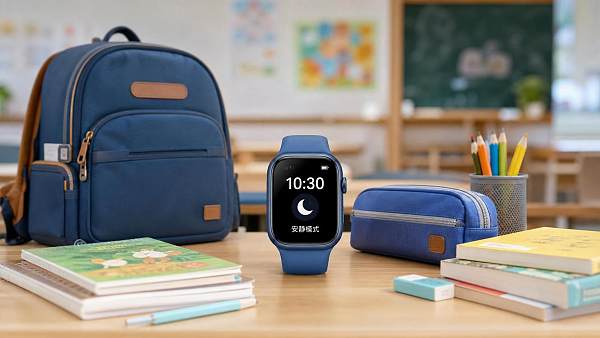
A proper school mode is one of the most valuable features in kids smart watches for school. It should silence alerts, limit nonessential functions, and allow emergency access without turning the watch into a distraction.
Without this feature, even a well-built watch may conflict with classroom expectations.
Location tools matter, but accuracy is not the whole story
GPS is often the headline feature, yet it should be judged carefully. Real-world accuracy depends on network quality, building density, and whether the child is indoors or outdoors.
A reliable location system usually combines GPS, Wi-Fi, and cellular positioning. More importantly, it should present location data clearly, without creating false confidence.
Geofencing can also help. For example, alerts can confirm arrival at school or departure from campus. But frequent false alerts reduce trust and quickly become ignored.
This is where practical testing matters more than a product sheet. For kids smart watches for school, stable location reporting is more useful than occasional high precision.
Battery life decides whether the watch is dependable
Battery claims are often based on light use. School reality is different. A watch may handle calls, location updates, safety alerts, and daily movement in a compressed time window.
A useful benchmark is whether the device can comfortably last from morning departure to evening return, with margin to spare. If the battery reaches low levels before pickup time, the watch fails at the most important moment.
Charging design also matters. Magnetic chargers are convenient, but they can be easy to misplace. Standardized cables may be less elegant, yet often simplify daily use.
Comfort, durability, and school-friendly design
Children wear these devices through classes, breaks, sports, and commutes. That makes comfort a serious buying factor, not a cosmetic one.
A bulky watch may be removed and forgotten. A weak strap may break in a playground setting. An overly bright interface may draw attention in class.
For educational settings, understated design is often better than a toy-like appearance. A simpler look tends to fit school policies and age transitions more smoothly.
Privacy and data handling deserve close attention
This is one of the least visible issues in kids smart watches for school, yet one of the most important. A device may collect location data, voice data, contact information, and usage history.
Before buying, it helps to review where data is stored, how long it is retained, and whether account settings are transparent. Weak privacy controls can turn a convenience product into a long-term concern.
In the broader sourcing environment, this aligns with the same standards used for many education-adjacent products: compliance, traceability, and trustworthiness matter alongside functionality. GCT’s editorial focus on safety compliance and dependable supply standards reflects this wider expectation.
- Check whether the app explains permissions clearly.
- Confirm whether contacts can be approved manually.
- Look for software update support.
- Review any camera or microphone functions against school policy.
Comparing devices by age and routine
Not every child needs the same watch. The right comparison depends on routine, independence level, and the school’s approach to wearables.
Early primary years
The priority is usually basic contact, easy location checks, and strong school mode controls. Extra apps rarely improve the experience.
Older children with after-school movement
Battery life, route visibility, and reliable calling become more important. A sturdier build may also matter more than colorful design.
Schools with stricter device policies
Here, minimalism wins. Kids smart watches for school should look discreet, mute easily, and avoid entertainment-heavy features that invite conflict with classroom rules.
A practical comparison checklist before buying
A short checklist often leads to a better choice than comparing dozens of technical claims. Focus on the daily school scenario, not the product advertisement.
- Does the watch support approved contacts only?
- Can school mode be scheduled by time?
- Will the battery last through a normal school day and commute?
- Are location alerts useful without being excessive?
- Is the app clear about privacy, permissions, and updates?
- Will the size, strap, and appearance work in a school setting?
When these answers are clear, comparing kids smart watches for school becomes much easier. The decision stops being about flashy extras and becomes a grounded assessment of fit, trust, and daily performance.
Where to look next
The strongest purchase decisions usually come from matching features to real routines. Start with school policy, commute pattern, and communication needs. Then compare privacy controls, battery performance, and build quality.
For anyone tracking education-related product trends more broadly, kids smart watches for school are also a useful signal. They show how consumer technology is being reshaped by institutional expectations, safety requirements, and more disciplined sourcing standards.
A careful shortlist, built around actual use rather than marketing claims, is usually the most reliable next step.
Search News
Hot Articles
- Office Furniture & EquipChoosing Commercial Air Conditioners for Offices: Capacity, Zoning, and NoiseOct 13, 2026
- Fashion & Gem JewelryHow to Choose Designer Eyewear That Fits Your Store’s Customer ProfileOct 12, 2026
- Musical InstrumentsA Practical Guide to Identifying Wooden Orchestral Instruments by Family and ToneOct 10, 2026
Popular Tags
Need ExpertConsultation?
Connect with our specialized leisureengineering team for procurementstrategies.
Recommended News
 Sep 08, 2026Water-Resistant Commercial Watches: Choosing Ratings for Workwear and Promotional UseWater resistant commercial watch guide: match 3, 5, or 10 ATM ratings to workwear and promotional needs, verify testing, and protect your budget and brand.● Luxury Retail Analyst
 Sep 07, 2026Commercial Watch Bulk Orders: How to Evaluate Pricing Tiers, Lead Times, and SamplesCommercial watch bulk order guide: evaluate pricing tiers, lead times, samples, landed costs, and supplier readiness to protect margins and launch on schedule.● Luxury Retail Analyst
 Sep 06, 2026Private Label Commercial Watches: A Buyer's Checklist for Branding, MOQ, and QCPrivate label commercial watch sourcing made simple: explore branding, MOQ, materials, supplier QC, and approval steps to build a reliable, market-ready watch program.● Luxury Retail Analyst
 Aug 16, 2026Where to Source Moissanite Iced Out Watches Wholesale Without Sacrificing QualityMoissanite iced out watches wholesale buyers: learn how to source factory-direct quality, verify stone setting and plating, and reduce risk before placing bulk orders.● Luxury Retail Analyst
 Aug 12, 2026How to Evaluate Luxury Watch Winders Wholesale for Retail and Gift Supply?Luxury watch winders wholesale buying guide: learn how to assess quality, noise, compatibility, OEM options, and supplier risk for retail, hospitality, and premium gift supply.● Luxury Retail Analyst
 Jul 15, 2026Kids Smart Watches for School: Key Features Parents Should Compare Before BuyingKids smart watches for school: compare school mode, safe calling, GPS accuracy, battery life, comfort, and privacy controls before you buy the best fit for your child.● Luxury Retail Analyst
 Jul 07, 2026Wholesale Mechanical Watches Stainless Steel: What to Check Before Placing a Bulk OrderWholesale mechanical watches stainless steel sourcing guide: learn how to verify movement quality, steel grade, compliance, and supplier reliability before placing a bulk order.● Luxury Retail Analyst
 Jul 05, 2026Nurse Watches Bulk Buying Guide: Styles, Compliance, and Order QuantitiesNurse watches bulk buying made simple: compare styles, compliance checks, MOQ strategy, and supplier reliability to reduce risk and place smarter orders.● Luxury Retail Analyst
 Jul 05, 2026Stainless Steel Watch Bands Clasp Guide: Types, Fit, and Common Locking IssuesStainless steel watch bands clasp guide covering clasp types, fit checks, and common locking issues. Learn how to compare options, avoid failures, and choose a secure, comfortable band with confidence.● Luxury Retail Analyst
 Jun 30, 2026SASO Arabic UI Rule Tightens Smartwatch ExportsSASO Arabic UI Rule Tightens Smartwatch Exports as Saudi Arabia mandates full Arabic support by Oct 1, 2026. Learn the compliance risks, testing impact, and export actions now.● Luxury Retail Analyst
 Jun 30, 2026How to Source Silicone Watch Bands Bulk: MOQ, Material Grades, and OEM OptionsSilicone watch bands bulk sourcing made simple: compare MOQ, material grades, quality control, and OEM options to reduce risk, choose reliable suppliers, and buy with confidence.● Luxury Retail Analyst
 Jun 29, 2026Saudi SASO Adds Arabic UI Check for SmartwatchesSaudi SASO Adds Arabic UI Check for Smartwatches: learn how the 2026 Arabic UI verification may affect OEM models, certification, imports, and retail listings in Saudi Arabia.● Luxury Retail Analyst
 Jun 17, 2026Automatic Watches OEM Explained: Movement Options, Case Materials, and CustomizationAutomatic watches OEM explained: compare movement options, case materials, and customization factors that shape quality, brand value, and supplier reliability.● Luxury Retail Analyst
 Jun 11, 2026REACH SVHC Update Hits Watch OEMs and SmartwatchesREACH SVHC update puts Watch OEM and smartwatch exports to the EU under new pressure. See how SCIP filing, supplier declarations, and material checks can protect shipments before the 2026 deadline.● Luxury Retail Analyst
 Jun 10, 2026REACH SVHC Update Adds New Watch Export Compliance DutiesREACH SVHC update puts Watch OEM and smartwatch exporters under new EU compliance pressure. Learn the new SCIP duties, 0.1% threshold risks, and what teams must do before December 2026.● Luxury Retail Analyst
 Jun 08, 2026Commercial Watch vs Retail Watch: Key Differences in OEM Specs, Pricing, and Use CasesCommercial watch vs retail watch: discover key OEM specs, pricing factors, and use cases to choose the right sourcing strategy, reduce risk, and improve brand fit.● Luxury Retail Analyst
 Jun 05, 2026Watch Hands and Crowns: Key Specs to Check for OEM Repair and AssemblyWatch hands and crowns for OEM repair and assembly: learn the key specs to verify for fit, sealing, durability, and repeatable quality before approval.● Luxury Retail Analyst
 Jun 02, 2026Sapphire Watch Glass vs Mineral Glass: Durability, Clarity, and Cost DifferencesSapphire watch glass vs mineral glass: compare scratch resistance, clarity, impact behavior, and cost to choose the right lens for premium or value-driven watches.● Luxury Retail Analyst
 May 23, 2026What should buyers check before sourcing iced out watches wholesale?Iced out watches wholesale buyers should check material honesty, stone setting, durability, and supplier compliance before ordering to reduce returns and protect profit.● Luxury Retail Analyst
 May 02, 2026Zheng Qinwen’s Madrid Exit Delays EU Orders for Smart Tennis WearablesSmart tennis wearables face EU procurement delays after Zheng Qinwen’s Madrid Open exit — key for manufacturers navigating WTA data privacy guidelines.● Luxury Retail Analyst
 Apr 30, 2026What separates a commercial watch from a fashion driven modelCommercial watch buying explained: discover how durability, precision, serviceability, and channel fit separate true commercial models from fashion-led watches for retail, gifting, and hospitality.● Luxury Retail Analyst
 Apr 30, 2026ODM watches or private label, which model fits betterODM watches or private label? Compare speed, customization, MOQ, and sourcing risk to choose the best watch model for your brand, launch timeline, and profit goals.● Luxury Retail Analyst
 Apr 24, 2026ODM Watches: Costs, MOQ, and Lead TimesODM watches guide: compare costs, MOQ, and lead times for sports and entertainment sourcing. Ideal for hospitality procurement, resort retail, and branded event merchandise buyers.● Luxury Retail Analyst
 Apr 24, 2026ODM Watches vs OEM: Which Fits Your Brand?ODM watches vs OEM: compare speed, cost, design control, MOQ, and brand value. A practical guide for hospitality procurement, retailers, and distributors.● Luxury Retail Analyst