Is glamping furniture worth the higher project cost?
For project managers balancing capital budgets against guest experience, glamping furniture can look like a premium line item rather than a strategic investment.
Yet in outdoor hospitality, furniture directly affects booking appeal, durability, maintenance cycles, and brand positioning.
This article examines whether higher upfront costs are justified by stronger occupancy, longer asset life, and improved project ROI.
The goal is to evaluate glamping furniture with a sourcing mindset, not a simple price comparison.
When the project setting makes glamping furniture a revenue asset
The value of glamping furniture depends heavily on the project setting, climate exposure, nightly rate, and expected guest profile.
A remote eco-lodge, a coastal resort, and a festival pop-up do not need the same specification.
In premium outdoor accommodation, furniture is photographed, reviewed, touched, and shared online.
That makes glamping furniture part of the commercial experience, not only a functional installation.
Low-cost pieces may reduce initial expenditure, but can increase replacement frequency, service disruption, and guest complaints.
Higher-grade glamping furniture usually brings stronger frames, outdoor fabrics, modular serviceability, and coordinated design language.
The question is not whether expensive furniture is always better.
The better question is whether the furniture matches the earning role of each space.
Scenario 1: Luxury tents where furniture drives booking confidence
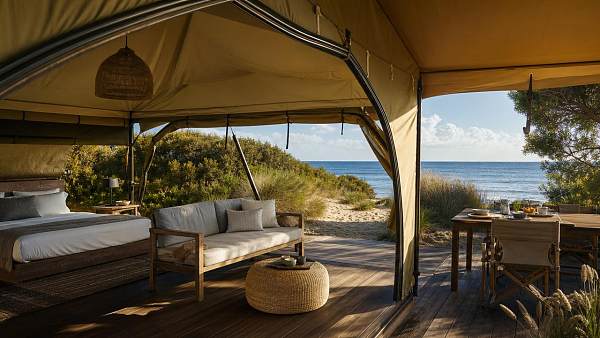
In luxury tent projects, glamping furniture often supports the first booking decision before arrival.
Beds, lounge chairs, bedside tables, storage, and outdoor seating define the visual promise of the stay.
If the project charges premium rates, generic camping furniture weakens the perceived value immediately.
The core judgment point is rate integrity.
If furniture helps justify a higher average daily rate, the additional cost can be commercially rational.
Durability also matters because tent interiors face humidity, dust, UV transfer, and uneven flooring.
Commercial glamping furniture should resist wobbling, fabric fading, joint failure, and mattress deformation.
A cheaper package may look acceptable on opening day, but degrade before the second high season.
Scenario 2: Resort villas where outdoor zones carry the experience
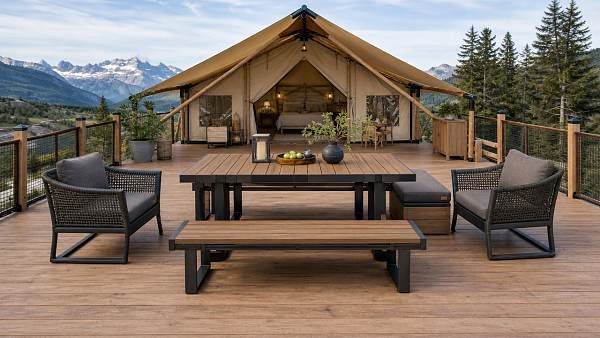
In resort villas, exterior terraces, fire pits, decks, and poolside corners are not secondary areas.
They are often the reason guests choose an outdoor hospitality concept instead of a standard hotel.
Here, glamping furniture must handle sun, rain, salt air, temperature swings, and frequent cleaning.
Powder-coated aluminum, treated hardwood, marine-grade fabrics, and quick-dry cushions may raise costs.
However, they can reduce downtime and preserve the look shown in marketing content.
The decision point is exposure intensity.
For high-UV, coastal, snowy, or wet locations, premium glamping furniture is often cheaper over its lifecycle.
For covered areas in mild climates, a mid-tier commercial specification may be enough.
Scenario 3: Eco-retreats where material story affects brand trust
Eco-retreats face a different challenge: every visible material must support the sustainability message.
Guests notice plastic-heavy seating, disposable-looking finishes, and weak repairability.
In this setting, glamping furniture should balance natural aesthetics with verified commercial performance.
Reclaimed wood, bamboo, rattan-style synthetics, recycled textiles, and repairable metal frames may be appropriate.
The judgment point is authenticity without operational fragility.
Natural materials can be beautiful, but they require moisture control, surface treatment, and maintenance planning.
Premium glamping furniture is worth considering when the supplier can document materials, coatings, and replacement parts.
Without that documentation, the sustainability story may become a maintenance risk.
Scenario 4: Seasonal pop-ups where flexibility may beat luxury
Not every project needs the highest furniture specification.
Seasonal pop-ups, music festival camps, and temporary wellness events often prioritize fast setup and storage efficiency.
In these cases, glamping furniture should be lightweight, stackable, replaceable, and easy to move.
Premium handcrafted furniture may create logistical friction and unnecessary handling costs.
The judgment point is asset mobility.
If furniture moves between sites, modularity and packaging protection may matter more than decorative detail.
A smart strategy is to upgrade high-visibility touchpoints while keeping secondary items standardized.
For example, invest in beds, lounge seating, and lighting stands, while simplifying utility tables.
Scenario 5: Family sites where safety and cleaning define value
Family-oriented glamping sites usually face heavier furniture use than romantic or adult-only retreats.
Children climb, spill, drag, and test every exposed edge.
Here, glamping furniture should prioritize rounded corners, stable bases, washable fabrics, and stain resistance.
Removable cushion covers, antimicrobial surfaces, and robust hardware can reduce housekeeping pressure.
The judgment point is service recovery speed.
If cleaning takes too long, unit turnover suffers and operating costs rise.
Better glamping furniture can support faster reset times and fewer visible stains between guest cycles.
How different scenes change the furniture requirement
This comparison shows why one universal furniture package rarely delivers the best result.
Glamping furniture becomes cost-effective when specification reflects the revenue and stress profile of each zone.
A practical method to judge whether the higher cost is justified
A strong evaluation should compare total value, not only unit price.
The following checkpoints help convert glamping furniture decisions into measurable project assumptions.
- Estimate expected asset life under real weather exposure and occupancy levels.
- Compare replacement cycles between economy, mid-tier, and premium furniture.
- Assess whether better visuals can support higher nightly rates.
- Review cleaning time, spare parts availability, and maintenance skills required.
- Check fire safety, fabric performance, load capacity, and coating documentation.
- Match furniture finishes with architecture, landscape, lighting, and guest journey design.
If premium glamping furniture improves three or more checkpoints, the higher cost likely has a business case.
If it only improves appearance, the upgrade should be limited to high-impact zones.
Where to upgrade first when the budget is limited
Budget pressure does not require an all-or-nothing decision.
A phased specification often creates better ROI than spreading budget thinly across every item.
- Upgrade beds first because sleep quality has direct review impact.
- Upgrade lounge seating because it appears often in guest photos.
- Upgrade outdoor dining sets in weather-exposed premium units.
- Use durable standard pieces for low-visibility storage or service areas.
- Specify replaceable cushions and covers before choosing rare decorative details.
This approach keeps glamping furniture aligned with both visual impact and operational return.
It also reduces the risk of over-investing in items guests barely notice.
Common misjudgments that make furniture costs look misleading
The first mistake is comparing residential furniture with commercial glamping furniture.
Residential products may not be designed for repeated turnover, outdoor exposure, or commercial liability expectations.
The second mistake is ignoring freight, packaging, assembly, and replacement logistics.
Large outdoor items can become expensive if packaging is weak or parts are hard to identify.
The third mistake is choosing style before defining maintenance standards.
A beautiful chair that needs constant refinishing can drain operating resources.
The fourth mistake is overlooking spare parts.
Commercial glamping furniture should allow cushion, glide, fabric, screw, and tabletop replacement where possible.
The fifth mistake is underestimating brand photography.
Furniture that photographs well can strengthen digital conversion long before the guest arrives.
Sourcing signals that separate premium value from premium pricing
Higher price alone does not prove better quality.
Reliable glamping furniture sourcing should be supported by evidence, samples, and transparent specifications.
- Request frame material details, coating process, and corrosion resistance information.
- Confirm fabric rub rating, UV performance, water resistance, and cleaning guidance.
- Ask for load testing or relevant commercial-use documentation.
- Review previous outdoor hospitality projects in similar climates.
- Check whether OEM or ODM customization supports site-specific branding.
- Evaluate packaging for long-distance shipping and remote-site delivery.
These signals help distinguish genuinely robust glamping furniture from decorative products with inflated pricing.
They also support clearer comparison between suppliers across regions and production models.
So, is glamping furniture worth the higher project cost?
Glamping furniture is worth the higher cost when it protects revenue, reduces replacement, and strengthens the guest experience.
It is especially justified in luxury tents, exposed resort zones, eco-retreats, and high-review-impact spaces.
It may be less justified for short-term pop-ups, hidden utility zones, or low-rate seasonal concepts.
The best decision uses scene-based specification rather than blanket upgrading.
Global Commercial Trade supports this approach by connecting commercial experience design, supplier intelligence, and sourcing evaluation.
Before confirming a furniture package, map each space by visibility, weather exposure, maintenance load, and revenue influence.
Then request comparable specifications, lifecycle assumptions, and project references from qualified suppliers.
That process turns glamping furniture from a cost concern into a controlled investment decision.
Search News
Hot Articles
- Office Furniture & EquipChoosing Commercial Air Conditioners for Offices: Capacity, Zoning, and NoiseOct 13, 2026
- Fashion & Gem JewelryHow to Choose Designer Eyewear That Fits Your Store’s Customer ProfileOct 12, 2026
- Musical InstrumentsA Practical Guide to Identifying Wooden Orchestral Instruments by Family and ToneOct 10, 2026
Popular Tags
Need ExpertConsultation?
Connect with our specialized leisureengineering team for procurementstrategies.
Recommended News
 Oct 05, 2026How to Select Hotel Hair Dryers That Balance Guest Safety, Durability, and CostHair dryer for hotels: learn how to select safe, durable, cost-efficient models with the right certifications, performance, maintenance, and supplier support.● Hospitality Sourcing Dir
 Oct 01, 2026How Hotels Can Choose Amenity Bottles That Balance Brand Image and Refill CostsHotel amenity bottles: learn how to balance premium brand presentation, refill costs, hygiene, durability, and efficient housekeeping workflows.● Hospitality Sourcing Dir
 Sep 25, 2026How to Evaluate a Wall-Mounted Hotel Hair Dryer Manufacturer for Bulk ProjectsHotel hair dryers wall mounted manufacturer evaluation guide: compare safety, durability, installation fit, OEM options, total cost, and reliable bulk-project support.● Hospitality Sourcing Dir
 Sep 03, 2026What Lead Times Should Buyers Expect for Custom Luxury Fixtures?What delivery lead times should I expect for custom luxury fixtures? Discover realistic 12–24 week timelines, approval milestones, freight factors, and ways to avoid costly delays.● Hospitality Sourcing Dir
 Sep 05, 2026Hotel Hair Dryers Compared: Wattage, Safety Features, and Guest-Room DurabilityHair dryer for hotels: compare wattage, thermal safety, noise, mounting, and durability to select reliable guest-room dryers that elevate comfort and reduce maintenance costs.● Hospitality Sourcing Dir
 Aug 04, 2026What to Check Before Buying Space Saving Ironing Boards Wholesale for HotelsSpace saving ironing boards wholesale for hotels: learn what to check before buying, from room fit and mounting to durability, compliance, and total installed cost.● Hospitality Sourcing Dir
 Jul 12, 2026Saudi e-SABER Label Rule Hits Hotel Amenities ExportsSaudi e-SABER label rule will reshape hotel amenities exports from August 1, 2026. Learn how SASO compliance, port clearance risks, and supplier readiness may impact shipments.● Hospitality Sourcing Dir
 Jul 11, 2026SASO Requires e-SABER Labels for Hotel AmenitiesSASO requires e-SABER labels for hotel amenities from August 1, 2026. Learn how QR code, SABER, and GCC compliance rules may impact Saudi shipments and port clearance.● Hospitality Sourcing Dir
 Jul 10, 2026Saudi SABER Update Adds GCC and Arabic Manual RuleSaudi SABER Update Adds GCC and Arabic Manual Rule: learn how the new SABER requirements affect hotel amenities certification, timelines, costs, and Saudi market access planning.● Hospitality Sourcing Dir
 Jul 03, 2026Wet and Dry Vacuum Cleaners Quiet Enough for Hotels: What Noise Level and Features Matter?Wet and dry vacuum cleaners quiet enough for hotels: compare ideal dB ranges, filtration, maneuverability, and lifecycle cost to choose cleaner, quieter machines with confidence.● Hospitality Sourcing Dir
 Jul 01, 2026How to Choose Hotel Hospitality Supplies for Different Property TypesHotel hospitality supplies buying guide for resorts, boutique, business, and economy hotels. Learn how to match supplies to property type, durability, brand image, and lifecycle value.● Hospitality Sourcing Dir
 Jun 27, 2026Memory Foam Hotel Mattresses vs Hybrid Beds: Which Option Fits Your Property?Memory foam hotel mattresses or hybrid beds? Compare comfort, durability, cooling, and lifecycle cost to find the best fit for your property and guest experience.● Hospitality Sourcing Dir
 Jun 26, 2026Hotel Desks: Types, Materials, and Layout Tips for Modern Guest RoomsHotel desks guide covering desk types, durable materials, and smart layout tips for modern guest rooms. Discover practical ideas to improve comfort, style, and space efficiency.● Hospitality Sourcing Dir
 Jun 23, 2026How to Choose Hotel Wardrobes: Materials, Storage Layout, and Durability StandardsHotel wardrobes guide: learn how to compare materials, storage layout, and durability standards to choose wardrobes that improve guest experience and reduce long-term maintenance costs.● Hospitality Sourcing Dir
 Jun 20, 2026Artificial Plants for Hotels: How to Compare Fire Ratings, Materials, and Maintenance NeedsArtificial plants for hotels: compare fire ratings, materials, and maintenance needs to choose safer, longer-lasting greenery that protects design quality and lifecycle cost.● Hospitality Sourcing Dir
 Jun 17, 2026How to Choose Hotel Hair Dryers Wall Mounted for Safety, Power, and Room TypeHotel hair dryers wall mounted buying guide: learn how to compare safety features, power levels, noise, and room-fit options to choose reliable models for every hotel segment.● Hospitality Sourcing Dir
 Jun 04, 2026Wholesale Hotel Safes Buying Guide: Lock Types, Size Options, and Installation PointsWholesale hotel safes buying guide covering lock types, size options, and installation points. Compare models, reduce procurement risk, and choose the right safe for your hotel project.● Hospitality Sourcing Dir
 May 30, 2026Is glamping furniture worth the higher project cost?Glamping furniture can justify higher project costs when it boosts bookings, durability, guest reviews, and long-term ROI. Learn where premium upgrades truly pay off.● Hospitality Sourcing Dir
 May 29, 2026Do blackout curtains for hotels Cut Energy Costs?Blackout curtains for hotels can lower HVAC costs, improve guest comfort, and boost room performance. Learn when they save energy and how to specify the right system.● Hospitality Sourcing Dir
 May 09, 2026Glamping furniture mistakes that make premium stays feel cheapGlamping furniture mistakes can make premium stays feel cheap. Learn how to choose durable, comfortable, brand-aligned pieces that elevate guest experience and protect long-term value.● Hospitality Sourcing Dir
 May 04, 2026Commercial Carpet Tiles for Hotels: What Wears Out First?Commercial carpet tiles hotel buyers: discover what wears out first in entrances, corridors, and transition zones, and learn how to specify longer-lasting, guest-ready flooring.● Hospitality Sourcing Dir
 May 04, 2026Custom Hotel Signage That Looks Premium and Stays ReadableCustom hotel signage that balances premium aesthetics with readability, durability, and compliance. Discover a practical checklist to improve guest experience and streamline hotel projects.● Hospitality Sourcing Dir
 May 04, 2026Luxury Vinyl Tile Commercial Flooring in High-Traffic AreasLuxury vinyl tile commercial flooring for high-traffic spaces: discover how to compare durability, maintenance, installation risks, and lifecycle value before you specify.● Hospitality Sourcing Dir
 May 03, 2026AC Milan’s Smart Locker Room Procurement Triggers UNI 11743 Compliance ReviewAC Milan’s smart locker room procurement triggers UNI 11743:2025 compliance review — critical for sports infrastructure suppliers, EU exporters & integrators.● Hospitality Sourcing Dir