How to Evaluate a Wall-Mounted Hotel Hair Dryer Manufacturer for Bulk Projects
A wall-mounted hair dryer is a small room amenity with an outsized effect on guest perception. When it is missing, awkward to use, too weak for practical drying, or removed from service because of an electrical fault, guests notice immediately. For hotel operators, the issue is broader: a poor product choice can create maintenance calls across hundreds of rooms, delay handover, complicate safety inspections, and weaken a carefully planned bathroom design.
That is why selecting a hotel hair dryers wall mounted manufacturer for a bulk project should not begin and end with a catalog price. Procurement teams need to determine whether the supplier can deliver a product that is safe in the target market, compatible with the property’s electrical and wall conditions, durable under frequent use, and consistently available throughout the project timeline.
The most useful evaluation process looks at the manufacturer as both a product partner and a supply-chain risk. A unit that costs slightly less but requires frequent replacement, comes with unclear certification documents, or arrives without installation support may become the more expensive decision long after the purchase order is closed.
Begin with the Property, Not the Product Sheet
Before comparing suppliers, define how the hair dryer will be used. A resort bathroom, an airport hotel, a student residence, and a long-stay serviced apartment may all specify wall-mounted dryers, but their operating realities are different.
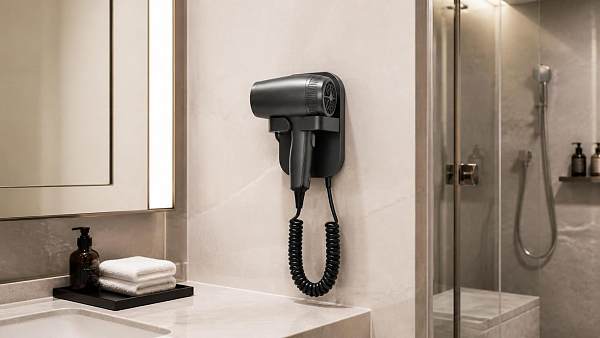
For example, a luxury property may prioritize restrained visual design, quieter operation, a premium handle feel, and finishes that match the bathroom hardware. A high-turnover business hotel may place greater value on fast drying performance, easy cleaning, tamper resistance, and a straightforward replacement process for its engineering team. In humid coastal locations, material resistance and cable durability deserve more scrutiny than they might in a dry urban environment.
Create a project brief before requesting quotations. It should include the number of rooms, expected spare-unit ratio, target installation dates, country or region of use, voltage and plug or hardwire requirements, preferred mounting position, finish requirements, performance expectations, and any accessibility or brand-standard considerations. This document helps prevent a common sourcing problem: every manufacturer quotes a slightly different configuration, making price comparisons misleading.
Safety Documentation Must Be Specific to the Destination Market
Electrical safety is the first non-negotiable checkpoint. A manufacturer should be able to explain which compliance documents apply to the exact model being quoted, not merely provide a generic statement that its products are “certified.” Request copies of applicable test reports, declarations, marking information, and factory quality-control procedures. Then confirm that the documents correspond to the target voltage, plug type, cable assembly, and product revision.
Depending on the destination market and project specification, buyers may need evidence related to electrical safety, electromagnetic compatibility, restricted substances, or local market-access rules. Requirements vary by country, so procurement teams should involve their compliance department, consultant, or importer of record early. A certificate from one market does not automatically validate a product for another.
For wall-mounted units used in bathrooms, ask detailed questions about protective design. Is the product intended for use in the specified bathroom zone? Does it incorporate an appropriate residual-current protection approach where required? What safeguards exist against overheating? How is the unit protected when the handle is not returned correctly? Are the wall bracket, cable, and internal connections designed for the property’s installation method?
A capable manufacturer will answer in practical terms and identify any limitations. Vague assurances, incomplete paperwork, or reluctance to share model-specific documents are warning signs, especially in a multi-country hotel rollout.
Assess the Wall System and Installation Method Early
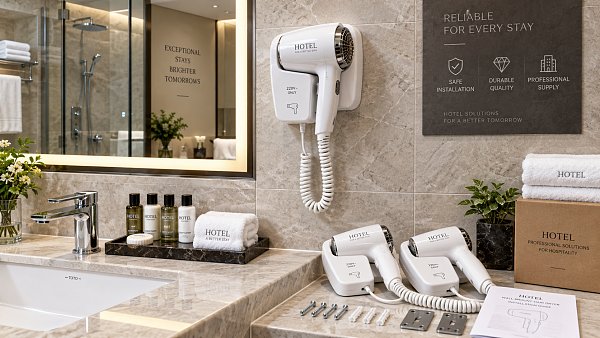
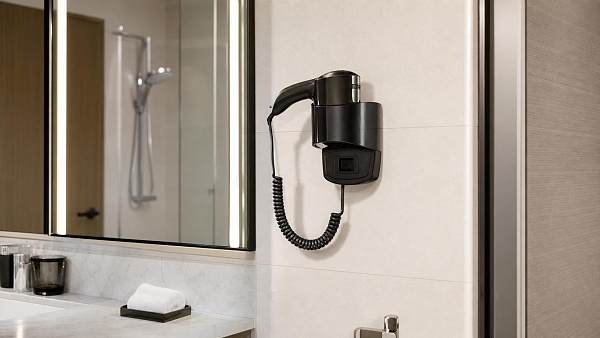
Wall-mounted hotel hair dryers are often selected late in the room-equipment process, after tile, mirrors, vanity lighting, and electrical points have already been finalized. That can create avoidable installation conflicts. The dryer’s footprint may interfere with a towel rail; its cable reach may be too short; or the bracket may not hold securely in the chosen wall substrate.
Ask the supplier for a complete technical pack rather than a single product image. At minimum, it should show:
- Overall dimensions, weight, and wall-base dimensions;
- Mounting-hole positions and screw requirements;
- Required clearance around the unit and handle;
- Cable length, electrical connection details, and strain-relief design;
- Recommended mounting substrates and installation instructions;
- Service access points for maintenance or replacement.
Tile over concrete, plasterboard on metal studs, stone cladding, and prefabricated bathroom pods each need a different fixing strategy. The manufacturer does not need to control the building works, but it should provide enough engineering information for the contractor to install the product correctly. Where projects use bathroom pods, obtain a sample unit early and conduct a fit check before the full order is released.
Consider replacement as part of installation planning. If a failed dryer can be changed without removing wall tiles or exposing unfinished cable ends, the hotel’s maintenance burden is far lower. A modular base-and-handle design may be useful, provided the locking mechanism is robust and replacement parts remain available.
Do Not Judge Performance by Wattage Alone
Higher wattage is not automatically equivalent to a better guest experience. Drying effectiveness depends on airflow, heat management, nozzle design, motor behavior, and the balance between air temperature and user comfort. In hospitality settings, buyers should evaluate the practical drying result alongside energy use, noise, and longevity.
Request samples from shortlisted suppliers and test them as guests would. Does the handle feel balanced? Is the control intuitive? Can a guest with wet hands operate it comfortably? Does the hose, if included, retract or hang naturally? Is the sound level acceptable in a quiet room? A model that appears polished in a showroom can feel underpowered or inconvenient after several minutes of real use.
Testing should also reflect housekeeping and engineering realities. Check whether dust can accumulate in the air inlet, whether the exterior tolerates common cleaning practices, and whether the holder remains stable after repeated handle removal. If the product has an automatic shut-off or timer, verify that the setting suits guest use rather than creating frustration.
Durability Is a Design Question, Not Just a Warranty Question
Hotel dryers endure a different usage pattern from household appliances. They may be used by many guests with varying habits, exposed to steam, cleaned frequently, and occasionally pulled or mishandled. A manufacturer’s durability claims should therefore be supported by information about the components most likely to fail: switches, cords, handle mounts, motor assemblies, thermal cut-outs, and wall brackets.
Ask what internal or third-party testing the supplier performs and what the test conditions represent. Request clarification on how the product is evaluated for repeated switching, cable flexing, handle docking, heat cycling, and drop or impact resistance. The purpose is not to demand an unrealistic failure-free promise. It is to understand whether the supplier has a disciplined approach to predictable hotel-use stresses.
Material selection matters as well. Exterior plastics should resist discoloration and cracking under normal bathroom conditions. A cord should remain flexible enough for repeated use while resisting strain at entry points. Metal details may look refined, but they should be assessed for corrosion resistance in humid environments. For projects near pools or in tropical climates, this conversation becomes even more important.
Compare Total Project Cost, Not the Unit Price
The lowest quotation can be persuasive when a project involves several hundred or several thousand rooms. Yet a meaningful comparison needs to include more than the stated unit cost. Freight terms, customs exposure, packaging design, installation accessories, sample charges, spare parts, inspection requirements, and expected replacement needs all affect the final cost of ownership.
Ask suppliers to separate tooling, customization, testing, and freight-related charges rather than embedding everything in a broad “project price.” Transparent cost breakdowns make negotiation more productive and reveal whether a low opening price depends on exclusions that will appear later.
Examine OEM and ODM Capability with Realistic Expectations
Many hotel groups require a dryer that aligns with a brand’s interior concept. Customization may be as simple as a logo, color, or label language, or it may involve a unique wall plate, packaging format, plug configuration, or performance specification. The key is distinguishing genuine OEM/ODM capability from superficial customization.
A reliable hotel hair dryers wall mounted manufacturer should explain which elements can be changed without affecting compliance, tooling requirements, minimum order quantities, cost, or lead time. Changing a logo on an existing certified housing is very different from redesigning a bracket or electrical layout. Any material design change may require renewed testing or document updates, so it should not be treated as a last-minute marketing decision.
Request a controlled sample-approval process. The approved sample should define finish, logo placement, labeling, cable, plug, accessories, carton markings, and operating instructions. Keep this reference connected to the production order and quality-inspection checklist. It is one of the simplest ways to reduce variation between the showroom sample and the delivered goods.
Validate Manufacturing Capacity and Lead-Time Discipline
Bulk hospitality projects rarely move in a straight line. Room counts change, mock-up approvals take longer than expected, and installation dates can shift by building zone. A manufacturer does not need to absorb every change without consequence, but it should demonstrate a credible planning process.
Ask for a proposed production schedule that shows the milestones between sample approval and shipment: component procurement, production, assembly, aging or functional testing where applicable, inspection, packing, and dispatch. Find out whether the quoted lead time begins at deposit receipt, artwork approval, final sample confirmation, or another point. This detail matters when construction deadlines are tight.
Capacity should be assessed in relation to your order window, not as an isolated annual figure. Ask whether other large orders are scheduled during the same period and whether key components are single-sourced. For phased hotel openings, discuss whether the supplier can reserve capacity or produce in agreed batches. Clear communication about constraints is more useful than an optimistic delivery promise.
After-Sales Support Is Where Supplier Quality Becomes Visible
A bulk project is not complete when cartons reach the site. The first months of operation often reveal installation errors, guest misuse patterns, and occasional component failures. Before contracting, establish who will handle technical questions, what evidence is required for a warranty claim, and how quickly replacement parts can be supplied.
Good after-sales support is practical rather than theatrical. It includes installation guides that contractors can understand, troubleshooting instructions for hotel engineers, a defined warranty scope, named service contacts, and spare-parts availability. Ask whether the supplier can provide replacement units from regional stock or whether every request must wait for a new export shipment.
For multi-property operators, it can be worthwhile to standardize a modest spare-parts package with the original order. This reduces downtime and prevents maintenance teams from mixing incompatible versions sourced later from the market.
A Procurement Scorecard Helps Separate Confidence from Assumption
Once samples, quotations, and documents are in hand, use a weighted scorecard rather than relying on a single stakeholder’s preference. Safety compliance, technical fit, durability evidence, delivery reliability, total cost, customization control, and after-sales responsiveness should each carry weight based on the project’s risks. A design-led boutique hotel may assign more importance to finish and aesthetics; a large select-service portfolio may prioritize serviceability and stable replacement supply.
Document unresolved points before issuing the purchase order. These might include confirmation of the final plug, approved label artwork, mounting screw specification, inspection criteria, or spare-parts list. What feels minor during sourcing can become expensive ambiguity during installation.
In commercial hospitality procurement, a wall-mounted dryer should be treated as a long-term operating asset, not a disposable bathroom accessory. The right manufacturer combines compliant engineering, honest documentation, repeatable production, and support that remains available after the rooms are occupied. By evaluating those factors together, buyers can protect the project budget while delivering the quiet, dependable convenience guests expect.
Search News
Hot Articles
- Hotel Room AmenitiesHow to Evaluate a Wall-Mounted Hotel Hair Dryer Manufacturer for Bulk ProjectsSep 25, 2026
- Commercial KitchenConveyor Pizza Oven Price: What Buyers Should Budget for Capacity and FeaturesSep 24, 2026
- Commercial KitchenHow Restaurant Buyers Can Source Hospitality Supplies Without OverorderingSep 23, 2026
Popular Tags
Need ExpertConsultation?
Connect with our specialized leisureengineering team for procurementstrategies.
Recommended News
 Sep 25, 2026How to Evaluate a Wall-Mounted Hotel Hair Dryer Manufacturer for Bulk ProjectsHotel hair dryers wall mounted manufacturer evaluation guide: compare safety, durability, installation fit, OEM options, total cost, and reliable bulk-project support.● Hospitality Sourcing Dir
 Sep 03, 2026What Lead Times Should Buyers Expect for Custom Luxury Fixtures?What delivery lead times should I expect for custom luxury fixtures? Discover realistic 12–24 week timelines, approval milestones, freight factors, and ways to avoid costly delays.● Hospitality Sourcing Dir
 Sep 05, 2026Hotel Hair Dryers Compared: Wattage, Safety Features, and Guest-Room DurabilityHair dryer for hotels: compare wattage, thermal safety, noise, mounting, and durability to select reliable guest-room dryers that elevate comfort and reduce maintenance costs.● Hospitality Sourcing Dir
 Aug 04, 2026What to Check Before Buying Space Saving Ironing Boards Wholesale for HotelsSpace saving ironing boards wholesale for hotels: learn what to check before buying, from room fit and mounting to durability, compliance, and total installed cost.● Hospitality Sourcing Dir
 Jul 12, 2026Saudi e-SABER Label Rule Hits Hotel Amenities ExportsSaudi e-SABER label rule will reshape hotel amenities exports from August 1, 2026. Learn how SASO compliance, port clearance risks, and supplier readiness may impact shipments.● Hospitality Sourcing Dir
 Jul 11, 2026SASO Requires e-SABER Labels for Hotel AmenitiesSASO requires e-SABER labels for hotel amenities from August 1, 2026. Learn how QR code, SABER, and GCC compliance rules may impact Saudi shipments and port clearance.● Hospitality Sourcing Dir
 Jul 10, 2026Saudi SABER Update Adds GCC and Arabic Manual RuleSaudi SABER Update Adds GCC and Arabic Manual Rule: learn how the new SABER requirements affect hotel amenities certification, timelines, costs, and Saudi market access planning.● Hospitality Sourcing Dir
 Jul 03, 2026Wet and Dry Vacuum Cleaners Quiet Enough for Hotels: What Noise Level and Features Matter?Wet and dry vacuum cleaners quiet enough for hotels: compare ideal dB ranges, filtration, maneuverability, and lifecycle cost to choose cleaner, quieter machines with confidence.● Hospitality Sourcing Dir
 Jul 01, 2026How to Choose Hotel Hospitality Supplies for Different Property TypesHotel hospitality supplies buying guide for resorts, boutique, business, and economy hotels. Learn how to match supplies to property type, durability, brand image, and lifecycle value.● Hospitality Sourcing Dir
 Jun 27, 2026Memory Foam Hotel Mattresses vs Hybrid Beds: Which Option Fits Your Property?Memory foam hotel mattresses or hybrid beds? Compare comfort, durability, cooling, and lifecycle cost to find the best fit for your property and guest experience.● Hospitality Sourcing Dir
 Jun 26, 2026Hotel Desks: Types, Materials, and Layout Tips for Modern Guest RoomsHotel desks guide covering desk types, durable materials, and smart layout tips for modern guest rooms. Discover practical ideas to improve comfort, style, and space efficiency.● Hospitality Sourcing Dir
 Jun 23, 2026How to Choose Hotel Wardrobes: Materials, Storage Layout, and Durability StandardsHotel wardrobes guide: learn how to compare materials, storage layout, and durability standards to choose wardrobes that improve guest experience and reduce long-term maintenance costs.● Hospitality Sourcing Dir
 Jun 20, 2026Artificial Plants for Hotels: How to Compare Fire Ratings, Materials, and Maintenance NeedsArtificial plants for hotels: compare fire ratings, materials, and maintenance needs to choose safer, longer-lasting greenery that protects design quality and lifecycle cost.● Hospitality Sourcing Dir
 Jun 17, 2026How to Choose Hotel Hair Dryers Wall Mounted for Safety, Power, and Room TypeHotel hair dryers wall mounted buying guide: learn how to compare safety features, power levels, noise, and room-fit options to choose reliable models for every hotel segment.● Hospitality Sourcing Dir
 Jun 04, 2026Wholesale Hotel Safes Buying Guide: Lock Types, Size Options, and Installation PointsWholesale hotel safes buying guide covering lock types, size options, and installation points. Compare models, reduce procurement risk, and choose the right safe for your hotel project.● Hospitality Sourcing Dir
 May 30, 2026Is glamping furniture worth the higher project cost?Glamping furniture can justify higher project costs when it boosts bookings, durability, guest reviews, and long-term ROI. Learn where premium upgrades truly pay off.● Hospitality Sourcing Dir
 May 29, 2026Do blackout curtains for hotels Cut Energy Costs?Blackout curtains for hotels can lower HVAC costs, improve guest comfort, and boost room performance. Learn when they save energy and how to specify the right system.● Hospitality Sourcing Dir
 May 09, 2026Glamping furniture mistakes that make premium stays feel cheapGlamping furniture mistakes can make premium stays feel cheap. Learn how to choose durable, comfortable, brand-aligned pieces that elevate guest experience and protect long-term value.● Hospitality Sourcing Dir
 May 04, 2026Commercial Carpet Tiles for Hotels: What Wears Out First?Commercial carpet tiles hotel buyers: discover what wears out first in entrances, corridors, and transition zones, and learn how to specify longer-lasting, guest-ready flooring.● Hospitality Sourcing Dir
 May 04, 2026Custom Hotel Signage That Looks Premium and Stays ReadableCustom hotel signage that balances premium aesthetics with readability, durability, and compliance. Discover a practical checklist to improve guest experience and streamline hotel projects.● Hospitality Sourcing Dir
 May 04, 2026Luxury Vinyl Tile Commercial Flooring in High-Traffic AreasLuxury vinyl tile commercial flooring for high-traffic spaces: discover how to compare durability, maintenance, installation risks, and lifecycle value before you specify.● Hospitality Sourcing Dir
 May 03, 2026AC Milan’s Smart Locker Room Procurement Triggers UNI 11743 Compliance ReviewAC Milan’s smart locker room procurement triggers UNI 11743:2025 compliance review — critical for sports infrastructure suppliers, EU exporters & integrators.● Hospitality Sourcing Dir
 May 03, 2026Hotel room minibar fridges: silent operation is not enoughHotel room minibar fridges now require more than silent operation. Explore how energy efficiency, design fit, compliance, and lifecycle value shape smarter hotel sourcing.● Hospitality Sourcing Dir
 May 03, 2026HVAC systems for hotels: poor zoning raises energy bills quietlyHVAC systems for hotels can silently inflate energy bills when zoning is weak. Learn how smarter controls cut costs, improve guest comfort, and protect long-term hotel asset value.● Hospitality Sourcing Dir