How to Choose Dynamic Microphones for Vocals in Live Stage Settings
Selecting dynamic microphones for vocals for a live stage is primarily a system-matching decision. A microphone that sounds strong in a quiet showroom can become difficult to manage once wedges, reflective walls, multiple open channels, and inexperienced performers enter the picture. For technical evaluation, the most useful question is not “Which vocal microphone is best?” but “Which microphone gives this venue and this performer the most consistent, controllable result?”
For most live applications, a suitable dynamic vocal microphone should deliver intelligible speech or singing at practical working distance, resist feedback at usable monitor levels, tolerate handling and accidental drops, and behave predictably through the existing PA chain. The right balance changes between a small hotel function room, a high-energy music venue, an amusement-stage presentation, and a permanent entertainment installation.
Start with the stage, not the microphone catalogue
Before comparing models, document the operating conditions. This prevents a common procurement mistake: selecting a technically impressive microphone whose polar pattern, output behavior, or physical design does not suit the actual venue.
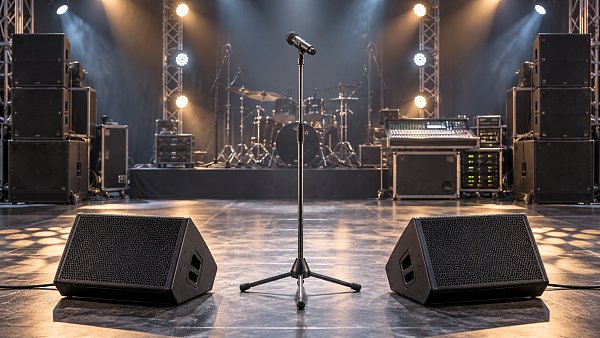
- Stage monitoring: Identify whether performers use floor wedges, side fills, in-ear monitoring, or a combination. Wedge placement strongly affects which pickup pattern is easiest to operate.
- Room acoustics: Hard surfaces, low ceilings, glass, and open hospitality spaces can return loudspeaker energy to the microphone. In these rooms, feedback margin often matters more than a flattering frequency response.
- Program type: Spoken announcements, karaoke, lead vocals, group entertainment, and theatrical performance place different demands on articulation, proximity control, and off-axis sound.
- Users: A microphone used by trained singers can be more specialized. A shared microphone for rotating presenters and guests should be forgiving of inconsistent technique.
- Signal chain: Review the mixer preamps, installed DSP, stage boxes, wireless systems, and available equalization. A microphone cannot solve poor loudspeaker aiming or insufficient system headroom.
For permanent venues, evaluate the microphone in the actual sound system whenever possible. A decision based only on a manufacturer response curve or an online comparison leaves out the interaction that determines real performance: microphone position relative to monitors, room reflections, gain structure, and the operator’s ability to correct problems quickly.
Choose the polar pattern around monitor placement
Polar pattern is one of the most consequential differences among live vocal microphones. It determines how much sound the microphone accepts from the front and rejects from other directions. It also influences how precisely a performer must work the microphone.
Tighter patterns are not automatically better. They may reduce bleed from nearby instruments or loudspeakers, but they also make changes in microphone angle more audible. A singer who frequently turns away, holds the microphone at chest level, or passes it between speakers may produce uneven level and tone with a highly directional model.
When floor wedges are used, ask the sound team to map their intended position relative to the microphone’s rejection zones. This is a more reliable approach than assuming a supercardioid microphone will always provide higher gain before feedback.
Evaluate vocal clarity as usable intelligibility
Vocal clarity on stage is not the same as brightness. A microphone with a pronounced upper-frequency presence can help speech cut through a dense mix, but it can also emphasize sibilance, harsh vocal characteristics, cymbal spill, or a room’s reflective character. The useful result is intelligibility without creating an aggressive source that needs excessive corrective EQ.
Listen for how clearly consonants remain audible when the PA is operating at realistic volume. Test both speech and singing if the venue hosts both. A microphone that suits a powerful lead vocalist may make a soft presenter sound thin; one with a fuller low-mid response may support speech but become muddy when used very close to the mouth.
Proximity effect needs a practical decision
Directional dynamic microphones commonly increase low-frequency response as the source moves closer. This proximity effect can give a voice weight and authority, especially for close-miked singing. It can also create boomy sound when users grip the microphone tightly, speak too close, or work in rooms where low frequencies already build up.
For regular trained performers, this characteristic can be part of the desired vocal sound. For shared stages, conference entertainment, and karaoke rooms, a more controlled low end is often easier to operate. The preferred microphone is the one that remains understandable across normal variations in distance, not merely the one that sounds fullest when used perfectly.
Feedback control is a system outcome
It is tempting to describe a microphone as “feedback resistant” as though that were a fixed property. In practice, feedback behavior depends on the whole electroacoustic loop: microphone pattern, monitor placement, loudspeaker tuning, room reflections, channel EQ, compression, stage volume, and performer position.
A dynamic vocal microphone can improve feedback margin by rejecting sound from problematic directions and by producing a focused vocal signal that needs less corrective boost. It cannot compensate for a monitor aimed into its pickup area or a loudspeaker system that is too loud for the room.
During evaluation, test at the level required for the program rather than at a comfortable rehearsal volume. Raise the vocal channel gradually with monitors active, then move the microphone through realistic positions. Include the singer’s usual hand position and body movement. The resulting behavior is more valuable than a generic claim about feedback performance.
Handling noise and construction affect operational reliability
Live-stage microphones are frequently handheld, mounted, passed between users, or stored and transported in bulk. Mechanical design therefore affects both audio quality and total ownership burden.
Check handling noise by moving the microphone as performers would: changing grip, lifting it from a stand, tapping the body lightly, and passing it between hands. Internal shock mounting can reduce vibration transmitted to the capsule, but the result should be assessed through the PA, not judged only by feel.
Also inspect the grille, switch, connector, finish, and replaceable components. A robust grille protects the capsule, but a damaged or loose grille can alter acoustics and create rattling. In venues with frequent public use, serviceability matters. A microphone that can be cleaned, fitted with a replacement grille, and returned to use quickly may be more appropriate than a delicate alternative with marginally more refined sound.
Switches deserve a deliberate decision. An on/off switch can help with self-operated presentations, yet it also allows accidental muting and inconsistent handoff. Fixed installations and managed stages often benefit from switchless microphones, while certain event formats may require local muting capability.
Do not overlook off-axis sound and bleed
On a crowded stage, the microphone captures more than the vocalist. Drum cymbals, guitar amplifiers, audience noise, side-fill speakers, and neighboring performers all enter from outside the main pickup axis. Two microphones with a similar front-facing vocal sound can behave very differently when exposed to this spill.
Off-axis response should sound reduced but reasonably natural. If sound arriving from the side becomes thin, brittle, or unusually colored, the mix engineer may struggle when multiple open vocal channels are active. This is particularly relevant for panel-style entertainment, ensemble vocals, and stages where performers cannot maintain generous spacing.
For a lead vocalist standing in front of a loud band, stronger side rejection may be worth a stricter working position. For hosts, presenters, or singers moving across a hospitality stage, smoother off-axis behavior and easier handling may produce better consistency.
Match the microphone to the user profile
A procurement list should not assume every vocalist uses the microphone the same way. Dividing requirements by user type leads to clearer choices.
- Professional lead singers: May benefit from a model with stronger presence, tighter pattern control, and a predictable close-mic response. Their technique can support a more specialized design.
- Backing vocalists and ensembles: Often need good rejection between adjacent performers, but excessive directionality can expose variations in positioning. Test the intended stage spacing.
- Hosts and corporate presenters: Need intelligible speech, low handling noise, and predictable results when the microphone moves away from the mouth.
- Public-use or karaoke environments: Favor durability, sensible plosive control, manageable proximity effect, and a response that remains acceptable with inconsistent technique.
- Permanent entertainment venues: Need repeatability across operators, replacement availability, cleaning procedures, and compatibility with installed cables or wireless transmitters.
Assess compatibility beyond the XLR connection
Most wired dynamic microphones use a balanced XLR connection, but electrical connection alone does not guarantee operational compatibility. Confirm that the microphone produces an appropriate level for the available preamps and that existing channel processing can accommodate its tonal balance without extreme EQ.
If the microphone will be used with a wireless handheld transmitter, verify the approved capsule or adapter arrangement rather than assuming physical fit is sufficient. Mechanical mounting, thread systems, electrical contacts, and transmitter gain settings vary. The integrated result should be checked for handling noise, RF-system workflow, battery-access implications, and repeatable sound across spare units.
For multi-room properties and commercial entertainment operators, standardizing on a limited number of microphone types can simplify training, spare inventory, channel labeling, and equalization templates. Standardization should follow a successful venue test, not replace it. A single model may be efficient for speech and general vocals but unsuitable for a louder music stage with different monitoring conditions.
A practical evaluation sequence
- Define each use case: lead vocal, presenter, public-use vocal, backup microphone, or wireless capsule.
- Record monitor locations, stage volume expectations, room acoustics, and likely sources of bleed.
- Shortlist microphones by pickup pattern, physical format, durability requirements, and signal-chain compatibility.
- Test shortlisted units through the installed PA with the intended monitors active.
- Use more than one voice type and include realistic movement, hand position, and speaking or singing distance.
- Compare intelligibility, feedback behavior, plosive control, handling noise, and off-axis spill before making tonal preference the deciding factor.
- Confirm service, storage, cleaning, spare-part, and replacement requirements before issuing a larger purchase order.
For commercial buyers, the strongest selection is usually the microphone that reduces operator intervention while maintaining a credible vocal sound. In a controlled concert setting, that may be a tighter-pattern model tailored to a trained performer. In a mixed-use venue, it may be a more forgiving dynamic microphone that stays clear, durable, and stable across many users.
Global Commercial Trade evaluates pro-audio sourcing through this operational lens: equipment selection should support the complete commercial experience, including room design, user behavior, maintenance demands, and dependable supply. For vocal microphone procurement, the final decision should follow an on-system comparison in the venue conditions that matter most, rather than a brand preference or a single specification sheet.
Search News
Hot Articles
- Pro Stage AudioHow to Choose Dynamic Microphones for Vocals in Live Stage SettingsSep 26, 2026
- Hotel Room AmenitiesHow to Evaluate a Wall-Mounted Hotel Hair Dryer Manufacturer for Bulk ProjectsSep 25, 2026
- Commercial KitchenConveyor Pizza Oven Price: What Buyers Should Budget for Capacity and FeaturesSep 24, 2026
Popular Tags
Need ExpertConsultation?
Connect with our specialized leisureengineering team for procurementstrategies.
Recommended News
 Sep 26, 2026How to Choose Dynamic Microphones for Vocals in Live Stage SettingsDynamic microphones for vocals: learn how to match polar patterns, feedback control, durability, and clarity to live stage needs for reliable, professional sound.● Pro Audio Engineer
 Sep 07, 2026How to Choose Wall Mount Speakers for Clear Audio in Commercial SpacesWall mount speakers for commercial spaces: learn how to optimize coverage, SPL, directivity, installation, and system design for clear, reliable audio.● Pro Audio Engineer
 Sep 03, 2026How to Choose Locking Speakon Speaker Cables for Reliable Live Sound ConnectionsLocking Speakon speaker cables: learn how to select the right gauge, connector pinout, strain relief, and durable construction for reliable live sound connections.● Pro Audio Engineer
 Sep 08, 2026Is It Worth Upgrading a Stage Sound System Mid-Project?Is it worth upgrading stage sound systems mid-project? Discover how to assess performance gaps, costs, compatibility, and long-term venue value.● Pro Audio Engineer
 Sep 04, 2026Can AV Systems Be Retrofitted Into Older Commercial Buildings?Can AV integration be retrofitted into older commercial buildings? Discover practical strategies for reliable, code-aware AV upgrades with minimal disruption.● Pro Audio Engineer
 Jul 17, 2026How to Choose a Crossover Networks Supplier: Key Specs, Quality Checks, and OEM FactorsFind the right crossover networks supplier with this practical guide to key specs, quality checks, OEM factors, and supply chain risks for better audio performance and sourcing confidence.● Pro Audio Engineer
 Jul 16, 2026How to Evaluate ODM Services for Pro Audio: Design, Certification, and Production CapabilitiesODM services for pro audio: learn how to assess design depth, certification readiness, and production strength to choose a reliable partner and launch better audio products with less risk.● Pro Audio Engineer
 Jul 15, 2026JETRO Flags Modular, Low-Power Shift in Pro Stage AudioPro Stage Audio buyers in Japan are shifting fast: JETRO flags modular amplifiers, IP65 line arrays, low standby power, and JIS compliance as key to channel entry.● Pro Audio Engineer
 Jul 15, 2026Paper Speaker Cones Explained: How Cone Weight and Stiffness Affect SoundPaper speaker cones explained: discover how cone weight and stiffness shape sensitivity, clarity, breakup control, and real-world speaker performance for smarter audio sourcing.● Pro Audio Engineer
 Jul 15, 2026Performance Venues Compliance Checklist: Fire Safety, Accessibility, and Crowd RulesPerformance venues compliance checklist covering fire safety, accessibility, and crowd rules. Learn how to reduce delays, improve approvals, and open safer, more resilient venues.● Pro Audio Engineer
 Jul 14, 2026Japan Adds EMC Immunity Test for Stage AmplifiersJapan Adds EMC Immunity Test for Stage Amplifiers: learn how Japan’s 2026 JIS update affects EMC testing, JIS marking, certification timing, and market access for exporters.● Pro Audio Engineer
 Jul 13, 2026CISCE 2026 Adds Pro Stage Audio ZoneCISCE 2026 Adds Pro Stage Audio Zone as free overseas pre-registration opens. Explore key updates for pro audio suppliers, distributors, and system integrators before the Shanghai expo.● Pro Audio Engineer
 Jul 12, 2026Japan Tightens Pro Stage Audio Efficiency Limits Under JIS C 8105-2026Japan Tightens Pro Stage Audio Efficiency Limits Under JIS C 8105-2026: learn how new PSE compliance rules reshape market access, product eligibility, and shipment planning in Japan.● Pro Audio Engineer
 Jul 12, 2026How to Choose Low Profile Ceiling Speakers for Hotels, Offices, and Retrofit ProjectsLow profile ceiling speakers for hotels, offices, and retrofit projects: learn how to compare depth, coverage, compliance, and installation factors to choose the right fit.● Pro Audio Engineer
 Jul 11, 2026Japan Tightens JIS C 8105-2026 for Pro AudioJapan Tightens JIS C 8105-2026 for Pro Audio: learn how stricter standby power, PSE diamond mark rules, and the 2026 deadline impact exports, compliance, and market access.● Pro Audio Engineer
 Jul 10, 2026JETRO Q2 Outlook Signals Higher Stage Audio DemandJETRO Q2 Outlook signals higher stage audio demand in Japan, with 37% procurement growth and stricter PSE Annex D compliance. See what importers, manufacturers, and rental channels must act on now.● Pro Audio Engineer
 Jul 10, 2026How to Choose Wall Mount Speakers for Restaurants by Layout, Coverage, and SPLWall mount speakers for restaurants should match layout, coverage, and SPL. Learn how to choose the right setup for even sound, guest comfort, and reliable performance.● Pro Audio Engineer
 Jul 09, 2026JIS T 9001:2026 Adds Mandatory AI Noise LabelsJIS T 9001:2026 adds mandatory AI noise labels for pro audio gear from October 2026. Learn how it impacts compliance, testing, exports, and product launches.● Pro Audio Engineer
 Jul 06, 2026Improving Sound Reinforcement Speech Clarity: Key Causes of Muddiness and How to Fix ThemSound reinforcement speech clarity starts with identifying reverberation, coverage, noise, and timing issues. Discover practical fixes that make announcements clearer and commercial spaces perform better.● Pro Audio Engineer
 Jul 05, 2026Saudi Rule Adds Arabic UI Requirement for Pro Audio ImportsSaudi Rule Adds Arabic UI Requirement for Pro Audio Imports: learn how SASO’s new Arabic UI mandate affects digital amplifiers, DSP processors, and network audio interfaces before Sept. 1, 2026.● Pro Audio Engineer
 Jul 02, 2026How to Choose Audio Mixing Consoles for Live Venues: Channels, Buses, and I/O ExplainedAudio mixing consoles explained for live venues: learn how to choose the right channels, buses, and I/O to improve workflow, support growth, and avoid costly mistakes.● Pro Audio Engineer
 Jul 01, 2026UL 62368-3:2026 Adds EMC Rules for Pro Stage AudioUL 62368-3:2026 adds EMC rules for Pro Stage Audio, requiring Level 4 immunity and manual labeling by Oct 1, 2026. See what exporters, makers, and buyers must do now.● Pro Audio Engineer
 Jun 30, 2026Sound Reinforcement Design Basics: How to Plan Coverage, SPL, and Speaker PlacementSound reinforcement design starts with smarter coverage, target SPL, and speaker placement. Learn how to plan clearer, more reliable audio performance for commercial spaces.● Pro Audio Engineer
 Jun 28, 2026TUV Rheinland Adds 5G Immunity Test for Pro AudioTUV Rheinland adds 5G immunity test for pro audio, reshaping EU EMC certification for mixing consoles, amplifiers, and audio-lighting control systems. See who is affected and how to prepare.● Pro Audio Engineer