Choosing a Speaker Parts Supplier: Quality, Compatibility and Lead Times
Choosing the right speaker parts supplier can determine whether an audio project meets its performance targets, budget, and delivery schedule. For procurement teams, the decision goes beyond unit price: component quality, compatibility with existing designs, production capacity, and lead-time reliability all affect sourcing risk.
Start by confirming that a supplier can deliver components that work in your design, meet agreed quality requirements, and arrive when production needs them.
This guide explains how to evaluate suppliers, verify technical specifications, compare quotes, and plan orders so buyers can make informed decisions and keep projects on track.
What Should Procurement Teams Check First?
Before requesting quotes, define the component, application, annual demand, and consequences of failure. A replacement driver for an installed venue system presents different risks from a driver for a new product.
Separate mandatory requirements from preferences. Electrical and mechanical compatibility may be non-negotiable, while packaging format or payment terms may allow room for discussion.
For each shortlisted supplier, ask for a current specification sheet, sample availability, manufacturing location, standard lead time, minimum order quantity, and quality documentation.
Also identify whether the company manufactures the part, distributes it, or sources it through intermediaries. Each model can work, but traceability and change control must be clear.
Use the same requirements and forecast when contacting each supplier. Comparable information makes it easier to identify gaps before price discussions begin.
How Can You Verify Speaker Component Quality?
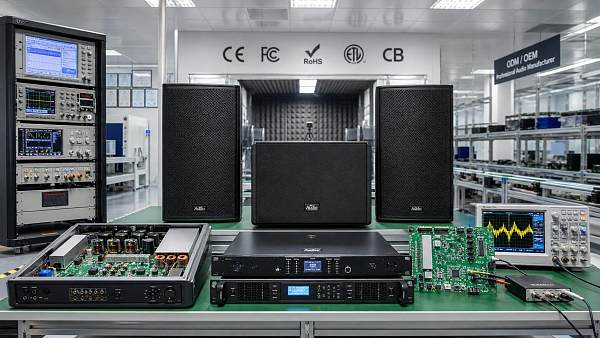
Quality begins with measurable requirements. Ask suppliers which specifications they test, how often they test them, and what limits determine whether a batch passes.
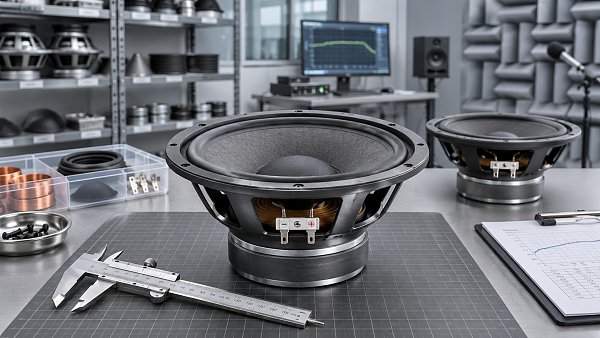
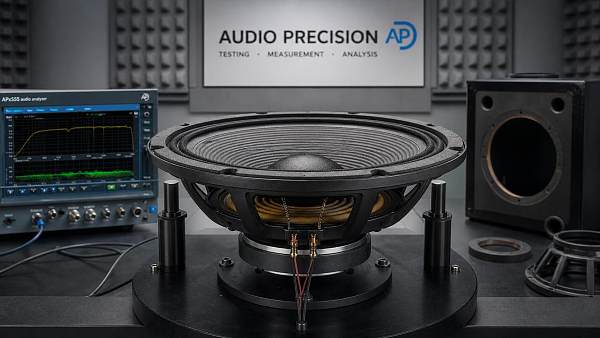
For loudspeaker drivers, relevant checks may include impedance, frequency response, sensitivity, distortion, and power handling. The required tests depend on the application and design.
Request test conditions as well as results. Frequency response measured in different environments or power ratings based on different methods cannot be compared reliably without context.
Ask for representative inspection records and a sample test report. Check whether the supplier can trace finished parts to production lots and relevant incoming materials.
Where a supplier cites ISO 9001 certification, verify its scope and validity. Certification indicates a quality management system; it does not guarantee that a particular component meets your specifications.
For critical applications, agree on an inspection plan covering sample size, acceptance limits, cosmetic defects, functional tests, and the process for handling failed lots.
Review how the supplier investigates defects and implements corrective actions. A useful response identifies the affected lots, root cause, containment measures, and evidence that the fix works.
Quality records should match the parts being purchased. A generic brochure or test report for a different model is insufficient evidence for a release decision.
Will the Parts Work With Your Existing Design?
Compatibility problems can turn an inexpensive component into a costly redesign. Confirm electrical, mechanical, acoustic, and environmental requirements before approving any substitute.
For a replacement driver, compare nominal impedance, impedance behavior, power handling, sensitivity, usable frequency range, and crossover requirements. Matching the nominal impedance alone is insufficient.
Check mounting dimensions, cutout diameter, depth, terminal type, and gasket placement against the enclosure. Small differences can prevent assembly or cause air leaks.
Acoustic behavior matters too. A driver with similar dimensions may perform differently in the same cabinet, especially if its parameters or frequency response differ.
For enclosure-dependent designs, request the relevant Thiele-Small parameters and assess them with the complete system. A qualified engineer should review the proposed substitution.
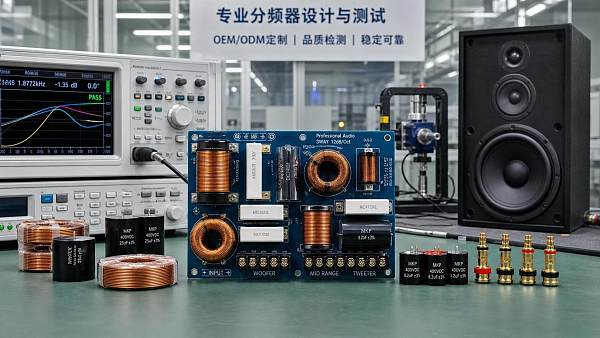
For horns, diaphragms, crossover components, connectors, and grilles, verify interface dimensions, material requirements, polarity or wiring, and any application-specific ratings.
Ask suppliers to identify revisions and provide drawings with tolerances. Approve a specific part number and revision rather than relying on a broad description.
Test samples in the actual assembly whenever practical. Fit checks, listening or acoustic measurements, and thermal or endurance tests should reflect intended operating conditions.
Record the approved configuration and communicate it to purchasing, engineering, and receiving teams. This reduces the risk of an unreviewed substitution entering production.
What Evidence Supports Reliable Lead Times?
A quoted lead time is useful only when its starting point and assumptions are defined. Ask whether it begins at purchase order acceptance, deposit receipt, or final drawing approval.
Request separate estimates for tooling, samples, production, inspection, and shipment. Include transit time and customs clearance in the project schedule, especially for international orders.
Ask which materials or subcomponents constrain capacity and whether they are stocked. Magnets, diaphragms, custom tooling, and imported parts may have different replenishment cycles.
Compare quoted capacity with your forecast and peak demand. A supplier may meet average monthly volume but struggle with a large launch order or seasonal increase.
Request recent on-time delivery performance and clarify how it is calculated. For example, a metric based on revised dates may conceal missed original commitments.
Discuss what happens when production slips: who provides updates, how often dates are reviewed, and whether partial shipments or alternative logistics are available.
Build schedule buffers around realistic risks, including approval delays and transit variability. The right buffer depends on demand uncertainty, replenishment time, and the cost of a production stoppage.
How Should You Compare Quotes Beyond Unit Price?
Evaluate total landed cost using the same order quantity, delivery destination, currency, and commercial assumptions. A low component price may exclude costs included elsewhere.
Check tooling charges, sample fees, packaging, freight, insurance, duties, inspection, and payment terms. Confirm which costs recur and who owns any dedicated tooling.
Use the agreed Incoterms rule and named location to clarify delivery responsibilities. Confirm the applicable edition and separately establish when ownership and payment obligations transfer.
Include inventory carrying costs and the financial effect of minimum order quantities. An attractive price break can become expensive if it creates excess or obsolete stock.
Compare warranty terms, return freight, replacement timelines, and remedies for nonconforming goods. A supplier’s response to failures can materially affect the final cost.
For custom parts, document engineering charges, drawing ownership, exclusivity if applicable, and the treatment of unused materials or tooling when the relationship ends.
Use a weighted scorecard to balance technical compliance, quality evidence, delivery capability, and commercial terms. Set minimum thresholds for critical requirements before comparing overall scores.
For example, reject a quote that fails a required fit test even if its price is lowest. Weight the remaining criteria according to the project’s actual risks.
Which Documents and Compliance Claims Matter?
Request documents appropriate to the component, destination market, and intended end product. Requirements for a passive driver can differ from those for a powered speaker assembly.
Ask for material declarations or supporting evidence where regulations such as RoHS or REACH apply. Confirm the document covers the supplied part and current requirements.
Do not assume a component certificate automatically covers the finished product. The manufacturer or importer may need additional assessment for the complete system and target market.
Where safety, environmental, or customer requirements are contractual, specify the relevant standard, edition, test method, and responsible party before placing the order.
Verify that test reports identify the tested model, laboratory, date, and applicable methods. If documentation is missing or outdated, agree on a resolution before approval.
Request notification of changes to materials, manufacturing sites, tooling, or sub-suppliers. Define which changes require your written approval and whether requalification is necessary.
How Do You Qualify a Supplier Before Scaling Up?
Begin with a technical review and sample order, then move to a pilot batch that reflects normal production. Prototype samples alone may not reveal process variation.
Inspect the pilot against the agreed specification and test it in the intended product. Track defect types, assembly issues, packaging damage, and delivery performance.
If the supplier uses a factory different from its sales office, establish which site will make the parts. Assess that site directly when project risk warrants it.
A remote review, independent inspection, or factory audit can examine equipment, calibration, process controls, traceability, and capacity. Choose the depth based on purchase value and failure impact.
Check references relevant to similar products or order volumes where available. Treat claims about major customers or export experience as leads to verify, not proof on their own.
Approve production only after engineering and procurement agree that technical results, documentation, commercial terms, and delivery plans meet the project’s requirements.
After launch, review performance against agreed measures such as accepted lots, delivery against original commitments, response time, and closure of corrective actions.
How Can Buyers Reduce Supply Disruption?
Share a rolling forecast and distinguish firm orders from estimates. This helps suppliers plan materials while preserving visibility into your actual purchasing commitments.
For essential components, assess whether a qualified second source is practical. Alternate parts should pass the same engineering and quality approval process before an emergency.
Consider safety stock, supplier-held inventory, or scheduled releases when demand and contract terms justify them. Agree on ownership, replenishment triggers, and liability for unused stock.
Monitor changes in supplier ownership, production location, and critical materials. Early notice gives your team time to test alternatives or adjust purchasing plans.
Review performance regularly and address recurring issues before renewal. A documented escalation path helps both sides respond quickly when a shipment or quality problem threatens production.
Make the Final Supplier Decision
The best speaker parts supplier is the one that meets your essential technical requirements and demonstrates consistent quality, credible capacity, and dependable delivery at an acceptable total cost.
Make the decision using verified documents, application-specific testing, and comparable commercial terms. Keep approved specifications and change controls current as the product and supply chain evolve.
For procurement teams, that discipline turns a component purchase into a manageable sourcing decision and reduces the risk of expensive delays, rework, and field failures.
Search News
Hot Articles
Popular Tags
Need ExpertConsultation?
Connect with our specialized leisureengineering team for procurementstrategies.
Recommended News
 Nov 14, 2026Choosing a Speaker Parts Supplier: Quality, Compatibility and Lead TimesChoose a speaker parts supplier with confidence. Learn how to verify quality, compatibility and lead times while controlling costs and reducing sourcing risks.● Pro Audio Engineer
 Nov 10, 2026Music Production Tools for Podcasts: Choosing Software for Your WorkflowChoose music production tools for podcasts with confidence. Compare editing, mixing, collaboration, and export features to find the right fit for your workflow.● Pro Audio Engineer
 Nov 03, 20262027 NAMM Show to Debut TEC Tracks Live Sound Summit2027 NAMM Show debuts the TEC Tracks Live Sound Summit on January 27. Explore what it could mean for touring technology and production workflows.● Pro Audio Engineer
 Oct 24, 2026RME Launches ADI-2/4 PRO EX Audio Converter with Integrated ProcessingExplore the RME ADI-2/4 PRO EX audio converter with AD/DA conversion, dual headphone amps and integrated processing. Discover its potential for studio, live sound and broadcast workflows.● Pro Audio Engineer
 Oct 22, 2026Audio Production for Streaming: How to Build a Dedicated Live Event MixMaster audio production for streaming with a dedicated live event mix. Learn routing, loudness control, and monitoring techniques to deliver clear, balanced sound your online audience will love.● Pro Audio Engineer
 Oct 15, 2026Designing Theater Sound Systems for Clear Dialogue and Even Audience CoverageOptimize stage sound for theaters with practical tips on acoustics, speaker placement, and tuning. Discover how to deliver clear dialogue and consistent coverage across audience seating.● Pro Audio Engineer
 Oct 22, 2026Which Professional Sound System Specs Matter Most for Live Venues?Discover what professional sound system specs matter most for live venues. Compare SPL, coverage, frequency response, and headroom to choose a PA that delivers clear, powerful sound.● Pro Audio Engineer
 Oct 20, 2026Should You Prioritize Stage Sound or Audience Coverage?Should I prioritize stage sound or audience coverage first? Discover how to balance clear audience audio, reliable monitoring, and smarter sound-system upgrades for your venue.● Pro Audio Engineer
 Oct 18, 2026How Much Does Studio Acoustic Treatment Cost per Square Meter?How much does studio acoustic treatment cost per square meter? Learn how to compare panel prices, installation fees, and complete budgets to choose the right treatment without overspending.● Pro Audio Engineer
 Oct 17, 2026How Do Line Array and Point Source Sound Systems Differ?What is the difference between line array and point source systems? Compare coverage, costs, and venue fit to find the right solution for clearer sound.● Pro Audio Engineer
 Oct 16, 2026Are Standard Acoustic Panels Enough for Performance Venues?Are standard acoustic panels enough for performance venues? Discover their limits, explore bass control and diffusion, and learn how to choose treatments that improve sound without wasting budget.● Pro Audio Engineer
 Sep 30, 2026How to Choose an Aluminum Projector Ceiling Mount for Load, Drop, and Ceiling TypeChoose an aluminum projector ceiling mount with confidence. Learn how load capacity, drop length, ceiling structure, safety retention, and service access shape a reliable commercial AV installation.● Pro Audio Engineer
 Sep 26, 2026How to Choose Dynamic Microphones for Vocals in Live Stage SettingsDynamic microphones for vocals: learn how to match polar patterns, feedback control, durability, and clarity to live stage needs for reliable, professional sound.● Pro Audio Engineer
 Sep 07, 2026How to Choose Wall Mount Speakers for Clear Audio in Commercial SpacesWall mount speakers for commercial spaces: learn how to optimize coverage, SPL, directivity, installation, and system design for clear, reliable audio.● Pro Audio Engineer
 Sep 03, 2026How to Choose Locking Speakon Speaker Cables for Reliable Live Sound ConnectionsLocking Speakon speaker cables: learn how to select the right gauge, connector pinout, strain relief, and durable construction for reliable live sound connections.● Pro Audio Engineer
 Sep 08, 2026Is It Worth Upgrading a Stage Sound System Mid-Project?Is it worth upgrading stage sound systems mid-project? Discover how to assess performance gaps, costs, compatibility, and long-term venue value.● Pro Audio Engineer
 Sep 04, 2026Can AV Systems Be Retrofitted Into Older Commercial Buildings?Can AV integration be retrofitted into older commercial buildings? Discover practical strategies for reliable, code-aware AV upgrades with minimal disruption.● Pro Audio Engineer
 Jul 17, 2026How to Choose a Crossover Networks Supplier: Key Specs, Quality Checks, and OEM FactorsFind the right crossover networks supplier with this practical guide to key specs, quality checks, OEM factors, and supply chain risks for better audio performance and sourcing confidence.● Pro Audio Engineer
 Jul 16, 2026How to Evaluate ODM Services for Pro Audio: Design, Certification, and Production CapabilitiesODM services for pro audio: learn how to assess design depth, certification readiness, and production strength to choose a reliable partner and launch better audio products with less risk.● Pro Audio Engineer
 Jul 15, 2026JETRO Flags Modular, Low-Power Shift in Pro Stage AudioPro Stage Audio buyers in Japan are shifting fast: JETRO flags modular amplifiers, IP65 line arrays, low standby power, and JIS compliance as key to channel entry.● Pro Audio Engineer
 Jul 15, 2026Paper Speaker Cones Explained: How Cone Weight and Stiffness Affect SoundPaper speaker cones explained: discover how cone weight and stiffness shape sensitivity, clarity, breakup control, and real-world speaker performance for smarter audio sourcing.● Pro Audio Engineer
 Jul 15, 2026Performance Venues Compliance Checklist: Fire Safety, Accessibility, and Crowd RulesPerformance venues compliance checklist covering fire safety, accessibility, and crowd rules. Learn how to reduce delays, improve approvals, and open safer, more resilient venues.● Pro Audio Engineer
 Jul 14, 2026Japan Adds EMC Immunity Test for Stage AmplifiersJapan Adds EMC Immunity Test for Stage Amplifiers: learn how Japan’s 2026 JIS update affects EMC testing, JIS marking, certification timing, and market access for exporters.● Pro Audio Engineer
 Jul 13, 2026CISCE 2026 Adds Pro Stage Audio ZoneCISCE 2026 Adds Pro Stage Audio Zone as free overseas pre-registration opens. Explore key updates for pro audio suppliers, distributors, and system integrators before the Shanghai expo.● Pro Audio Engineer