How Hotels Can Choose Amenity Bottles That Balance Brand Image and Refill Costs
Start With the Operating Model, Not the Bottle Design
For a hotel procurement team, amenity bottles sit at the intersection of guest experience and recurring operating expense. A bottle that looks premium in a room can become an expensive choice if it is difficult to refill, frequently damaged, incompatible with housekeeping routines, or tied to a supplier with inconsistent lead times. Conversely, a low-cost dispenser can undermine a property’s positioning if it feels generic, leaks, or creates doubts about cleanliness.
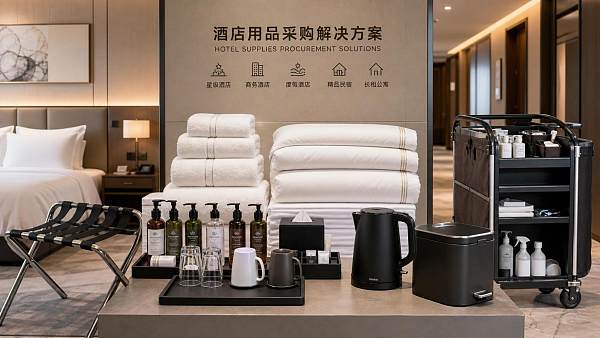
The practical answer is to select hotel amenity bottles as part of a complete in-room amenity system. The bottle, pump or cap, wall fixture, refill pack, labeling method, cleaning routine, and replacement policy all need to work together. Hotels that evaluate only the unit price of an empty bottle often discover later that the larger costs sit in labor, product waste, breakage, emergency replacement orders, and guest complaints.
The right balance depends on the property type. A luxury urban hotel, a resort with long guest stays, an airport hotel with high turnover, and an extended-stay property may all use similar products, but they should not necessarily use the same format or refill model.
Define What the Bottle Must Communicate to the Guest
Amenities are among the few branded physical objects that guests handle repeatedly in a room. Their visual quality affects the perceived standard of the bathroom, even when guests do not consciously evaluate the packaging. Shape, material weight, label finish, closure quality, and placement all contribute to that impression.
That does not mean every property needs heavy glass bottles, custom-molded forms, or elaborate decoration. Those choices can be appropriate for a flagship luxury property, but they may not be suitable for a multi-property rollout or a hotel where room attendants must service a large number of rooms in a limited window.
Procurement should first establish the desired guest signal in concrete terms. For example, the brief may require the amenity set to feel refined and residential, clean and contemporary, locally inspired, family-friendly, or highly durable and practical. This gives suppliers and design teams a usable direction without forcing an expensive visual treatment before the operating requirements are known.
Several details tend to have more influence on perceived quality than buyers expect:
- Consistency across the set. Shampoo, conditioner, body wash, lotion, and hand wash should look like one system. Mixed bottle shapes, uneven labels, or different pump finishes can make a premium room feel assembled rather than designed.
- Scale relative to the bathroom. Large wall-mounted bottles may suit spacious resort showers but can dominate a compact guest bathroom. Small bottles can look elegant but may create frequent replacement work in high-occupancy properties.
- Dispensing experience. A pump that sticks, delivers too much product, or requires repeated pressing damages the experience more quickly than a modest bottle design ever could improve it.
- Label legibility. Guests need to identify each product immediately, particularly where shampoo, conditioner, and body wash are in similar-colored liquids. Decorative labels that are hard to read create avoidable confusion.
- Condition after repeated cleaning. The bottle has to retain its intended appearance after housekeeping cleaning, exposure to moisture, contact with cleaning agents, and ordinary guest handling.
A useful procurement question is: will this bottle still look aligned with the brand after it has been installed, cleaned, refilled, and handled hundreds of times? The answer is often more informative than an initial sample review.
Choose the Format Based on Turnover and Service Workflow
Refillable bottles are often treated as a straightforward sustainability or cost-saving move. In practice, refillability only produces reliable savings when the housekeeping workflow is designed around it. The format should be selected according to occupancy patterns, staff capacity, bathroom layout, and the hotel’s hygiene controls.
Single-use miniatures offer simple stock control and a clear appearance of unopened product, but they generate high packaging consumption and require room attendants to replace partially used items. They may still be justified for a particular suite category, a special welcome set, or a property where the amenity presentation is part of a tightly controlled luxury ritual. They are less compelling as a default solution when the same products are replenished at scale every day.
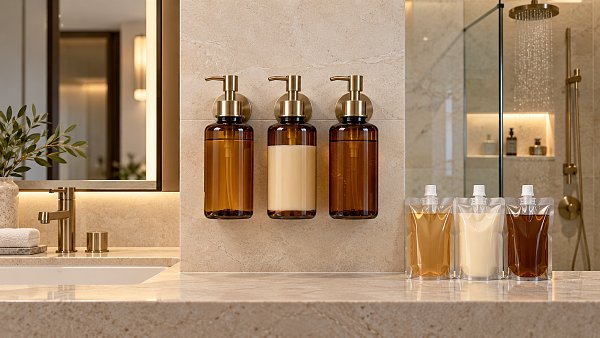
Wall-mounted refillable dispensers reduce bottle handling and can lower the amount of packaging moving through the property. They are usually best suited to high-volume hotels, resorts, gyms, and longer-stay properties, where the system can be serviced efficiently. Their limitation is aesthetic: a dispenser should look intentionally integrated into the bathroom rather than like a cost-cutting addition. Mounting hardware, finish quality, alignment, and label design matter as much as the container itself.
Freestanding refillable bottles often provide the strongest middle ground. They can preserve a more residential or upscale appearance while reducing disposable packaging. Yet they introduce operational demands: bottles must remain stable on wet surfaces, pumps need to be durable, and staff need a controlled method for topping up, cleaning, and retiring damaged units.
The most appropriate choice may vary within one hotel. Public washrooms, spa changing areas, standard rooms, suites, and villas do not necessarily need identical systems. A common brand language can be maintained while allowing the operational format to reflect the actual use case.
Calculate Refill Cost as a System Cost
The cost of a refillable amenity program cannot be measured by comparing the purchase price of a refill pouch with the purchase price of individual bottles. A more useful calculation considers the cost per occupied room or per guest night over a defined period, including the assets and labor that support the program.
At minimum, the evaluation should include:
- Initial bottle, fixture, pump, and installation cost
- Bulk refill or cartridge price and its usable product volume
- Average product consumption per occupied room or guest night
- Product lost through over-dispensing, leakage, spills, or premature disposal
- Housekeeping time for inspection, cleaning, refilling, and replacement
- Replacement frequency for damaged bottles, labels, pumps, locks, and brackets
- Storage requirements for bulk product and empty packaging
- Freight, import handling, minimum order quantities, and buffer stock
Product consumption deserves particular attention. A large-capacity bottle does not automatically reduce cost. If it uses a pump that dispenses more product than necessary, or if guests use extra product because the pump is difficult to control, the apparent savings can disappear. The same issue arises when a room attendant replaces an almost-empty bottle to avoid a guest running out during the stay.
Dispensing hardware should therefore be sampled with the actual product viscosity. Shampoo, conditioner, body wash, hand soap, and lotion behave differently. A pump that works well with a thin body wash may deliver an inadequate amount of thick conditioner. Procurement teams should avoid approving a bottle based only on an empty container or water-filled sample.
Refill pack size also affects cost. Larger packs can reduce packaging per litre and lower order frequency, but they can be inefficient if a property has limited storage space or cannot use the product before its specified shelf-life period. Smaller packs may cost more per unit of product but simplify handling and reduce the risk of partially used stock sitting in a back-of-house area.
For multi-property groups, standardizing the bottle platform can create purchasing leverage, but complete standardization is not always economical. A tropical resort may need corrosion-resistant wall fixtures and high-capacity bottles, while a city hotel may prioritize compact dimensions and fast room turnaround. Standardizing core components while allowing selected local variation is often a more durable approach.
Do Not Treat Hygiene as a Labeling Exercise
Refill systems require clear ownership. When several teams handle the bottles, gaps can develop between housekeeping, purchasing, engineering, and the outsourced amenity supplier. A visually attractive refillable system becomes a liability when nobody is responsible for cleaning, refilling, checking pump function, recording batch details where required, and withdrawing damaged units.
The risk is not limited to product contamination. Poorly maintained bottles also create visible hygiene concerns: residue around pump collars, labels lifting at the edges, inconsistent fill levels, sticky bottle surfaces, or a dispenser that appears old and poorly secured. Guests may judge the whole bathroom by those signals.
Before committing to a refillable system, buyers should ask suppliers to explain the intended refill procedure rather than simply providing refill compatibility claims. The process should address how the bottle is opened, whether it can be refilled without exposing the product unnecessarily, how it is cleaned, whether the pump can be removed, and how the system prevents mixing products or using the wrong refill.
Traceability should be practical rather than performative. Hotels need a way to identify the relevant product batch and replenishment date when an operational issue arises. The method might be embedded in the refill pack, a back-of-house record, or another internal control process. What matters is that the hotel can manage the product responsibly without creating a paperwork burden that staff cannot sustain.
Sealed cartridge systems can reduce direct product handling, but they also need scrutiny. Check whether cartridges can be replaced quickly, whether they lock into place securely, whether empty units can be identified at a glance, and whether the system leaves the hotel reliant on one proprietary source. A proprietary format may be justified when it delivers real hygiene, dosing, or visual advantages. It should not be accepted merely because changing suppliers later would be inconvenient.
Test Durability in the Conditions the Hotel Actually Has
Material selection should follow the bathroom environment and service method. Plastic bottles can be lightweight, shatter-resistant, and economical, but they vary widely in scratch resistance, chemical tolerance, surface finish, and long-term appearance. Glass can support a more premium presentation, yet it raises breakage and safety considerations, especially around wet floors, family rooms, pool areas, and high-turnover operations. Metal elements may elevate the design, but finishes must withstand humidity, cleaning products, and repeated contact.
Request samples that represent the final specification: final bottle material, color, printing or label method, pump, cap, fixture, and product fill. Then review them against the conditions they will face. A supplier sample that looks excellent in a meeting room may reveal flaws after routine cleaning, contact with water, or several cycles of pump use.
Label construction is often underestimated. Paper labels may fit a particular design direction, but they can deteriorate in humid bathrooms. Direct printing can be more durable, though it may limit flexibility when the hotel changes a fragrance, formula, or sub-brand. Removable labels may ease updates but can create a worn appearance if edges lift. The right choice depends on how frequently the hotel expects to alter its amenity program and how much visual wear it can tolerate.
It is also sensible to define replacement parts before the purchase order is finalized. If a pump fails, can it be replaced independently of the full bottle? If a wall bracket is damaged, can engineering replace that component without removing the entire system? Spare parts availability is a small contractual detail that can prevent a costly visual inconsistency across rooms.
Source for Continuity, Not Just the Opening Order
A new amenity bottle program typically begins with an attractive sample, a launch order, and a branded presentation. Its real test comes months later, when the hotel needs matching refill stock, replacement pumps, revised labels, or additional units for renovated rooms. Procurement should assess whether the supplier can maintain consistency across those later orders.
Specifications should clearly define bottle dimensions, usable volume, material, color reference, decoration method, pump output, fixture finish, refill compatibility, and packaging requirements. Vague wording such as “similar color” or “premium pump” leaves room for variation that becomes visible in guest rooms.
Supply continuity also involves lead times and order flexibility. A bottle designed around a unique mold, custom metal fixture, or proprietary cartridge may create a stronger brand signature, but it can increase exposure to long replenishment cycles. Buyers should decide deliberately where customization is worth that exposure. Often, the most effective solution uses a proven bottle platform with distinctive labeling, scent, color, or mounting presentation rather than an entirely bespoke container.
The strongest purchasing decision is rarely the cheapest bottle or the most elaborate one. It is the system that delivers the intended room standard, can be serviced consistently by hotel staff, and keeps the full refill cost predictable over time. When those conditions are met, amenity packaging stops being a recurring nuisance and becomes a controlled part of the property’s brand experience.
Search News
Hot Articles
- Hotel Room AmenitiesHow Hotels Can Choose Amenity Bottles That Balance Brand Image and Refill CostsOct 01, 2026
- Pro Stage AudioHow to Choose an Aluminum Projector Ceiling Mount for Load, Drop, and Ceiling TypeSep 30, 2026
- Indoor PlaygroundPoured Playground Safety Surfacing: How to Specify Thickness for Fall HeightsSep 29, 2026
Popular Tags
Need ExpertConsultation?
Connect with our specialized leisureengineering team for procurementstrategies.
Recommended News
 Oct 01, 2026How Hotels Can Choose Amenity Bottles That Balance Brand Image and Refill CostsHotel amenity bottles: learn how to balance premium brand presentation, refill costs, hygiene, durability, and efficient housekeeping workflows.● Hospitality Sourcing Dir
 Sep 25, 2026How to Evaluate a Wall-Mounted Hotel Hair Dryer Manufacturer for Bulk ProjectsHotel hair dryers wall mounted manufacturer evaluation guide: compare safety, durability, installation fit, OEM options, total cost, and reliable bulk-project support.● Hospitality Sourcing Dir
 Sep 03, 2026What Lead Times Should Buyers Expect for Custom Luxury Fixtures?What delivery lead times should I expect for custom luxury fixtures? Discover realistic 12–24 week timelines, approval milestones, freight factors, and ways to avoid costly delays.● Hospitality Sourcing Dir
 Sep 05, 2026Hotel Hair Dryers Compared: Wattage, Safety Features, and Guest-Room DurabilityHair dryer for hotels: compare wattage, thermal safety, noise, mounting, and durability to select reliable guest-room dryers that elevate comfort and reduce maintenance costs.● Hospitality Sourcing Dir
 Aug 04, 2026What to Check Before Buying Space Saving Ironing Boards Wholesale for HotelsSpace saving ironing boards wholesale for hotels: learn what to check before buying, from room fit and mounting to durability, compliance, and total installed cost.● Hospitality Sourcing Dir
 Jul 12, 2026Saudi e-SABER Label Rule Hits Hotel Amenities ExportsSaudi e-SABER label rule will reshape hotel amenities exports from August 1, 2026. Learn how SASO compliance, port clearance risks, and supplier readiness may impact shipments.● Hospitality Sourcing Dir
 Jul 11, 2026SASO Requires e-SABER Labels for Hotel AmenitiesSASO requires e-SABER labels for hotel amenities from August 1, 2026. Learn how QR code, SABER, and GCC compliance rules may impact Saudi shipments and port clearance.● Hospitality Sourcing Dir
 Jul 10, 2026Saudi SABER Update Adds GCC and Arabic Manual RuleSaudi SABER Update Adds GCC and Arabic Manual Rule: learn how the new SABER requirements affect hotel amenities certification, timelines, costs, and Saudi market access planning.● Hospitality Sourcing Dir
 Jul 03, 2026Wet and Dry Vacuum Cleaners Quiet Enough for Hotels: What Noise Level and Features Matter?Wet and dry vacuum cleaners quiet enough for hotels: compare ideal dB ranges, filtration, maneuverability, and lifecycle cost to choose cleaner, quieter machines with confidence.● Hospitality Sourcing Dir
 Jul 01, 2026How to Choose Hotel Hospitality Supplies for Different Property TypesHotel hospitality supplies buying guide for resorts, boutique, business, and economy hotels. Learn how to match supplies to property type, durability, brand image, and lifecycle value.● Hospitality Sourcing Dir
 Jun 27, 2026Memory Foam Hotel Mattresses vs Hybrid Beds: Which Option Fits Your Property?Memory foam hotel mattresses or hybrid beds? Compare comfort, durability, cooling, and lifecycle cost to find the best fit for your property and guest experience.● Hospitality Sourcing Dir
 Jun 26, 2026Hotel Desks: Types, Materials, and Layout Tips for Modern Guest RoomsHotel desks guide covering desk types, durable materials, and smart layout tips for modern guest rooms. Discover practical ideas to improve comfort, style, and space efficiency.● Hospitality Sourcing Dir
 Jun 23, 2026How to Choose Hotel Wardrobes: Materials, Storage Layout, and Durability StandardsHotel wardrobes guide: learn how to compare materials, storage layout, and durability standards to choose wardrobes that improve guest experience and reduce long-term maintenance costs.● Hospitality Sourcing Dir
 Jun 20, 2026Artificial Plants for Hotels: How to Compare Fire Ratings, Materials, and Maintenance NeedsArtificial plants for hotels: compare fire ratings, materials, and maintenance needs to choose safer, longer-lasting greenery that protects design quality and lifecycle cost.● Hospitality Sourcing Dir
 Jun 17, 2026How to Choose Hotel Hair Dryers Wall Mounted for Safety, Power, and Room TypeHotel hair dryers wall mounted buying guide: learn how to compare safety features, power levels, noise, and room-fit options to choose reliable models for every hotel segment.● Hospitality Sourcing Dir
 Jun 04, 2026Wholesale Hotel Safes Buying Guide: Lock Types, Size Options, and Installation PointsWholesale hotel safes buying guide covering lock types, size options, and installation points. Compare models, reduce procurement risk, and choose the right safe for your hotel project.● Hospitality Sourcing Dir
 May 30, 2026Is glamping furniture worth the higher project cost?Glamping furniture can justify higher project costs when it boosts bookings, durability, guest reviews, and long-term ROI. Learn where premium upgrades truly pay off.● Hospitality Sourcing Dir
 May 29, 2026Do blackout curtains for hotels Cut Energy Costs?Blackout curtains for hotels can lower HVAC costs, improve guest comfort, and boost room performance. Learn when they save energy and how to specify the right system.● Hospitality Sourcing Dir
 May 09, 2026Glamping furniture mistakes that make premium stays feel cheapGlamping furniture mistakes can make premium stays feel cheap. Learn how to choose durable, comfortable, brand-aligned pieces that elevate guest experience and protect long-term value.● Hospitality Sourcing Dir
 May 04, 2026Commercial Carpet Tiles for Hotels: What Wears Out First?Commercial carpet tiles hotel buyers: discover what wears out first in entrances, corridors, and transition zones, and learn how to specify longer-lasting, guest-ready flooring.● Hospitality Sourcing Dir
 May 04, 2026Custom Hotel Signage That Looks Premium and Stays ReadableCustom hotel signage that balances premium aesthetics with readability, durability, and compliance. Discover a practical checklist to improve guest experience and streamline hotel projects.● Hospitality Sourcing Dir
 May 04, 2026Luxury Vinyl Tile Commercial Flooring in High-Traffic AreasLuxury vinyl tile commercial flooring for high-traffic spaces: discover how to compare durability, maintenance, installation risks, and lifecycle value before you specify.● Hospitality Sourcing Dir
 May 03, 2026AC Milan’s Smart Locker Room Procurement Triggers UNI 11743 Compliance ReviewAC Milan’s smart locker room procurement triggers UNI 11743:2025 compliance review — critical for sports infrastructure suppliers, EU exporters & integrators.● Hospitality Sourcing Dir
 May 03, 2026Hotel room minibar fridges: silent operation is not enoughHotel room minibar fridges now require more than silent operation. Explore how energy efficiency, design fit, compliance, and lifecycle value shape smarter hotel sourcing.● Hospitality Sourcing Dir