Professional Sound Systems Installation: Key Room, Power, and Wiring Factors to Review
Professional Sound Systems Installation Starts with the Room
Professional sound systems installation starts long before loudspeakers are fixed in place.
In commercial projects, the room defines how the system will actually perform.
That is why early technical review matters more than last-minute equipment upgrades.
A clear process helps avoid speech loss, uneven coverage, overload events, and expensive rewiring later.
For hospitality, education, retail, and entertainment sites, three issues come first.
They are room acoustics, available power, and wiring architecture.
When those elements are reviewed properly, professional sound systems installation becomes more predictable and easier to maintain.
This also supports compliance, protects capital expenditure, and reduces disruption during commissioning.
Room Acoustics Set the Real Performance Limit
A strong product list cannot fix a poor acoustic environment.
In professional sound systems installation, room behavior often decides whether audio feels clean or tiring.
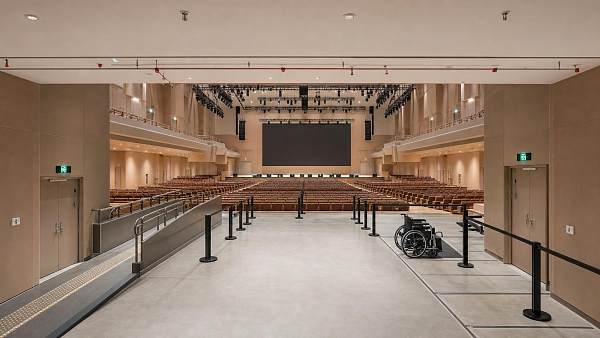
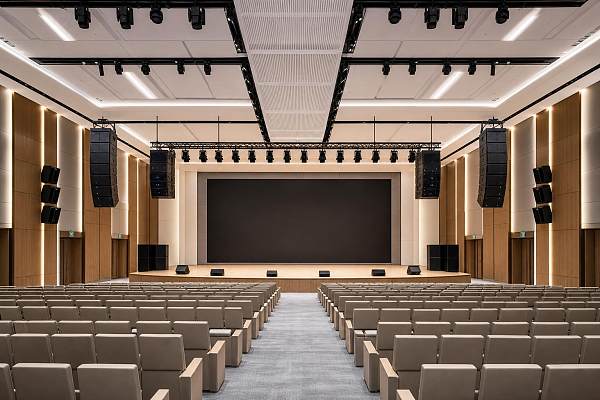
Hard surfaces, glass walls, open ceilings, and long reflective corridors create obvious problems.
Speech systems suffer first because reflections blur consonants and reduce intelligibility.
Music playback can also become harsh, boomy, or inconsistent across seats.
Before approving any design, review these acoustic factors carefully.
- Room dimensions and ceiling height
- Surface materials and absorption balance
- Background noise from HVAC, kitchens, crowds, or machinery
- Reverberation time for speech or mixed-use content
- Audience layout, partitions, and flexible furniture zones
A ballroom and a lecture hall may have similar floor area, yet need very different tuning logic.
That difference becomes more obvious in multi-use spaces with movable walls.
From a technical review perspective, acoustic modeling should happen before final loudspeaker positioning.
Coverage maps, SPL targets, and STI expectations should be aligned early.
In real projects, this step prevents overdesign as often as it prevents underperformance.
What to Check During Site Evaluation
Walk the space at different times of day.
A quiet room during handover can sound very different during live operation.
Check for hidden noise sources, temporary structures, and decorative finishes that may change reflections.
If the venue hosts events, ask whether layouts change often.
This affects aiming angles, zoning, DSP presets, and delay strategy.
Power Capacity Is a System Reliability Issue
Power review is often underestimated in professional sound systems installation.
Yet unstable power can damage equipment, trigger faults, and compromise safety compliance.
The key question is not only total load.
It is whether clean, correctly distributed power reaches every device under real operating conditions.
Amplifiers, DSP racks, wireless receivers, mixers, and network switches each have different sensitivities.
Large sites may also share electrical infrastructure with lighting, refrigeration, or kitchen equipment.
That creates voltage fluctuation, grounding issues, and noise contamination.
Core Power Review Points
- Dedicated circuits for audio equipment where possible
- Correct voltage, phase balance, and breaker sizing
- Inrush current planning for amplifier startup
- Proper grounding and bonding strategy
- UPS or conditioned backup for critical control paths
- Separation from heavy-load devices that inject noise
In hospitality and campus projects, future expansion should also be included.
A system that uses all available power capacity on day one leaves no safe margin.
That usually leads to temporary fixes later, and temporary fixes rarely age well.
A more resilient professional sound systems installation includes headroom for added zones, conferencing devices, or digital signage audio.
Why Power Quality Matters as Much as Quantity
Hum, hiss, and random resets are not always audio design flaws.
They often trace back to grounding loops, unstable supply, or poor rack-level distribution.
During technical evaluation, ask for one-line power diagrams and load schedules.
These documents reveal whether the installation is engineered or simply assembled.
Wiring Design Determines Stability and Serviceability
Good wiring is invisible during operation, which is exactly the point.
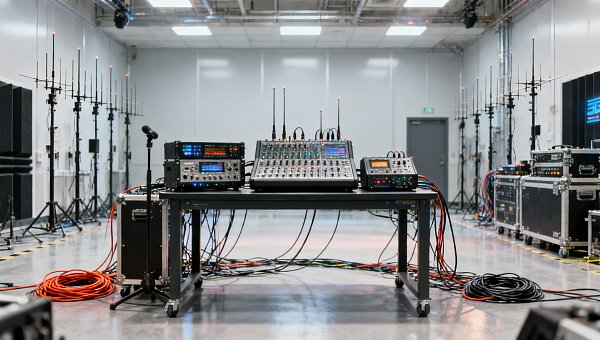
In professional sound systems installation, cable planning affects signal integrity, troubleshooting speed, and upgrade flexibility.
Poor cable routing can introduce interference, signal loss, and maintenance confusion.
That risk grows when audio, control, power, and data share crowded pathways.
Key Wiring Factors to Review
- Cable type matched to signal format and distance
- Separation between low-voltage signal and AC power lines
- Conduit, tray, or raceway capacity for present and future use
- Termination quality, connector standards, and labeling discipline
- Fire rating, local code compliance, and pathway protection
- Accessible pull points and service loops for maintenance
One practical mistake is routing audio cabling through spaces with frequent electrical noise exposure.
Another is failing to label both ends consistently.
When faults appear, unlabeled infrastructure turns a small issue into a long outage.
This is especially important in campuses, malls, hotels, and themed attractions with distributed zones.
Analog, Digital, and Networked Audio Considerations
Many projects now combine analog lines with networked audio transport.
That can improve scalability, but it raises the standard for switch design and cable certification.
If networked audio is part of the scope, review bandwidth, redundancy, VLAN policy, and clocking behavior.
A professional sound systems installation should treat network paths as mission-critical infrastructure, not as spare IT capacity.
A Practical Review Framework Before Deployment
In actual project work, evaluation improves when checks follow a simple order.
- Confirm room use cases and target listening outcomes.
- Review acoustic conditions and likely operational noise.
- Validate power availability, quality, and growth margin.
- Check wiring routes, cable specifications, and labeling plans.
- Align loudspeaker layout with real coverage and intelligibility goals.
- Verify maintenance access, as-built documents, and commissioning scope.
This sequence helps teams catch hidden constraints before equipment is locked in.
It also creates a cleaner conversation with integrators, consultants, and facility stakeholders.
The better the inputs, the more dependable the final professional sound systems installation.
Common Red Flags That Should Slow Approval
Some warning signs appear early and should never be ignored.
- No acoustic assessment for a reflective or flexible-use space
- No clear power schedule or shared circuits with heavy equipment
- No cable labeling standard or as-built documentation requirement
- No allowance for service access around racks and terminations
- No future capacity for expansion, zoning, or digital integration
When these issues show up together, risk rises fast.
The cost may not appear during installation, but it usually appears during operation.
Final Takeaway for Better Project Decisions
Professional sound systems installation is not only about choosing premium equipment.
It is about building the right conditions for that equipment to work consistently.
If room acoustics are unresolved, power is unstable, or wiring is poorly designed, performance will suffer.
A disciplined technical review reduces those risks before deployment begins.
For commercial buyers and project teams, that means clearer audio, smoother commissioning, and lower lifecycle cost.
Use this framework to challenge assumptions early and guide every professional sound systems installation toward reliable long-term performance.
Search News
Hot Articles
- Outdoor RidesWhat Drives Animatronic Dinosaur Manufacturer Prices for Theme Park Projects?Sep 18, 2026
- Stationery & UniformsHow to Source Wholesale Packing Tape Without Compromising Carton Seal StrengthSep 17, 2026
- Smart Campus TechHow to Source Educational Furniture Worldwide for Safe, Flexible Learning SpacesSep 16, 2026
Popular Tags
Need ExpertConsultation?
Connect with our specialized leisureengineering team for procurementstrategies.
Recommended News
 Sep 07, 2026How to Choose Wall Mount Speakers for Clear Audio in Commercial SpacesWall mount speakers for commercial spaces: learn how to optimize coverage, SPL, directivity, installation, and system design for clear, reliable audio.● Pro Audio Engineer
 Sep 03, 2026How to Choose Locking Speakon Speaker Cables for Reliable Live Sound ConnectionsLocking Speakon speaker cables: learn how to select the right gauge, connector pinout, strain relief, and durable construction for reliable live sound connections.● Pro Audio Engineer
 Sep 08, 2026Is It Worth Upgrading a Stage Sound System Mid-Project?Is it worth upgrading stage sound systems mid-project? Discover how to assess performance gaps, costs, compatibility, and long-term venue value.● Pro Audio Engineer
 Sep 04, 2026Can AV Systems Be Retrofitted Into Older Commercial Buildings?Can AV integration be retrofitted into older commercial buildings? Discover practical strategies for reliable, code-aware AV upgrades with minimal disruption.● Pro Audio Engineer
 Jul 17, 2026How to Choose a Crossover Networks Supplier: Key Specs, Quality Checks, and OEM FactorsFind the right crossover networks supplier with this practical guide to key specs, quality checks, OEM factors, and supply chain risks for better audio performance and sourcing confidence.● Pro Audio Engineer
 Jul 16, 2026How to Evaluate ODM Services for Pro Audio: Design, Certification, and Production CapabilitiesODM services for pro audio: learn how to assess design depth, certification readiness, and production strength to choose a reliable partner and launch better audio products with less risk.● Pro Audio Engineer
 Jul 15, 2026JETRO Flags Modular, Low-Power Shift in Pro Stage AudioPro Stage Audio buyers in Japan are shifting fast: JETRO flags modular amplifiers, IP65 line arrays, low standby power, and JIS compliance as key to channel entry.● Pro Audio Engineer
 Jul 15, 2026Paper Speaker Cones Explained: How Cone Weight and Stiffness Affect SoundPaper speaker cones explained: discover how cone weight and stiffness shape sensitivity, clarity, breakup control, and real-world speaker performance for smarter audio sourcing.● Pro Audio Engineer
 Jul 15, 2026Performance Venues Compliance Checklist: Fire Safety, Accessibility, and Crowd RulesPerformance venues compliance checklist covering fire safety, accessibility, and crowd rules. Learn how to reduce delays, improve approvals, and open safer, more resilient venues.● Pro Audio Engineer
 Jul 14, 2026Japan Adds EMC Immunity Test for Stage AmplifiersJapan Adds EMC Immunity Test for Stage Amplifiers: learn how Japan’s 2026 JIS update affects EMC testing, JIS marking, certification timing, and market access for exporters.● Pro Audio Engineer
 Jul 13, 2026CISCE 2026 Adds Pro Stage Audio ZoneCISCE 2026 Adds Pro Stage Audio Zone as free overseas pre-registration opens. Explore key updates for pro audio suppliers, distributors, and system integrators before the Shanghai expo.● Pro Audio Engineer
 Jul 12, 2026Japan Tightens Pro Stage Audio Efficiency Limits Under JIS C 8105-2026Japan Tightens Pro Stage Audio Efficiency Limits Under JIS C 8105-2026: learn how new PSE compliance rules reshape market access, product eligibility, and shipment planning in Japan.● Pro Audio Engineer
 Jul 12, 2026How to Choose Low Profile Ceiling Speakers for Hotels, Offices, and Retrofit ProjectsLow profile ceiling speakers for hotels, offices, and retrofit projects: learn how to compare depth, coverage, compliance, and installation factors to choose the right fit.● Pro Audio Engineer
 Jul 11, 2026Japan Tightens JIS C 8105-2026 for Pro AudioJapan Tightens JIS C 8105-2026 for Pro Audio: learn how stricter standby power, PSE diamond mark rules, and the 2026 deadline impact exports, compliance, and market access.● Pro Audio Engineer
 Jul 10, 2026JETRO Q2 Outlook Signals Higher Stage Audio DemandJETRO Q2 Outlook signals higher stage audio demand in Japan, with 37% procurement growth and stricter PSE Annex D compliance. See what importers, manufacturers, and rental channels must act on now.● Pro Audio Engineer
 Jul 10, 2026How to Choose Wall Mount Speakers for Restaurants by Layout, Coverage, and SPLWall mount speakers for restaurants should match layout, coverage, and SPL. Learn how to choose the right setup for even sound, guest comfort, and reliable performance.● Pro Audio Engineer
 Jul 09, 2026JIS T 9001:2026 Adds Mandatory AI Noise LabelsJIS T 9001:2026 adds mandatory AI noise labels for pro audio gear from October 2026. Learn how it impacts compliance, testing, exports, and product launches.● Pro Audio Engineer
 Jul 06, 2026Improving Sound Reinforcement Speech Clarity: Key Causes of Muddiness and How to Fix ThemSound reinforcement speech clarity starts with identifying reverberation, coverage, noise, and timing issues. Discover practical fixes that make announcements clearer and commercial spaces perform better.● Pro Audio Engineer
 Jul 05, 2026Saudi Rule Adds Arabic UI Requirement for Pro Audio ImportsSaudi Rule Adds Arabic UI Requirement for Pro Audio Imports: learn how SASO’s new Arabic UI mandate affects digital amplifiers, DSP processors, and network audio interfaces before Sept. 1, 2026.● Pro Audio Engineer
 Jul 02, 2026How to Choose Audio Mixing Consoles for Live Venues: Channels, Buses, and I/O ExplainedAudio mixing consoles explained for live venues: learn how to choose the right channels, buses, and I/O to improve workflow, support growth, and avoid costly mistakes.● Pro Audio Engineer
 Jul 01, 2026UL 62368-3:2026 Adds EMC Rules for Pro Stage AudioUL 62368-3:2026 adds EMC rules for Pro Stage Audio, requiring Level 4 immunity and manual labeling by Oct 1, 2026. See what exporters, makers, and buyers must do now.● Pro Audio Engineer
 Jun 30, 2026Sound Reinforcement Design Basics: How to Plan Coverage, SPL, and Speaker PlacementSound reinforcement design starts with smarter coverage, target SPL, and speaker placement. Learn how to plan clearer, more reliable audio performance for commercial spaces.● Pro Audio Engineer
 Jun 28, 2026TUV Rheinland Adds 5G Immunity Test for Pro AudioTUV Rheinland adds 5G immunity test for pro audio, reshaping EU EMC certification for mixing consoles, amplifiers, and audio-lighting control systems. See who is affected and how to prepare.● Pro Audio Engineer
 Jun 27, 2026TUV Rheinland Adds 5G EMC Test for Stage AudioTUV Rheinland adds 5G EMC test for stage audio from Sept. 1, 2026. Learn how CE-EMC changes may impact smart mixers, DMX/WiFi/Bluetooth systems, certification, and delivery plans.● Pro Audio Engineer