How to Build a Fashion Accessories Catalog That Improves Product Discovery and Sales
Why a Fashion Accessories Catalog Matters Beyond Product Display
A strong fashion accessories catalog is not just a visual archive.
It shapes how products are found, compared, and shortlisted across complex buying journeys.
In practice, discovery problems rarely come from having too few items.
They usually come from poor structure, unclear product logic, and weak search relevance.
That issue becomes sharper in sectors tied to commercial experiences and premium presentation.
A hotel boutique, a luxury retail corner, and a duty-free display may all sell accessories.
Yet they search for very different combinations of style, margin, packaging, and supply reliability.
A well-built fashion accessories catalog helps those differences surface early.
It supports stronger product discovery and reduces wasted review time.
That is especially relevant in data-led sourcing environments such as GCT.
Here, editorial quality, compliance context, and commercial credibility matter alongside aesthetics.
Different Sales Contexts Change What the Catalog Must Do
Not every fashion accessories catalog serves the same decision path.
Some catalogs support fast browsing and impulse-friendly assortment planning.
Others support long evaluation cycles involving custom finishes, labeling rules, and export readiness.
The more varied the channel, the more carefully the catalog structure should guide discovery.
In luxury accessories, visual polish matters.
In commercial sourcing, comparability matters just as much.
A product page that looks elegant but hides material composition, lead time, or MOQ slows decisions.
A page overloaded with raw data can also reduce engagement.
The better approach is to align the fashion accessories catalog with real usage context.
Where premium retail presentation leads the decision
In boutique and luxury display settings, buyers often begin with visual identity.
They need to scan by collection mood, finish quality, and merchandising fit.
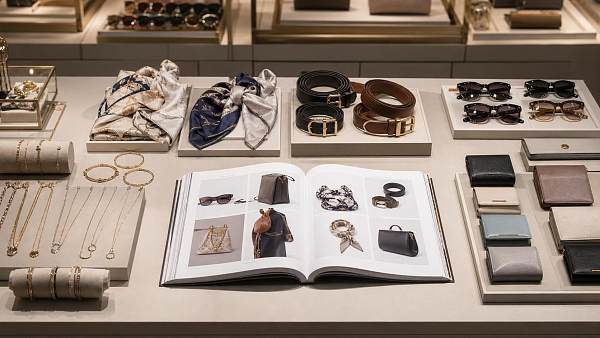
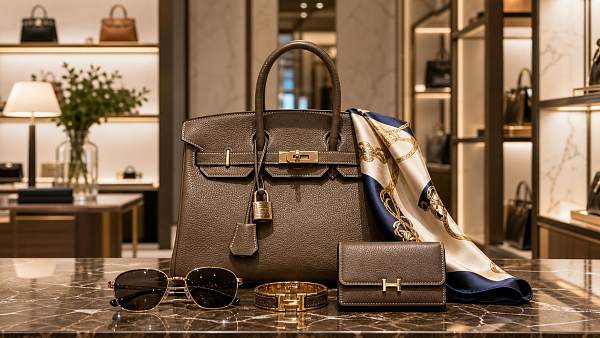
Here, the fashion accessories catalog should group products by style families, capsule themes, and coordinated sets.
If the catalog only sorts by SKU or generic category, discovery becomes shallow.
Searchers may find belts, scarves, and jewelry.
They may still miss which items create a coherent premium assortment.
Where sourcing discipline matters more than pure style
In cross-border trade or private-label programs, catalog priorities shift.
Material traceability, packaging options, compliance notes, and replenishment speed become more important.
A fashion accessories catalog in this setting should expose filters for production capability and delivery conditions.
Without those filters, high-interest products may reach a shortlist and fail later.
That creates friction, especially when catalog traffic comes from high-intent B2B search.
What High-Value Discovery Looks Like in Real Catalog Use
A useful fashion accessories catalog helps users move from inspiration to qualification.
That transition is where many catalogs underperform.
They show many items, but they do not help narrow options intelligently.
The strongest structures usually include layered navigation, commercial context, and meaningful comparison points.
- Use primary categories such as jewelry, scarves, belts, eyewear, and small leather accessories.
- Add secondary filters for material, finish, gender positioning, seasonality, and price band.
- Include business filters such as MOQ, OEM availability, packaging type, and export market suitability.
- Highlight coordinated ranges to improve cross-selling and visual merchandising decisions.
- Show lead time and stock status early when repeat ordering is expected.
This structure works because it supports both broad browsing and precise intent.
Someone comparing statement necklaces for resort retail should not use the same path as someone sourcing logo-ready gift accessories.
The catalog should recognize that difference without forcing extra clicks.
Some Scenarios Need Aesthetic Navigation, Others Need Spec-Driven Filtering
A common mistake is assuming all accessory buyers search in the same way.
In reality, catalog behavior changes with sales environment, product risk, and reorder complexity.
This is why a single flat catalog layout often weakens product discovery.
It treats visually similar scenarios as commercially identical.
That rarely holds true for accessories connected to premium environments.
What to Include on Each Product Page to Support Sales
The fashion accessories catalog succeeds or fails at product-page level.
If key details are missing, discovery may happen, but conversion stalls.
In actual use, the most helpful pages balance image-led appeal with decision-ready facts.
- Clear product naming that reflects type, style cue, and material.
- Multiple images showing scale, finish, clasp detail, and packaging.
- Short descriptions that explain use context, not just decorative features.
- Structured specifications for dimensions, materials, colorways, and care.
- Commercial fields for MOQ, lead time, customization, and compliance status.
- Related products that support set building and upsell logic.
It also helps to separate fixed data from editorial cues.
Dimensions and materials belong in structured fields.
Styling notes, display ideas, and pairing suggestions belong in concise narrative blocks.
That improves readability while keeping the fashion accessories catalog SEO-friendly.
Where Catalogs Often Go Wrong Before Sales Data Shows the Problem
Many weak catalogs look polished at first glance.
The problems appear later in bounce rate, low inquiry quality, or abandoned shortlists.
Several misjudgments show up repeatedly.
- Relying on broad labels like “fashion jewelry” without functional subcategories.
- Treating seasonal accessories and evergreen core items as one merchandising group.
- Prioritizing photography while hiding lead time, finish durability, or packaging options.
- Ignoring regional compliance or material sensitivity requirements.
- Assuming similar visual products share the same commercial suitability.
This last point matters more than it seems.
Two crystal bracelets may look nearly identical.
One may fit premium gifting with rigid packaging rules.
The other may only work for volume retail with basic replenishment needs.
A good fashion accessories catalog makes that distinction visible early.
How to Build a Fashion Accessories Catalog That Performs Across Channels
The most effective approach is to build the catalog from decision paths, not from internal inventory logic.
That means reviewing how products are discovered in luxury, hospitality, gifting, and trade settings.
Then shape taxonomy, metadata, and page layout around those paths.
Practical steps that improve both visibility and conversion
- Map product categories against actual usage environments, not only style labels.
- Build filter logic around commercial questions that appear before ordering.
- Standardize product data so comparisons stay accurate across collections.
- Use descriptive SEO copy that reflects search intent and application context.
- Review internal search terms to identify missing aliases and long-tail phrases.
- Refresh underperforming pages where impressions are high but engagement is weak.
For platforms connected to intelligence-led trade ecosystems, the value is even broader.
A fashion accessories catalog can become a trust signal.
It shows not only what is available, but how clearly the business understands specification, quality, and channel fit.
A Better Next Step Starts With Catalog Logic, Not More Products
Better product discovery rarely begins with adding more SKUs.
It begins with clarifying how different environments search, compare, and eliminate options.
A stronger fashion accessories catalog connects visual appeal with structured decision support.
That is what improves relevance, engagement, and sales quality over time.
The practical next move is to audit current catalog pages by scenario.
Check where discovery depends on style, where it depends on specification, and where both must work together.
Then refine taxonomy, filters, and product data around those differences.
That process usually reveals the fastest path to a more effective fashion accessories catalog.
Search News
Hot Articles
- Outdoor RidesWhat Drives Animatronic Dinosaur Manufacturer Prices for Theme Park Projects?Sep 18, 2026
- Stationery & UniformsHow to Source Wholesale Packing Tape Without Compromising Carton Seal StrengthSep 17, 2026
- Smart Campus TechHow to Source Educational Furniture Worldwide for Safe, Flexible Learning SpacesSep 16, 2026
Popular Tags
Need ExpertConsultation?
Connect with our specialized leisureengineering team for procurementstrategies.
Recommended News
 Sep 09, 2026Wholesale Coral Earrings: How Buyers Can Assess Quality, Treatments, and Supply RiskCoral jewelry earrings wholesale guide for buyers: assess quality, treatments, secure settings, documentation, and supply risks before ordering.● Luxury Retail Analyst
 Sep 01, 2026How to Choose a Jewelry Laser Engraving Machine Manufacturer for Custom ProductionChoose a jewelry laser engraving machine manufacturer with proven sample testing, precision fixtures, workflow-ready software, and reliable support for custom production.● Luxury Retail Analyst
 Aug 27, 2026Evaluating Luxury Retail Accessories Suppliers: Quality, Lead Times, and Brand FitLuxury retail accessories supplier selection made clearer: assess quality, lead times, compliance, costs, and brand fit to protect premium launches and margins.● Luxury Retail Analyst
 Jul 29, 2026Fine Jewelry Price Guide: What Affects Cost and How to Judge Real ValueFine jewelry price guide for buyers: learn what drives cost in metals, gemstones, craftsmanship, certification, and branding so you can judge real value, reduce sourcing risk, and buy with confidence.● Luxury Retail Analyst
 Jul 14, 2026What to Ask an Enamel Jewelry Manufacturer Before Sampling and Mass ProductionEnamel jewelry manufacturer selection starts with the right questions. Learn what to ask about materials, color matching, MOQ, QC, compliance, and lead times before sampling and mass production.● Luxury Retail Analyst
 Jul 12, 2026Surgical Steel Belly Rings vs Titanium: Material Differences, Safety, and CostSurgical steel belly rings vs titanium: compare safety, nickel exposure, comfort, durability, and cost to choose the best option for sensitive skin or budget-friendly style.● Luxury Retail Analyst
 Jul 12, 2026Natural Coral Jewelry Guide: How to Identify Real Coral, Treatments, and QualityNatural coral jewelry guide covering how to identify real coral, spot treatments, assess quality, and buy with confidence. Learn the key signs before you choose.● Luxury Retail Analyst
 Jul 11, 2026Braided Leather Bracelets OEM: Material, Clasp, and MOQ Factors Before SamplingBraided leather bracelets OEM guide covering material grades, clasp options, and MOQ factors before sampling. Learn how to reduce sourcing risk, control cost, and choose the right supplier.● Luxury Retail Analyst
 Jul 09, 2026Jewelry Craftsmanship Gemstone Setting Methods Explained: Prong, Bezel, Pave, and MoreJewelry craftsmanship gemstone setting explained clearly: compare prong, bezel, pavé, channel, and more to choose secure, beautiful, and commercially smart jewelry designs.● Luxury Retail Analyst
 Jul 06, 2026Photo Locket Necklace Manufacturer Selection Guide: Materials, MOQ, and Custom OptionsPhoto locket necklace manufacturer selection guide covering materials, MOQ, custom options, compliance, and quality checks to help buyers source smarter and build stronger jewelry lines.● Luxury Retail Analyst
 Jul 05, 2026What to Check When Comparing a Sterling Silver Clasp ManufacturerChoosing a sterling silver clasp manufacturer? Learn what to check first: 925 silver claims, finish quality, testing, compliance, lead times, and hidden sourcing costs.● Luxury Retail Analyst
 Jul 02, 2026Jewelry Craftsmanship Techniques Explained: Casting, Stone Setting, Engraving, and PolishingJewelry craftsmanship techniques explained: discover how casting, stone setting, engraving, and polishing shape quality, durability, and sourcing confidence.● Luxury Retail Analyst
 Jul 01, 2026Lost Wax Casting Machines Explained: Types, Capacity, and Metal CompatibilityLost wax casting machines explained: compare types, real capacity, and metal compatibility to choose the right system for precision casting, higher quality, and smarter sourcing.● Luxury Retail Analyst
 Jun 29, 2026How to Evaluate a Luxury Accessories Online Store Before You BuyLuxury accessories online store buying guide: learn how to verify authenticity, compare policies, check reviews, and avoid costly mistakes before you place an order.● Luxury Retail Analyst
 Jun 22, 2026Matching Couple Rings: Popular Materials, Fit Differences, and How to ChooseMatching couple rings guide: compare popular materials, fit differences, comfort, durability, and resizing options to choose a stylish pair that truly lasts.● Luxury Retail Analyst
 Jun 19, 2026How to Build a Fashion Accessories Catalog That Improves Product Discovery and SalesFashion accessories catalog strategies that improve product discovery, filtering, and conversions. Learn how to structure pages, categories, and data to drive more qualified sales.● Luxury Retail Analyst
 Jun 19, 2026How to Choose Luxury Accessories for Women by Material, Style, and Price PointLuxury accessories for women: learn how to choose the right pieces by material, style, and price point for better value, timeless appeal, and smarter buying decisions.● Luxury Retail Analyst
 Jun 18, 2026Stainless Steel Rings Bulk: 304 vs 316L, Finishes, and Custom Order FactorsStainless steel rings bulk guide: compare 304 vs 316L, explore finish options, and learn key custom order factors to reduce sourcing risk and improve product value.● Luxury Retail Analyst
 Jun 18, 2026Body Piercing Jewelry Bulk Buying Guide: Materials, Sizes, and MOQ QuestionsBody piercing jewelry bulk buying guide covering safe materials, size checks, MOQ strategy, supplier screening, and compliance tips to reduce risk and source with confidence.● Luxury Retail Analyst
 Jun 18, 2026How to Evaluate a Luxury Jewelry Exporter for Quality, Compliance, and DeliveryLuxury jewelry exporter evaluation starts with more than design. Learn how to verify quality, compliance, and delivery control to source premium jewelry with less risk.● Luxury Retail Analyst
 Jun 17, 2026Iced Out Watches Wholesale: How to Compare MOQ, Stone Quality, and MarginsIced out watches wholesale guide: compare MOQ, stone quality, and real margins to choose reliable suppliers, reduce risk, and grow resale profits with smarter sourcing.● Luxury Retail Analyst
 Jun 15, 2026How to Evaluate an Amber Jewelry Manufacturer: Quality Grades, OEM Options, and Lead TimesAmber jewelry manufacturer selection starts with quality grades, OEM capability, and realistic lead times. Learn how to compare suppliers, reduce sourcing risk, and choose with confidence.● Luxury Retail Analyst
 Jun 14, 2026Stainless Steel Rings Bulk Buying Guide: Grades, Finishes, Sizes, and Supplier ChecksStainless steel rings bulk buying guide covering grades, finishes, sizing, and supplier checks to help you reduce returns, protect quality, and source with confidence.● Luxury Retail Analyst
 Jun 14, 2026How to Choose Custom Luxury Jewelry for Private Label: Materials, MOQ, and Lead TimeCustom luxury jewelry buying guide for private labels: compare materials, MOQ, and lead time to reduce sourcing risk, control costs, and choose reliable suppliers with confidence.● Luxury Retail Analyst