Stainless Steel Rings Bulk Buying Guide: Grades, Finishes, Sizes, and Supplier Checks
Buying stainless steel rings bulk looks simple until quality differences begin to affect returns, delivery schedules, and brand perception. For commercial resale, private-label collections, hospitality gifting, or event merchandise, the better decision usually comes from understanding grade selection, finish performance, sizing consistency, and supplier discipline rather than chasing the lowest quote.
That matters even more in today’s commercial landscape, where product presentation and reliability shape customer experience. Across jewelry and luxury accessories, the standards applied by data-led sourcing platforms such as Global Commercial Trade reflect a broader shift: buyers want durable, compliant, market-ready products that align with both design expectations and operational control.
Why stainless steel rings remain a strong bulk category
Stainless steel sits in a practical middle ground between fashion jewelry and precious metals. It offers good corrosion resistance, stable appearance, and broad design flexibility at a manageable cost.
For bulk programs, that balance is useful. Rings may be sold in retail channels, included in promotional sets, used in branded gift programs, or developed as entry-price items within a wider jewelry assortment.
In multi-market sourcing, stainless steel also supports faster assortment building. Styles can range from minimalist polished bands to plated statement pieces, engraved logo rings, or stone-set designs.
The commercial value is not only price. It is the combination of design repeatability, low-maintenance wear, and production scalability that keeps stainless steel rings bulk relevant.
The first checkpoint is the steel grade
Not all stainless steel rings perform the same way. Grade affects corrosion resistance, weight feel, polish response, and long-term appearance, especially in humid climates or high-contact retail use.
Common grades in ring sourcing
For many commercial buyers, 316L is worth closer attention. It is commonly associated with better corrosion resistance and a cleaner premium narrative in jewelry markets.
That does not mean 304 is unsuitable. It can be the right answer when the target segment is price-sensitive and the wearing environment is less demanding.
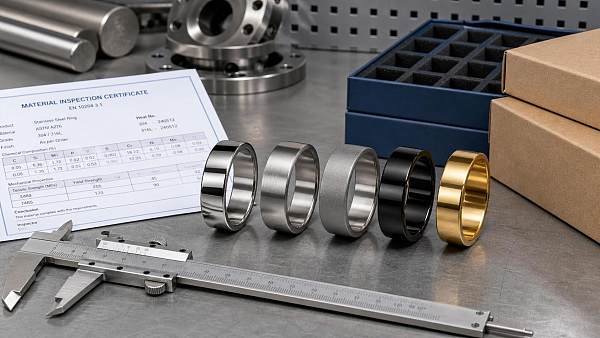
The key is to ask for grade confirmation in writing. Material declarations, mill certificates, or third-party lab reports reduce ambiguity when evaluating stainless steel rings bulk offers.
Finish quality influences both look and returns
Surface finish is often what the end customer notices first. It affects shelf appeal, touch quality, scratch visibility, and how well the ring supports a brand’s intended positioning.
Typical finish options
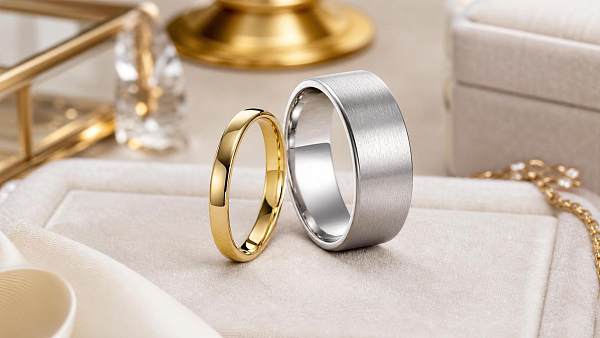
- High polish for classic retail styles and formal gifting.
- Brushed or matte finishes for modern, understated collections.
- Ion plating or PVD colors for black, gold, rose gold, and fashion-led looks.
- Hammered, sandblasted, or patterned surfaces for more distinctive designs.
The practical question is not only which finish looks best in a catalog. It is which finish keeps its appearance after packing, handling, transit, and repeated try-on activity.
Polished rings show fingerprints quickly. Matte rings can hide minor wear but may vary more across production lots. Plated rings need coating adhesion checks, thickness control, and abrasion testing.
When reviewing stainless steel rings bulk samples, compare at least three points: color consistency, edge smoothness, and finish uniformity under direct light. Small defects become more visible at scale.
Sizing control is where many bulk orders succeed or fail
Size inconsistency is one of the fastest ways to create returns and customer complaints. Even an attractive ring loses value if the actual inner diameter differs from the stated size.
This becomes more important in cross-border trade, because US, EU, and Asian sizing systems are not always aligned in production documents or packaging labels.
What should be standardized
- Inner diameter tolerance and conversion chart.
- Band width and thickness by size.
- Weight tolerance for each SKU.
- Laser marking, barcode, and size label method.
It is also smart to request a pre-production size set before authorizing full output. One approved sample ring is not enough when the order covers multiple sizes or unisex styles.
For stainless steel rings bulk projects tied to gifting or retail display, packaging should be reviewed alongside sizing. Mislabeling can cause the same disruption as incorrect manufacturing.
Supplier checks should go beyond catalog images
Many sourcing problems start with incomplete supplier evaluation. Product photos may look strong, but the real issue is whether the factory can hold stable quality across repeat orders.
A reliable supplier for stainless steel rings bulk should be able to explain material sourcing, polishing steps, plating controls, inspection records, and packaging standards without vague answers.
Useful verification points
- Factory profile, production capacity, and export history.
- Evidence of experience in jewelry or accessory manufacturing.
- Quality control checkpoints from raw material to final packing.
- Testing support for nickel release, coating durability, or material verification where needed.
- Clear defect policy, remake terms, and lead-time commitments.
In sectors covered by GCT-style sourcing standards, trust is built through evidence. Commercial buyers increasingly favor suppliers who can connect aesthetics with process discipline, documentation, and consistent execution.
Business scenarios change the buying criteria
The right ring for a fashion retailer is not always the right ring for a hotel loyalty gift or a branded event package. Commercial context changes what matters most.
This is why the same stainless steel rings bulk inquiry should not be sent with generic specifications. A stronger RFQ connects product requirements with the actual selling or usage environment.
A smarter RFQ usually saves more than negotiation does
A detailed request for quotation helps suppliers respond with realistic pricing and fewer assumptions. It also makes side-by-side comparison much easier.
Include these details in the brief
- Target grade, such as 304 or 316L.
- Finish requirement and plating color, if applicable.
- Exact size range and tolerance expectations.
- Artwork, logo, engraving depth, or stone-setting details.
- Packaging format, barcode rules, and destination market.
- Testing, documentation, and inspection needs.
For repeat programs, keep a control sheet for every approved SKU. That file should store sample photos, measurements, finish references, packaging details, and accepted tolerances.
Over time, this turns stainless steel rings bulk buying from reactive sourcing into a more predictable procurement system.
What to review before placing the order
Before confirming production, it helps to slow down and check the full chain rather than only the unit price. Small omissions usually become expensive after shipment.
- Confirm material grade and keep written evidence.
- Approve finish samples under consistent lighting.
- Verify size standards across all ordered SKUs.
- Align packaging, labels, and carton details.
- Set inspection timing for pre-production and final checks.
- Review lead time against launch or delivery deadlines.
That approach fits the broader direction of commercial sourcing today. Better buying decisions come from combining product knowledge with evidence-based supplier evaluation, especially in categories where appearance and durability meet brand expectations.
For the next step, it makes sense to compare current ring specifications against actual market use, then tighten the RFQ, sample review, and supplier verification process. In most cases, that is where better margins and fewer quality surprises begin.
Search News
Hot Articles
- Musical InstrumentsMusic China 2026 Opens Tomorrow, With 800-Plus Events Connecting TradeOct 28, 2026
- Outdoor RidesChoosing an Electric Trackless Train Supplier: Safety, Warranty, and Spare PartsOct 28, 2026
- Fashion & Gem JewelryLuxury Retail Merchandising: What Sets It Apart From Mass-Market Retail?Oct 27, 2026
Popular Tags
Need ExpertConsultation?
Connect with our specialized leisureengineering team for procurementstrategies.
Recommended News
 Oct 27, 2026Luxury Retail Merchandising: What Sets It Apart From Mass-Market Retail?Discover how luxury retail merchandising differs from mass-market retail, with curated displays, refined spaces, and personalized service that elevate perceived value and inspire purchases.● Luxury Retail Analyst
 Oct 12, 2026How to Choose Designer Eyewear That Fits Your Store’s Customer ProfileDesigner eyewear buying guide for retailers: match frames, price points, brand appeal, fit, and supplier support to your store’s customer profile for stronger sales.● Luxury Retail Analyst
 Oct 07, 2026Thermal Diamond Testers: How They Work and When They Can Misidentify StonesThermal diamond tester guide: learn how it works, spot false positives from moissanite, and choose reliable verification methods for jewelry trade and retail.● Luxury Retail Analyst
 Oct 02, 2026Diamond Tester Wholesale: How to Vet Accuracy, Calibration, and MOQ Before OrderingDiamond tester wholesale guide: verify accuracy, calibration records, supplier quality controls, and MOQ terms before ordering. Source reliable testers with confidence.● Luxury Retail Analyst
 Sep 09, 2026Wholesale Coral Earrings: How Buyers Can Assess Quality, Treatments, and Supply RiskCoral jewelry earrings wholesale guide for buyers: assess quality, treatments, secure settings, documentation, and supply risks before ordering.● Luxury Retail Analyst
 Sep 01, 2026How to Choose a Jewelry Laser Engraving Machine Manufacturer for Custom ProductionChoose a jewelry laser engraving machine manufacturer with proven sample testing, precision fixtures, workflow-ready software, and reliable support for custom production.● Luxury Retail Analyst
 Aug 27, 2026Evaluating Luxury Retail Accessories Suppliers: Quality, Lead Times, and Brand FitLuxury retail accessories supplier selection made clearer: assess quality, lead times, compliance, costs, and brand fit to protect premium launches and margins.● Luxury Retail Analyst
 Jul 29, 2026Fine Jewelry Price Guide: What Affects Cost and How to Judge Real ValueFine jewelry price guide for buyers: learn what drives cost in metals, gemstones, craftsmanship, certification, and branding so you can judge real value, reduce sourcing risk, and buy with confidence.● Luxury Retail Analyst
 Jul 14, 2026What to Ask an Enamel Jewelry Manufacturer Before Sampling and Mass ProductionEnamel jewelry manufacturer selection starts with the right questions. Learn what to ask about materials, color matching, MOQ, QC, compliance, and lead times before sampling and mass production.● Luxury Retail Analyst
 Jul 12, 2026Surgical Steel Belly Rings vs Titanium: Material Differences, Safety, and CostSurgical steel belly rings vs titanium: compare safety, nickel exposure, comfort, durability, and cost to choose the best option for sensitive skin or budget-friendly style.● Luxury Retail Analyst
 Jul 12, 2026Natural Coral Jewelry Guide: How to Identify Real Coral, Treatments, and QualityNatural coral jewelry guide covering how to identify real coral, spot treatments, assess quality, and buy with confidence. Learn the key signs before you choose.● Luxury Retail Analyst
 Jul 11, 2026Braided Leather Bracelets OEM: Material, Clasp, and MOQ Factors Before SamplingBraided leather bracelets OEM guide covering material grades, clasp options, and MOQ factors before sampling. Learn how to reduce sourcing risk, control cost, and choose the right supplier.● Luxury Retail Analyst
 Jul 09, 2026Jewelry Craftsmanship Gemstone Setting Methods Explained: Prong, Bezel, Pave, and MoreJewelry craftsmanship gemstone setting explained clearly: compare prong, bezel, pavé, channel, and more to choose secure, beautiful, and commercially smart jewelry designs.● Luxury Retail Analyst
 Jul 06, 2026Photo Locket Necklace Manufacturer Selection Guide: Materials, MOQ, and Custom OptionsPhoto locket necklace manufacturer selection guide covering materials, MOQ, custom options, compliance, and quality checks to help buyers source smarter and build stronger jewelry lines.● Luxury Retail Analyst
 Jul 05, 2026What to Check When Comparing a Sterling Silver Clasp ManufacturerChoosing a sterling silver clasp manufacturer? Learn what to check first: 925 silver claims, finish quality, testing, compliance, lead times, and hidden sourcing costs.● Luxury Retail Analyst
 Jul 02, 2026Jewelry Craftsmanship Techniques Explained: Casting, Stone Setting, Engraving, and PolishingJewelry craftsmanship techniques explained: discover how casting, stone setting, engraving, and polishing shape quality, durability, and sourcing confidence.● Luxury Retail Analyst
 Jul 01, 2026Lost Wax Casting Machines Explained: Types, Capacity, and Metal CompatibilityLost wax casting machines explained: compare types, real capacity, and metal compatibility to choose the right system for precision casting, higher quality, and smarter sourcing.● Luxury Retail Analyst
 Jun 29, 2026How to Evaluate a Luxury Accessories Online Store Before You BuyLuxury accessories online store buying guide: learn how to verify authenticity, compare policies, check reviews, and avoid costly mistakes before you place an order.● Luxury Retail Analyst
 Jun 22, 2026Matching Couple Rings: Popular Materials, Fit Differences, and How to ChooseMatching couple rings guide: compare popular materials, fit differences, comfort, durability, and resizing options to choose a stylish pair that truly lasts.● Luxury Retail Analyst
 Jun 19, 2026How to Build a Fashion Accessories Catalog That Improves Product Discovery and SalesFashion accessories catalog strategies that improve product discovery, filtering, and conversions. Learn how to structure pages, categories, and data to drive more qualified sales.● Luxury Retail Analyst
 Jun 19, 2026How to Choose Luxury Accessories for Women by Material, Style, and Price PointLuxury accessories for women: learn how to choose the right pieces by material, style, and price point for better value, timeless appeal, and smarter buying decisions.● Luxury Retail Analyst
 Jun 18, 2026Stainless Steel Rings Bulk: 304 vs 316L, Finishes, and Custom Order FactorsStainless steel rings bulk guide: compare 304 vs 316L, explore finish options, and learn key custom order factors to reduce sourcing risk and improve product value.● Luxury Retail Analyst
 Jun 18, 2026Body Piercing Jewelry Bulk Buying Guide: Materials, Sizes, and MOQ QuestionsBody piercing jewelry bulk buying guide covering safe materials, size checks, MOQ strategy, supplier screening, and compliance tips to reduce risk and source with confidence.● Luxury Retail Analyst
 Jun 18, 2026How to Evaluate a Luxury Jewelry Exporter for Quality, Compliance, and DeliveryLuxury jewelry exporter evaluation starts with more than design. Learn how to verify quality, compliance, and delivery control to source premium jewelry with less risk.● Luxury Retail Analyst