Matching Couple Rings: Popular Materials, Fit Differences, and How to Choose
Matching couple rings sit at the intersection of emotion, design, and everyday function. They are chosen for symbolism, yet the real decision often comes down to material behavior, comfort, and long-term wear. In a market shaped by premiumization and experience-driven buying, these details matter more than appearance alone. That is especially true across jewelry and luxury accessories, where visual harmony must also meet practical expectations, reliable sourcing standards, and lasting value.
Why matching couple rings attract steady attention
The appeal of matching couple rings is easy to understand. They offer a shared design language without requiring identical personal style.
Some pairs prefer exact symmetry. Others choose rings with one common element, such as metal tone, engraving style, or surface finish.
That flexibility has made matching couple rings relevant across casual gifting, anniversaries, engagement alternatives, and luxury retail collections.
From an industry perspective, the category also reflects a broader shift. Buyers increasingly want jewelry that carries narrative value, not just decorative value.
This is one reason platforms focused on curated sourcing intelligence, such as GCT, pay attention to jewelry decisions through both aesthetic and commercial lenses.
What “matching” really means in practice
Matching does not always mean duplicate rings. In many cases, the best pair is coordinated rather than identical.
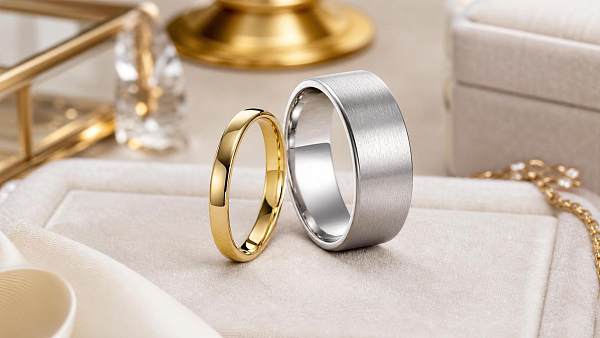
A narrow band may suit one hand better, while a wider band gives the other ring more presence. The visual connection remains intact.
This is where many first-time buyers hesitate. They focus on photos, but overlook proportions, skin sensitivity, and daily routines.
A ring worn every day has to survive keyboards, handwashing, commuting, fitness, and changing temperatures. Design should account for that reality.
Shared style can come from different details
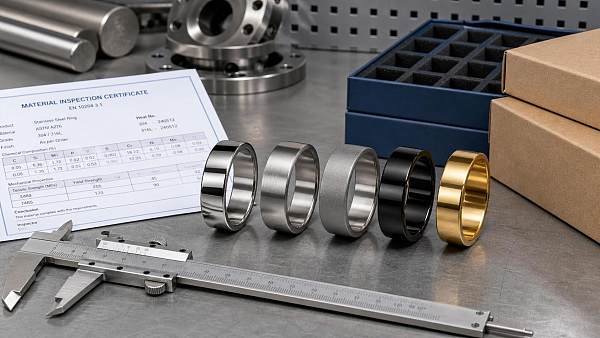
- Metal color, such as yellow gold, white metal, or dark gray tones
- Surface treatment, including polished, brushed, matte, or hammered finishes
- Edge profile, from sharp modern lines to softly rounded contours
- Subtle personal details, such as inside engraving or a single accent stone
Popular materials and how they behave
Material selection shapes almost every part of the experience. It affects color stability, scratch visibility, weight, maintenance, and resize potential.
For matching couple rings, material should be assessed in relation to lifestyle rather than trend alone.
Gold remains the most versatile choice because it balances heritage, customization, and repairability. Silver works well for style-led purchases, but usually needs more care.
Titanium and tungsten have become popular in matching couple rings because they signal a cleaner, contemporary look. Still, their sizing limitations should never be treated as a minor detail.
Fit differences that change the wearing experience
Two rings can share the same numerical size and still feel very different. Fit depends on more than diameter.
Band width is a major factor. Wider bands usually feel tighter because they cover more skin and create more friction.
Inner profile also matters. Comfort-fit bands have a slightly rounded interior, making them easier to slide over the knuckle.
Flat interior bands can feel more secure, but also less forgiving during warm weather or long wear.
Weight influences perception as well. Platinum and tungsten can feel more substantial, while titanium often disappears on the hand.
Common fit variables to compare
- Band width between 2 mm and 8 mm
- Comfort fit versus standard inner shape
- Metal weight and daily sensitivity to pressure
- Seasonal finger swelling and knuckle size difference
- Resizing options after purchase
In practical terms, matching couple rings should feel balanced as a pair, but individually right on each hand. One design should not force the other into discomfort.
How style, durability, and sourcing connect
The jewelry category now sits inside a wider commercial conversation about traceability, finish quality, and dependable fulfillment.
That is where a sourcing-focused perspective becomes useful. A beautiful product image does not confirm metal purity, plating consistency, or production stability.
For luxury accessories, confidence often comes from a combination of product detail and supply chain transparency. GCT’s editorial model reflects that broader expectation.
In other words, evaluating matching couple rings is not only about design preference. It also involves understanding whether craftsmanship and supplier capability support the intended quality level.
Signals worth reviewing before deciding
- Clear disclosure of base metal, alloy content, and surface treatment
- Consistent finishing across both rings in the pair
- Reasonable policies for size exchange, repair, or refinishing
- Evidence of production quality through detailed specifications or case references
Typical scenarios for choosing matching couple rings
Different use cases create different priorities. A symbolic gift set may favor design harmony, while daily commitment rings may put comfort first.
For travel-heavy lifestyles, lightweight metals often become more practical. For formal wear and milestone purchases, precious metals usually feel more appropriate.
Some buyers also use matching couple rings as a bridge between fashion jewelry and wedding jewelry. In those cases, adaptability becomes valuable.
A practical way to narrow the options
A useful decision process starts with wear pattern, not color. Ask how often the rings will be worn and in what settings.
Then compare fit preferences. If one person dislikes heavier jewelry, a dense metal may create regret even if the design looks ideal.
After that, consider maintenance tolerance. Some people are comfortable polishing silver or refinishing gold. Others want minimal upkeep.
The final filter should be flexibility. Resizing, repair, and long-term care can matter more than a small initial price difference.
Short checklist before making a final comparison
- Confirm whether both rings need identical or coordinated design
- Match metal choice to daily use, climate, and maintenance habits
- Review width and inner profile, not size number alone
- Check if future resizing is possible for the chosen material
- Compare supplier detail, finish consistency, and aftercare support
Matching couple rings work best when symbolism and wearability support each other. A pair should look connected, feel natural, and remain suitable beyond the first impression.
The next step is usually simple: define the lifestyle context, shortlist two or three materials, and compare fit features with the same care given to design. That approach leads to a more reliable choice, whether the goal is a personal purchase, a curated collection reference, or a broader sourcing evaluation within the jewelry and luxury accessories market.
Search News
Hot Articles
- Stationery & UniformsHow Schools Can Cut Printing Costs When Buying Ink Cartridges in BulkSep 21, 2026
- Jewelry Packaging & DisplayHow to Evaluate a Luxury Retail Packaging Supplier for Premium Brand ConsistencySep 20, 2026
- Commercial KitchenHow to Select a Spiral Dough Mixer for Bakery Batch Size and Dough HydrationSep 19, 2026
Popular Tags
Need ExpertConsultation?
Connect with our specialized leisureengineering team for procurementstrategies.
Recommended News
 Sep 09, 2026Wholesale Coral Earrings: How Buyers Can Assess Quality, Treatments, and Supply RiskCoral jewelry earrings wholesale guide for buyers: assess quality, treatments, secure settings, documentation, and supply risks before ordering.● Luxury Retail Analyst
 Sep 01, 2026How to Choose a Jewelry Laser Engraving Machine Manufacturer for Custom ProductionChoose a jewelry laser engraving machine manufacturer with proven sample testing, precision fixtures, workflow-ready software, and reliable support for custom production.● Luxury Retail Analyst
 Aug 27, 2026Evaluating Luxury Retail Accessories Suppliers: Quality, Lead Times, and Brand FitLuxury retail accessories supplier selection made clearer: assess quality, lead times, compliance, costs, and brand fit to protect premium launches and margins.● Luxury Retail Analyst
 Jul 29, 2026Fine Jewelry Price Guide: What Affects Cost and How to Judge Real ValueFine jewelry price guide for buyers: learn what drives cost in metals, gemstones, craftsmanship, certification, and branding so you can judge real value, reduce sourcing risk, and buy with confidence.● Luxury Retail Analyst
 Jul 14, 2026What to Ask an Enamel Jewelry Manufacturer Before Sampling and Mass ProductionEnamel jewelry manufacturer selection starts with the right questions. Learn what to ask about materials, color matching, MOQ, QC, compliance, and lead times before sampling and mass production.● Luxury Retail Analyst
 Jul 12, 2026Surgical Steel Belly Rings vs Titanium: Material Differences, Safety, and CostSurgical steel belly rings vs titanium: compare safety, nickel exposure, comfort, durability, and cost to choose the best option for sensitive skin or budget-friendly style.● Luxury Retail Analyst
 Jul 12, 2026Natural Coral Jewelry Guide: How to Identify Real Coral, Treatments, and QualityNatural coral jewelry guide covering how to identify real coral, spot treatments, assess quality, and buy with confidence. Learn the key signs before you choose.● Luxury Retail Analyst
 Jul 11, 2026Braided Leather Bracelets OEM: Material, Clasp, and MOQ Factors Before SamplingBraided leather bracelets OEM guide covering material grades, clasp options, and MOQ factors before sampling. Learn how to reduce sourcing risk, control cost, and choose the right supplier.● Luxury Retail Analyst
 Jul 09, 2026Jewelry Craftsmanship Gemstone Setting Methods Explained: Prong, Bezel, Pave, and MoreJewelry craftsmanship gemstone setting explained clearly: compare prong, bezel, pavé, channel, and more to choose secure, beautiful, and commercially smart jewelry designs.● Luxury Retail Analyst
 Jul 06, 2026Photo Locket Necklace Manufacturer Selection Guide: Materials, MOQ, and Custom OptionsPhoto locket necklace manufacturer selection guide covering materials, MOQ, custom options, compliance, and quality checks to help buyers source smarter and build stronger jewelry lines.● Luxury Retail Analyst
 Jul 05, 2026What to Check When Comparing a Sterling Silver Clasp ManufacturerChoosing a sterling silver clasp manufacturer? Learn what to check first: 925 silver claims, finish quality, testing, compliance, lead times, and hidden sourcing costs.● Luxury Retail Analyst
 Jul 02, 2026Jewelry Craftsmanship Techniques Explained: Casting, Stone Setting, Engraving, and PolishingJewelry craftsmanship techniques explained: discover how casting, stone setting, engraving, and polishing shape quality, durability, and sourcing confidence.● Luxury Retail Analyst
 Jul 01, 2026Lost Wax Casting Machines Explained: Types, Capacity, and Metal CompatibilityLost wax casting machines explained: compare types, real capacity, and metal compatibility to choose the right system for precision casting, higher quality, and smarter sourcing.● Luxury Retail Analyst
 Jun 29, 2026How to Evaluate a Luxury Accessories Online Store Before You BuyLuxury accessories online store buying guide: learn how to verify authenticity, compare policies, check reviews, and avoid costly mistakes before you place an order.● Luxury Retail Analyst
 Jun 22, 2026Matching Couple Rings: Popular Materials, Fit Differences, and How to ChooseMatching couple rings guide: compare popular materials, fit differences, comfort, durability, and resizing options to choose a stylish pair that truly lasts.● Luxury Retail Analyst
 Jun 19, 2026How to Build a Fashion Accessories Catalog That Improves Product Discovery and SalesFashion accessories catalog strategies that improve product discovery, filtering, and conversions. Learn how to structure pages, categories, and data to drive more qualified sales.● Luxury Retail Analyst
 Jun 19, 2026How to Choose Luxury Accessories for Women by Material, Style, and Price PointLuxury accessories for women: learn how to choose the right pieces by material, style, and price point for better value, timeless appeal, and smarter buying decisions.● Luxury Retail Analyst
 Jun 18, 2026Stainless Steel Rings Bulk: 304 vs 316L, Finishes, and Custom Order FactorsStainless steel rings bulk guide: compare 304 vs 316L, explore finish options, and learn key custom order factors to reduce sourcing risk and improve product value.● Luxury Retail Analyst
 Jun 18, 2026Body Piercing Jewelry Bulk Buying Guide: Materials, Sizes, and MOQ QuestionsBody piercing jewelry bulk buying guide covering safe materials, size checks, MOQ strategy, supplier screening, and compliance tips to reduce risk and source with confidence.● Luxury Retail Analyst
 Jun 18, 2026How to Evaluate a Luxury Jewelry Exporter for Quality, Compliance, and DeliveryLuxury jewelry exporter evaluation starts with more than design. Learn how to verify quality, compliance, and delivery control to source premium jewelry with less risk.● Luxury Retail Analyst
 Jun 17, 2026Iced Out Watches Wholesale: How to Compare MOQ, Stone Quality, and MarginsIced out watches wholesale guide: compare MOQ, stone quality, and real margins to choose reliable suppliers, reduce risk, and grow resale profits with smarter sourcing.● Luxury Retail Analyst
 Jun 15, 2026How to Evaluate an Amber Jewelry Manufacturer: Quality Grades, OEM Options, and Lead TimesAmber jewelry manufacturer selection starts with quality grades, OEM capability, and realistic lead times. Learn how to compare suppliers, reduce sourcing risk, and choose with confidence.● Luxury Retail Analyst
 Jun 14, 2026Stainless Steel Rings Bulk Buying Guide: Grades, Finishes, Sizes, and Supplier ChecksStainless steel rings bulk buying guide covering grades, finishes, sizing, and supplier checks to help you reduce returns, protect quality, and source with confidence.● Luxury Retail Analyst
 Jun 14, 2026How to Choose Custom Luxury Jewelry for Private Label: Materials, MOQ, and Lead TimeCustom luxury jewelry buying guide for private labels: compare materials, MOQ, and lead time to reduce sourcing risk, control costs, and choose reliable suppliers with confidence.● Luxury Retail Analyst