How to Evaluate a Luxury Jewelry Exporter for Quality, Compliance, and Delivery
Why does choosing a luxury jewelry exporter require more than reviewing design samples?
A polished catalog can create confidence fast. It can also hide the most expensive risks in global sourcing.
When evaluating a luxury jewelry exporter, visual appeal is only the starting point. Premium buyers usually carry brand promises that depend on accuracy, traceability, and stable delivery.
That is why the real question is broader. Can the exporter prove material integrity, meet destination rules, and repeat quality across every shipment?
In practical terms, luxury jewelry sourcing sits at the intersection of craftsmanship and trade execution. A supplier may excel at one and fail at the other.
For commercial projects linked to hospitality, specialty retail, gifting, or branded environments, this distinction matters even more. Delays or non-compliant goods can disrupt launches and damage perceived value.
This is also where a research-led approach becomes useful. Platforms such as Global Commercial Trade, which focus on experience-driven sectors, frame supplier evaluation around quality, compliance, and supply continuity rather than trend language alone.
What should be checked first when screening a luxury jewelry exporter?
Start with basic legitimacy, but do not stop there. The first screen should confirm whether the exporter can support premium commercial expectations at scale.
A useful early review usually covers five points:
- Business registration, export history, and target markets served.
- Product specialization, such as fine jewelry, plated collections, bespoke pieces, or branded packaging sets.
- Material documentation for gold, silver, platinum, diamonds, gemstones, and coatings.
- Production model, including in-house manufacturing, subcontracting, or hybrid sourcing.
- Quality control checkpoints before plating, stone setting, polishing, packing, and export release.
At this stage, many buyers focus heavily on price. A better first filter is operational fit.
For example, an exporter serving boutique orders may struggle with project-driven replenishment. Another may handle volume well, yet lack the finishing standards expected in luxury retail.
A capable luxury jewelry exporter should explain process details clearly. If answers remain vague around sourcing, subcontractors, or inspection records, the risk is usually higher than the quote suggests.
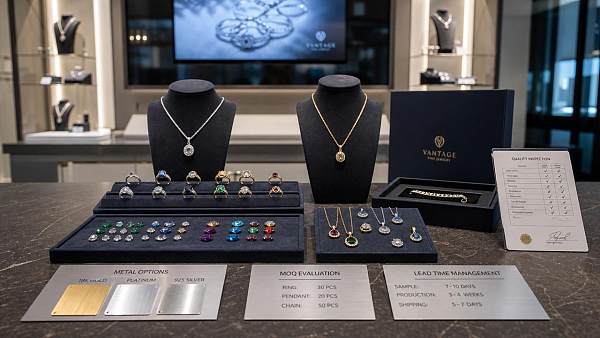
A fast comparison table for early-stage qualification
Before asking for final pricing, it helps to compare exporters using practical decision signals rather than marketing claims.
How can material quality be verified without relying only on trust?
This is often the turning point in supplier selection. Trust matters, but evidence matters more.
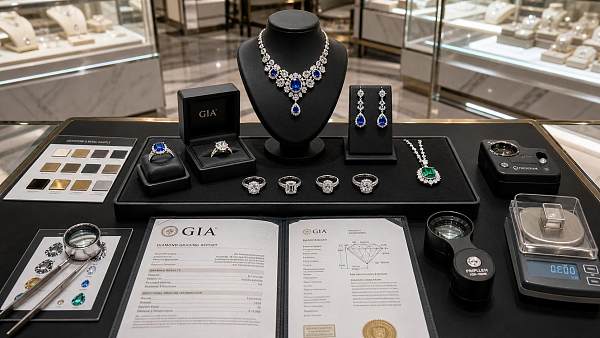
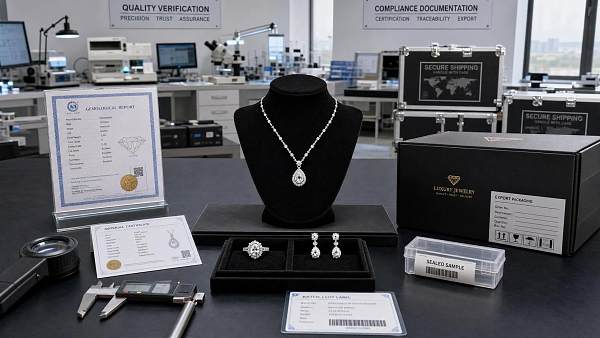
For a luxury jewelry exporter, quality verification should cover both the visible result and the hidden structure of the item.
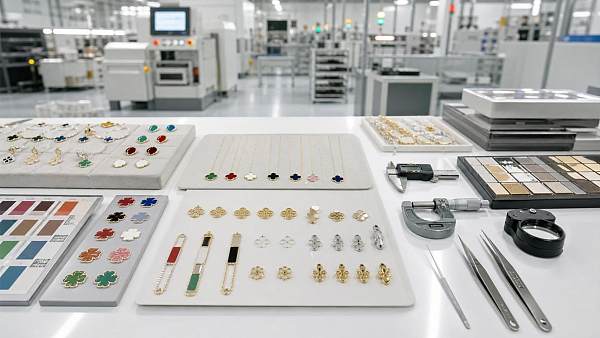
Visible quality includes polish, symmetry, stone alignment, clasp function, plating uniformity, engraving precision, and packaging finish. These are easier to inspect.
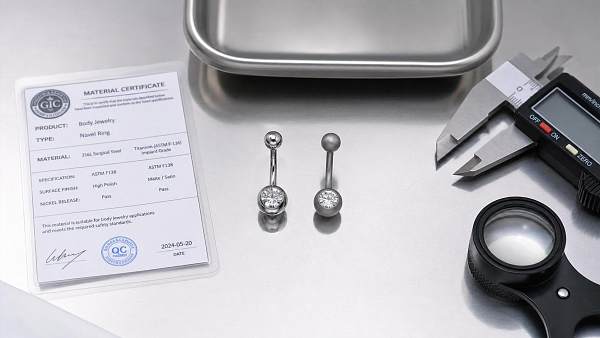
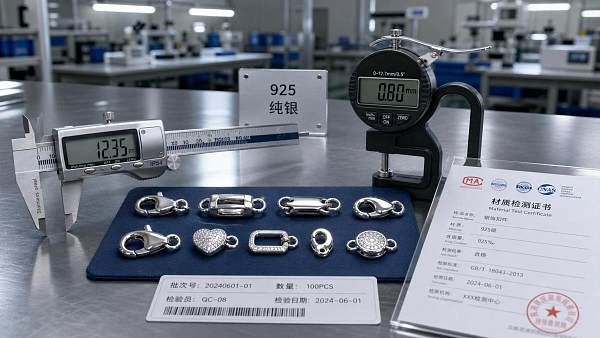
Hidden quality is where many disputes begin. Metal purity, gemstone treatment disclosure, adhesion durability, soldering integrity, and nickel release limits may not appear in a photo.
A careful review usually asks for:
- Third-party assay or lab certificates where relevant.
- Detailed bills of materials for each SKU or collection.
- Pre-production samples and sealed approval samples.
- Wear, plating, or fastening tests for repeated-use items.
- Inspection photos tied to batch numbers.
In actual sourcing, sample approval should never be treated as a formality. The approved sample becomes the reference standard for finish, dimensions, weight tolerance, and packaging execution.
If the exporter cannot lock those details into a written specification, repeatability becomes uncertain. That problem usually appears during reorder cycles, not during the first conversation.
Which compliance and documentation issues create the biggest export risks?
Compliance failures are rarely dramatic at the beginning. More often, they appear as customs delays, retesting costs, or rejected shipments.
A luxury jewelry exporter should understand the destination market as well as the product itself. Requirements differ by region, especially for precious metals, treated stones, coatings, packaging materials, and origin claims.
Common checkpoints include product descriptions, HS codes, country-of-origin declarations, packing lists, invoices, and any testing or material disclosure needed by the importing market.
Need attention to restricted substances as well. Nickel, cadmium, lead, and certain chemical finishes can trigger compliance issues depending on the destination and product category.
Where branded or custom collections are involved, intellectual property control also matters. Design files, logo use permissions, and confidentiality terms should be set before production begins.
More experienced exporters usually maintain document templates by market. They can explain what must travel with the goods, what needs testing, and what claims should not appear on labels or invoices.
That level of readiness often separates a decorative supplier from a true luxury jewelry exporter capable of supporting international commercial programs.
How do you judge whether delivery promises are reliable?
Late delivery in premium jewelry has wider consequences than missed dates. It can affect opening events, retail launches, gifting schedules, and seasonal collections.
The better question is not, “What is the lead time?” It is, “What controls support that lead time?”
A dependable luxury jewelry exporter should define each stage clearly. That includes sourcing, casting or fabrication, setting, plating, inspection, packing, customs preparation, and freight handover.
Ask where delays usually occur. The answer reveals operational maturity.
More credible suppliers discuss buffer time, raw material exposure, subcontractor dependencies, and remake procedures. Less prepared ones repeat a short lead time without explaining how it is protected.
This is especially important for custom collections. A design revision, packaging change, or hallmark update can shift the whole schedule if the exporter lacks change-control discipline.
Useful delivery questions include:
- What percentage of orders shipped on time over the last two quarters?
- Which production steps are outsourced?
- How are urgent remakes handled without affecting the full order?
- Can batch shipments be split by priority or launch date?
- What reporting format is used during production?
What mistakes are common when comparing one luxury jewelry exporter with another?
The most common mistake is comparing unit price without normalizing the specification. Small differences in metal weight, plating thickness, stone grade, or packaging can distort the quote.
Another mistake is treating compliance as a later step. If testing, labeling, or documentation are discussed only after order confirmation, cost and timing usually change.
Buyers also underestimate communication quality. In premium sourcing, weak communication is not a soft issue. It often predicts errors in engraving, finish, assortment mix, or shipment documents.
There is also a tendency to overvalue a beautiful first sample. A sample proves capability once. It does not prove process control across repeated orders.
A stronger comparison method is to score each luxury jewelry exporter against the same decision framework:
- Material transparency and test support.
- Consistency between first sample and second sample.
- Document readiness for the destination market.
- Lead-time realism and milestone visibility.
- Corrective action speed when issues appear.
- Commercial fit for reorder frequency and assortment complexity.
That approach gives a more durable answer than choosing the lowest quote or the most polished presentation.
What is a practical next step before making a final sourcing decision?
Move from impression to evidence. That shift usually reduces both quality disputes and delivery surprises.
Start by defining the non-negotiables for the collection. These may include metal content, stone disclosure, finish standard, packaging requirements, compliance documents, and delivery windows.
Then run a controlled comparison. Request equivalent samples, the same specification sheet, the same export assumptions, and the same commercial terms from each luxury jewelry exporter under review.
Where possible, include a pilot order. A smaller live order often reveals more than long presentations or edited factory videos.
It also helps to document acceptance criteria in advance. That means approved sample references, tolerances, inspection method, carton labeling, and remedy rules for defects or delays.
In sectors shaped by premium customer experience, sourcing decisions are rarely isolated. Jewelry often supports a wider commercial environment, from retail identity to hospitality gifting and curated brand programs.
That is why the best luxury jewelry exporter is not simply the one with attractive pieces. It is the one that protects quality, compliance, and delivery with equal discipline.
If the next review round is approaching, build a short scorecard, verify documents early, and test consistency before scaling volume. Those three steps usually create a stronger long-term sourcing result.
Search News
Hot Articles
- Smart Campus TechHow to Source Educational Furniture Worldwide for Safe, Flexible Learning SpacesSep 16, 2026
- Arcade & VR MachinesHow to Choose Coin-Operated Pool Tables for Bars, Hotels, and Arcade VenuesSep 15, 2026
- Commercial KitchenHow Restaurants Can Choose Disposable Wooden Cutlery for Takeout and CateringSep 14, 2026
Popular Tags
Need ExpertConsultation?
Connect with our specialized leisureengineering team for procurementstrategies.
Recommended News
 Sep 09, 2026Wholesale Coral Earrings: How Buyers Can Assess Quality, Treatments, and Supply RiskCoral jewelry earrings wholesale guide for buyers: assess quality, treatments, secure settings, documentation, and supply risks before ordering.● Luxury Retail Analyst
 Sep 01, 2026How to Choose a Jewelry Laser Engraving Machine Manufacturer for Custom ProductionChoose a jewelry laser engraving machine manufacturer with proven sample testing, precision fixtures, workflow-ready software, and reliable support for custom production.● Luxury Retail Analyst
 Aug 27, 2026Evaluating Luxury Retail Accessories Suppliers: Quality, Lead Times, and Brand FitLuxury retail accessories supplier selection made clearer: assess quality, lead times, compliance, costs, and brand fit to protect premium launches and margins.● Luxury Retail Analyst
 Jul 29, 2026Fine Jewelry Price Guide: What Affects Cost and How to Judge Real ValueFine jewelry price guide for buyers: learn what drives cost in metals, gemstones, craftsmanship, certification, and branding so you can judge real value, reduce sourcing risk, and buy with confidence.● Luxury Retail Analyst
 Jul 14, 2026What to Ask an Enamel Jewelry Manufacturer Before Sampling and Mass ProductionEnamel jewelry manufacturer selection starts with the right questions. Learn what to ask about materials, color matching, MOQ, QC, compliance, and lead times before sampling and mass production.● Luxury Retail Analyst
 Jul 12, 2026Surgical Steel Belly Rings vs Titanium: Material Differences, Safety, and CostSurgical steel belly rings vs titanium: compare safety, nickel exposure, comfort, durability, and cost to choose the best option for sensitive skin or budget-friendly style.● Luxury Retail Analyst
 Jul 12, 2026Natural Coral Jewelry Guide: How to Identify Real Coral, Treatments, and QualityNatural coral jewelry guide covering how to identify real coral, spot treatments, assess quality, and buy with confidence. Learn the key signs before you choose.● Luxury Retail Analyst
 Jul 11, 2026Braided Leather Bracelets OEM: Material, Clasp, and MOQ Factors Before SamplingBraided leather bracelets OEM guide covering material grades, clasp options, and MOQ factors before sampling. Learn how to reduce sourcing risk, control cost, and choose the right supplier.● Luxury Retail Analyst
 Jul 09, 2026Jewelry Craftsmanship Gemstone Setting Methods Explained: Prong, Bezel, Pave, and MoreJewelry craftsmanship gemstone setting explained clearly: compare prong, bezel, pavé, channel, and more to choose secure, beautiful, and commercially smart jewelry designs.● Luxury Retail Analyst
 Jul 06, 2026Photo Locket Necklace Manufacturer Selection Guide: Materials, MOQ, and Custom OptionsPhoto locket necklace manufacturer selection guide covering materials, MOQ, custom options, compliance, and quality checks to help buyers source smarter and build stronger jewelry lines.● Luxury Retail Analyst
 Jul 05, 2026What to Check When Comparing a Sterling Silver Clasp ManufacturerChoosing a sterling silver clasp manufacturer? Learn what to check first: 925 silver claims, finish quality, testing, compliance, lead times, and hidden sourcing costs.● Luxury Retail Analyst
 Jul 02, 2026Jewelry Craftsmanship Techniques Explained: Casting, Stone Setting, Engraving, and PolishingJewelry craftsmanship techniques explained: discover how casting, stone setting, engraving, and polishing shape quality, durability, and sourcing confidence.● Luxury Retail Analyst
 Jul 01, 2026Lost Wax Casting Machines Explained: Types, Capacity, and Metal CompatibilityLost wax casting machines explained: compare types, real capacity, and metal compatibility to choose the right system for precision casting, higher quality, and smarter sourcing.● Luxury Retail Analyst
 Jun 29, 2026How to Evaluate a Luxury Accessories Online Store Before You BuyLuxury accessories online store buying guide: learn how to verify authenticity, compare policies, check reviews, and avoid costly mistakes before you place an order.● Luxury Retail Analyst
 Jun 22, 2026Matching Couple Rings: Popular Materials, Fit Differences, and How to ChooseMatching couple rings guide: compare popular materials, fit differences, comfort, durability, and resizing options to choose a stylish pair that truly lasts.● Luxury Retail Analyst
 Jun 19, 2026How to Build a Fashion Accessories Catalog That Improves Product Discovery and SalesFashion accessories catalog strategies that improve product discovery, filtering, and conversions. Learn how to structure pages, categories, and data to drive more qualified sales.● Luxury Retail Analyst
 Jun 19, 2026How to Choose Luxury Accessories for Women by Material, Style, and Price PointLuxury accessories for women: learn how to choose the right pieces by material, style, and price point for better value, timeless appeal, and smarter buying decisions.● Luxury Retail Analyst
 Jun 18, 2026Stainless Steel Rings Bulk: 304 vs 316L, Finishes, and Custom Order FactorsStainless steel rings bulk guide: compare 304 vs 316L, explore finish options, and learn key custom order factors to reduce sourcing risk and improve product value.● Luxury Retail Analyst
 Jun 18, 2026Body Piercing Jewelry Bulk Buying Guide: Materials, Sizes, and MOQ QuestionsBody piercing jewelry bulk buying guide covering safe materials, size checks, MOQ strategy, supplier screening, and compliance tips to reduce risk and source with confidence.● Luxury Retail Analyst
 Jun 18, 2026How to Evaluate a Luxury Jewelry Exporter for Quality, Compliance, and DeliveryLuxury jewelry exporter evaluation starts with more than design. Learn how to verify quality, compliance, and delivery control to source premium jewelry with less risk.● Luxury Retail Analyst
 Jun 17, 2026Iced Out Watches Wholesale: How to Compare MOQ, Stone Quality, and MarginsIced out watches wholesale guide: compare MOQ, stone quality, and real margins to choose reliable suppliers, reduce risk, and grow resale profits with smarter sourcing.● Luxury Retail Analyst
 Jun 15, 2026How to Evaluate an Amber Jewelry Manufacturer: Quality Grades, OEM Options, and Lead TimesAmber jewelry manufacturer selection starts with quality grades, OEM capability, and realistic lead times. Learn how to compare suppliers, reduce sourcing risk, and choose with confidence.● Luxury Retail Analyst
 Jun 14, 2026Stainless Steel Rings Bulk Buying Guide: Grades, Finishes, Sizes, and Supplier ChecksStainless steel rings bulk buying guide covering grades, finishes, sizing, and supplier checks to help you reduce returns, protect quality, and source with confidence.● Luxury Retail Analyst
 Jun 14, 2026How to Choose Custom Luxury Jewelry for Private Label: Materials, MOQ, and Lead TimeCustom luxury jewelry buying guide for private labels: compare materials, MOQ, and lead time to reduce sourcing risk, control costs, and choose reliable suppliers with confidence.● Luxury Retail Analyst