How to Evaluate Wholesale Vending Machines for Multi-Location Business Deployment
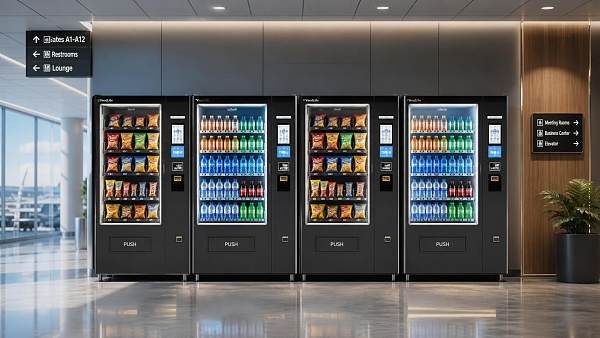
When a vending rollout expands from one successful site to ten, fifty, or several hundred, the buying decision changes completely. A machine that performs well in a single office lobby may become a recurring service headache when deployed across airports, campuses, hospitals, hotels, or mixed retail portfolios. That is why evaluating wholesale vending machines for multi-location business deployment is less about unit price and more about system fit.
Procurement teams usually sit in the middle of competing pressures: operations wants uptime, finance wants predictability, site managers want flexibility, and leadership wants a model that can scale without creating hidden costs. In practice, the right choice comes from assessing reliability, compatibility, replenishment logic, payment infrastructure, after-sales support, and supplier consistency as one connected decision—not a list of isolated specs.
Start with deployment reality, not the catalog
Many sourcing mistakes begin with an overemphasis on machine features before the operating environment is clear. A vending machine for a controlled corporate office behaves differently from one placed in a transport hub with long operating hours, varied temperature conditions, and heavier consumer traffic. Before comparing models, define the actual deployment map.
For each location cluster, procurement should document a few practical variables: expected footfall, product mix, refill frequency, available floor space, power requirements, security exposure, and local payment preferences. A snack machine in a university residence hall may need high product diversity and mobile payment options. A machine in a hotel staff area may prioritize reliability, simple SKU management, and quiet operation. A premium venue may care as much about aesthetics and finish as internal mechanics.
This early location profiling helps buyers avoid a common problem in wholesale sourcing: standardizing too aggressively. Uniformity has purchasing benefits, but forcing one machine format across every site can create lower sell-through, more service calls, and poor user experience.
What “wholesale” should really mean in a multi-site procurement context
For experienced buyers, wholesale vending machines are not simply machines sold in volume. The term only becomes valuable when the supplier can support deployment at scale. That includes production consistency across batches, documentation quality, spare parts availability, technical support structure, and the ability to maintain comparable standards across regions.
A low initial quote can be attractive, especially when the rollout is large. But a procurement team should look beyond the cost per unit and ask harder questions. Will the supplier hold configuration records for future repeat orders? Can they support phased deployment instead of a single shipment? Are key components standardized, or will every service event require model-specific troubleshooting? Is there a clear process for handling damaged units, warranty claims, or firmware issues across multiple destinations?
These questions matter because scaling exposes weaknesses that are easy to miss in a pilot. One machine can be manually managed. Fifty machines turn every inconsistency into an operational pattern.
The machine itself: core evaluation criteria that affect long-term ROI
Reliability and serviceability
Reliability is still the first filter. Not because procurement teams expect perfection, but because frequent minor failures become expensive when service routes, labor scheduling, and customer complaints multiply across sites. Look closely at component quality in the dispensing mechanism, refrigeration system if applicable, touch interface, and bill or cashless payment hardware.
Serviceability deserves equal weight. Can technicians access wear parts quickly? Are high-failure components modular and easy to replace? Does the supplier provide maintenance manuals, wiring diagrams, and remote troubleshooting support? In multi-location deployments, a machine that is slightly more expensive but faster to service often produces better lifecycle economics than a cheaper but harder-to-maintain alternative.
Capacity and configuration flexibility
Capacity should match both demand and route efficiency. Machines with too little capacity require excessive replenishment visits. Machines that are oversized for slower sites tie up capital and waste floor space. Procurement should evaluate tray configuration, SKU flexibility, packaging compatibility, and the ease of adjusting product lanes without specialized intervention.
This becomes especially important when locations vary. A deployment spanning offices, schools, and leisure venues may require a mixed fleet: some machines optimized for beverages, some for snacks, and some for broader unattended retail use. A supplier with flexible configurations can simplify procurement without forcing a one-size-fits-all layout.
Payment ecosystem compatibility
Payment flexibility is no longer optional in many markets. Consumers expect contactless cards, mobile wallets, QR-based payments, and, in some settings, closed-loop campus or staff systems. Procurement teams should verify which payment options are natively supported, which require third-party hardware, and how integration affects warranty or service responsibilities.
Just as important is transaction stability. A long list of payment methods looks good in a sales sheet, but if the system fails during network interruptions or creates reconciliation challenges across locations, the business impact can outweigh the benefit. Ask how payment logs are accessed, how failed transactions are handled, and whether reporting can be centralized.
Telemetry and remote management
In multi-location vending, remote visibility often separates scalable operations from reactive ones. Machines with telemetry support allow operators to monitor stock levels, machine status, sales patterns, and service alerts without waiting for on-site reports. For procurement, this is not merely a technology preference; it directly affects route planning, downtime reduction, and stock optimization.
When reviewing remote management capabilities, focus on practical questions. Does the dashboard provide exception alerts that are actually useful? Can different user roles access data by region or site type? Is the system exportable to broader retail or facility reporting tools? A sophisticated interface is less valuable than clear, actionable operational data.
The supplier evaluation is as important as the machine evaluation
Procurement professionals know that equipment selection and supplier selection are inseparable. In the case of wholesale vending machines, the supplier’s operational maturity often determines whether a rollout remains manageable after installation.
Look for evidence of process discipline. That includes pre-shipment inspection routines, packaging standards for international transport, product documentation, replacement part policies, and support response structure. A supplier serving multi-site commercial buyers should also be comfortable discussing lead times realistically, not just optimistically.
It is wise to test the supplier’s consistency before placing a broad order. Sample units, technical Q&A sessions, and pilot site reviews often reveal more than polished presentations. Procurement teams should notice how quickly technical questions are answered, whether specifications remain consistent across documents, and whether the supplier can communicate clearly with stakeholders outside pure purchasing—such as operations teams, installers, and finance reviewers.
Regional deployment adds another layer of complexity
If the rollout spans multiple countries or even multiple regulatory environments within one region, machine evaluation should include compliance and localization checks early in the process. Power standards, connectivity requirements, payment protocols, language settings, labeling rules, and accessibility expectations can all affect suitability.
This is where B2B sourcing often becomes more strategic than transactional. Buyers are not simply ordering machines; they are building a repeatable deployment model. A sourcing partner or intelligence-led procurement approach can help identify whether a manufacturer is truly prepared for varied commercial environments or only suited for a narrow domestic market.
For organizations managing hospitality, education, institutional, or specialty retail assets across borders, this broader view matters. Machines must function not just mechanically, but commercially and operationally, within each local context.
Questions procurement teams should ask before approving a vendor
Strong evaluation usually comes down to the quality of the questions asked. A practical vendor review should cover the following:
- Which components are most commonly replaced, and what is the expected service path?
- How are spare parts stocked and shipped for repeat customers?
- What payment systems are tested and supported in the target markets?
- Can telemetry, firmware, and reporting tools be standardized across the fleet?
- How does the supplier handle phased deployment and future replenishment orders?
- What site conditions can affect warranty coverage or performance?
- Can machine configuration be adapted for different SKU categories without major redesign?
- What training materials are available for operators, technicians, and site managers?
These questions may sound operational, but they are also financial. Every unclear answer creates risk that usually appears later as downtime, emergency service visits, stock inefficiency, or replacement spend.
Avoid the usual procurement traps
One of the most frequent mistakes is buying for the pilot instead of buying for the network. A pilot can tolerate manual workarounds, inconsistent reporting, and heavier management attention. A scaled deployment cannot. Another trap is focusing too much on visible features—screen size, exterior design, headline capacity—while underweighting service logistics and software stability.
There is also a tendency to assume that broad product catalogs signal strong manufacturing capability. In reality, a supplier with fewer but more standardized, well-supported models may be a safer choice for multi-site business deployment. Standardization reduces training time, spare parts complexity, and maintenance variation.
Finally, procurement should be careful not to treat the cheapest freight arrangement as the most economical one. Packaging quality, installation readiness, documentation accuracy, and post-delivery support all affect the real landed cost. A machine arriving cheaply but requiring extra labor, troubleshooting, or component replacement is rarely a good buy.
Why this evaluation process matters more in experience-driven commercial spaces
Vending is no longer limited to simple convenience transactions. In hotels, smart campuses, leisure venues, and premium commercial spaces, unattended retail increasingly contributes to the overall user experience. That changes the specification conversation. Quiet operation, intuitive interface design, payment speed, machine finish, and product presentation begin to matter alongside pure throughput.
For buyers working in sectors where environment and brand perception matter, the machine must support the space rather than disrupt it. This is especially relevant in the commercial categories where sourcing decisions intersect with design standards, operational discipline, and long-term asset planning. In those settings, evaluation should reflect both the technical demands of vending operations and the broader expectations of modern commercial environments.
Choosing with scale in mind
The best procurement decisions for wholesale vending machines are usually the least impulsive ones. They do not come from a single attractive quote or an impressive showroom demonstration. They come from matching machine capabilities to site realities, pressure-testing supplier readiness, and viewing the purchase as part of a scalable operating system.
For multi-location deployment, the real goal is not simply to buy machines. It is to build a vending network that remains serviceable, measurable, and commercially sensible as it grows. Procurement teams that evaluate on those terms tend to make choices that hold up long after the initial rollout—when the excitement of installation is gone and daily performance becomes the only metric that matters.
Search News
Hot Articles
- Commercial KitchenWhat Is Driving Demand for Commercial Hospitality Projects Across the GCC?Oct 06, 2026
- Hotel Room AmenitiesHow to Select Hotel Hair Dryers That Balance Guest Safety, Durability, and CostOct 05, 2026
- Restaurant FurnitureFast-Casual Restaurant Interiors: Design Choices That Improve Speed and Guest FlowOct 04, 2026
Popular Tags
Need ExpertConsultation?
Connect with our specialized leisureengineering team for procurementstrategies.
Recommended News
 Sep 15, 2026How to Choose Coin-Operated Pool Tables for Bars, Hotels, and Arcade VenuesCoin operated pool tables for bars, hotels, and arcades: compare sizes, payment systems, durability, service access, and revenue potential.● Theme Park Strategist
 Sep 08, 2026What to Look for in a Flight Simulator Chair Manufacturer for Commercial VR CentersChoose a flight simulator chair manufacturer that delivers durable, safe, customizable seating for commercial VR centers. Explore key sourcing criteria now.● Theme Park Strategist
 Aug 25, 2026What to Evaluate Before Buying Commercial Self Service Photo Booths for VenuesCommercial self service photo booths for venues: learn how to evaluate durability, software stability, branding flexibility, support, and total ROI before you buy.● Theme Park Strategist
 Aug 23, 2026How to Evaluate Wholesale Vending Machines for Multi-Location Business DeploymentWholesale vending machines for multi-location deployment require more than low unit cost. Learn how to compare reliability, payments, telemetry, and supplier support to scale smarter.● Theme Park Strategist
 Aug 17, 2026U.S. CPSC Urges Bilingual Warnings for Arcade and VR MachinesU.S. CPSC urges bilingual safety warnings for Arcade & VR Machines—learn what exporters, importers, and distributors must do now to avoid delays and returns.● Theme Park Strategist
 Aug 16, 2026EU Enforces EN IEC 62368-1:2026 Certification for Arcade and VR MachinesEU Enforces EN IEC 62368-1:2026 certification for arcade and VR machines, reshaping EU market access, customs clearance, and compliance planning for exporters and distributors.● Theme Park Strategist
 Aug 13, 2026UFLPA’s new guidelines take effect: Exports of Arcade and VR equipment face full-link labor compliance requirementsUFLPA’s new guide takes effect: Arcade and VR machine exports to the U.S. now face full-chain labor compliance checks. Discover key risks and action steps.● Theme Park Strategist
 Aug 12, 2026EU PPWR takes effect, Arcade and VR packaging incorporate heavy metal and PFAS restrictionsEU PPWR now applies to Arcade and VR packaging, tightening heavy metal and PFAS compliance. Learn how exporters can avoid delays, fines, and customs risks.● Theme Park Strategist
 Aug 11, 2026CPSC Sets Bilingual Labels for Arcade and VR ImportsCPSC bilingual labels for arcade and VR imports become mandatory on October 1, 2026. Learn the new English-Spanish warning rules, customs risks, and key compliance steps now.● Theme Park Strategist
 Aug 10, 2026EU Rule Takes Effect for Arcade & VR Machine ClearanceArcade & VR Machine clearance in the EU now depends on EN IEC 62368-1:2026+A11:2026 compliance. Learn what changed, who is affected, and how to avoid customs delays.● Theme Park Strategist
 Aug 09, 2026CPSC Requires New Labels for Arcade and VR ImportsCPSC requires new labels for Arcade and VR imports starting Oct 1, 2026. Learn the multilingual warning rules, compliance risks, and key steps exporters and buyers must take now.● Theme Park Strategist
 Aug 08, 2026EU Entry Rule Tightens for Arcade & VR MachinesArcade & VR Machines entering the EU now face stricter CE compliance under EN IEC 62368-1:2026+A11:2026. Learn the new rule, risks, and what exporters must do now.● Theme Park Strategist
 Aug 07, 2026CPSC Notice Tightens U.S. Entry Rules for Arcade and VR MachinesCPSC Notice Tightens U.S. Entry Rules for Arcade and VR Machines: learn the new labeling, FCC, UN38.3, and compliance document requirements before October 1, 2026.● Theme Park Strategist
 Aug 06, 2026EU Rule Takes Effect for CE-UKCA Labels on Arcade & VR MachinesArcade & VR Machines face new CE-UKCA label and ECPD filing rules in the EU and UK. Learn what manufacturers, importers, and distributors must do now to avoid delays.● Theme Park Strategist
 Aug 05, 2026CPSC Recalls Arcade and VR Machines Over UL 62368-1CPSC recalls arcade and VR machines over UL 62368-1 non-compliance. Learn how this 2026 safety action may affect imports, distribution, customs clearance, and market access.● Theme Park Strategist
 Aug 02, 2026EU Sets New Certification Rule for Arcade and VR MachinesArcade and VR Machines face a new EU certification rule from Oct 1, 2026. Learn how EN IEC 62368-1:2026+A11:2026 affects CE marking, customs clearance, and market access.● Theme Park Strategist
 Aug 01, 2026CPSC Moves to Require Bilingual Warnings on Arcade and VR MachinesCPSC bilingual warnings for Arcade and VR Machines may reshape U.S. import compliance. Learn how English-Spanish labels affect packaging, customs risk, and shipment readiness.● Theme Park Strategist
 Jul 31, 2026EU Sets EN IEC 62368-1:2025 Rule for Arcade and VR MachinesEU Sets EN IEC 62368-1:2025 Rule for Arcade and VR Machines. Learn the new EU compliance deadlines, safety updates, and key actions for manufacturers, OEMs, and distributors.● Theme Park Strategist
 Jul 30, 2026CPSC Sets New Warning Label Rule for Arcade & VR MachinesCPSC sets a new warning label rule for Arcade & VR Machines effective August 15, 2026. Learn key compliance risks, multilingual label requirements, and shipment actions now.● Theme Park Strategist
 Jul 29, 2026EU Enforces New Safety Standard for Arcade and VR MachinesEU Enforces New Safety Standard for Arcade and VR Machines: learn how EN IEC 62368-1 affects CE compliance, customs clearance, and EU market access for exporters and buyers.● Theme Park Strategist
 Jul 28, 2026CPSC Sets ASTM F3472-26 Rule for Arcade & VR ImportsCPSC ASTM F3472-26 rule reshapes Arcade & VR imports to the U.S. Learn key compliance deadlines, certification risks, and what exporters, OEM/ODM suppliers, and buyers should do now.● Theme Park Strategist
 Jul 27, 2026EU Rule Takes Effect for Arcade & VR Machine CybersecurityEU Rule Takes Effect for Arcade & VR Machine Cybersecurity: learn how EN IEC 62443-3-3:2025 affects compliance, customs clearance, sales continuity, and supplier planning in the EU market.● Theme Park Strategist
 Jul 25, 2026CPSC Sets Bilingual Warning Rule for Arcade and VR ImportsCPSC bilingual warning rule for arcade and VR imports takes effect August 1, 2026. Learn how OEM/ODM exporters can avoid CBP delays, relabel shipments, and protect U.S. delivery timelines.● Theme Park Strategist
 Jul 24, 2026EU Enforces New Safety Standard for Arcade and VR MachinesEU Enforces New Safety Standard for Arcade and VR Machines: learn how EN IEC 62368-1:2026+A11:2026 reshapes EU compliance, CE documentation, testing timelines, and export readiness.● Theme Park Strategist