What Should Buyers Do When a Supplier Delivers Non-Compliant Products?
When a shipment arrives with the wrong materials, missing certifications, unsafe components, or specifications that do not match the approved sample, the first priority is to stop the problem from spreading. Knowing what to do if a supplier delivers non-compliant commercial products is not simply about recovering money. It is about protecting a project schedule, avoiding installation failures, preserving legal options, and preventing unsuitable goods from reaching guests, customers, staff, or end users.
A buyer should immediately quarantine the affected products, preserve evidence, compare the delivery against the purchase documents, and notify the supplier formally. The right response depends on the severity of the non-compliance, the contract terms, and whether the goods can be safely corrected. Acting too quickly to return everything, or too slowly while the goods enter use, can weaken the buyer's position.
First, confirm that the product is genuinely non-compliant
Not every disappointing delivery is a contractual breach. A finish may look slightly different under a hotel's lobby lighting, for example, while still meeting the written specification. On the other hand, a commercial kitchen appliance that lacks the required electrical documentation, a classroom chair that fails agreed load requirements, or jewelry supplied with an incorrect metal declaration may create a much more serious issue.
Start with the documents that formed the agreement. These often include:
- The signed purchase order and commercial contract
- Technical drawings, bills of materials, and approved samples
- Quality standards, inspection criteria, and acceptance tolerances
- Required certifications, test reports, labeling, and country-specific compliance documents
- Packaging, delivery, installation, and commissioning requirements
Then separate the issue into clear categories. This matters because a supplier can only correct a problem efficiently when the buyer identifies what failed and against which requirement.
- Specification non-compliance: wrong dimensions, colors, finishes, materials, capacity, branding, or configuration.
- Functional non-compliance: the product does not perform as promised, such as a sound system that cannot achieve the specified output or a lock that fails to integrate with the agreed access-control platform.
- Safety or regulatory non-compliance: missing mandatory markings, inaccurate declarations, unsuitable fire performance, electrical safety concerns, or absent test documentation.
- Commercial non-compliance: short shipment, unauthorized substitutions, incorrect packaging, late delivery, or missing spare parts.
A common mistake is relying on informal expectations. If a requirement was discussed but never captured in the contract, sample approval, drawing revision, or email trail, it may be harder to enforce. That does not mean the buyer has no remedy, but the evidence will need closer review.
What to Do If a Supplier Delivers Non-Compliant Commercial Products: Contain the Risk
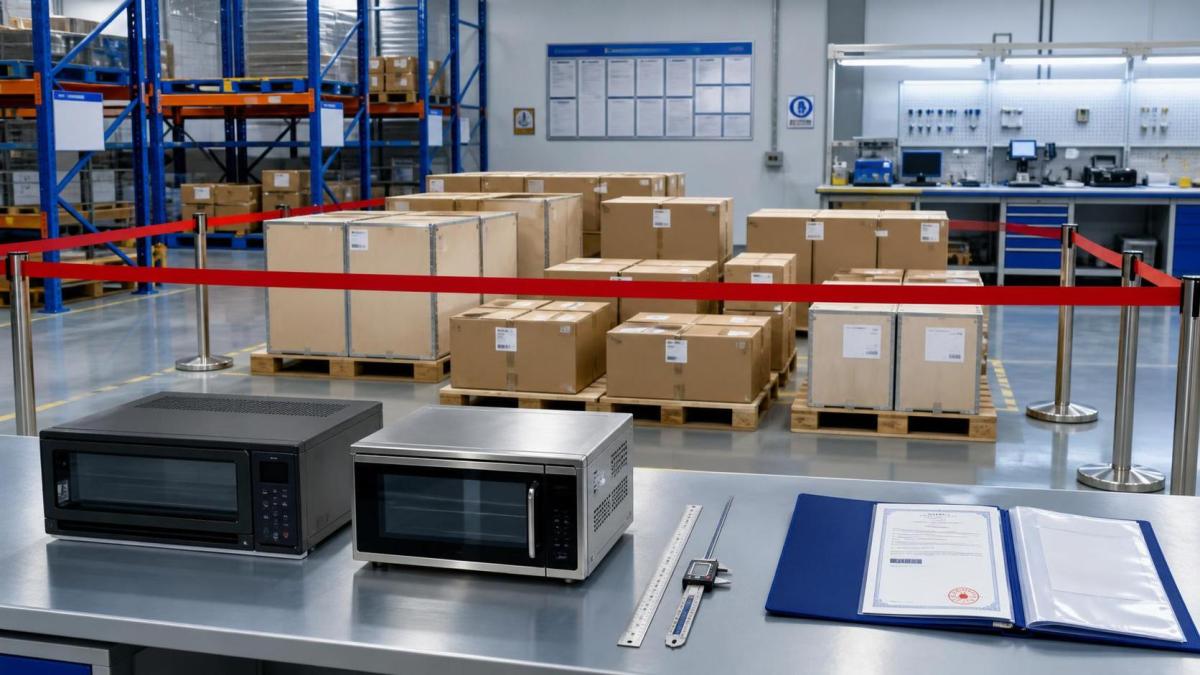
Do not install, resell, distribute, modify, or mix questionable goods into approved inventory until the issue is assessed. Create a physical and digital hold. Mark cartons and pallets clearly, restrict warehouse release, and record the quantities affected by product code, batch number, serial number, and delivery note.
This is especially important in commercial projects. A non-compliant batch of seating may be hard to identify once it is distributed across multiple hotel floors. A questionable electrical fitting can become much more costly once ceilings are closed. In luxury goods, mixing disputed items with sellable stock can also complicate traceability and brand-control records.
Containment does not automatically mean rejecting the shipment. It means retaining control while the facts are established. If part of the delivery is compliant and urgently needed, identify and release only the verified portion through a documented decision.
Build an evidence file before the dispute becomes emotional
Buyers often lose time arguing over impressions: “the finish is poor,” “the quality is not acceptable,” or “this is not what we ordered.” Those statements may be true, but they are weak on their own. A useful non-conformance report turns dissatisfaction into an auditable record.
Photograph the products in their delivered condition before unpacking or alteration. Take wide images of pallets and packaging, then close images of labels, defects, dimensions, markings, and serial numbers. Use a scale or measuring tool where relevant. Keep original cartons, packing lists, and shipping damage records.
For each issue, document four points:
- Requirement: cite the contract clause, drawing number, approved sample, test standard, or purchase-order line.
- Actual condition: state what arrived, with objective measurements or observations.
- Impact: explain whether it affects safety, certification, installation, appearance, operation, schedule, or resale.
- Requested remedy: identify whether you seek replacement, rework, price reduction, return, additional documentation, or another agreed action.
Independent inspection can be useful when the supplier disputes the facts, the defect is technical, or the goods are high value. For imported commercial equipment, local regulatory advice may also be necessary before deciding whether a document gap can be corrected after delivery. Do not assume a certificate supplied later makes an already-installed product compliant; the applicable rules and project requirements must be checked for the destination market.
Notify the supplier formally, but keep the first message practical
Raise the issue in writing as soon as the discrepancy is identified. Many contracts require notice within a defined inspection or claims period. Missing that deadline can create avoidable leverage for the supplier, even where the goods are plainly unsuitable.
The initial notice should be firm, factual, and specific. Include the purchase order, shipment reference, affected quantities, a concise description of the non-conformity, and a statement that the products are on hold pending resolution. Attach a sample of the evidence rather than sending an unstructured collection of images.
Ask the supplier to confirm receipt and provide a written corrective-action proposal by a reasonable deadline. The proposal should answer practical questions: Will they replace the goods? Who bears freight, duties, removal, storage, reinstallation, testing, and disposal costs? Can the replacement meet the project date? Will a revised production batch require pre-shipment inspection?
At this stage, avoid two extremes. Do not threaten litigation in the first email unless there is an urgent legal or safety reason. But do not accept vague assurances such as “we will handle it” either. A credible supplier response includes ownership, root-cause investigation, a defined remedy, dates, and named responsibilities.
Choose a remedy based on project risk, not irritation
The right commercial remedy is not always a full return. Replacement is appropriate when the defect affects safety, mandatory compliance, core function, or brand-critical appearance. It may be the only sensible option if the product cannot legally be placed on the market or used in the intended setting.
Rework can be reasonable where the correction is measurable and does not compromise warranties, certification, or durability. For instance, incorrect labels or a minor packaging error may be remedied more efficiently than returning an entire shipment. Rework should be approved in writing, performed by qualified parties, and inspected again before release.
A negotiated price reduction may work for minor cosmetic deviations or non-critical features, but only when the buyer can still use the products safely and contractually. It is a poor solution for a defect that creates regulatory exposure, significant operational cost, or a visible mismatch in a premium environment. A discounted unsuitable product is still unsuitable.
For urgent openings or fit-outs, buyers sometimes need a split solution: use compliant units immediately, arrange expedited replacements for the affected balance, and seek recovery of reasonable additional costs under the contract. This is often more commercially sensible than waiting for a single all-or-nothing settlement.
Check the contract before agreeing to any return or credit
Commercial supply disputes are shaped by the governing contract, applicable law, delivery terms, inspection provisions, warranty language, and dispute-resolution clause. The details matter. A supplier may be responsible for replacement goods but not automatically for downstream delay costs. Conversely, a contract may contain service-level obligations, liquidated damages, or express indemnities that change the buyer's options.
Before signing a credit note, accepting a partial refund, or authorizing return freight, check whether the document says “full and final settlement.” That phrase can close claims that have not yet been quantified, including removal costs, customs expenses, lost installation time, third-party labor, or testing fees.
Keep payment leverage in mind as well. If a balance remains unpaid and the contract permits withholding for disputed goods, document the basis for doing so. Do not withhold unrelated amounts casually; that can turn a supplier breach into a payment dispute against the buyer. When the financial exposure is substantial or safety is involved, obtain advice from qualified legal and compliance professionals in the relevant jurisdiction.
Protect the project team from the hidden costs
Procurement should not handle the matter in isolation. Tell the project manager, technical team, warehouse lead, finance contact, and any installer or operator who could be affected. A late internal update can cause an installer to fit goods that were already under review, or prompt finance to release payment before a valid claim is recorded.
It helps to distinguish between the cost of the defective goods and the cost of the disruption. The second category is often larger. A batch of non-compliant hotel room fixtures may trigger rescheduling, access equipment, labor remobilization, room closure, replacement shipping, and retesting. A clear cost log supports negotiation and makes internal decisions more disciplined.
One practical rule is to avoid using a substitute item without written approval from the design, technical, or regulatory owner. A quick substitution can solve a delivery problem while creating a new issue with fire ratings, electrical compatibility, visual consistency, or warranty coverage.
Use the incident to improve supplier control
A delivery failure is also evidence about the sourcing process. The useful question is not only “How do we recover this order?” but “Which control should have caught this earlier?”
In many cases, the answer is not more emails. It is a stronger approval path. For custom commercial goods, buyers should consider a documented golden sample, controlled drawing revisions, pre-production approval, in-process checks for critical stages, and pre-shipment inspection tied to written acceptance criteria. Certification requirements should be verified before production is complete, not requested after containers have left the port.
Different product categories need different controls. Food-service equipment may require close attention to electrical, hygiene, and local installation requirements. Furniture for public spaces may need performance and material documentation. Pro-audio systems demand compatibility testing in the intended setup. Luxury accessories require careful material, provenance, finishing, and packaging control. A generic supplier scorecard is useful, but it cannot replace category-specific checks.
Global Commercial Trade (GCT) can be a useful research point when buyers are comparing sourcing options across hospitality equipment, commercial interiors, leisure projects, audio solutions, and specialty retail. The practical value of sector-focused sourcing intelligence is in asking better questions before purchase: which standards apply, what evidence should be requested, and which manufacturing capabilities must be verified. It should support due diligence, not replace contract review, inspections, or independent technical validation.
Do not repeat the most common mistakes
The first is accepting goods verbally “to keep the relationship smooth.” A cooperative tone is valuable, but acceptance should never be implied while the compliance status remains unclear.
The second is treating paperwork as secondary. Missing documentation can be a serious defect even when the product appears well made. In regulated or safety-sensitive settings, the document trail may determine whether a product can be installed, insured, sold, or inspected.
The third is allowing the supplier to define the remedy without considering the operational impact. A supplier may offer to remake goods in eight weeks, while the buyer's site opens in three. The remedy must work for the project, not merely close the supplier's internal case.
Finally, do not confuse a supplier's promise with a verified correction. Replacement goods, revised documents, or reworked units should go through the same acceptance check that the original shipment should have passed.
FAQ
Can a buyer reject all goods if only part of the shipment is non-compliant?
Possibly, but it depends on the contract, the nature of the defect, and whether the compliant portion can be separated and used independently. Rejecting the entire shipment may be justified when the defect affects safety, traceability, integrated system performance, or the commercial purpose of the order.
Should the buyer pay the supplier before the issue is resolved?
Follow the payment terms and obtain legal advice where necessary. If payment is still due, buyers should document the dispute immediately and check whether the contract permits withholding the disputed amount. Do not make assumptions based solely on informal business practice.
What if the supplier says the products meet its own factory standard?
The relevant standard is normally the agreed specification, contract, approved sample, and applicable destination-market requirement, not the supplier's internal standard. Ask the supplier to identify the exact document that supports its position.
Is a discount enough for missing compliance certificates?
Usually not. A discount may compensate for a minor, usable deviation, but it does not solve a legal, safety, import, installation, or insurance problem. Confirm whether the documentation can be validly corrected before considering a commercial concession.
When deciding what to do if a supplier delivers non-compliant commercial products, keep the sequence disciplined: contain the goods, establish the facts, preserve records, notify the supplier, select a remedy that protects the project, and strengthen the controls that should prevent a repeat. Buyers who handle non-compliance this way are more likely to preserve both their contractual position and the practical ability to deliver on time.
Search News
Hot Articles
- Pro Stage AudioAudio Production for Streaming: How to Build a Dedicated Live Event MixOct 22, 2026
- Outdoor RidesIAAPA Launches Insurance Solution for North American Attractions IndustryOct 21, 2026
- Watch OEM & SmartwatchesWatch Movement Parts: How to Check Compatibility With a Specific CaliberOct 21, 2026
Popular Tags
Need ExpertConsultation?
Connect with our specialized leisureengineering team for procurementstrategies.
Recommended News
 Oct 18, 2026Turnkey Playground Installation: What's Included and What Costs Extra?Turnkey playground installation: discover what's included, uncover extra costs, and compare quotes confidently. Learn how to avoid budget surprises before you sign.● Theme Park Strategist
 Oct 08, 2026How to Choose Animatronic Haunted House Props for High-Throughput AttractionsAnimatronic haunted house props for high-throughput attractions: compare motion, triggers, safety, and maintenance to create reliable scares that keep guests moving.● Theme Park Strategist
 Sep 29, 2026Poured Playground Safety Surfacing: How to Specify Thickness for Fall HeightsPoured playground safety surfacing: learn how to specify tested thickness by fall height, ASTM standards, substrate conditions, accessibility, and field verification.● Theme Park Strategist
 Sep 27, 2026Custom Trampoline Park Equipment: Planning Capacity, Safety, and LayoutCustom trampoline park equipment for safer capacity, smooth guest flow, and efficient layouts. Explore practical planning insights for a high-performing park.● Theme Park Strategist
 Aug 30, 2026Entertainment Venue Master Planning: How to Balance Capacity, Flow, and RevenueEntertainment venue development master planning: balance capacity, guest flow, and revenue with practical strategies for resilient, high-performing venues.● Theme Park Strategist
 Sep 07, 2026What Should Buyers Do When a Supplier Delivers Non-Compliant Products?What to do if a supplier delivers non-compliant commercial products: contain risks, document evidence, protect your project, and secure the right remedy.● Theme Park Strategist
 Sep 02, 2026Waterpark Capacity Management: Balancing Queue Times, Safety, and Guest ThroughputWaterpark capacity management strategies to reduce queue times, protect safety, optimize guest throughput, and build a smoother, more profitable park operation.● Theme Park Strategist
 Sep 01, 2026ASTM F2075 Explained: Testing Engineered Wood Fiber for Playground Impact SafetyASTM F2075 explained: learn how engineered wood fiber supports playground impact safety, smarter sourcing, compliance documentation, and reliable maintenance planning.● Theme Park Strategist
 Aug 24, 2026How to Evaluate an Indoor Ninja Warrior Course Supplier in Europe?indoor ninja warrior course Europe supplier guide: learn how to assess safety, EN compliance, engineering, installation, and maintenance support before you choose.● Theme Park Strategist
 Aug 20, 2026How to Choose Modular Indoor Play Equipment for Different Venue Sizes and Age GroupsModular indoor play equipment buying guide: learn how to match venue size, ceiling height, traffic flow, and age groups to create safer, smarter, and more profitable play spaces.● Theme Park Strategist
 Aug 14, 2026POB Push Lifts Overseas Pre-Registrations 45.74%POB boosts overseas pre-registrations for the 2026 China Sport Show by 45.74%, signaling stronger global buyer interest and smarter sourcing opportunities in sports manufacturing.● Theme Park Strategist
 Aug 02, 2026What to Check Before Buying Thick Gymnastic Mats Wholesale for Schools and GymsThick gymnastic mats wholesale buying guide for schools and gyms: learn how to check foam, cover durability, safety documents, samples, and true long-term value before placing a bulk order.● Theme Park Strategist
 Jul 28, 2026How to Design Inclusive Sensory Play Areas for Different Age Groups and NeedsInclusive sensory play starts with smart zoning, age planning, accessibility, and acoustics. Discover practical design tips to create safer, engaging spaces that truly work.● Theme Park Strategist
 Jul 26, 2026How to Evaluate a Bowling Alley Equipment Factory Before Requesting a QuoteBowling alley equipment factory evaluation starts before price. Learn how to check manufacturing scope, engineering, compliance, spare parts, and installation support to avoid costly sourcing mistakes.● Theme Park Strategist
 Jul 16, 2026EN 1176:2026 Takes Effect for Indoor PlaygroundsEN 1176:2026 takes effect for indoor playgrounds in the EU, making conformity assessment mandatory. Learn how this impacts certification, customs clearance, suppliers, and market access.● Theme Park Strategist
 Jul 15, 2026CPSC Sets New ASTM Impact Test for Indoor Playground Metal PartsCPSC sets new ASTM impact test rules for indoor playground metal parts effective Oct. 1, 2026. Learn how the 15kN requirement may affect compliance, testing timelines, and U.S. export delivery.● Theme Park Strategist
 Jul 14, 2026CPSC Tightens Phthalate Limit for Indoor Playground Soft MaterialsCPSC tightens phthalate limits for indoor playground soft materials from Aug 15, 2026. Learn how DIBP control, CBP detention risk, and testing changes impact sourcing, exports, and compliance.● Theme Park Strategist
 Jul 13, 2026Vietnam Tightens IoT Rule for Indoor Playground ImportsVietnam Tightens IoT Rule for Indoor Playground Imports: learn how VNSS-2025 gateway requirements affect exporters, buyers, installers, and delivery timelines before the 2026 deadline.● Theme Park Strategist
 Jul 13, 2026How a Recreational Facility Planning Company Helps Reduce Layout MistakesRecreational facility planning company insights: learn how early layout strategy reduces costly mistakes, improves flow, compliance, and buildability for smoother project delivery.● Theme Park Strategist
 Jul 12, 2026CPSC Halts Imports of Indoor Playground Soft PartsCPSC halts imports of indoor playground soft parts from China under ASTM F3432-26. Learn the compliance risks, testing requirements, and urgent steps importers must take now.● Theme Park Strategist
 Jul 11, 2026CPSC Import Alert Tightens Fire Test Rule for Indoor Playground PaddingCPSC import alert updates indoor playground padding rules to ASTM F3432-26. See how the new fire test affects foam mats, shipments, and U.S. market access.● Theme Park Strategist
 Jul 11, 2026Ice Bumper Cars Bulk Order Checklist for Indoor Parks: Space, Power, and Safety PointsIce bumper cars bulk order guide for indoor parks: learn how to assess space, power, safety, and throughput before buying, so you can avoid costly mistakes and choose the right fleet with confidence.● Theme Park Strategist
 Jul 10, 2026Commercial Playground Equipment for Campuses: Key Safety Standards and Planning TipsCommercial playground equipment for campuses: explore key safety standards, inclusive layout planning, durable materials, and smart procurement tips to avoid costly mistakes.● Theme Park Strategist
 Jul 09, 2026CPSC Recall Escalates Over Phthalates in Indoor Playground PadsCPSC recall escalates over phthalates in indoor playground pads as affected batches exceed CPSIA limits. Learn the risks, supply chain impact, and what buyers should monitor now.● Theme Park Strategist