Commercial Product Compliance Testing: How to Identify Applicable Requirements
Identifying requirements for commercial product compliance testing starts with the exact product, its intended use, and the markets where it will be placed on sale or installed. A category such as “commercial kitchen equipment” is a useful starting point, but it does not determine a complete test plan. Electrical supply, food contact, wireless functions, installation conditions, and the identity of the responsible economic operator can each change the assessment.
For a defensible decision, work from legal obligations to applicable standards, then from those standards to a test plan for a defined product configuration. A test report or certificate can support that process, but its title alone does not establish that the finished product meets every requirement in a target market.
Define the product before searching for standards
Begin with a configuration that an assessor or laboratory can identify without guessing. Record the model and variants, rated voltage and frequency, power sources, materials, interfaces, accessories, and the functions enabled at the time of sale. Include the intended installation and operating environment: a fixed appliance connected by an installer presents a different assessment problem from a portable unit plugged into a standard outlet.
The intended user matters as well. A manufacturer may describe equipment as “professional” or “commercial,” but that description does not automatically remove obligations associated with foreseeable users or environments. Consider whether the product will be operated by trained staff, accessed by the public, cleaned with water, installed outdoors, or used near children. These details can affect both the rules that apply and the tests selected within a standard.
For products assembled from modules, define the boundary of the item being supplied. A powered speaker, for example, may include a radio module, power supply, amplifier, and battery. Evidence for individual components can be valuable, but the complete assembly may introduce different electrical, electromagnetic compatibility, thermal, or radio concerns. The evaluator needs to know what is being assessed as a component and what is being assessed as the finished product.
Capture foreseeable variants early. A change in enclosure material, heater rating, wireless module, or power supply can alter the applicable assessment or invalidate part of an existing report. Conversely, a well-defined product family may allow a laboratory to select representative configurations, provided the technical justification covers the differences.
Map obligations by market and product function
Create a separate requirements record for each destination market. Start with the jurisdiction and planned route to market, then identify the legislation and implementing rules that cover the product’s functions and intended use. A commercial appliance may need review for electrical safety, electromagnetic compatibility, restricted substances, food-contact materials, and energy-related requirements. A connected version may also bring radio requirements into scope.
The table below shows how to organize the first pass. It is a screening tool: each entry must be checked against the actual product and the rules in the destination market.
Do not treat that list as a universal set of mandatory tests. Applicability depends on the legal scope, exclusions, product design, and circumstances of supply. Some obligations concern documentation, labeling, registration, or conformity assessment rather than a laboratory test. Others may apply to the site or installation as well as to the product itself.
The EU and the United States illustrate why a market-by-market review matters. In the EU, applicable product legislation may require a manufacturer to complete a conformity assessment, prepare technical documentation, issue an EU declaration of conformity, and affix CE marking. The relevant legislation and procedure depend on the product; CE marking is not a general certificate covering every possible requirement. In the United States, applicable obligations can come from federal rules, state or local authorities, and installation or workplace requirements. Whether third-party listing or certification is required depends on the product and the context in which it is supplied and used.
For each market, record the legal instrument, the reason it applies or does not apply, the responsible party, and the evidence needed. A brief rationale for exclusions is useful: if a product has no intentional radio transmitter, for example, record that design fact rather than simply leaving the radio row blank.
Choose standards that support the legal assessment
Once the obligations are mapped, identify the standards that address the relevant hazards and product functions. Read the scope of each candidate standard before commissioning work. Check the products it covers, the installation and use assumptions, and any exclusions or references to more specific standards. A standard that appears relevant by name may apply only to a particular equipment type or operating environment.
Record the edition, amendments, and jurisdiction-specific adoption or deviations. The version used in an existing report may differ from the version accepted for the intended conformity route. Transition arrangements and references in legislation can also affect which edition is appropriate for a particular date or market. Resolve those details with the responsible compliance team, certification body, or laboratory before testing begins.
Standards and laws have different roles. A regulation can impose an obligation directly; a technical standard can provide a method for demonstrating that certain requirements are met. In the EU, use of an applicable harmonised standard can provide a presumption of conformity with the legal requirements it covers, subject to the conditions of its reference. It does not automatically cover obligations outside that standard’s scope. In other contexts, a standard may be incorporated into a rule, specified by an authority, required under a certification scheme, or requested by a customer.
Customer specifications deserve their own row in the requirements matrix. A hotel group or institutional buyer may request a sanitation certification, a particular listing, or performance tests beyond the minimum legal requirements. Those conditions can determine whether a product is accepted for a project, even when they are not universally required for sale in the market.
Turn the requirements matrix into a test plan
A useful test plan links each obligation to a specific piece of evidence. That evidence may be a laboratory report, material declaration, design assessment, inspection record, label review, or technical calculation. It should also identify gaps that cannot be closed until the production design is stable.
For each proposed test or assessment, specify:
- Scope: the product, model numbers, variants, accessories, and operating modes covered.
- Basis: the applicable requirement, standard and edition, including relevant national differences.
- Sample selection: the configuration to be tested and the technical reason it represents any other models.
- Conditions: supply ratings, software or firmware version, installation arrangement, and operating settings relevant to the assessment.
- Evidence and acceptance: the required report, certification or other record, and who will decide whether it is sufficient.
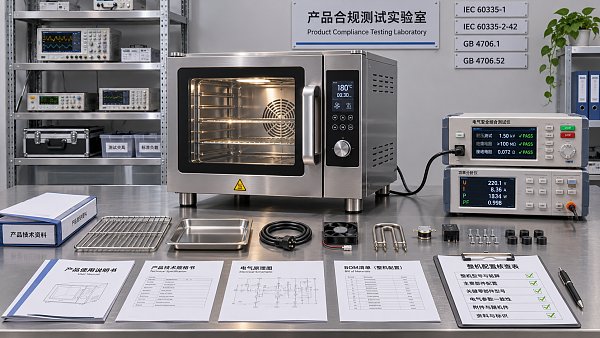
Give the laboratory a bill of materials, circuit diagrams, ratings, instructions, photographs, and a description of intended use appropriate to the product. Ask it to identify prerequisites and exclusions in its quotation or test scope. A quote for electrical safety alone should not be assumed to include radio approval, food-contact assessment, or review of every destination-market label.
If third-party involvement is required or commercially necessary, check that the body has the appropriate recognition and scope for the intended scheme and market. Laboratory accreditation can support confidence in specified testing activities, but accreditation alone does not mean every test offered by that laboratory is within its accredited scope, or that its report will satisfy every certification or regulatory route.
Check existing evidence against the finished product
Supplier documents can shorten an assessment when they match the design and the question being answered. They can also create false confidence when evaluators accept a certificate without reading its scope.
Check the named manufacturer, model numbers, product description, standard and edition, issue date, and any limitations. Compare critical components and ratings with the current bill of materials. For a report covering a family of products, review the explanation of which samples were tested and how other variants were represented. A certificate for a power supply, for instance, may support its use in an appliance, but it does not by itself establish the safety or electromagnetic performance of the complete appliance.
Review whether the document remains usable for the intended route. A report may describe a prototype, an earlier enclosure, or a radio module operating in conditions different from those of the finished product. Changes to antennas, shielding, firmware, wiring, or thermal design can affect the relevance of prior results. The appropriate response may be a documented engineering review, limited retesting, or a broader reassessment, depending on the change and the rules of the applicable scheme.
Labels and instructions need the same configuration discipline. Ratings, warnings, model identifiers, installation instructions, and required markings should agree with the product assessed and with the market in which it will be supplied. An otherwise satisfactory test report does not correct a missing warning or an inaccurate rating plate.
Keep the decision traceable after testing
Close the assessment by recording what each report covers, which obligations it supports, and which open items remain. The technical file should let a reviewer follow the chain from intended use and product configuration to applicable requirements, selected standards, evidence, and the final conformity decision. Where a third party issues a certificate, retain its conditions and surveillance obligations as well as the certificate itself.
Assign ownership for design changes and market changes. Before substituting a component or enabling a new wireless function, compare the change with the assumptions in the requirements matrix and test reports. Revisit the matrix when entering another jurisdiction or when an applicable legal requirement or standard changes. The value of the assessment lies in being able to explain why the evidence still fits the product being shipped.
Search News
Hot Articles
Popular Tags
Need ExpertConsultation?
Connect with our specialized leisureengineering team for procurementstrategies.
Recommended News
 Nov 22, 2026Commercial Product Compliance Testing: How to Identify Applicable RequirementsCommercial product compliance testing starts with the right requirements. Learn how to map regulations, select standards, and build a defensible test plan.● Hospitality Sourcing Dir
 Nov 16, 2026Choosing Data Center Server Cabinets: Size, Cooling and Load CapacityChoose data center server cabinets with confidence. Learn how to assess equipment fit, cooling, load capacity and service access before you buy.● Hospitality Sourcing Dir
 Nov 12, 2026Choosing Resort Hotel Lobby Chandeliers: Size, Style and MaintenanceExplore hotel lobby chandeliers for resorts: compare sizes, styles and maintenance needs to create a stunning, practical guest experience.● Hospitality Sourcing Dir
 Nov 09, 2026Buying School Sports Equipment in the USA: What Schools Should ConsiderBuying school sports equipment in the USA? Compare safety, total costs, supplier support, and purchasing requirements to make a confident choice.● Hospitality Sourcing Dir
 Nov 08, 2026Acoustic Enclosure Prices: What Drives the Cost of Noise Control?Acoustic enclosure price depends on noise targets, ventilation, materials and installation. Discover what drives costs and how to compare quotes with confidence.● Hospitality Sourcing Dir
 Nov 07, 2026GulfHost 2026 in Dubai Brings Together Global Kitchen and Automation ManufacturersGulfHost 2026 in Dubai connects commercial kitchen and automation manufacturers with food service buyers. Explore equipment trends and key procurement checks.● Hospitality Sourcing Dir
 Nov 06, 2026Choosing a Leisure Facility Design Company: How to Evaluate Its ExperienceChoosing a leisure facility design company? Learn how to verify experience, assess technical capabilities, and select a partner with confidence.● Hospitality Sourcing Dir
 Nov 03, 2026Choosing 39mm Ceramic Poker Chips: Weight, Finish and Print QualityChoosing 39mm ceramic poker chips? Compare weight, finish and print quality, and learn what to check before placing a bulk order.● Hospitality Sourcing Dir
 Oct 25, 2026Choosing an Electric Shawarma Machine: Capacity and Power RequirementsChoose the right electric shawarma machine by comparing capacity, power requirements, and peak-hour output. Discover practical buying tips to avoid costly mistakes and keep service moving.● Hospitality Sourcing Dir
 Oct 06, 2026What Is Driving Demand for Commercial Hospitality Projects Across the GCC?Commercial hospitality GCC demand is rising through destination-led tourism, mixed-use development, and premium operational standards. Explore the procurement strategies shaping resilient projects.● Hospitality Sourcing Dir
 Sep 24, 2026Conveyor Pizza Oven Price: What Buyers Should Budget for Capacity and FeaturesConveyor pizza oven price guide: compare capacity, features, installation costs, and quote factors to choose the right commercial oven for your operation.● Hospitality Sourcing Dir
 Sep 23, 2026How Restaurant Buyers Can Source Hospitality Supplies Without OverorderingHospitality supplies for restaurants: learn practical sourcing strategies to cut excess inventory, protect cash flow, improve supplier reliability, and keep every service running smoothly.● Hospitality Sourcing Dir
 Sep 22, 2026Commercial Kitchen Design Price: Budgeting by Layout, Equipment, and MEP ScopeCommercial kitchen design price explained: budget smarter for layout, equipment, MEP scope, compliance, installation, and long-term operational performance.● Hospitality Sourcing Dir
 Sep 19, 2026How to Select a Spiral Dough Mixer for Bakery Batch Size and Dough HydrationSpiral dough mixer bakery guide: match batch size, flour load, and hydration to select reliable torque, temperature control, and consistent dough results.● Hospitality Sourcing Dir
 Sep 14, 2026How Restaurants Can Choose Disposable Wooden Cutlery for Takeout and CateringDisposable wooden cutlery fork spoon knife guide for restaurants: compare strength, finish, packaging, food-contact needs, and catering performance.● Hospitality Sourcing Dir
 Sep 12, 2026How to Size a Restaurant Walk-In Cooler for Peak Inventory and Kitchen LayoutRestaurant walk in coolers sized for peak inventory and kitchen workflow help improve food safety, staff efficiency, storage access, and long-term operational performance.● Hospitality Sourcing Dir
 Sep 10, 2026How to Choose a CE Hot Dog Roller for Safe, High-Volume Food Service?Choose a CE hot dog roller with confidence: compare compliance documents, heating consistency, cleaning design, capacity, and total cost for safe, high-volume food service.● Hospitality Sourcing Dir
 Sep 04, 2026How to Evaluate a Commercial Food Warmer Manufacturer for Bulk Catering ProjectsCommercial food warmer manufacturer evaluation guide for bulk catering projects: compare thermal performance, compliance, customization, costs, and after-sales support.● Hospitality Sourcing Dir
 Aug 30, 2026How Can Buyers Verify Supplier Qualifications Before a Bulk Order?How to confirm supplier qualifications before placing a bulk order: verify legal identity, factory capability, certificates, samples, quality controls, and payment safeguards.● Hospitality Sourcing Dir
 Aug 28, 2026Commercial Kitchen Design Standards: A Planning Checklist for Code-Compliant LayoutsCommercial kitchen design standards: use this practical checklist to plan safer, code-compliant layouts, streamline approvals, and avoid costly rework.● Hospitality Sourcing Dir
 Aug 06, 2026How to Choose Flake Ice Makers for Seafood Displays, Bars, and Food Prep?Flake ice makers buying guide: compare output, hygiene, storage, energy use, and reliability to choose the best solution for seafood displays, bars, and food prep.● Hospitality Sourcing Dir
 Aug 03, 2026Commercial Kitchen Design Price: What Drives Cost in a New Build Project?Commercial kitchen design price explained: discover what drives cost in a new build, from layout and equipment to ventilation, compliance, and hidden budget risks.● Hospitality Sourcing Dir
 Jul 30, 2026How to Choose a Countertop Commercial Pizza Oven for Capacity, Speed, and Space?Countertop commercial pizza oven buying guide: learn how to match capacity, bake speed, and kitchen space for consistent output, lower costs, and smarter purchasing decisions.● Hospitality Sourcing Dir
 Jul 22, 2026How to Evaluate a Cotton Candy Machine Supplier for Quality, Lead Time, and MOQCotton candy machine supplier selection starts with quality, lead time, and MOQ. Learn how to compare suppliers, reduce sourcing risk, and choose a partner that supports reliable growth.● Hospitality Sourcing Dir