Buying School Sports Equipment in the USA: What Schools Should Consider
The purchase price of school sports equipment is only one part of the budget. Freight, installation, storage, replacement parts, inspections, and eventual disposal can change which quote offers the best value. A low-cost goal that needs separate anchoring and assembly, for example, may cost more to put into service than a higher-priced package with those items included.
Begin with the activities, student age groups, available space, and expected frequency of use. These details determine whether a basic physical education set is sufficient or whether the purchase requires competition-ready equipment, professional installation, and a documented maintenance plan. For school sports equipment in the USA, purchasing rules and applicable safety requirements also vary by jurisdiction and school system, so confirm them before issuing specifications.
Define the use before comparing quotes
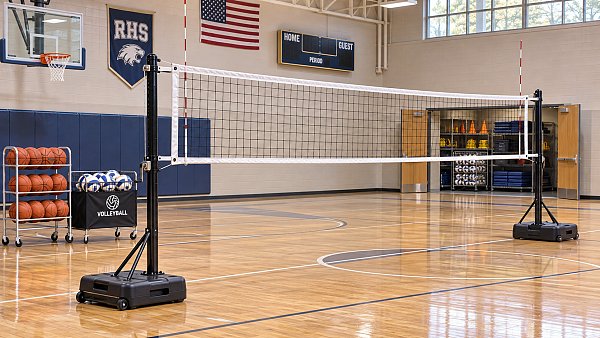
A physical education class, an after-school club, and a competitive athletics program place different demands on the same category of equipment. A lightweight portable volleyball system may suit a shared gym where staff regularly clear the floor. A fixed system may be a better fit for a dedicated court, provided the building structure and floor can support the installation. Competition rules may also specify dimensions or features that are unnecessary for introductory instruction.
Describe the intended use in the request for quotations: indoor or outdoor setting, age range, number of simultaneous activity stations, surface type, and whether equipment must be moved between locations. Include constraints such as storage-door width and the time available to set up between classes. These details give suppliers a basis for quoting comparable products and reduce the chance that an apparently suitable item arrives with an impractical footprint.
Separate essential requirements from preferences. For a set of balls, essential criteria could include the size appropriate to the age group, intended playing surface, and inflation method. Color choices or carrying-bag styles might be optional. For installed equipment, attachment method, clearances, and compatibility with the existing structure deserve more attention than finish options.
Build a cost comparison around a complete delivery
Ask each supplier to itemize the same scope. A quote for basketball backstops, for instance, should state whether it includes the backboard, rim, net, mounting structure, hardware, installation, freight, and any required site work. Confirm whether unloading and movement into the building are included. Large items may require a loading dock, liftgate, or scheduled access to a gym; missing those arrangements can add charges or delay installation.
Compare expected ownership costs over a stated planning period that fits the school’s replacement cycle. The comparison should include the initial purchase, delivery, assembly or installation, routine consumables, anticipated replacement parts, and inspection or service costs. Record assumptions next to the figures: a quote with free delivery to a loading dock is different from delivery into a locked equipment room, and a warranty that supplies parts may still leave labor costs with the school.
Avoid assigning a precise service life without evidence from the product documentation and the intended use. A mat stored dry and used indoors for supervised activities faces different wear from one moved outdoors and dragged across rough surfaces. When the expected life is uncertain, compare a favorable and an unfavorable replacement scenario rather than treating one estimate as certain.
Match durability claims to the environment
Specifications such as “heavy duty” or “commercial grade” are difficult to evaluate on their own. Request the materials, construction details, intended use, care instructions, and warranty exclusions. For balls, review the cover material and whether it is intended for indoor courts, outdoor pavement, or both. An indoor surface can provide good handling on a gym floor yet wear quickly when used on asphalt.
For mats, assess the covering, seams, dimensions, and how individual sections connect. A thick mat is not automatically suitable for every activity: impact protection depends on the mat’s construction and intended use, as well as the nature of a possible fall. Confirm the activity and installation arrangement with the supplier, including whether gaps between sections require a particular joining system. Damaged covers and exposed foam also complicate cleaning and can accelerate deterioration.
Outdoor equipment needs attention to drainage, weather exposure, and hardware. A coated metal frame still has joints, fasteners, and areas where the coating can be damaged. Ask how the product should be cleaned, stored, and inspected, and whether replacement components remain available. For equipment that moves frequently, wheel quality, locking mechanisms, and the location of handles influence both wear and day-to-day handling.
Safety requirements depend on the equipment and setting
Ask suppliers to identify the safety standards and test methods relevant to each item and provide supporting documentation for the specific model being offered. A general statement that a product is “certified” is insufficient unless it identifies the certifying body, the scope of certification, and the product covered. Compare that information with school district requirements, applicable state and local rules, and any governing rules for organized competition.
Documentation is especially important for equipment that can tip, fall, or be installed overhead. Portable soccer goals, for example, need an anchoring or counterweight arrangement suitable for the surface and the manufacturer’s instructions. The quote should make clear whether the necessary anchoring equipment is included. A goal described as portable is not necessarily safe to leave unsecured when it is being used or stored.
For wall- or ceiling-mounted equipment, establish who verifies the supporting structure and who is responsible for installation. Product load information alone does not confirm that an existing wall, ceiling, or floor can support the complete assembly. Coordinate the proposed mounting locations with building staff before ordering, especially where concealed services, structural limitations, or a planned renovation could change the work.
Protective equipment requires a separate approach from general activity supplies. Confirm the intended sport, fit range, condition, manufacturer instructions, and any applicable competition requirements. Inspect existing items before assuming that replacement components will restore them to acceptable condition; some products have specific limitations on repair, reconditioning, or continued use after damage.
Plan access, storage, and shared use
Equipment selection affects who can participate. Consider adjustable heights, manageable weights, clear markings, and the space needed to approach and use each station. A lower net or a lighter ball can support a wider range of activities, but adjustment mechanisms need to remain secure during use and practical to operate between classes.
Review accessibility requirements with the school’s facilities and accessibility staff, including relevant federal, state, and local obligations. Equipment choice is only part of the issue: routes to the activity area, storage placement, floor space, and the way an activity is organized all affect access. A portable apparatus that blocks an accessible route when stored creates a problem even if it functions well during class.
Storage also influences the quantity worth purchasing. Enough equipment for several simultaneous stations can reduce waiting time, but extra units need a dry, secure location and a way to keep small parts together. Measure the usable storage area and access points before ordering long poles, folded mats, or wheeled carts. Confirm whether carts are included and whether they fit through doorways when loaded.
Evaluate suppliers on evidence and support
Request model-specific specifications, assembly instructions, warranty terms, expected lead times, and a list of included components. For installed systems, obtain a clear description of site requirements and the qualifications or experience of the proposed installer. References for comparable school or institutional installations can help establish relevant experience; their value depends on similarity of equipment and scope.
Ask how replacement parts are identified and ordered. A low-cost set with proprietary connectors or unavailable fasteners can become unusable when a small component breaks. Conversely, a higher-priced system with replaceable nets, pads, wheels, or fittings may be economical when the frame remains serviceable. Availability should be confirmed in writing for the parts that are most likely to wear, without assuming a supplier can guarantee stock indefinitely.
Lead time should cover more than the date a shipment leaves a warehouse. Allow for delivery access, inspection, installation, and correction of missing or damaged parts before the first scheduled use. If equipment is needed for a season or a facility opening, put the required delivery and installation dates in the order and clarify the process for delays or substitutions. Approve substitutions against the same specifications used for the original selection.
Connect purchasing rules to the scope of work
Public school purchasing procedures can differ by state, district, funding source, contract value, and the type of work included. Before soliciting quotes, establish whether the purchase requires a competitive process, an approved contract, particular contract terms, or separate treatment of installation. Grants and other restricted funds may add conditions to the purchase or documentation.
Write requirements around necessary performance and compatibility, and use the applicable local procedure when considering equivalent products. If an existing system requires a particular fitting, document the interface and the reason it matters. This makes it easier to compare legitimate alternatives while avoiding an order that cannot connect to the equipment already on site.
Keep the final quote, approved specifications, warranty, delivery records, and installation documents together. At receipt, compare the shipment with the order before packaging is discarded: identify missing parts, visible damage, and any model substitutions, then record issues through the supplier’s stated process. For installed equipment, retain the installation and inspection records with the maintenance instructions so that future service decisions start with the correct model and configuration.
Search News
Hot Articles
Popular Tags
Need ExpertConsultation?
Connect with our specialized leisureengineering team for procurementstrategies.
Recommended News
 Nov 16, 2026Choosing Data Center Server Cabinets: Size, Cooling and Load CapacityChoose data center server cabinets with confidence. Learn how to assess equipment fit, cooling, load capacity and service access before you buy.● Hospitality Sourcing Dir
 Nov 12, 2026Choosing Resort Hotel Lobby Chandeliers: Size, Style and MaintenanceExplore hotel lobby chandeliers for resorts: compare sizes, styles and maintenance needs to create a stunning, practical guest experience.● Hospitality Sourcing Dir
 Nov 09, 2026Buying School Sports Equipment in the USA: What Schools Should ConsiderBuying school sports equipment in the USA? Compare safety, total costs, supplier support, and purchasing requirements to make a confident choice.● Hospitality Sourcing Dir
 Nov 08, 2026Acoustic Enclosure Prices: What Drives the Cost of Noise Control?Acoustic enclosure price depends on noise targets, ventilation, materials and installation. Discover what drives costs and how to compare quotes with confidence.● Hospitality Sourcing Dir
 Nov 07, 2026GulfHost 2026 in Dubai Brings Together Global Kitchen and Automation ManufacturersGulfHost 2026 in Dubai connects commercial kitchen and automation manufacturers with food service buyers. Explore equipment trends and key procurement checks.● Hospitality Sourcing Dir
 Nov 06, 2026Choosing a Leisure Facility Design Company: How to Evaluate Its ExperienceChoosing a leisure facility design company? Learn how to verify experience, assess technical capabilities, and select a partner with confidence.● Hospitality Sourcing Dir
 Nov 03, 2026Choosing 39mm Ceramic Poker Chips: Weight, Finish and Print QualityChoosing 39mm ceramic poker chips? Compare weight, finish and print quality, and learn what to check before placing a bulk order.● Hospitality Sourcing Dir
 Oct 25, 2026Choosing an Electric Shawarma Machine: Capacity and Power RequirementsChoose the right electric shawarma machine by comparing capacity, power requirements, and peak-hour output. Discover practical buying tips to avoid costly mistakes and keep service moving.● Hospitality Sourcing Dir
 Oct 06, 2026What Is Driving Demand for Commercial Hospitality Projects Across the GCC?Commercial hospitality GCC demand is rising through destination-led tourism, mixed-use development, and premium operational standards. Explore the procurement strategies shaping resilient projects.● Hospitality Sourcing Dir
 Sep 24, 2026Conveyor Pizza Oven Price: What Buyers Should Budget for Capacity and FeaturesConveyor pizza oven price guide: compare capacity, features, installation costs, and quote factors to choose the right commercial oven for your operation.● Hospitality Sourcing Dir
 Sep 23, 2026How Restaurant Buyers Can Source Hospitality Supplies Without OverorderingHospitality supplies for restaurants: learn practical sourcing strategies to cut excess inventory, protect cash flow, improve supplier reliability, and keep every service running smoothly.● Hospitality Sourcing Dir
 Sep 22, 2026Commercial Kitchen Design Price: Budgeting by Layout, Equipment, and MEP ScopeCommercial kitchen design price explained: budget smarter for layout, equipment, MEP scope, compliance, installation, and long-term operational performance.● Hospitality Sourcing Dir
 Sep 19, 2026How to Select a Spiral Dough Mixer for Bakery Batch Size and Dough HydrationSpiral dough mixer bakery guide: match batch size, flour load, and hydration to select reliable torque, temperature control, and consistent dough results.● Hospitality Sourcing Dir
 Sep 14, 2026How Restaurants Can Choose Disposable Wooden Cutlery for Takeout and CateringDisposable wooden cutlery fork spoon knife guide for restaurants: compare strength, finish, packaging, food-contact needs, and catering performance.● Hospitality Sourcing Dir
 Sep 12, 2026How to Size a Restaurant Walk-In Cooler for Peak Inventory and Kitchen LayoutRestaurant walk in coolers sized for peak inventory and kitchen workflow help improve food safety, staff efficiency, storage access, and long-term operational performance.● Hospitality Sourcing Dir
 Sep 10, 2026How to Choose a CE Hot Dog Roller for Safe, High-Volume Food Service?Choose a CE hot dog roller with confidence: compare compliance documents, heating consistency, cleaning design, capacity, and total cost for safe, high-volume food service.● Hospitality Sourcing Dir
 Sep 04, 2026How to Evaluate a Commercial Food Warmer Manufacturer for Bulk Catering ProjectsCommercial food warmer manufacturer evaluation guide for bulk catering projects: compare thermal performance, compliance, customization, costs, and after-sales support.● Hospitality Sourcing Dir
 Aug 30, 2026How Can Buyers Verify Supplier Qualifications Before a Bulk Order?How to confirm supplier qualifications before placing a bulk order: verify legal identity, factory capability, certificates, samples, quality controls, and payment safeguards.● Hospitality Sourcing Dir
 Aug 28, 2026Commercial Kitchen Design Standards: A Planning Checklist for Code-Compliant LayoutsCommercial kitchen design standards: use this practical checklist to plan safer, code-compliant layouts, streamline approvals, and avoid costly rework.● Hospitality Sourcing Dir
 Aug 06, 2026How to Choose Flake Ice Makers for Seafood Displays, Bars, and Food Prep?Flake ice makers buying guide: compare output, hygiene, storage, energy use, and reliability to choose the best solution for seafood displays, bars, and food prep.● Hospitality Sourcing Dir
 Aug 03, 2026Commercial Kitchen Design Price: What Drives Cost in a New Build Project?Commercial kitchen design price explained: discover what drives cost in a new build, from layout and equipment to ventilation, compliance, and hidden budget risks.● Hospitality Sourcing Dir
 Jul 30, 2026How to Choose a Countertop Commercial Pizza Oven for Capacity, Speed, and Space?Countertop commercial pizza oven buying guide: learn how to match capacity, bake speed, and kitchen space for consistent output, lower costs, and smarter purchasing decisions.● Hospitality Sourcing Dir
 Jul 22, 2026How to Evaluate a Cotton Candy Machine Supplier for Quality, Lead Time, and MOQCotton candy machine supplier selection starts with quality, lead time, and MOQ. Learn how to compare suppliers, reduce sourcing risk, and choose a partner that supports reliable growth.● Hospitality Sourcing Dir
 Jul 21, 2026How to Choose a Charcoal Commercial Grill for Capacity, Heat Control, and Menu FitCharcoal commercial grill buying guide: learn how to match capacity, heat control, and menu fit to boost consistency, service speed, and ROI in commercial kitchens.● Hospitality Sourcing Dir