Wholesale Coral Earrings: How Buyers Can Assess Quality, Treatments, and Supply Risk
Wholesale Coral Earrings: How Buyers Can Assess Quality, Treatments, and Supply Risk
Buying coral jewelry earrings wholesale requires more than comparing silhouettes, metal colors, and quoted unit prices. For a retailer, hospitality gift program, luxury accessory buyer, or private-label jewelry team, coral is one of those materials where visual appeal can conceal meaningful differences in durability, origin, treatment, and legal exposure. Two pairs of red drop earrings may look similar in a product image while carrying very different costs, documentation requirements, and return risks.
The practical question is not simply whether a supplier can offer coral earrings at a target price. It is whether the material description, quality grade, setting construction, and supply route can support the intended retail position. A low-cost seasonal assortment may tolerate modest natural variation. A fine-jewelry collection, corporate gifting program, or premium resort boutique usually cannot tolerate undisclosed dye, inconsistent matching, weak findings, or uncertain shipment clearance.
For procurement teams sourcing coral jewelry earrings wholesale, the most reliable approach is to separate the purchase into four decisions: what material is actually being supplied, how it has been treated, how consistently it can be matched at volume, and whether the supplier can document and repeat the supply. Price should be assessed after those questions are answered, not before.
Coral Is Not a Single Commercial Grade
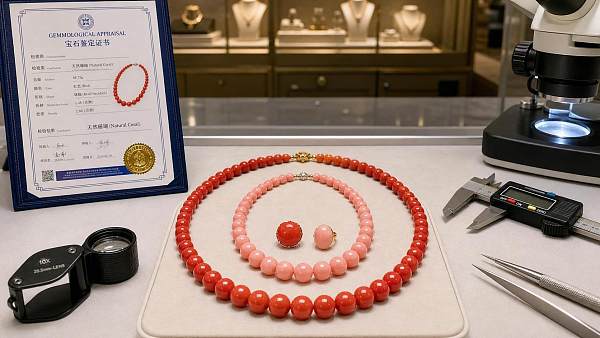
In wholesale conversations, “coral” can describe several very different materials. It may refer to natural coral used as an organic gem material, reconstructed or composite coral, dyed porous material, imitation resin, or another substitute presented in coral-like colors. Buyers should not assume that a listing labeled “natural coral,” “Mediterranean coral,” or simply “red coral” provides enough information for purchasing approval.
Natural coral used in jewelry is valued for color, polish, density, and the relative absence of visible pits, fractures, whitish areas, or uneven growth features. Commercial quality is often shaped by the degree of matching required. A pair of small stud earrings can be produced from a broader selection of material than large bead drops, calibrated cabochons, or symmetrical statement pieces. The latter require more closely matched color, dimensions, and surface condition, which can materially affect cost and lead time.
Buyers should also distinguish between a product made from a solid coral component and one made from powder, fragments, or chips combined with binders. Reconstructed material can be appropriate when clearly described and priced accordingly. It should not, however, be evaluated against the same quality expectations or merchandising claims as solid natural coral. The same principle applies to coral-colored glass, ceramic, acrylic, shell, or resin. These alternatives may offer better color consistency and lower breakage risk for fashion programs, but they are different products and should be labeled as such.
Start With a Material Specification, Not a Mood Board
A mood board can define the intended aesthetic, but it cannot control a natural material. Before requesting quotations, prepare a written material brief that identifies the acceptable color family, component shape, size tolerance, visible surface tolerance, pair-matching expectation, metal type, plating requirement, and maximum retail positioning. It should also state whether natural variation is part of the design language or whether a highly uniform appearance is required.
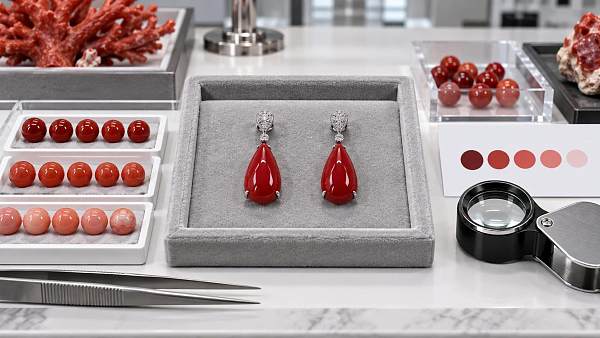
Color needs special attention. “Red” may cover salmon, orange-red, pink-red, deep oxblood, and tones with brown or white undertones. Product photography frequently compresses these differences. Ask for images and videos of multiple components under neutral lighting, rather than a single carefully selected finished sample. For larger programs, approve a physical color range: one reference for the preferred tone, plus boundaries for the lightest, darkest, warmest, and coolest acceptable pieces.
The specification should describe surface appearance in commercially useful language. For example, it can define whether small natural pores are acceptable, whether hairline growth marks may be visible, whether filling is permitted, and whether the buyer will accept a polished but non-uniform surface. Ambiguous terms such as “AAA quality” are not enough on their own. Suppliers may use them differently, and they do not replace agreed acceptance criteria.
Treatments Are Not Automatically a Problem—Non-Disclosure Is
Coral can be treated to improve or standardize its appearance. Depending on the material and supplier process, this may include dyeing, waxing or surface finishing, impregnation with resin or polymer, filling of surface cavities, coating, or reconstruction from smaller pieces. These processes can help manufacturers create a consistent commercial collection, particularly where the original material is pale, porous, or variable. The procurement issue is whether the treatment is declared accurately and reflected in the price and product description.
Dyed material deserves particularly careful review. Strong color may be attractive in samples yet fade, migrate, or look uneven around drill holes and edges if processing is poor. Ask suppliers whether the color is natural or enhanced, whether pieces have been sealed after dyeing, and what ordinary-use conditions they consider unsuitable. Buyers should avoid relying on informal claims such as “color will never change.” Organic gem materials can be sensitive to perfumes, acids, heat, solvents, and prolonged moisture exposure, even without treatment.
A sensible sample review includes more than looking at the front face. Inspect drill holes, backs, edges, and the contact area between the coral and setting. Check whether color appears concentrated in cracks or pores, whether a coating is visibly pooling, whether adhesive is exposed, and whether the component has a chalky or overly plastic appearance. These observations do not prove a treatment, but they can identify batches that need clarification or independent gemological evaluation before bulk approval.
For higher-value orders or markets where product claims are closely reviewed, buyers may wish to retain reference samples from the approved production lot. A reference sample is useful when later deliveries show a different hue, finish, or apparent treatment level. If laboratory verification is required, agree in advance who selects the sample, who bears the cost, and what happens if the result differs from the supplier declaration.
The Earring Setting Is Part of the Quality Grade
Coral may be the visual focus, but the setting determines whether the finished earring survives handling, fitting, packing, and customer wear. This is especially important for stud earrings, where posts can bend during transit, and for drop earrings, where the weight of a coral bead or cabochon puts repeated stress on loops, pins, and solder points.
Request details of the metal specification rather than accepting broad descriptions such as “alloy” or “gold tone.” The appropriate requirement depends on the intended market and price level, but the buyer should know the base metal, plating process if applicable, declared metal fineness where relevant, and whether posts, backs, hooks, and jump rings use the same material standard as the decorative body. Inconsistent component quality is a common source of complaints: a visually refined coral earring can still fail because of loose clutches, sharp edges, weak hinges, or premature plating wear.
Adhesive-set designs require a more demanding review than bezel-set designs. Adhesive can be entirely suitable, but buyers should assess bond cleanliness, alignment, curing consistency, and the supplier’s handling controls. A component that is slightly loose in a pre-production sample is not a cosmetic issue; it is a warning that transit vibration, temperature changes, or routine wear could create a return problem. For premium collections, ask how the supplier checks stone retention during final inspection and whether rework is permitted after assembly.
Supply Risk Extends Beyond Factory Capacity
Coral sourcing carries a level of supply uncertainty that buyers should address early. Natural material availability may vary by species, origin, harvest conditions, trade controls, and the quality needed for a particular design. Rules governing coral and wildlife-derived materials can differ between jurisdictions, and some types may be subject to trade restrictions or permit requirements. A supplier’s assurance that “export is normal” is not a substitute for verifying the applicable requirements in the destination market and for the specific material being offered.
The right documentation will depend on the product, material origin, shipping route, and local law. At a minimum, the commercial invoice and packing list should describe goods accurately and consistently with the agreed product specification. Where origin, species, permits, declarations, or other supporting records are relevant, buyers should request them before committing to a delivery date. Legal and customs review may be appropriate for larger or higher-risk programs. This is not an area where a generic certificate should be accepted without checking what it actually covers.
Supply continuity also has a design dimension. A collection built around unusually large, highly saturated, perfectly matched coral drops may be difficult to replenish, even when the first order is successful. If repeatability matters, ask the supplier to separate the quote into material cost, metal cost, labor, packaging, and any tooling or development charge. This makes later price movement easier to interpret. It also reveals whether a low quote relies on a limited parcel of raw material that may not support reorders.
A Better Way to Compare Wholesale Quotations
Comparing quotations only by unit price can be misleading because suppliers may be quoting different material realities. One offer may include natural components with modest variation, another may use dyed or reconstructed material, and a third may assume a lower metal weight or simpler finding. Put all offers against the same technical brief and ask suppliers to identify exceptions in writing.
For each style, request a pre-production sample or a representative approval set before confirming the bulk run. The approval set should show the actual range likely to be shipped, not only the best pair. Confirm dimensions and weight where relevant, examine post alignment and closure function, assess the balance of paired earrings, and check packaging protection. Coral components can chip when packed loosely against metal parts, so inner packing is not a minor afterthought.
It is also useful to agree on inspection language before production begins. Rather than asking for “no defects,” define what counts as a critical defect, major defect, and acceptable natural variation. A broken component, loose setting, mismatched earring pair, or incorrect declared material would normally need different handling from a small naturally occurring surface mark that falls within the approved range. Clear definitions reduce disputes when goods are inspected remotely or by a third party.
Build the Buying Decision Around the End Use
There is no universal “best” grade of coral earring. A specialty retailer selling natural-material jewelry may prioritize traceability, nuanced color, and clear treatment disclosure. A resort boutique may need lightweight designs, reliable replenishment, and packaging suited to travel retail. A promotional or fashion-led program may reasonably choose an imitation or reconstructed alternative if it provides stable color, lower cost, and transparent product communication.
The strongest buying decision aligns the material with the promise being made to the end customer. If the sales story centers on natural coral, the documentation and quality control must support that claim. If uniform color and scalable replenishment are more important, a clearly disclosed alternative may be the more commercially responsible choice.
Global Commercial Trade approaches jewelry and luxury accessory sourcing as a procurement question rather than a product-listing exercise. For buyers navigating premium commercial environments, useful supplier intelligence connects aesthetic requirements with material disclosure, manufacturing controls, delivery feasibility, and market-specific compliance checks. Before placing a wholesale coral earring order, confirm the approved sample range, treatment statement, setting specification, shipping documentation, and reorder assumptions. Those details are what turn an attractive quotation into a purchase that can be sold and replenished with confidence.
Search News
Hot Articles
- Pro Stage AudioRME Launches ADI-2/4 PRO EX Audio Converter with Integrated ProcessingOct 24, 2026
- Office Furniture & EquipOffice Phone Booths: How to Evaluate Speech Privacy Before You BuyOct 24, 2026
- Outdoor RidesComcast Q3 Earnings: Universal Theme Park Revenue Falls 4.4% to $2.6 BillionOct 23, 2026
Popular Tags
Need ExpertConsultation?
Connect with our specialized leisureengineering team for procurementstrategies.
Recommended News
 Oct 12, 2026How to Choose Designer Eyewear That Fits Your Store’s Customer ProfileDesigner eyewear buying guide for retailers: match frames, price points, brand appeal, fit, and supplier support to your store’s customer profile for stronger sales.● Luxury Retail Analyst
 Oct 07, 2026Thermal Diamond Testers: How They Work and When They Can Misidentify StonesThermal diamond tester guide: learn how it works, spot false positives from moissanite, and choose reliable verification methods for jewelry trade and retail.● Luxury Retail Analyst
 Oct 02, 2026Diamond Tester Wholesale: How to Vet Accuracy, Calibration, and MOQ Before OrderingDiamond tester wholesale guide: verify accuracy, calibration records, supplier quality controls, and MOQ terms before ordering. Source reliable testers with confidence.● Luxury Retail Analyst
 Sep 09, 2026Wholesale Coral Earrings: How Buyers Can Assess Quality, Treatments, and Supply RiskCoral jewelry earrings wholesale guide for buyers: assess quality, treatments, secure settings, documentation, and supply risks before ordering.● Luxury Retail Analyst
 Sep 01, 2026How to Choose a Jewelry Laser Engraving Machine Manufacturer for Custom ProductionChoose a jewelry laser engraving machine manufacturer with proven sample testing, precision fixtures, workflow-ready software, and reliable support for custom production.● Luxury Retail Analyst
 Aug 27, 2026Evaluating Luxury Retail Accessories Suppliers: Quality, Lead Times, and Brand FitLuxury retail accessories supplier selection made clearer: assess quality, lead times, compliance, costs, and brand fit to protect premium launches and margins.● Luxury Retail Analyst
 Jul 29, 2026Fine Jewelry Price Guide: What Affects Cost and How to Judge Real ValueFine jewelry price guide for buyers: learn what drives cost in metals, gemstones, craftsmanship, certification, and branding so you can judge real value, reduce sourcing risk, and buy with confidence.● Luxury Retail Analyst
 Jul 14, 2026What to Ask an Enamel Jewelry Manufacturer Before Sampling and Mass ProductionEnamel jewelry manufacturer selection starts with the right questions. Learn what to ask about materials, color matching, MOQ, QC, compliance, and lead times before sampling and mass production.● Luxury Retail Analyst
 Jul 12, 2026Surgical Steel Belly Rings vs Titanium: Material Differences, Safety, and CostSurgical steel belly rings vs titanium: compare safety, nickel exposure, comfort, durability, and cost to choose the best option for sensitive skin or budget-friendly style.● Luxury Retail Analyst
 Jul 12, 2026Natural Coral Jewelry Guide: How to Identify Real Coral, Treatments, and QualityNatural coral jewelry guide covering how to identify real coral, spot treatments, assess quality, and buy with confidence. Learn the key signs before you choose.● Luxury Retail Analyst
 Jul 11, 2026Braided Leather Bracelets OEM: Material, Clasp, and MOQ Factors Before SamplingBraided leather bracelets OEM guide covering material grades, clasp options, and MOQ factors before sampling. Learn how to reduce sourcing risk, control cost, and choose the right supplier.● Luxury Retail Analyst
 Jul 09, 2026Jewelry Craftsmanship Gemstone Setting Methods Explained: Prong, Bezel, Pave, and MoreJewelry craftsmanship gemstone setting explained clearly: compare prong, bezel, pavé, channel, and more to choose secure, beautiful, and commercially smart jewelry designs.● Luxury Retail Analyst
 Jul 06, 2026Photo Locket Necklace Manufacturer Selection Guide: Materials, MOQ, and Custom OptionsPhoto locket necklace manufacturer selection guide covering materials, MOQ, custom options, compliance, and quality checks to help buyers source smarter and build stronger jewelry lines.● Luxury Retail Analyst
 Jul 05, 2026What to Check When Comparing a Sterling Silver Clasp ManufacturerChoosing a sterling silver clasp manufacturer? Learn what to check first: 925 silver claims, finish quality, testing, compliance, lead times, and hidden sourcing costs.● Luxury Retail Analyst
 Jul 02, 2026Jewelry Craftsmanship Techniques Explained: Casting, Stone Setting, Engraving, and PolishingJewelry craftsmanship techniques explained: discover how casting, stone setting, engraving, and polishing shape quality, durability, and sourcing confidence.● Luxury Retail Analyst
 Jul 01, 2026Lost Wax Casting Machines Explained: Types, Capacity, and Metal CompatibilityLost wax casting machines explained: compare types, real capacity, and metal compatibility to choose the right system for precision casting, higher quality, and smarter sourcing.● Luxury Retail Analyst
 Jun 29, 2026How to Evaluate a Luxury Accessories Online Store Before You BuyLuxury accessories online store buying guide: learn how to verify authenticity, compare policies, check reviews, and avoid costly mistakes before you place an order.● Luxury Retail Analyst
 Jun 22, 2026Matching Couple Rings: Popular Materials, Fit Differences, and How to ChooseMatching couple rings guide: compare popular materials, fit differences, comfort, durability, and resizing options to choose a stylish pair that truly lasts.● Luxury Retail Analyst
 Jun 19, 2026How to Build a Fashion Accessories Catalog That Improves Product Discovery and SalesFashion accessories catalog strategies that improve product discovery, filtering, and conversions. Learn how to structure pages, categories, and data to drive more qualified sales.● Luxury Retail Analyst
 Jun 19, 2026How to Choose Luxury Accessories for Women by Material, Style, and Price PointLuxury accessories for women: learn how to choose the right pieces by material, style, and price point for better value, timeless appeal, and smarter buying decisions.● Luxury Retail Analyst
 Jun 18, 2026Stainless Steel Rings Bulk: 304 vs 316L, Finishes, and Custom Order FactorsStainless steel rings bulk guide: compare 304 vs 316L, explore finish options, and learn key custom order factors to reduce sourcing risk and improve product value.● Luxury Retail Analyst
 Jun 18, 2026Body Piercing Jewelry Bulk Buying Guide: Materials, Sizes, and MOQ QuestionsBody piercing jewelry bulk buying guide covering safe materials, size checks, MOQ strategy, supplier screening, and compliance tips to reduce risk and source with confidence.● Luxury Retail Analyst
 Jun 18, 2026How to Evaluate a Luxury Jewelry Exporter for Quality, Compliance, and DeliveryLuxury jewelry exporter evaluation starts with more than design. Learn how to verify quality, compliance, and delivery control to source premium jewelry with less risk.● Luxury Retail Analyst
 Jun 17, 2026Iced Out Watches Wholesale: How to Compare MOQ, Stone Quality, and MarginsIced out watches wholesale guide: compare MOQ, stone quality, and real margins to choose reliable suppliers, reduce risk, and grow resale profits with smarter sourcing.● Luxury Retail Analyst