EU Rule Requires CE-EMC 2026 Tests for Arcade & VR Machines
On July 8, 2026, the Official Journal of the European Union published Regulation (EU) 2026/1142, setting a new compliance requirement for Arcade & VR Machines entering the EU market. From October 1, 2026, these products must meet EN IEC 55032:2026 for EMC and EN IEC 55035:2026 for immunity, with tighter emission provisions for VR headset wireless synchronization in the 2.4 GHz and 5.8 GHz bands. For manufacturers, importers, certification teams, and delivery planners, this is worth close attention because the change directly affects market access, customs clearance, and product listing continuity.
What the new requirement formally changes
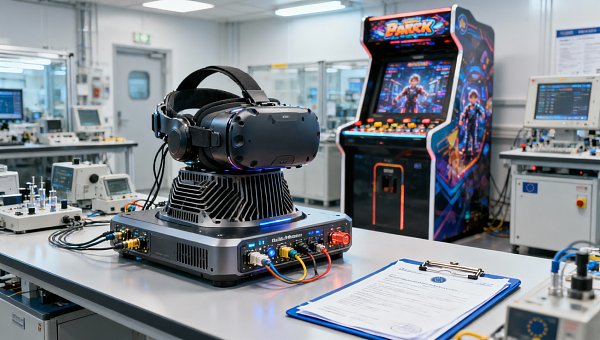
The confirmed facts are limited but clear. Regulation (EU) 2026/1142 was published in the OJEU on July 8, 2026. It requires all Arcade & VR Machines placed on the EU market from October 1, 2026 to comply with the revised EN IEC 55032:2026 and EN IEC 55035:2026 standards. The update introduces stricter radiated emission provisions for VR headset wireless synchronization frequencies at 2.4 GHz and 5.8 GHz. It also requires whole-machine EMC test reports to be issued by an EU Notified Body (NB). According to the provided event summary, products without the revised certification may be unable to clear customs or may face delisting risk.
Where the pressure is likely to appear across the chain
Market-entry exposure for exporters and importers
From an industry perspective, exporters and overseas importers are the first groups likely to feel the effect of this rule change because the requirement is tied directly to EU market access. The main business impact is not limited to testing itself; it extends to shipment readiness, customs documentation, and the ability to keep products commercially available after entry. What deserves closer attention is whether existing certification files, technical dossiers, and shipment schedules still align with the revised standards and the NB-issued whole-machine EMC report requirement.
Design and validation pressure for equipment manufacturers
Manufacturers of Arcade & VR Machines may be affected at the product validation stage, especially where VR headset synchronization functions operate in the 2.4 GHz or 5.8 GHz bands. Analysis shows that the rule change is not simply a paperwork update, because stricter radiated emission provisions can push compliance review back into product-level engineering, pre-test verification, and final model release decisions. For these companies, the practical focus is whether current machine configurations and integrated wireless functions remain supportable under the revised EMC framework.
Documentation and scheduling risks for certification and test coordination
Certification-related teams, testing coordinators, and supply chain service providers may see the impact through timing and document control rather than sales alone. The requirement that whole-machine EMC reports be issued by an EU Notified Body means that report ownership, acceptance criteria, and submission timing become more important in shipment planning. Observably, businesses involved in export preparation or customer delivery need to pay closer attention to whether report formats, certification status, and supporting technical documents are complete before goods move toward EU entry.
Procurement and channel-side checks before delivery
Buyers, distributors, and channel operators may also need to revise pre-delivery checks. If a product lacks the revised certification, the stated risks include customs blockage or removal from the market. That means procurement review is likely to shift upstream, with more focus on compliance evidence before purchase confirmation, stocking, or distribution arrangements. The practical issue is less about abstract regulation and more about whether goods can be received, listed, and supplied without interruption.
What companies should review now
Recheck the certification basis of in-scope products
Analysis shows that companies handling Arcade & VR Machines for the EU market should first identify which models rely on existing EMC files that may no longer match the revised EN IEC 55032:2026 and EN IEC 55035:2026 requirements. This is especially relevant where products combine arcade hardware with VR synchronization functions.
Verify the role of the NB in whole-machine EMC reports
What deserves closer attention is the report issuance requirement. The event summary states that whole-machine EMC test reports must be issued by an EU Notified Body. Businesses should therefore review whether their current test and approval workflow matches that requirement, rather than assuming earlier documentation paths remain sufficient.
Adjust delivery and purchasing timelines around the October 1 date
Observably, the effective date matters for both outbound shipment planning and inbound procurement commitments. Companies with EU-bound orders, stocking plans, or near-term launches should pay attention to whether products expected to enter the market on or after October 1, 2026 are supported by the revised compliance package. Where the input does not provide further execution detail, it is more appropriate to treat timeline planning as a precautionary compliance issue rather than a settled operational outcome.
Watch for downstream document and tender language changes
From an industry perspective, one near-term effect may be changes in technical document requests, buyer-side compliance checklists, and tender specifications. Since the provided information does not include specific implementation guidance, companies should monitor whether customers, import partners, or channel operators begin to request updated EMC references or NB-issued whole-machine reports as a condition for acceptance.
Why this looks like an execution signal, not only a standards update
Analysis shows that this development is better understood as an implemented market-access signal rather than a general policy discussion. The reason is that the event summary combines three concrete elements: a published regulation, a defined effective date, and explicit consequences for products lacking the revised certification. At the same time, it remains necessary to observe how certification practice, document review standards, and market-side acceptance will be applied in day-to-day transactions, because the input does not provide those operational details.
How this development is best understood at this stage
At this stage, the update is more appropriate to understand as a confirmed compliance change with immediate relevance for EU-bound Arcade & VR Machines, especially where VR wireless synchronization functions are involved. It does not yet answer every practical execution question, but it clearly raises the importance of certification basis, NB-issued whole-machine EMC reports, and delivery timing. For the industry, the prudent reading is that this is already a landed rule change, while the exact market practice around implementation still warrants close observation.
Basis of this article and what still needs verification
This article is based on the user-provided news title, event date, and event summary. For developments of this type, relevant source categories usually include official notices, regulatory publications, customs or trade authority information, industry association updates, standards organization documents, and reporting by established professional media. The specific official source link was not provided in the input, so continued verification is still necessary. Follow-up attention should remain on detailed implementation language, certification interpretation, tender document updates, market feedback, and how companies are carrying out compliance in practice.
Search News
Hot Articles
- Fashion & Gem JewelryThermal Diamond Testers: How They Work and When They Can Misidentify StonesOct 07, 2026
- Commercial KitchenWhat Is Driving Demand for Commercial Hospitality Projects Across the GCC?Oct 06, 2026
- Hotel Room AmenitiesHow to Select Hotel Hair Dryers That Balance Guest Safety, Durability, and CostOct 05, 2026
Popular Tags
Need ExpertConsultation?
Connect with our specialized leisureengineering team for procurementstrategies.
Recommended News
 Sep 15, 2026How to Choose Coin-Operated Pool Tables for Bars, Hotels, and Arcade VenuesCoin operated pool tables for bars, hotels, and arcades: compare sizes, payment systems, durability, service access, and revenue potential.● Theme Park Strategist
 Sep 08, 2026What to Look for in a Flight Simulator Chair Manufacturer for Commercial VR CentersChoose a flight simulator chair manufacturer that delivers durable, safe, customizable seating for commercial VR centers. Explore key sourcing criteria now.● Theme Park Strategist
 Aug 25, 2026What to Evaluate Before Buying Commercial Self Service Photo Booths for VenuesCommercial self service photo booths for venues: learn how to evaluate durability, software stability, branding flexibility, support, and total ROI before you buy.● Theme Park Strategist
 Aug 23, 2026How to Evaluate Wholesale Vending Machines for Multi-Location Business DeploymentWholesale vending machines for multi-location deployment require more than low unit cost. Learn how to compare reliability, payments, telemetry, and supplier support to scale smarter.● Theme Park Strategist
 Aug 17, 2026U.S. CPSC Urges Bilingual Warnings for Arcade and VR MachinesU.S. CPSC urges bilingual safety warnings for Arcade & VR Machines—learn what exporters, importers, and distributors must do now to avoid delays and returns.● Theme Park Strategist
 Aug 16, 2026EU Enforces EN IEC 62368-1:2026 Certification for Arcade and VR MachinesEU Enforces EN IEC 62368-1:2026 certification for arcade and VR machines, reshaping EU market access, customs clearance, and compliance planning for exporters and distributors.● Theme Park Strategist
 Aug 13, 2026UFLPA’s new guidelines take effect: Exports of Arcade and VR equipment face full-link labor compliance requirementsUFLPA’s new guide takes effect: Arcade and VR machine exports to the U.S. now face full-chain labor compliance checks. Discover key risks and action steps.● Theme Park Strategist
 Aug 12, 2026EU PPWR takes effect, Arcade and VR packaging incorporate heavy metal and PFAS restrictionsEU PPWR now applies to Arcade and VR packaging, tightening heavy metal and PFAS compliance. Learn how exporters can avoid delays, fines, and customs risks.● Theme Park Strategist
 Aug 11, 2026CPSC Sets Bilingual Labels for Arcade and VR ImportsCPSC bilingual labels for arcade and VR imports become mandatory on October 1, 2026. Learn the new English-Spanish warning rules, customs risks, and key compliance steps now.● Theme Park Strategist
 Aug 10, 2026EU Rule Takes Effect for Arcade & VR Machine ClearanceArcade & VR Machine clearance in the EU now depends on EN IEC 62368-1:2026+A11:2026 compliance. Learn what changed, who is affected, and how to avoid customs delays.● Theme Park Strategist
 Aug 09, 2026CPSC Requires New Labels for Arcade and VR ImportsCPSC requires new labels for Arcade and VR imports starting Oct 1, 2026. Learn the multilingual warning rules, compliance risks, and key steps exporters and buyers must take now.● Theme Park Strategist
 Aug 08, 2026EU Entry Rule Tightens for Arcade & VR MachinesArcade & VR Machines entering the EU now face stricter CE compliance under EN IEC 62368-1:2026+A11:2026. Learn the new rule, risks, and what exporters must do now.● Theme Park Strategist
 Aug 07, 2026CPSC Notice Tightens U.S. Entry Rules for Arcade and VR MachinesCPSC Notice Tightens U.S. Entry Rules for Arcade and VR Machines: learn the new labeling, FCC, UN38.3, and compliance document requirements before October 1, 2026.● Theme Park Strategist
 Aug 06, 2026EU Rule Takes Effect for CE-UKCA Labels on Arcade & VR MachinesArcade & VR Machines face new CE-UKCA label and ECPD filing rules in the EU and UK. Learn what manufacturers, importers, and distributors must do now to avoid delays.● Theme Park Strategist
 Aug 05, 2026CPSC Recalls Arcade and VR Machines Over UL 62368-1CPSC recalls arcade and VR machines over UL 62368-1 non-compliance. Learn how this 2026 safety action may affect imports, distribution, customs clearance, and market access.● Theme Park Strategist
 Aug 02, 2026EU Sets New Certification Rule for Arcade and VR MachinesArcade and VR Machines face a new EU certification rule from Oct 1, 2026. Learn how EN IEC 62368-1:2026+A11:2026 affects CE marking, customs clearance, and market access.● Theme Park Strategist
 Aug 01, 2026CPSC Moves to Require Bilingual Warnings on Arcade and VR MachinesCPSC bilingual warnings for Arcade and VR Machines may reshape U.S. import compliance. Learn how English-Spanish labels affect packaging, customs risk, and shipment readiness.● Theme Park Strategist
 Jul 31, 2026EU Sets EN IEC 62368-1:2025 Rule for Arcade and VR MachinesEU Sets EN IEC 62368-1:2025 Rule for Arcade and VR Machines. Learn the new EU compliance deadlines, safety updates, and key actions for manufacturers, OEMs, and distributors.● Theme Park Strategist
 Jul 30, 2026CPSC Sets New Warning Label Rule for Arcade & VR MachinesCPSC sets a new warning label rule for Arcade & VR Machines effective August 15, 2026. Learn key compliance risks, multilingual label requirements, and shipment actions now.● Theme Park Strategist
 Jul 29, 2026EU Enforces New Safety Standard for Arcade and VR MachinesEU Enforces New Safety Standard for Arcade and VR Machines: learn how EN IEC 62368-1 affects CE compliance, customs clearance, and EU market access for exporters and buyers.● Theme Park Strategist
 Jul 28, 2026CPSC Sets ASTM F3472-26 Rule for Arcade & VR ImportsCPSC ASTM F3472-26 rule reshapes Arcade & VR imports to the U.S. Learn key compliance deadlines, certification risks, and what exporters, OEM/ODM suppliers, and buyers should do now.● Theme Park Strategist
 Jul 27, 2026EU Rule Takes Effect for Arcade & VR Machine CybersecurityEU Rule Takes Effect for Arcade & VR Machine Cybersecurity: learn how EN IEC 62443-3-3:2025 affects compliance, customs clearance, sales continuity, and supplier planning in the EU market.● Theme Park Strategist
 Jul 25, 2026CPSC Sets Bilingual Warning Rule for Arcade and VR ImportsCPSC bilingual warning rule for arcade and VR imports takes effect August 1, 2026. Learn how OEM/ODM exporters can avoid CBP delays, relabel shipments, and protect U.S. delivery timelines.● Theme Park Strategist
 Jul 24, 2026EU Enforces New Safety Standard for Arcade and VR MachinesEU Enforces New Safety Standard for Arcade and VR Machines: learn how EN IEC 62368-1:2026+A11:2026 reshapes EU compliance, CE documentation, testing timelines, and export readiness.● Theme Park Strategist