Entertainment Venue Development in the Middle East: Key Planning Risks and Delivery Priorities
Why is entertainment venue development in the Middle East drawing so much attention?
Entertainment venue development Middle East has moved from isolated projects to regional strategy. New leisure districts, mixed-use resorts, and destination attractions are now tied to tourism growth, urban branding, and longer visitor stays.
That shift creates opportunity, but it also raises delivery pressure. Ambitious opening dates often sit beside evolving approvals, imported systems, specialist fit-out packages, and strict guest experience expectations.
In practice, the hardest part is rarely the headline concept. The challenge is aligning design intent, code compliance, procurement timing, and operational readiness before the venue opens to the public.
This is where market intelligence matters. Across hospitality, leisure parks, pro audio, and premium commercial spaces, GCT tracks the sourcing patterns and compliance signals that often decide whether a project opens smoothly or opens under strain.
What tends to go wrong first in entertainment venue development Middle East projects?
The first visible delay is often not the real root cause. More commonly, early assumptions are too optimistic about authority reviews, utility interfaces, or long-lead imported equipment.
Entertainment venue development Middle East programs usually involve multiple specialist trades. Show control, acoustic treatment, kitchen systems, themed fabrication, lighting, rides, and life safety must work together, not just arrive on site.
When these scopes are procured in silos, coordination gaps appear late. Ceiling clashes, power loads, maintenance access, and software integration issues then become site problems instead of design-stage decisions.
Another early failure point is treating international product approval as a paperwork step. For many venue components, documentation, fire performance, testing history, and local acceptance must be checked before purchase orders are released.
A useful way to frame the risk is simple: if the venue cannot be approved, installed, commissioned, staffed, and maintained together, the schedule is already fragile.
A quick planning screen for early warning signs
Before detailed procurement begins, it helps to test the project against a short diagnostic table. This catches common planning blind spots while changes are still manageable.
Which planning risks deserve priority before procurement starts?
Not every risk carries equal weight. In entertainment venue development Middle East work, a few categories consistently have outsized impact on budget and opening readiness.
- Approval risk: local code interpretation, civil defense reviews, and occupancy conditions can reshape the design late.
- Supply chain risk: specialist manufacturers may offer attractive pricing but weak delivery certainty or limited regional support.
- Integration risk: show systems, guest technology, and facility management platforms often fail where package boundaries are vague.
- Operational risk: staff training, spare parts, and preventative maintenance are frequently postponed until the building is nearly complete.
A common mistake is to focus heavily on capex savings while underestimating opening-phase disruption. A lower purchase price can disappear quickly if recommissioning, redesign, or emergency substitutions follow.
More reliable teams rank risks by consequence, not just probability. A rare issue that blocks certification deserves earlier action than a frequent issue with a modest cost effect.
This is also where curated sourcing intelligence helps. GCT’s cross-sector view is useful because venue projects increasingly blend hospitality equipment, leisure systems, commercial interiors, and premium guest-facing design standards.
How should delivery priorities be set when timelines are aggressive?
Fast-track schedules only work when priorities are disciplined. The right question is not how to accelerate everything. It is which decisions must be frozen early to protect the critical path.
In entertainment venue development Middle East projects, priority usually belongs to authority-sensitive systems, long-lead fabrication, core infrastructure interfaces, and operationally critical back-of-house areas.
That means themed finishes may have some flexibility, while fire-rated assemblies, control rooms, acoustic isolation, and power distribution often do not.
A practical sequencing approach includes four early delivery priorities:
- Lock the approval matrix and document owners.
- Release long-lead packages only after interface assumptions are tested.
- Build commissioning logic into the master schedule, not after construction milestones.
- Define opening-day operating scenarios before final fit-out is complete.
Teams that do this well treat commissioning as a production phase. They do not wait for substantial completion to discover that software mapping, operator training, and guest flow testing need weeks, not days.
How do you judge suppliers beyond price and lead time?
For entertainment venue development Middle East work, supplier selection should reflect the opening model of the venue. A technically acceptable bid may still be a poor delivery choice.
More useful screening questions are about documentation quality, regional service response, replacement part availability, FAT or SAT discipline, and experience with comparable commercial environments.
This matters especially for venues where guest perception is immediate. Poor sound tuning, unstable control systems, finish inconsistency, or slow maintenance support can damage performance from day one.
A balanced evaluation often compares suppliers across these dimensions:
- Compliance evidence that fits local review expectations.
- Manufacturing depth for custom or repeat packages.
- Regional after-sales capability and technician access.
- Integration discipline with other appointed vendors.
- Lifecycle support, not just initial installation.
Because GCT follows sourcing across commercial experience sectors, its value is less about promotion and more about signal quality. Reliable benchmarking helps separate well-presented vendors from genuinely delivery-ready ones.
What does operational readiness really mean before opening day?
Operational readiness is the point where the venue can run safely, consistently, and profitably under real guest conditions. It is broader than testing equipment and broader than handover paperwork.
In entertainment venue development Middle East programs, readiness often depends on details that are easy to delay. Examples include maintenance isolation procedures, peak-hour queue handling, spare part storage, and escalation rules for system failure.
Soft opening plans are especially important. They reveal where the design works on paper but struggles in operation, such as bottlenecks at food service points, poor acoustics, or underpowered back-office workflows.
A strong readiness review usually asks:
- Can staff operate all guest-facing systems without vendor presence?
- Are cleaning, replenishment, and maintenance routes conflict-free?
- Has emergency response been tested for real occupancy patterns?
- Are consumables, parts, and service contracts active at launch?
When those answers are weak, the venue may still open, but it will open exposed. That exposure usually appears as guest complaints, reactive maintenance, and budget leakage in the first operating quarter.
So what is the smartest next step if a project is still in planning?
Start by turning the concept into a risk-ranked delivery map. For entertainment venue development Middle East work, that means linking approvals, long-lead procurement, integration interfaces, and operational testing in one decision structure.
Then review supplier packages through a wider commercial lens. The best choices usually balance technical compliance, brand fit, maintenance resilience, and opening-phase support.
It also helps to compare the venue against adjacent sectors. Hospitality kitchens, premium retail finishes, pro audio systems, and leisure park operations often share delivery lessons that are missed when teams work in narrow silos.
That broader view is one reason GCT remains relevant in this space. Its sourcing intelligence connects design ambition with practical delivery evidence across commercial experience categories.
If the planning stage is still open, the most useful move now is to audit approval assumptions, confirm package interfaces, and test whether the operating model is realistic before major commitments are locked in.
Entertainment venue development Middle East can deliver strong returns, but only when schedule logic, compliance strategy, and guest operations are treated as one coordinated system rather than separate workstreams.
Search News
Hot Articles
- Restaurant FurnitureFast-Casual Restaurant Interiors: Design Choices That Improve Speed and Guest FlowOct 04, 2026
- Outdoor RidesHow to Select Leisure Park Equipment for Safe, High-Throughput Visitor AreasOct 03, 2026
- Fashion & Gem JewelryDiamond Tester Wholesale: How to Vet Accuracy, Calibration, and MOQ Before OrderingOct 02, 2026
Popular Tags
Need ExpertConsultation?
Connect with our specialized leisureengineering team for procurementstrategies.
Recommended News
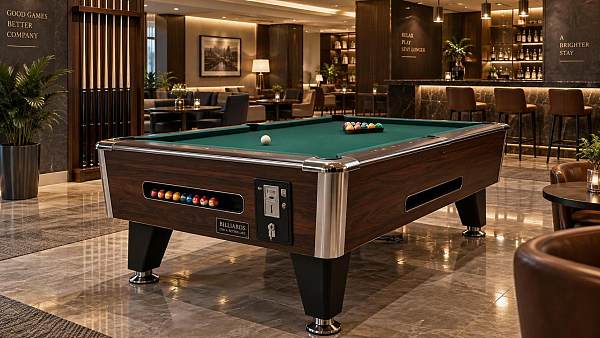
 Sep 15, 2026How to Choose Coin-Operated Pool Tables for Bars, Hotels, and Arcade VenuesCoin operated pool tables for bars, hotels, and arcades: compare sizes, payment systems, durability, service access, and revenue potential.● Theme Park Strategist
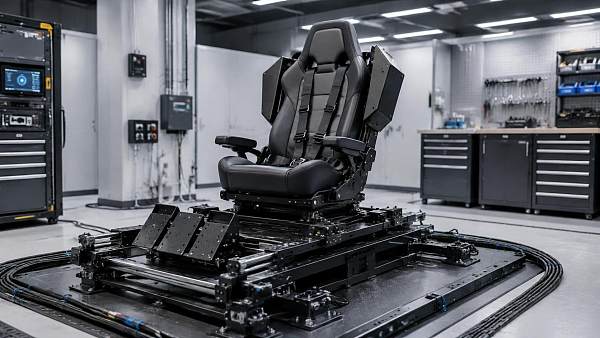
 Sep 08, 2026What to Look for in a Flight Simulator Chair Manufacturer for Commercial VR CentersChoose a flight simulator chair manufacturer that delivers durable, safe, customizable seating for commercial VR centers. Explore key sourcing criteria now.● Theme Park Strategist
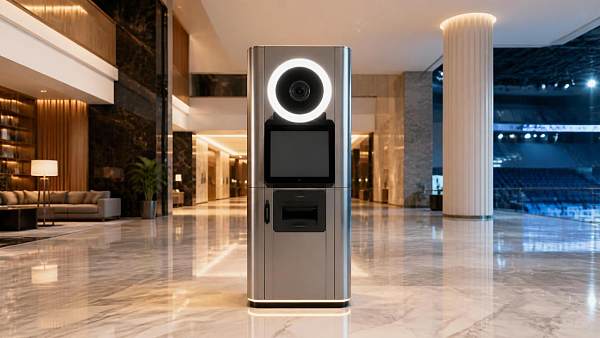
 Aug 25, 2026What to Evaluate Before Buying Commercial Self Service Photo Booths for VenuesCommercial self service photo booths for venues: learn how to evaluate durability, software stability, branding flexibility, support, and total ROI before you buy.● Theme Park Strategist
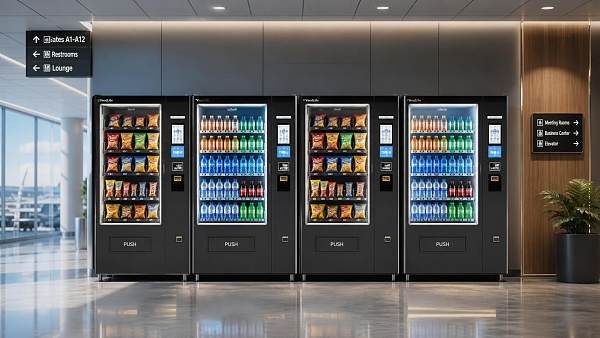
 Aug 23, 2026How to Evaluate Wholesale Vending Machines for Multi-Location Business DeploymentWholesale vending machines for multi-location deployment require more than low unit cost. Learn how to compare reliability, payments, telemetry, and supplier support to scale smarter.● Theme Park Strategist
 Aug 17, 2026U.S. CPSC Urges Bilingual Warnings for Arcade and VR MachinesU.S. CPSC urges bilingual safety warnings for Arcade & VR Machines—learn what exporters, importers, and distributors must do now to avoid delays and returns.● Theme Park Strategist
 Aug 16, 2026EU Enforces EN IEC 62368-1:2026 Certification for Arcade and VR MachinesEU Enforces EN IEC 62368-1:2026 certification for arcade and VR machines, reshaping EU market access, customs clearance, and compliance planning for exporters and distributors.● Theme Park Strategist
 Aug 13, 2026UFLPA’s new guidelines take effect: Exports of Arcade and VR equipment face full-link labor compliance requirementsUFLPA’s new guide takes effect: Arcade and VR machine exports to the U.S. now face full-chain labor compliance checks. Discover key risks and action steps.● Theme Park Strategist
 Aug 12, 2026EU PPWR takes effect, Arcade and VR packaging incorporate heavy metal and PFAS restrictionsEU PPWR now applies to Arcade and VR packaging, tightening heavy metal and PFAS compliance. Learn how exporters can avoid delays, fines, and customs risks.● Theme Park Strategist
 Aug 11, 2026CPSC Sets Bilingual Labels for Arcade and VR ImportsCPSC bilingual labels for arcade and VR imports become mandatory on October 1, 2026. Learn the new English-Spanish warning rules, customs risks, and key compliance steps now.● Theme Park Strategist
 Aug 10, 2026EU Rule Takes Effect for Arcade & VR Machine ClearanceArcade & VR Machine clearance in the EU now depends on EN IEC 62368-1:2026+A11:2026 compliance. Learn what changed, who is affected, and how to avoid customs delays.● Theme Park Strategist
 Aug 09, 2026CPSC Requires New Labels for Arcade and VR ImportsCPSC requires new labels for Arcade and VR imports starting Oct 1, 2026. Learn the multilingual warning rules, compliance risks, and key steps exporters and buyers must take now.● Theme Park Strategist
 Aug 08, 2026EU Entry Rule Tightens for Arcade & VR MachinesArcade & VR Machines entering the EU now face stricter CE compliance under EN IEC 62368-1:2026+A11:2026. Learn the new rule, risks, and what exporters must do now.● Theme Park Strategist
 Aug 07, 2026CPSC Notice Tightens U.S. Entry Rules for Arcade and VR MachinesCPSC Notice Tightens U.S. Entry Rules for Arcade and VR Machines: learn the new labeling, FCC, UN38.3, and compliance document requirements before October 1, 2026.● Theme Park Strategist
 Aug 06, 2026EU Rule Takes Effect for CE-UKCA Labels on Arcade & VR MachinesArcade & VR Machines face new CE-UKCA label and ECPD filing rules in the EU and UK. Learn what manufacturers, importers, and distributors must do now to avoid delays.● Theme Park Strategist
 Aug 05, 2026CPSC Recalls Arcade and VR Machines Over UL 62368-1CPSC recalls arcade and VR machines over UL 62368-1 non-compliance. Learn how this 2026 safety action may affect imports, distribution, customs clearance, and market access.● Theme Park Strategist
 Aug 02, 2026EU Sets New Certification Rule for Arcade and VR MachinesArcade and VR Machines face a new EU certification rule from Oct 1, 2026. Learn how EN IEC 62368-1:2026+A11:2026 affects CE marking, customs clearance, and market access.● Theme Park Strategist
 Aug 01, 2026CPSC Moves to Require Bilingual Warnings on Arcade and VR MachinesCPSC bilingual warnings for Arcade and VR Machines may reshape U.S. import compliance. Learn how English-Spanish labels affect packaging, customs risk, and shipment readiness.● Theme Park Strategist
 Jul 31, 2026EU Sets EN IEC 62368-1:2025 Rule for Arcade and VR MachinesEU Sets EN IEC 62368-1:2025 Rule for Arcade and VR Machines. Learn the new EU compliance deadlines, safety updates, and key actions for manufacturers, OEMs, and distributors.● Theme Park Strategist
 Jul 30, 2026CPSC Sets New Warning Label Rule for Arcade & VR MachinesCPSC sets a new warning label rule for Arcade & VR Machines effective August 15, 2026. Learn key compliance risks, multilingual label requirements, and shipment actions now.● Theme Park Strategist
 Jul 29, 2026EU Enforces New Safety Standard for Arcade and VR MachinesEU Enforces New Safety Standard for Arcade and VR Machines: learn how EN IEC 62368-1 affects CE compliance, customs clearance, and EU market access for exporters and buyers.● Theme Park Strategist
 Jul 28, 2026CPSC Sets ASTM F3472-26 Rule for Arcade & VR ImportsCPSC ASTM F3472-26 rule reshapes Arcade & VR imports to the U.S. Learn key compliance deadlines, certification risks, and what exporters, OEM/ODM suppliers, and buyers should do now.● Theme Park Strategist
 Jul 27, 2026EU Rule Takes Effect for Arcade & VR Machine CybersecurityEU Rule Takes Effect for Arcade & VR Machine Cybersecurity: learn how EN IEC 62443-3-3:2025 affects compliance, customs clearance, sales continuity, and supplier planning in the EU market.● Theme Park Strategist
 Jul 25, 2026CPSC Sets Bilingual Warning Rule for Arcade and VR ImportsCPSC bilingual warning rule for arcade and VR imports takes effect August 1, 2026. Learn how OEM/ODM exporters can avoid CBP delays, relabel shipments, and protect U.S. delivery timelines.● Theme Park Strategist
 Jul 24, 2026EU Enforces New Safety Standard for Arcade and VR MachinesEU Enforces New Safety Standard for Arcade and VR Machines: learn how EN IEC 62368-1:2026+A11:2026 reshapes EU compliance, CE documentation, testing timelines, and export readiness.● Theme Park Strategist