Vietnam Requires Cybersecurity Filing for Connected Arcade Imports
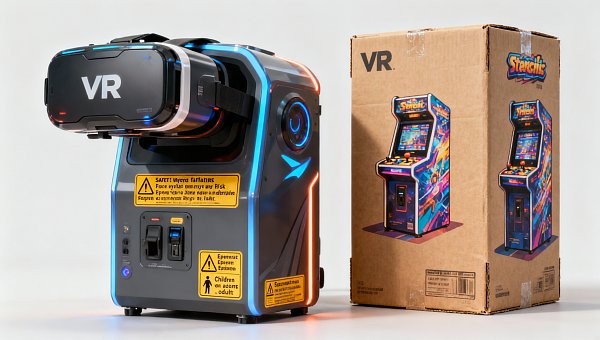
Vietnam moved a new compliance requirement into the import process for connected amusement equipment on July 2, 2026, when it signed Decree 56/2026/ND-CP. The measure covers network-enabled arcade machines, standalone VR devices, and interactive coin-operated equipment, and it matters not only to importers in Vietnam but also to OEM exporters, supply chain coordinators, and buyers managing delivery schedules into Southeast Asia. The reason this deserves attention is straightforward: the rule takes effect on July 15, and products without the required CyberSec-VN filing face detention at Ho Chi Minh City or Hai Phong ports.
What the New Filing Rule Requires
According to the provided information, the Vietnamese government signed Decree 56/2026/ND-CP on July 2, 2026. The decree requires all entertainment devices with network connectivity to complete a CyberSec-VN filing with Vietnam’s Ministry of Information and Communications (MIC) before import.
The filing must include firmware hash values, a description of remote management interface protocols, and a data localization storage declaration. The rule applies to arcade machines, all-in-one VR devices, and interactive coin-operated equipment with connected functions. The new requirement will take effect on July 15. Products that have not completed the filing may be held at ports in Ho Chi Minh City or Hai Phong.
Where the Business Impact Is Likely to Appear First
Export-oriented manufacturers face a new documentation threshold
From an industry perspective, manufacturers and OEM suppliers shipping connected entertainment equipment into Vietnam may be affected first because the filing requires technical information that sits close to product design and firmware management. The practical impact is likely to show up in export preparation, product documentation readiness, and the internal coordination needed before shipment.
What deserves closer attention is whether the required filing materials can be prepared consistently across product variants, especially where remote management functions are part of standard configurations.
Importers and channel operators may see timing risk at the port stage
Vietnam-based importers, distributors, and channel operators may be exposed to a more immediate operational risk because the rule links compliance directly to customs-side handling. If filing is incomplete before import, the problem is no longer only administrative; it can affect cargo release timing at Ho Chi Minh City and Hai Phong ports.
Analysis shows that the main pressure point for these companies is shipment scheduling, because a short gap between signing and effective date can compress document review, booking, and delivery planning.
Supply chain service providers may need tighter pre-shipment checks
Logistics coordinators, sourcing teams, and cross-border supply chain service providers may also be affected because they often sit between manufacturers and importers when export paperwork is assembled. Their exposure is less about the decree itself and more about execution risk: whether product files, declarations, and shipment timing are aligned before goods move.
Observably, this makes pre-shipment verification more important for connected equipment than for conventional non-networked amusement devices.
Practical Issues Companies Should Track Now
Check which product categories are in scope
Companies should first review whether the products they plan to ship into Vietnam fall within the connected entertainment equipment scope described in the decree. The supplied information specifically mentions arcade machines, standalone VR devices, and interactive coin-operated equipment, which means product teams and sales teams need a clear view of which models include network functions.
Prepare the technical filing set before shipment booking
The rule points to three required elements in the filing: firmware hash values, remote management interface protocol descriptions, and a data localization storage declaration. Businesses involved in export and import should therefore focus on whether these materials are available in a usable form before cargo is dispatched, rather than treating compliance as a post-arrival issue.
Separate policy language from execution readiness
Analysis shows that one of the main practical issues is the difference between understanding the rule and being ready to operate under it. A company may know that CyberSec-VN filing is required, but that does not automatically mean its engineering, documentation, and shipping teams can produce and align the required information within the effective timeline.
Align customer communication and delivery expectations
For sellers, buyers, and channel partners, the short implementation window means delivery commitments may need closer review. What deserves closer attention is how shipment timing, customer notice, and compliance responsibility are allocated between exporter, importer, and service partners before goods reach port.
Why This Looks Like More Than a One-Off Port Issue
This section is analysis. It is more appropriate to understand this development as a compliance signal tied to connected device governance rather than as a simple customs delay story. The filing items named in the decree focus on firmware identity, remote management access, and data localization, which indicates that connected amusement equipment is being assessed through a cybersecurity and data-handling lens.
At the same time, this should not yet be overstated as a fully settled long-term market outcome based only on the provided information. Observably, the immediate result is a new import gate for covered devices entering Vietnam, while the broader regional significance still requires continued tracking.
How to Read the Decree at This Stage
For the industry, the most balanced reading is that Decree 56/2026/ND-CP creates an immediate operational requirement and a longer-term compliance signal at the same time. In the short term, the core issue is whether connected arcade and VR equipment can clear import procedures without detention risk. In a broader sense, the decree suggests that exporters and import-side partners may need to treat technical documentation for connected entertainment devices as part of market access preparation, not only as an engineering matter.
Current observation suggests this is best understood as a concrete near-term rule change with wider implications that still need to be watched, rather than as a final verdict on the regional market.
Basis and Verification Note
This article is based on the user-provided news title, event date, and event summary. The confirmed facts used here come from the supplied description of Decree 56/2026/ND-CP, its signing date of July 2, 2026, its July 15 effective date, the CyberSec-VN filing requirements, the products identified as in scope, and the stated detention risk at Ho Chi Minh City and Hai Phong ports.
For this type of industry update, relevant source categories would usually include official government notices, ministry releases, company statements, industry association updates, authoritative media reporting, and standards or regulatory documentation. A specific official source link was not provided in the input, so further verification remains necessary. Follow-up attention should focus on any additional official wording, implementation detail, or procedural clarification related to filing and port enforcement.
Search News
Hot Articles
- Restaurant FurnitureFast-Casual Restaurant Interiors: Design Choices That Improve Speed and Guest FlowOct 04, 2026
- Outdoor RidesHow to Select Leisure Park Equipment for Safe, High-Throughput Visitor AreasOct 03, 2026
- Fashion & Gem JewelryDiamond Tester Wholesale: How to Vet Accuracy, Calibration, and MOQ Before OrderingOct 02, 2026
Popular Tags
Need ExpertConsultation?
Connect with our specialized leisureengineering team for procurementstrategies.
Recommended News
 Sep 15, 2026How to Choose Coin-Operated Pool Tables for Bars, Hotels, and Arcade VenuesCoin operated pool tables for bars, hotels, and arcades: compare sizes, payment systems, durability, service access, and revenue potential.● Theme Park Strategist
 Sep 08, 2026What to Look for in a Flight Simulator Chair Manufacturer for Commercial VR CentersChoose a flight simulator chair manufacturer that delivers durable, safe, customizable seating for commercial VR centers. Explore key sourcing criteria now.● Theme Park Strategist
 Aug 25, 2026What to Evaluate Before Buying Commercial Self Service Photo Booths for VenuesCommercial self service photo booths for venues: learn how to evaluate durability, software stability, branding flexibility, support, and total ROI before you buy.● Theme Park Strategist
 Aug 23, 2026How to Evaluate Wholesale Vending Machines for Multi-Location Business DeploymentWholesale vending machines for multi-location deployment require more than low unit cost. Learn how to compare reliability, payments, telemetry, and supplier support to scale smarter.● Theme Park Strategist
 Aug 17, 2026U.S. CPSC Urges Bilingual Warnings for Arcade and VR MachinesU.S. CPSC urges bilingual safety warnings for Arcade & VR Machines—learn what exporters, importers, and distributors must do now to avoid delays and returns.● Theme Park Strategist
 Aug 16, 2026EU Enforces EN IEC 62368-1:2026 Certification for Arcade and VR MachinesEU Enforces EN IEC 62368-1:2026 certification for arcade and VR machines, reshaping EU market access, customs clearance, and compliance planning for exporters and distributors.● Theme Park Strategist
 Aug 13, 2026UFLPA’s new guidelines take effect: Exports of Arcade and VR equipment face full-link labor compliance requirementsUFLPA’s new guide takes effect: Arcade and VR machine exports to the U.S. now face full-chain labor compliance checks. Discover key risks and action steps.● Theme Park Strategist
 Aug 12, 2026EU PPWR takes effect, Arcade and VR packaging incorporate heavy metal and PFAS restrictionsEU PPWR now applies to Arcade and VR packaging, tightening heavy metal and PFAS compliance. Learn how exporters can avoid delays, fines, and customs risks.● Theme Park Strategist
 Aug 11, 2026CPSC Sets Bilingual Labels for Arcade and VR ImportsCPSC bilingual labels for arcade and VR imports become mandatory on October 1, 2026. Learn the new English-Spanish warning rules, customs risks, and key compliance steps now.● Theme Park Strategist
 Aug 10, 2026EU Rule Takes Effect for Arcade & VR Machine ClearanceArcade & VR Machine clearance in the EU now depends on EN IEC 62368-1:2026+A11:2026 compliance. Learn what changed, who is affected, and how to avoid customs delays.● Theme Park Strategist
 Aug 09, 2026CPSC Requires New Labels for Arcade and VR ImportsCPSC requires new labels for Arcade and VR imports starting Oct 1, 2026. Learn the multilingual warning rules, compliance risks, and key steps exporters and buyers must take now.● Theme Park Strategist
 Aug 08, 2026EU Entry Rule Tightens for Arcade & VR MachinesArcade & VR Machines entering the EU now face stricter CE compliance under EN IEC 62368-1:2026+A11:2026. Learn the new rule, risks, and what exporters must do now.● Theme Park Strategist
 Aug 07, 2026CPSC Notice Tightens U.S. Entry Rules for Arcade and VR MachinesCPSC Notice Tightens U.S. Entry Rules for Arcade and VR Machines: learn the new labeling, FCC, UN38.3, and compliance document requirements before October 1, 2026.● Theme Park Strategist
 Aug 06, 2026EU Rule Takes Effect for CE-UKCA Labels on Arcade & VR MachinesArcade & VR Machines face new CE-UKCA label and ECPD filing rules in the EU and UK. Learn what manufacturers, importers, and distributors must do now to avoid delays.● Theme Park Strategist
 Aug 05, 2026CPSC Recalls Arcade and VR Machines Over UL 62368-1CPSC recalls arcade and VR machines over UL 62368-1 non-compliance. Learn how this 2026 safety action may affect imports, distribution, customs clearance, and market access.● Theme Park Strategist
 Aug 02, 2026EU Sets New Certification Rule for Arcade and VR MachinesArcade and VR Machines face a new EU certification rule from Oct 1, 2026. Learn how EN IEC 62368-1:2026+A11:2026 affects CE marking, customs clearance, and market access.● Theme Park Strategist
 Aug 01, 2026CPSC Moves to Require Bilingual Warnings on Arcade and VR MachinesCPSC bilingual warnings for Arcade and VR Machines may reshape U.S. import compliance. Learn how English-Spanish labels affect packaging, customs risk, and shipment readiness.● Theme Park Strategist
 Jul 31, 2026EU Sets EN IEC 62368-1:2025 Rule for Arcade and VR MachinesEU Sets EN IEC 62368-1:2025 Rule for Arcade and VR Machines. Learn the new EU compliance deadlines, safety updates, and key actions for manufacturers, OEMs, and distributors.● Theme Park Strategist
 Jul 30, 2026CPSC Sets New Warning Label Rule for Arcade & VR MachinesCPSC sets a new warning label rule for Arcade & VR Machines effective August 15, 2026. Learn key compliance risks, multilingual label requirements, and shipment actions now.● Theme Park Strategist
 Jul 29, 2026EU Enforces New Safety Standard for Arcade and VR MachinesEU Enforces New Safety Standard for Arcade and VR Machines: learn how EN IEC 62368-1 affects CE compliance, customs clearance, and EU market access for exporters and buyers.● Theme Park Strategist
 Jul 28, 2026CPSC Sets ASTM F3472-26 Rule for Arcade & VR ImportsCPSC ASTM F3472-26 rule reshapes Arcade & VR imports to the U.S. Learn key compliance deadlines, certification risks, and what exporters, OEM/ODM suppliers, and buyers should do now.● Theme Park Strategist
 Jul 27, 2026EU Rule Takes Effect for Arcade & VR Machine CybersecurityEU Rule Takes Effect for Arcade & VR Machine Cybersecurity: learn how EN IEC 62443-3-3:2025 affects compliance, customs clearance, sales continuity, and supplier planning in the EU market.● Theme Park Strategist
 Jul 25, 2026CPSC Sets Bilingual Warning Rule for Arcade and VR ImportsCPSC bilingual warning rule for arcade and VR imports takes effect August 1, 2026. Learn how OEM/ODM exporters can avoid CBP delays, relabel shipments, and protect U.S. delivery timelines.● Theme Park Strategist
 Jul 24, 2026EU Enforces New Safety Standard for Arcade and VR MachinesEU Enforces New Safety Standard for Arcade and VR Machines: learn how EN IEC 62368-1:2026+A11:2026 reshapes EU compliance, CE documentation, testing timelines, and export readiness.● Theme Park Strategist