CPSC Tightens Lithium Shipping Rules for Arcade and VR Machines
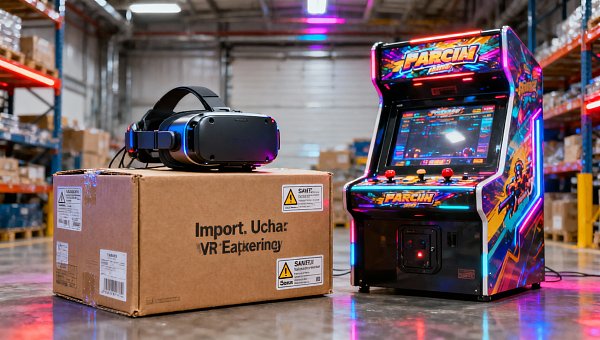
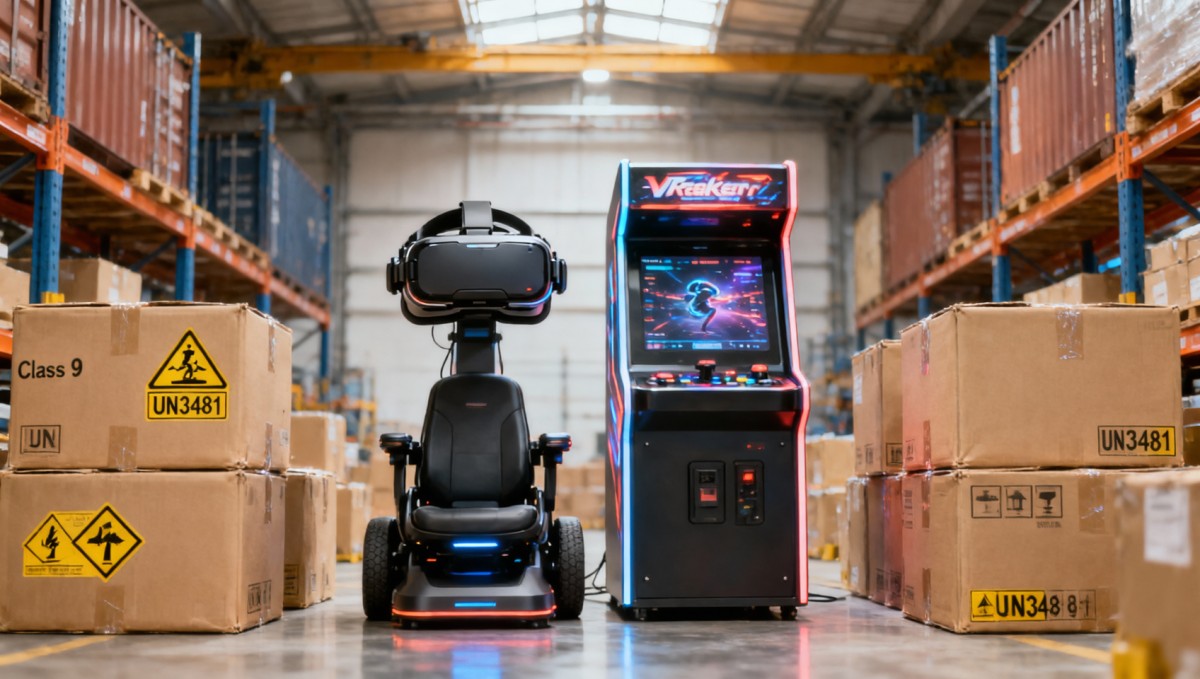
On July 2, 2026, the U.S. Consumer Product Safety Commission (CPSC) issued an emergency operating instruction that changes how certain Arcade & VR Machines with rechargeable lithium-ion batteries must be handled at import. For air and sea shipments entering the United States, any single package containing more than 5 kg net lithium battery weight must now be declared as UN3481 Class 9, with corresponding labeling and document filing across the transport chain. The change deserves close attention from exporters, manufacturers, import coordinators, logistics providers, and procurement teams because it directly affects shipment preparation, documentation, delivery timing, and port clearance risk.
What the July 2 instruction clearly requires
The confirmed facts are limited but commercially significant. According to the information provided, the CPSC released an emergency operating instruction on July 2, 2026 covering Arcade & VR Machines that contain rechargeable lithium-ion batteries. The instruction applies to inbound air and sea transport. Where the net weight of lithium batteries in a single package exceeds 5 kg, the shipment must be handled under UN3481 Class 9 dangerous goods requirements, including declaration, labeling, and document filing throughout the full transport chain. The rule took effect immediately. Non-compliant cargo may face port delays and confiscation at Los Angeles and New York.
Where the disruption is most likely to appear first
Export packaging and shipment planning
From an industry perspective, exporters and manufacturers are likely to feel the first impact at the packing stage. The 5 kg net battery threshold per package creates a direct compliance checkpoint, which means packaging configuration, carton allocation, and shipment batching may need closer review before cargo is booked for air or sea entry into the United States. What deserves closer attention is whether current packing practice already captures battery net weight at the single-package level in a way that supports declaration and transport documentation.
Freight booking and customs-facing documentation
Logistics service providers, freight coordinators, and trade operations teams may be affected because the rule is tied to dangerous goods classification, labels, and filing obligations. Analysis shows the operational burden is not only about whether the product contains lithium batteries, but whether the shipment file, labels, and supporting paperwork are consistent with a UN3481 Class 9 declaration when the threshold is exceeded. Any mismatch across booking data, transport labels, and filing records could increase the risk of hold-ups at port.
Procurement and delivery coordination
Buyers, import planners, and channel operators may also need to reassess delivery assumptions. Observably, an immediate-effect rule can affect lead-time reliability when goods were packed or documented under earlier internal routines. For procurement teams, the practical issue is less about product eligibility and more about whether suppliers and logistics partners can prepare compliant shipments without causing disruption to inbound schedules.
Practical checks companies should move to the front
Verify package-level battery weight records
Analysis shows one of the most immediate control points is the single-package net lithium battery weight. Companies involved in Arcade & VR Machines should review whether internal shipping records, packing specifications, and supplier declarations clearly identify this figure at package level, because the stated threshold is triggered at that point rather than at model or order level.
Review dangerous goods paperwork alignment
What deserves closer attention is document consistency across the full chain referenced in the instruction. Where a package exceeds 5 kg net lithium battery weight, firms should check whether declaration files, labels, and shipment documents are aligned with UN3481 Class 9 handling requirements. The input does not provide detailed execution templates, so this should be understood as a compliance review priority rather than a confirmed filing format.
Recheck supplier and forwarder readiness
For companies buying from contract manufacturers or shipping through external service providers, the immediate question is whether each party is prepared to support the new declaration and labeling burden. Observably, this is especially relevant for shipments already in preparation, because the rule is described as effective immediately. Current attention should stay on operational readiness, not on assumptions that existing battery-related paperwork will automatically satisfy the new enforcement expectation.
Track port-facing execution signals
The information provided specifically mentions risk at Los Angeles and New York for non-compliant cargo. From an industry perspective, companies should closely watch how port-side enforcement language, filing checks, and shipment release practices develop in response. Since no further official execution detail is included in the input, this remains an area for continued verification rather than a settled process standard.
Why this reads as an enforcement signal, not just a technical reminder
Analysis shows this update is more appropriately understood as a live execution signal than as a routine compliance restatement. The instruction is framed as an emergency operating measure, applies immediately, and links non-compliance to concrete port risk. At the same time, it would be premature to treat all downstream procedures as fully clarified, because the provided information does not include detailed interpretations, implementation examples, or supporting official guidance beyond the core requirement. That is why the most reasonable reading is that the rule change has already landed operationally, while its exact execution contours still need continued observation.
How the market should read the change now
At this stage, the update should be read as a narrow but direct compliance change for Arcade & VR Machines containing rechargeable lithium-ion batteries when package-level net battery weight exceeds 5 kg. Its importance lies in shipment execution, document control, and port-entry risk rather than in broad market forecasting. A neutral conclusion is that the rule is already actionable for affected shipments, while the broader industry still needs to monitor how consistently it is applied in practice across trade, logistics, and import handling.
Basis of this article and what still needs checking
This article is based on the user-provided news title, event date, and event summary. For developments of this kind, commonly relevant source categories may include official notices, regulatory releases, customs or trade authority updates, industry association communications, standard-setting documents, and reporting by established trade media. A specific official source link was not provided in the input, so that point still requires further verification. Observably, the items that still need ongoing checking include detailed enforcement wording, compliance interpretation in documentation practice, any changes in tender or procurement documents, market feedback from affected operators, and how companies are implementing the requirement in actual shipments.
Search News
Hot Articles
- Restaurant FurnitureFast-Casual Restaurant Interiors: Design Choices That Improve Speed and Guest FlowOct 04, 2026
- Outdoor RidesHow to Select Leisure Park Equipment for Safe, High-Throughput Visitor AreasOct 03, 2026
- Fashion & Gem JewelryDiamond Tester Wholesale: How to Vet Accuracy, Calibration, and MOQ Before OrderingOct 02, 2026
Popular Tags
Need ExpertConsultation?
Connect with our specialized leisureengineering team for procurementstrategies.
Recommended News
 Sep 15, 2026How to Choose Coin-Operated Pool Tables for Bars, Hotels, and Arcade VenuesCoin operated pool tables for bars, hotels, and arcades: compare sizes, payment systems, durability, service access, and revenue potential.● Theme Park Strategist
 Sep 08, 2026What to Look for in a Flight Simulator Chair Manufacturer for Commercial VR CentersChoose a flight simulator chair manufacturer that delivers durable, safe, customizable seating for commercial VR centers. Explore key sourcing criteria now.● Theme Park Strategist
 Aug 25, 2026What to Evaluate Before Buying Commercial Self Service Photo Booths for VenuesCommercial self service photo booths for venues: learn how to evaluate durability, software stability, branding flexibility, support, and total ROI before you buy.● Theme Park Strategist
 Aug 23, 2026How to Evaluate Wholesale Vending Machines for Multi-Location Business DeploymentWholesale vending machines for multi-location deployment require more than low unit cost. Learn how to compare reliability, payments, telemetry, and supplier support to scale smarter.● Theme Park Strategist
 Aug 17, 2026U.S. CPSC Urges Bilingual Warnings for Arcade and VR MachinesU.S. CPSC urges bilingual safety warnings for Arcade & VR Machines—learn what exporters, importers, and distributors must do now to avoid delays and returns.● Theme Park Strategist
 Aug 16, 2026EU Enforces EN IEC 62368-1:2026 Certification for Arcade and VR MachinesEU Enforces EN IEC 62368-1:2026 certification for arcade and VR machines, reshaping EU market access, customs clearance, and compliance planning for exporters and distributors.● Theme Park Strategist
 Aug 13, 2026UFLPA’s new guidelines take effect: Exports of Arcade and VR equipment face full-link labor compliance requirementsUFLPA’s new guide takes effect: Arcade and VR machine exports to the U.S. now face full-chain labor compliance checks. Discover key risks and action steps.● Theme Park Strategist
 Aug 12, 2026EU PPWR takes effect, Arcade and VR packaging incorporate heavy metal and PFAS restrictionsEU PPWR now applies to Arcade and VR packaging, tightening heavy metal and PFAS compliance. Learn how exporters can avoid delays, fines, and customs risks.● Theme Park Strategist
 Aug 11, 2026CPSC Sets Bilingual Labels for Arcade and VR ImportsCPSC bilingual labels for arcade and VR imports become mandatory on October 1, 2026. Learn the new English-Spanish warning rules, customs risks, and key compliance steps now.● Theme Park Strategist
 Aug 10, 2026EU Rule Takes Effect for Arcade & VR Machine ClearanceArcade & VR Machine clearance in the EU now depends on EN IEC 62368-1:2026+A11:2026 compliance. Learn what changed, who is affected, and how to avoid customs delays.● Theme Park Strategist
 Aug 09, 2026CPSC Requires New Labels for Arcade and VR ImportsCPSC requires new labels for Arcade and VR imports starting Oct 1, 2026. Learn the multilingual warning rules, compliance risks, and key steps exporters and buyers must take now.● Theme Park Strategist
 Aug 08, 2026EU Entry Rule Tightens for Arcade & VR MachinesArcade & VR Machines entering the EU now face stricter CE compliance under EN IEC 62368-1:2026+A11:2026. Learn the new rule, risks, and what exporters must do now.● Theme Park Strategist
 Aug 07, 2026CPSC Notice Tightens U.S. Entry Rules for Arcade and VR MachinesCPSC Notice Tightens U.S. Entry Rules for Arcade and VR Machines: learn the new labeling, FCC, UN38.3, and compliance document requirements before October 1, 2026.● Theme Park Strategist
 Aug 06, 2026EU Rule Takes Effect for CE-UKCA Labels on Arcade & VR MachinesArcade & VR Machines face new CE-UKCA label and ECPD filing rules in the EU and UK. Learn what manufacturers, importers, and distributors must do now to avoid delays.● Theme Park Strategist
 Aug 05, 2026CPSC Recalls Arcade and VR Machines Over UL 62368-1CPSC recalls arcade and VR machines over UL 62368-1 non-compliance. Learn how this 2026 safety action may affect imports, distribution, customs clearance, and market access.● Theme Park Strategist
 Aug 02, 2026EU Sets New Certification Rule for Arcade and VR MachinesArcade and VR Machines face a new EU certification rule from Oct 1, 2026. Learn how EN IEC 62368-1:2026+A11:2026 affects CE marking, customs clearance, and market access.● Theme Park Strategist
 Aug 01, 2026CPSC Moves to Require Bilingual Warnings on Arcade and VR MachinesCPSC bilingual warnings for Arcade and VR Machines may reshape U.S. import compliance. Learn how English-Spanish labels affect packaging, customs risk, and shipment readiness.● Theme Park Strategist
 Jul 31, 2026EU Sets EN IEC 62368-1:2025 Rule for Arcade and VR MachinesEU Sets EN IEC 62368-1:2025 Rule for Arcade and VR Machines. Learn the new EU compliance deadlines, safety updates, and key actions for manufacturers, OEMs, and distributors.● Theme Park Strategist
 Jul 30, 2026CPSC Sets New Warning Label Rule for Arcade & VR MachinesCPSC sets a new warning label rule for Arcade & VR Machines effective August 15, 2026. Learn key compliance risks, multilingual label requirements, and shipment actions now.● Theme Park Strategist
 Jul 29, 2026EU Enforces New Safety Standard for Arcade and VR MachinesEU Enforces New Safety Standard for Arcade and VR Machines: learn how EN IEC 62368-1 affects CE compliance, customs clearance, and EU market access for exporters and buyers.● Theme Park Strategist
 Jul 28, 2026CPSC Sets ASTM F3472-26 Rule for Arcade & VR ImportsCPSC ASTM F3472-26 rule reshapes Arcade & VR imports to the U.S. Learn key compliance deadlines, certification risks, and what exporters, OEM/ODM suppliers, and buyers should do now.● Theme Park Strategist
 Jul 27, 2026EU Rule Takes Effect for Arcade & VR Machine CybersecurityEU Rule Takes Effect for Arcade & VR Machine Cybersecurity: learn how EN IEC 62443-3-3:2025 affects compliance, customs clearance, sales continuity, and supplier planning in the EU market.● Theme Park Strategist
 Jul 25, 2026CPSC Sets Bilingual Warning Rule for Arcade and VR ImportsCPSC bilingual warning rule for arcade and VR imports takes effect August 1, 2026. Learn how OEM/ODM exporters can avoid CBP delays, relabel shipments, and protect U.S. delivery timelines.● Theme Park Strategist
 Jul 24, 2026EU Enforces New Safety Standard for Arcade and VR MachinesEU Enforces New Safety Standard for Arcade and VR Machines: learn how EN IEC 62368-1:2026+A11:2026 reshapes EU compliance, CE documentation, testing timelines, and export readiness.● Theme Park Strategist