Indonesia Enforces ID-SNI Labels on Smart Campus Imports
Effective July 1, 2026, a new Indonesia market-entry requirement has taken effect for imported Smart Campus Tech devices under an implementation rule linked to RCEP Article 12.5. The change applies to products such as electronic class signage, smart desks, and AI teaching hosts, and it puts labeling, certification presentation, customs clearance, and local representation into sharper focus for exporters, importers, procurement teams, and compliance functions. For the industry, the immediate relevance is that this is not just a standards reference in the background of a transaction: unlabeled goods may be refused by Jakarta customs, making label readiness part of delivery execution.
What the rule now requires at the border
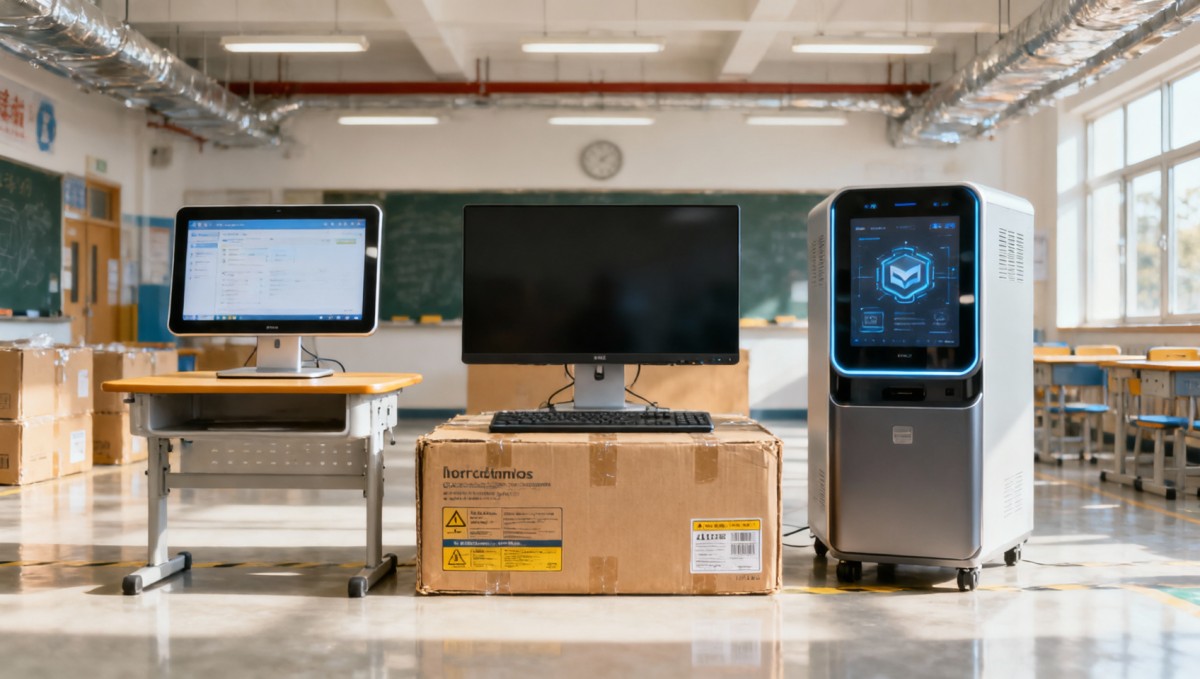
According to the provided event information, Indonesia’s National Standardization Agency (BSN) began implementing the rule on July 1, 2026, based on implementation provisions under RCEP Article 12.5. The requirement covers all imported Smart Campus Tech terminal devices, including electronic class signage, smart desks, and AI teaching hosts.
The products must carry an Indonesian SNI energy-efficiency certification mark, identified as the ID-SNI Label. The label must include the energy-efficiency rating in Indonesian, standby power consumption, and information for a locally authorized agent. The provided event summary also states that products without the label will be rejected by Jakarta customs.
Where the operational pressure is likely to appear
Export transactions and shipment release
From an industry perspective, exporters and direct trading companies are likely to feel the impact first because the rule is tied to whether goods can pass customs acceptance. The main pressure point is the shift from product compliance in principle to label compliance in shipment execution. What deserves closer attention is whether product packaging, unit labeling, and shipment documentation are aligned before dispatch, especially when the imported item falls within Smart Campus Tech categories named in the event summary.
Procurement and project delivery timing
Buyers, distributors, and project procurement teams may also be affected because a customs refusal can interrupt delivery schedules even when the product itself has already been selected commercially. In practice, the issue is less about broad product demand and more about whether tenders, purchase orders, and acceptance conditions now need to reflect the ID-SNI labeling requirement, including Indonesian-language energy information and local agent details.
Certification support and technical file preparation
Certification-related service providers, testing support functions, and internal compliance teams may face added workload because the rule explicitly connects an energy-efficiency certification mark with specific localized label content. Analysis shows that enterprises involved in pre-shipment review will need to pay closer attention to technical files, product markings, and the consistency between label content and the compliance materials used in trade and customs processes.
Local representation and after-sales coordination
The requirement to display a locally authorized agent means that local channel partners, import representatives, and after-sales coordinators may become more directly involved in compliance readiness. Observably, this adds a practical checkpoint for businesses that previously treated local representation mainly as a commercial or service arrangement rather than a visible element of label conformity.
What companies should review now
Check whether affected product lines fall within the named scope
Companies shipping Smart Campus Tech devices into Indonesia should first review whether their products fall within the categories explicitly described in the event summary, such as electronic class signage, smart desks, and AI teaching hosts. Where product classification at the commercial level is broad, the more immediate task is to map specific models to the rule-triggering product scope used in shipment and customs handling.
Reconfirm label content before production release and shipment
Because the requirement is not limited to applying an ID-SNI mark but also specifies Indonesian-language energy-efficiency grade, standby power consumption, and locally authorized agent information, enterprises should review label templates and approval workflows. Analysis shows that even where a company has already prepared technical compliance materials, shipment risk may still remain if the physical label content is incomplete or inconsistent with the rule as described.
Review tender, PO, and delivery documents for compliance language
Procurement teams and contract managers should examine whether bid documents, purchase orders, packaging specifications, and acceptance clauses need to reference the label requirement more clearly. This is especially relevant where delivery obligations are linked to customs clearance milestones or school project installation schedules. The current event information does not provide detailed enforcement procedures beyond customs rejection for unlabeled goods, so companies should treat documentation alignment as a precautionary control point rather than assume a settled market practice.
Keep watching for execution wording and market interpretation
The provided information confirms the rule’s effective date and the label elements, but it does not provide fuller detail on implementation interpretation, exception handling, or any broader enforcement practice beyond the Jakarta customs consequence stated in the summary. What deserves closer attention is how official wording, certification execution, and transaction documents may be interpreted in day-to-day trade operations after the rule takes effect.
Why this should be read as an execution signal
Observably, this development is better understood as a concrete execution signal rather than a distant policy direction. The event summary identifies a clear effective date, a defined product area, required label elements, and an immediate customs consequence for non-compliance. At the same time, it is not yet appropriate to treat all downstream market effects as settled facts, because the provided information does not include wider feedback from procurement entities, certification bodies, or industry participants. Analysis shows that the most useful reading for now is that border-facing compliance has become stricter for this product segment, while the full operating rhythm of implementation still requires continued observation.
How to read the change at this stage
At this stage, the rule should be understood as a live compliance requirement affecting import readiness for Smart Campus Tech shipments into Indonesia from July 1, 2026. The immediate significance lies in labeling and customs handling, but the broader commercial effect will depend on how procurement documents, supplier controls, certification support, and local representation practices adjust in response. It is more appropriate to understand this as a rule already in force with direct shipment implications, while the wider market response still needs to be tracked carefully.
Basis of this article and what still needs verification
This article is generated from the user-provided news title, event date, and event summary. For developments of this kind, commonly relevant source types may include official notices, releases from regulatory authorities, customs or trade-administration information, industry association updates, standards organization documents, and reporting by authoritative media. No specific official source link was provided in the input, so the underlying official publication path still requires ongoing verification. What should continue to be monitored includes implementation details, certification interpretation, customs enforcement wording, changes in tender or procurement documents, industry feedback, and how companies execute the requirement in practice.
Search News
Hot Articles
- Restaurant FurnitureFast-Casual Restaurant Interiors: Design Choices That Improve Speed and Guest FlowOct 04, 2026
- Outdoor RidesHow to Select Leisure Park Equipment for Safe, High-Throughput Visitor AreasOct 03, 2026
- Fashion & Gem JewelryDiamond Tester Wholesale: How to Vet Accuracy, Calibration, and MOQ Before OrderingOct 02, 2026
Popular Tags
Need ExpertConsultation?
Connect with our specialized leisureengineering team for procurementstrategies.
Recommended News
 Sep 28, 2026How U.S. Schools Can Choose Laboratory Equipment for Safe, Compliant Science LabsSchool laboratory equipment USA: learn how to select safe, compliant lab furniture, ventilation, emergency systems, and durable tools for K–12 science labs.● Institutional Buyer
 Sep 16, 2026How to Source Educational Furniture Worldwide for Safe, Flexible Learning SpacesEducational furniture worldwide: learn how to source safe, flexible, durable learning-space solutions while controlling compliance, logistics, and lifecycle costs.● Institutional Buyer
 Aug 31, 2026How to Plan Smart Classroom Solutions That Improve Learning and IT ManageabilitySmart classroom solutions: learn how to plan secure, scalable teaching spaces that improve learning, simplify IT management, and reduce lifecycle costs.● Institutional Buyer
 Aug 01, 2026How to Specify an EN54 School PA System for Safe, Compliant Campus Voice EvacuationEN54 school PA system specification guide for safer, compliant campus voice evacuation. Learn zoning, intelligibility, monitoring, tender tips, and handover checks.● Institutional Buyer
 Jul 15, 2026Vietnam Tightens Import Rules for Smart Campus TechVietnam Tightens Import Rules for Smart Campus Tech: learn how MOIT’s 2026 data hosting and NEP connection rules may reshape import approval, sourcing timelines, and delivery planning.● Institutional Buyer
 Jul 14, 2026Thailand TISI Tightens Rules for Smart Campus TerminalsThailand TISI tightens rules for smart campus terminals, requiring Thai speech recognition and local biometric data storage. Learn the compliance impact, timeline risks, and what exporters must do now.● Institutional Buyer
 Jul 13, 2026Red Sea Rerouting Lifts Smart Campus Tech Shipping CostsRed Sea rerouting lifts Smart Campus Tech shipping costs, extends Asia-Europe booking lead times, and delays delivery. See what exporters, buyers, and logistics teams should do now.● Institutional Buyer
 Jul 12, 2026Event Technology for Live Venues: What Systems Matter Most for Seamless Operations?Event technology defines how live venues handle ticketing, AV, access, and monitoring. Discover which systems matter most for seamless operations, higher uptime, and better guest experiences.● Institutional Buyer
 Jul 11, 2026What Is a Campus Procurement Platform and How Does It Improve School Purchasing Workflows?Campus procurement platform explained: learn how it streamlines school purchasing workflows, improves approval control, boosts spend visibility, and reduces delays across campus buying.● Institutional Buyer
 Jul 10, 2026Vietnam Raises Smart Campus Tech Import Tariff to 12%Vietnam Raises Smart Campus Tech Import Tariff to 12%: explore how the new Vietnam smart campus tech tariff impacts pricing, sourcing, and local assembly strategies across Southeast Asia.● Institutional Buyer
 Jul 10, 2026Interactive Document Camera vs Webcam: Which Works Better for Smart Classrooms?Interactive document camera vs webcam: discover which delivers clearer content sharing, faster lesson flow, and better hybrid teaching performance for smart classrooms.● Institutional Buyer
 Jul 09, 2026RCEP Rule Adds Carbon Footprint Filings for Smart Campus Tech ExportsRCEP Rule reshapes Smart Campus Tech exports: learn how new carbon footprint filings for Singapore, Thailand, and Vietnam affect customs clearance, lead times, and compliance planning before October 1, 2026.● Institutional Buyer
 Jul 09, 2026Basketball Hoops for Campuses: Which Backboard, Rim, and Mounting Type Fits Your Site?Basketball hoops for campuses: compare backboard, rim, and mounting options by site needs. Learn how to choose safer, longer-lasting systems for outdoor courts, gyms, and multipurpose halls.● Institutional Buyer
 Jul 09, 2026Modular Educational Furniture: What to Check Before Planning Flexible ClassroomsModular educational furniture: learn what to check before planning flexible classrooms, from safety and durability to teaching fit, supplier quality, and long-term value.● Institutional Buyer
 Jul 08, 2026Shenzhen-Yokohama Port Delays Fall to 2.1 DaysShenzhen-Yokohama Port Delays fall to 2.1 days, cutting shipment cycles by 5–7 days for smart campus equipment. See how faster port efficiency can ease Q3 school delivery pressure.● Institutional Buyer
 Jul 07, 2026FBX Slide Pushes Smart Campus Freight Below $980/FEUFBX Slide Pushes Smart Campus Freight Below $980/FEU as Asia-Europe rates tumble. Discover what this means for smart campus shipments, booking risks, and cost-saving opportunities.● Institutional Buyer
 Jul 07, 2026Math Manipulatives Bulk Price Guide: Cost Drivers, Pack Sizes, and School Budget PlanningMath manipulatives bulk price explained: compare cost drivers, pack sizes, landed costs, and school budget planning tips to source smarter and avoid hidden expenses.● Institutional Buyer
 Jul 04, 2026RCEP Update Expands Indonesia Duty-Free Quota for Edu DevicesRCEP Update Expands Indonesia Duty-Free Quota for Edu Devices: learn how the new 80,000-unit quota reshapes export costs, compliance, and school procurement opportunities in Indonesia.● Institutional Buyer
 Jul 03, 2026Indonesia Enforces ID-SNI Labels on Smart Campus ImportsIndonesia Enforces ID-SNI Labels on Smart Campus Imports: learn how the new rule affects labeling, customs clearance, certification, and delivery readiness for compliant market entry.● Institutional Buyer
 Jul 03, 2026How to Choose Indoor School Sports Equipment for Age Groups, Space, and Safety NeedsIndoor school sports equipment buying guide for schools: learn how to match age groups, space limits, and safety standards to choose durable, efficient solutions.● Institutional Buyer
 Jul 02, 2026Chromebook Charging Stations for Schools: Cart vs Cabinet vs Wall-Mount OptionsChromebook charging stations for schools compared: cart, cabinet, and wall-mount options. Discover the best fit for security, space, mobility, and budget before you buy.● Institutional Buyer
 Jul 01, 2026Indonesia Opens RCEP Fast Track for Smart Campus IoTIndonesia opens an RCEP fast track for Smart Campus IoT, cutting Jakarta customs clearance to 12 hours for eligible HS 8517.62 devices. See who qualifies and how to prepare.● Institutional Buyer
 Jun 30, 2026Flexible Learning Spaces for K-12 and Higher Ed: Layout Ideas, Furniture, and Tech NeedsFlexible learning spaces for K-12 and higher ed: explore practical layout ideas, durable furniture, and smart tech strategies that improve teaching, flexibility, and long-term campus value.● Institutional Buyer
 Jun 30, 2026Campus Equipment Procurement Checklist: How to Compare Specs, Warranties, and Total CostCampus equipment procurement made practical: compare specs, warranty terms, supplier reliability, and total cost to avoid hidden expenses and make smarter campus buying decisions.● Institutional Buyer